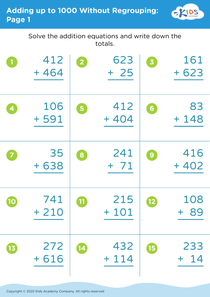
Shape Recognition Adding up to 1000 with Regrouping Worksheets for 9-Year-Olds
6 filtered results
-
From - To
Empower your 9-year-old's math and geometry skills with our engaging "Shape Recognition Adding up to 1000 with Regrouping Worksheets." Our expertly crafted worksheets seamlessly combine essential arithmetic practice with dynamic shape recognition activities. As children navigate through adding up to 1000 using regrouping, they will also identify and differentiate shapes, boosting both their mathematical and visual-spatial talents. The thoughtfully designed exercises and vibrant visuals ensure a fun and educational experience that keeps young learners motivated. Ideal for classroom or at-home learning, these worksheets support comprehensive skill development at this pivotal stage in their academic journey.
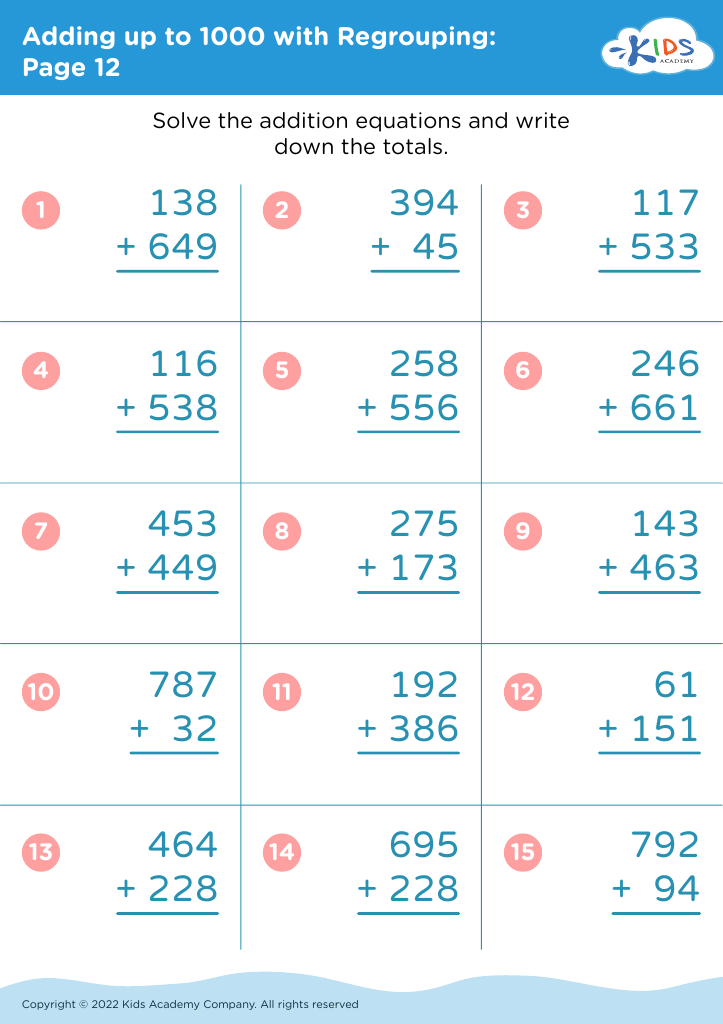
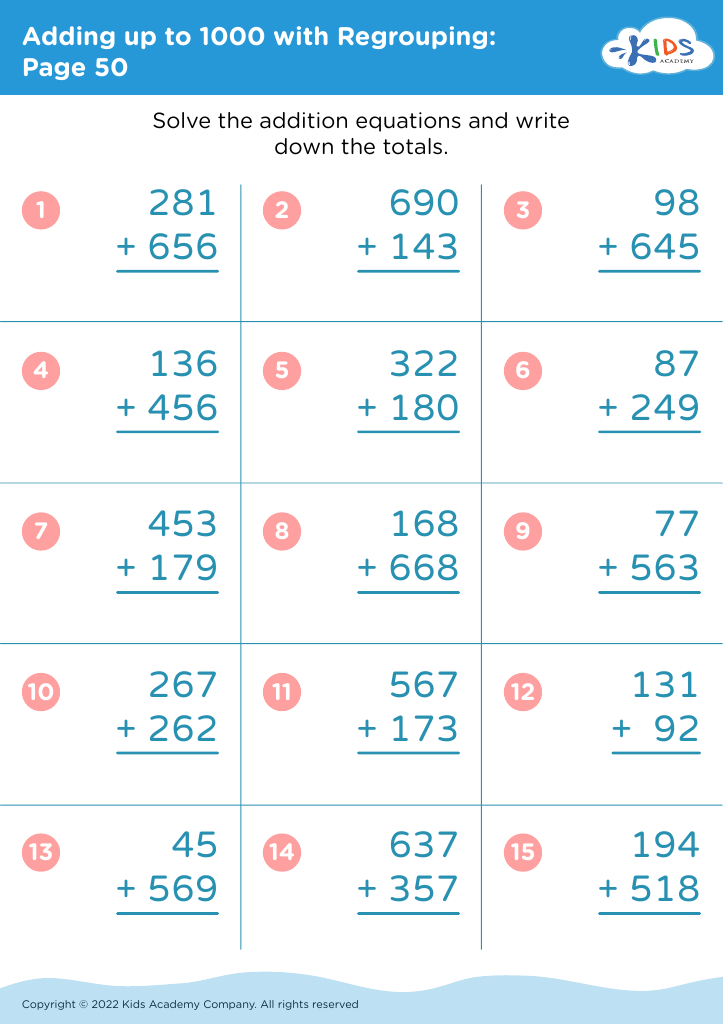
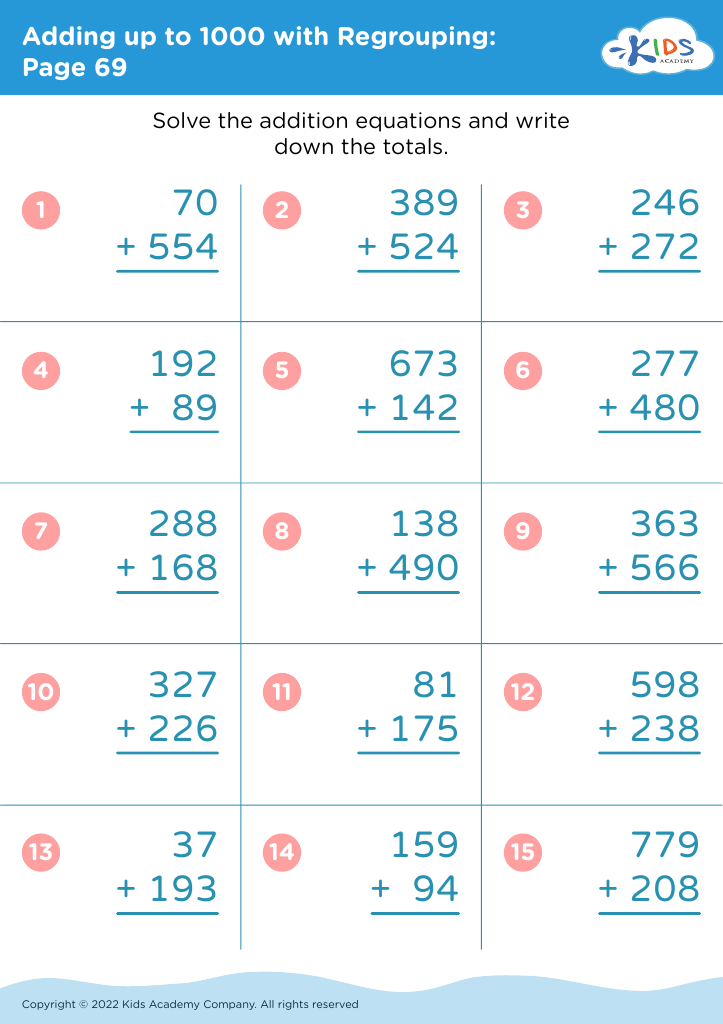
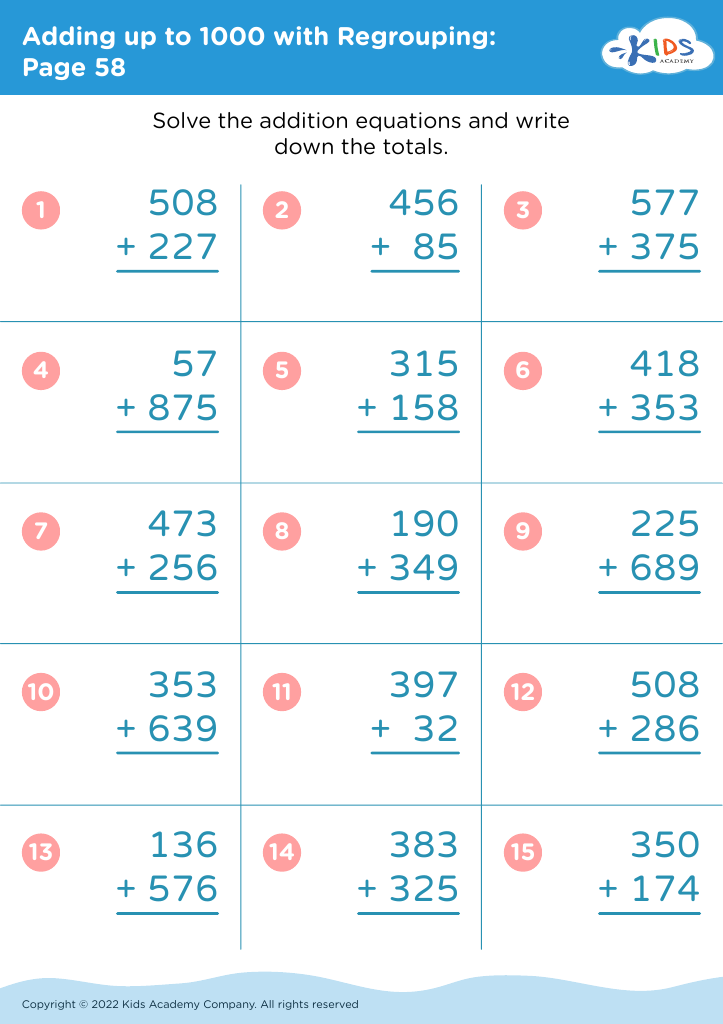
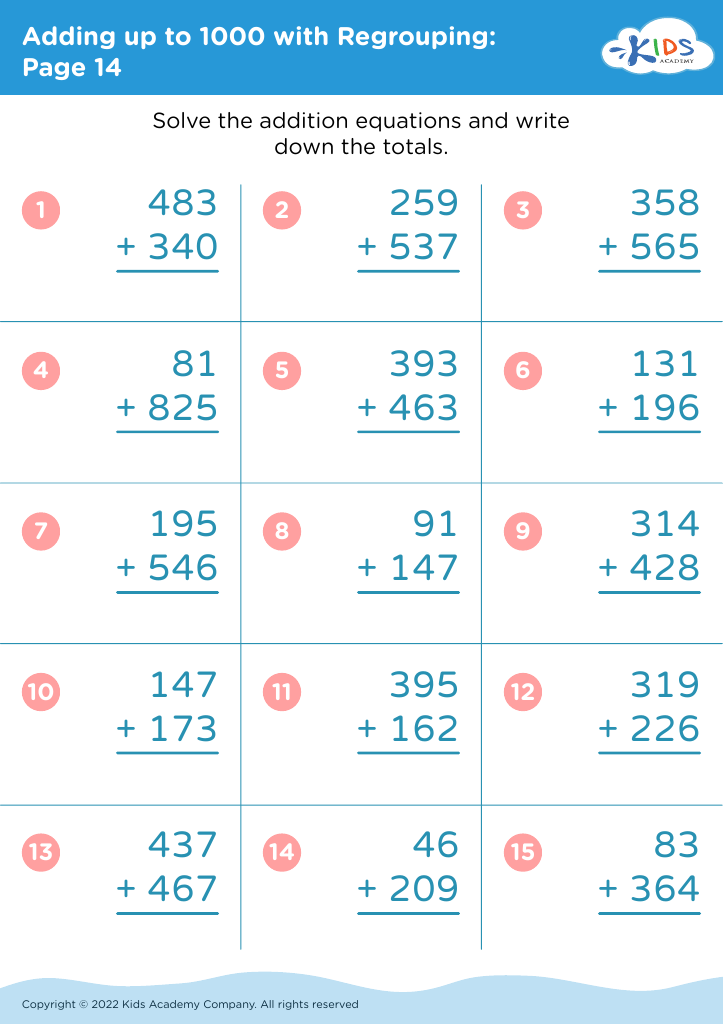
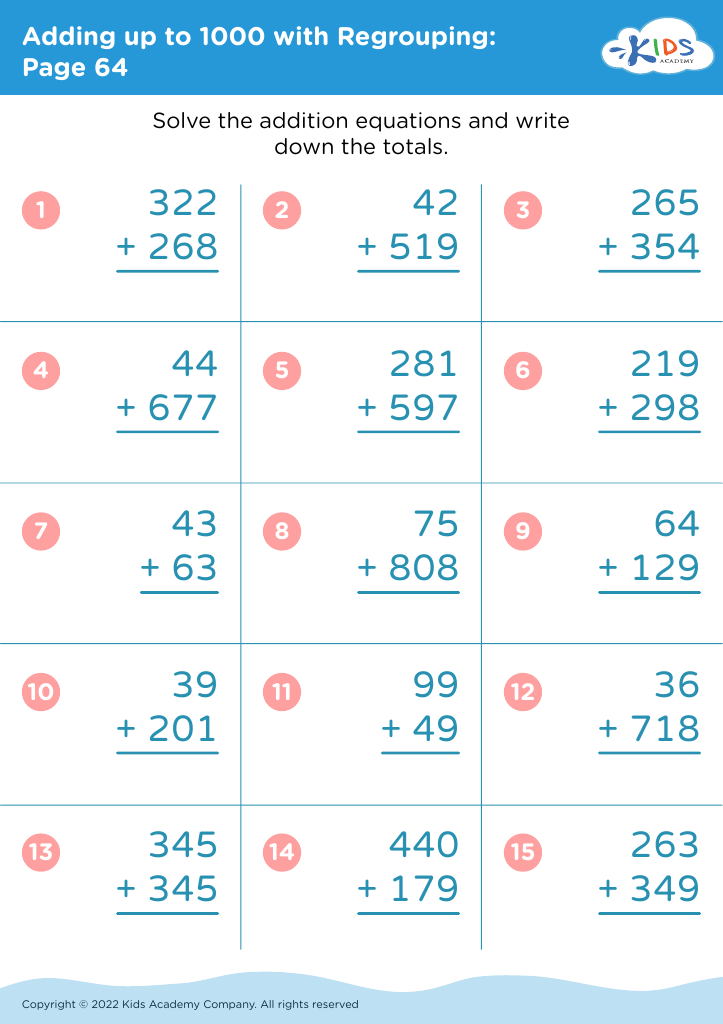


Shape recognition and adding up to 1000 with regrouping are essential skills for 9-year-olds, offering multiple developmental benefits in both academics and everyday life. Parents and teachers should recognize the importance of these skills for several reasons.
Firstly, shape recognition enhances spatial awareness and assists in understanding geometry. Recognizing and differentiating shapes build a foundation for more complex mathematical concepts such as symmetry, perimeter, and area calculation. It also aides in real-world problem-solving tasks like reading maps, understanding engineering diagrams, and storing objects efficiently.
Adding up to 1000 with regrouping, or carrying over numbers, teaches vital arithmetic skills and strengthens number sense. This skill is foundational for practical math proficiency and involves understanding place value—a concept critical for more advanced math topics. Moreover, it improves cognitive functions like logical reasoning and short-term memory. Mastery of these calculations liberates students from needing calculators, fostering mental arithmetic skills.
Both shape recognition and addition with regrouping are critical for a child's academic growth. They ensure a robust, versatile foundation critical for their future academic achievements and cognitive development. Parents and teachers should therefore prioritize engaging and meaningful activities that enforce these skills to equip children with the confidence and competence needed for more challenging math and real-life situations.