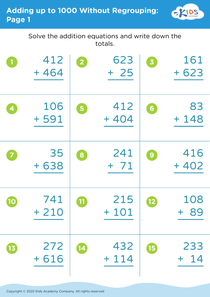
Simplifying Fractions Adding up to 1000 with Regrouping Worksheets for 9-Year-Olds
3 filtered results
-
From - To
Welcome to our comprehensive page on "Simplifying Fractions Adding Up to 1000 with Regrouping Worksheets" tailored for 9-year-olds! Our engaging worksheets are designed to help young learners enhance their math skills by simplifying fractions in conjunction with addition tasks that involve regrouping. Through interactive exercises, children will grasp key concepts of fractions while boosting their confidence in managing larger sums. Each worksheet promotes critical thinking and problem-solving skills, making math fun and accessible. Perfect for home or classroom use, these resources ensure that students not only learn to simplify fractions but also enjoy the process of mathematical discovery!
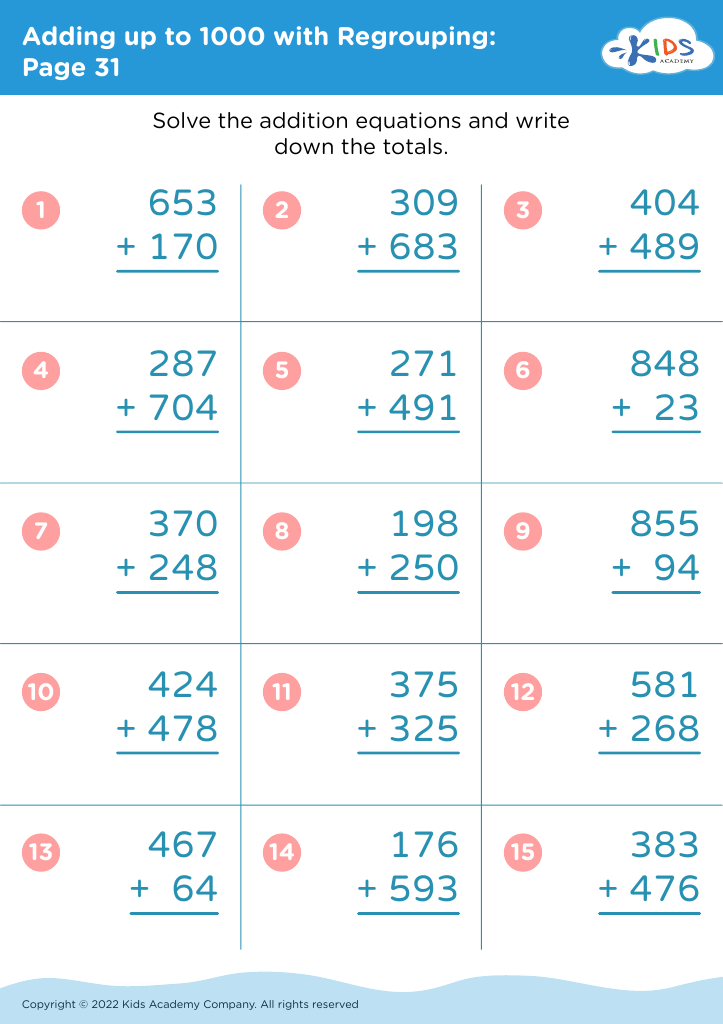
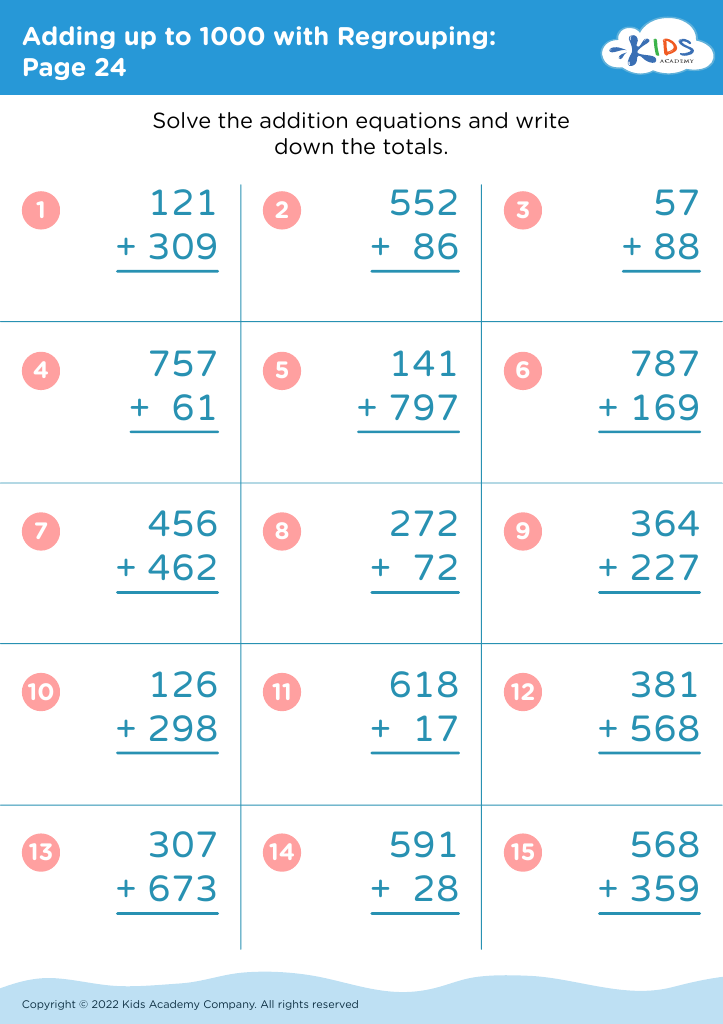
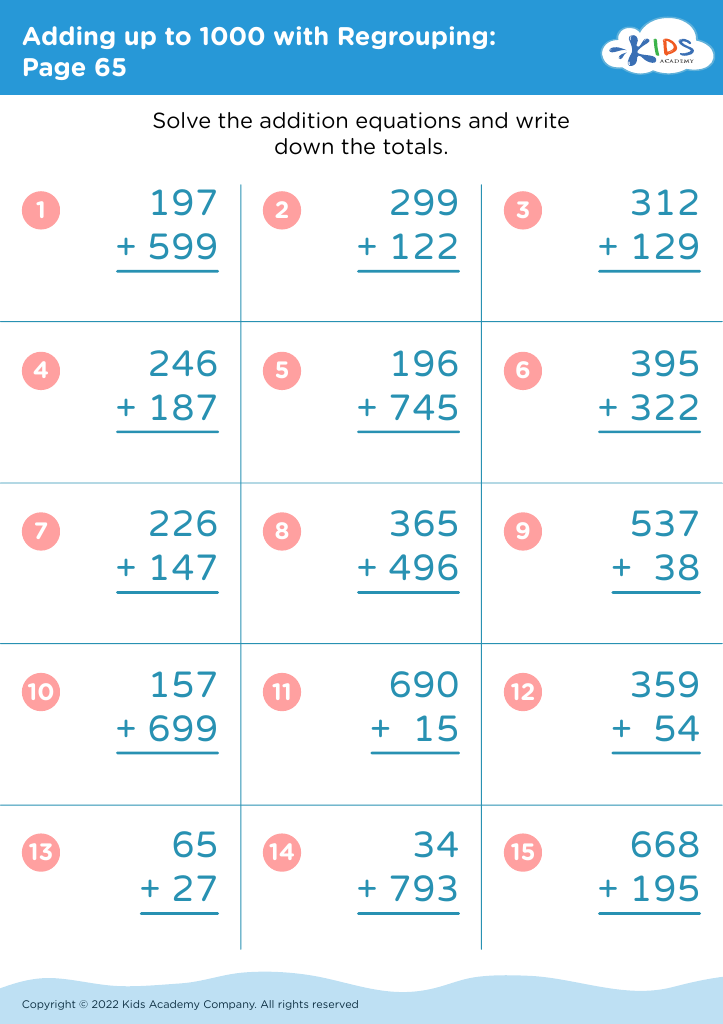


Understanding the concept of simplifying fractions and adding up to 1000 with regrouping is essential for 9-year-olds, as it forms a critical foundation in mathematics. At this age, children are developing their number sense and problem-solving skills, which are vital for learning more complex concepts in later grades.
By mastering simplifying fractions, children learn to recognize relationships between numbers, thereby enhancing their ability to compare and manipulate fractions. This skill is particularly important as they encounter real-world situations involving measurements, cooking, or dividing resources.
Moreover, adding up to 1000 with regrouping promotes advanced mental math strategies. It encourages flexibility in thinking, allowing children to break apart numbers and recombine them creatively. This cognitive development is not just limited to math; it also transcends into other subjects by fostering critical thinking and analytical skills.
Parents and teachers play an essential role in this learning process. Encouraging mastery of these topics can help boost a child’s confidence, foster a positive attitude toward math, and build a solid groundwork for future educational success. Additionally, a strong grasp of these concepts often leads to increased engagement and interest in math-related activities.