Understanding fractions Adding up to 1000 with Regrouping Worksheets for 9-Year-Olds

Explore our engaging "Understanding Fractions: Adding Up to 1000 with Regrouping Worksheets" designed specifically for 9-year-olds! These worksheets provide a fun and interactive way for students to grasp the concept of fractions while mastering addition with regrouping. Each activity is structured to enhance numerical understanding and improve problem-solving skills. Students will practice adding fractions to whole numbers and tackle real-world math scenarios that build confidence and competence. Perfect for reinforcing lessons at home or in the classroom, these worksheets make learning fractions enjoyable and effective. Download now to help your child achieve math success through hands-on practice!
Check out this FREE Trial Lesson on Adding up to 1000 with Regrouping for age 9!

P

Favorites
With answer key
Interactive
  • 9
  • Understanding fractions
  • Adding up to 1000 with Regrouping
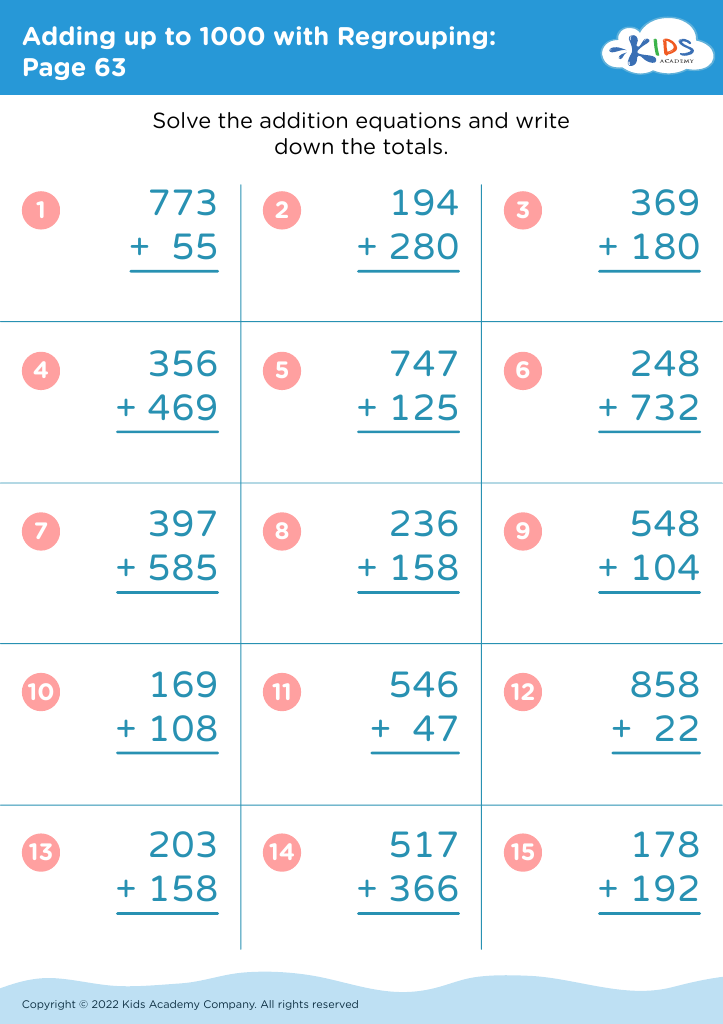
Adding up to 1000 with Regrouping: Page 63
Worksheet
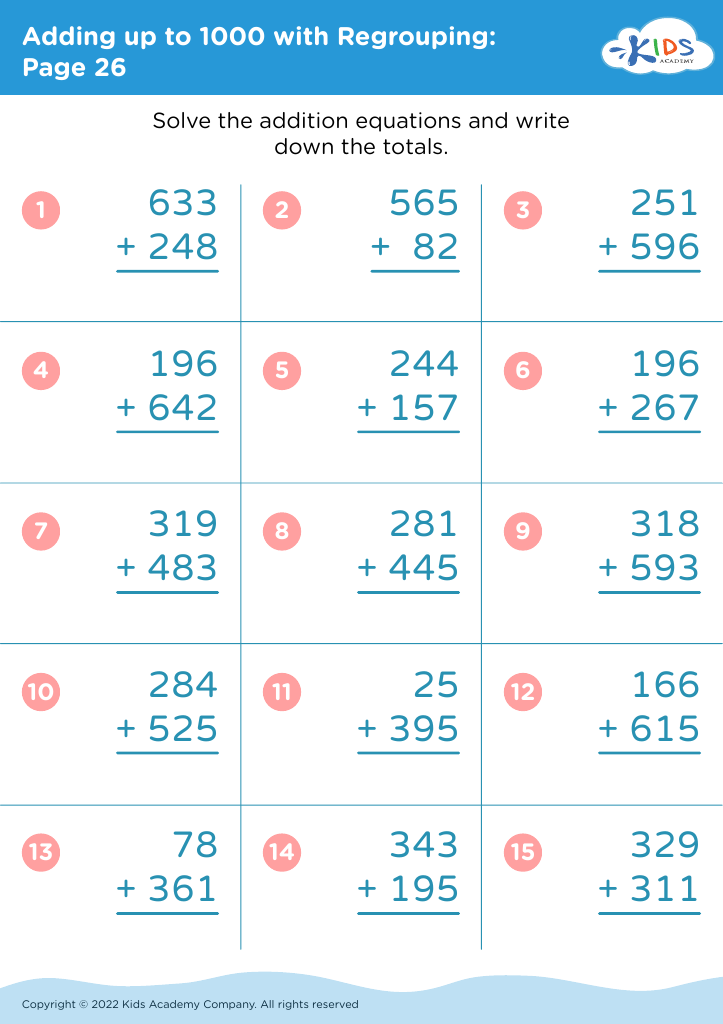
Adding up to 1000 with Regrouping: Page 26
Worksheet
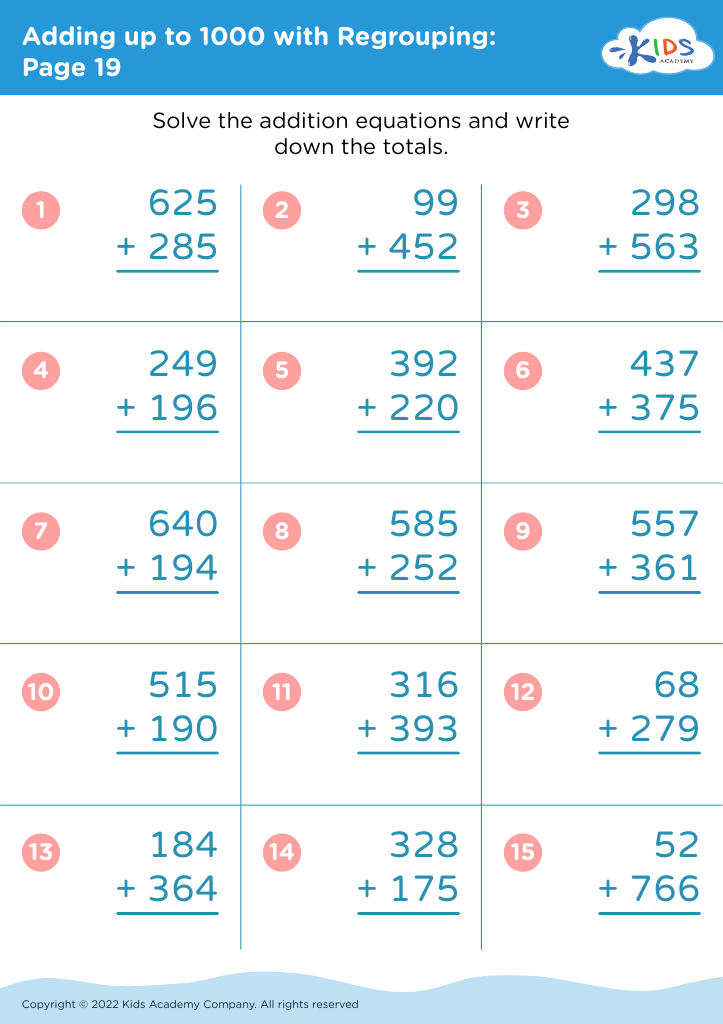
Adding up to 1000 with Regrouping: Page 19
Worksheet
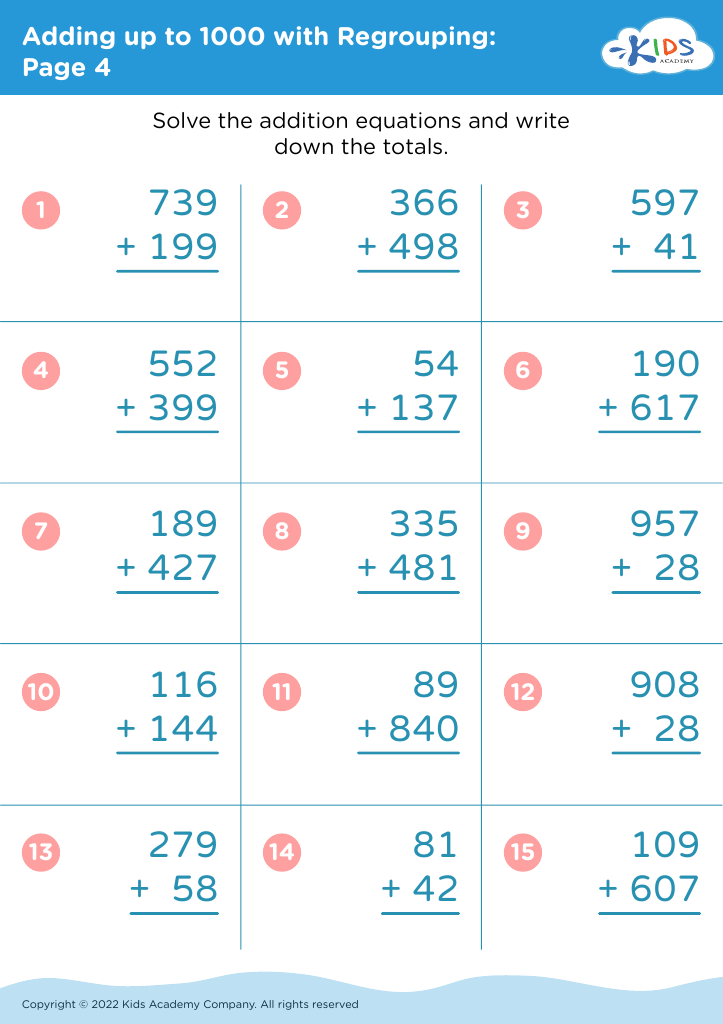
Adding up to 1000 with Regrouping: Page 4
Worksheet
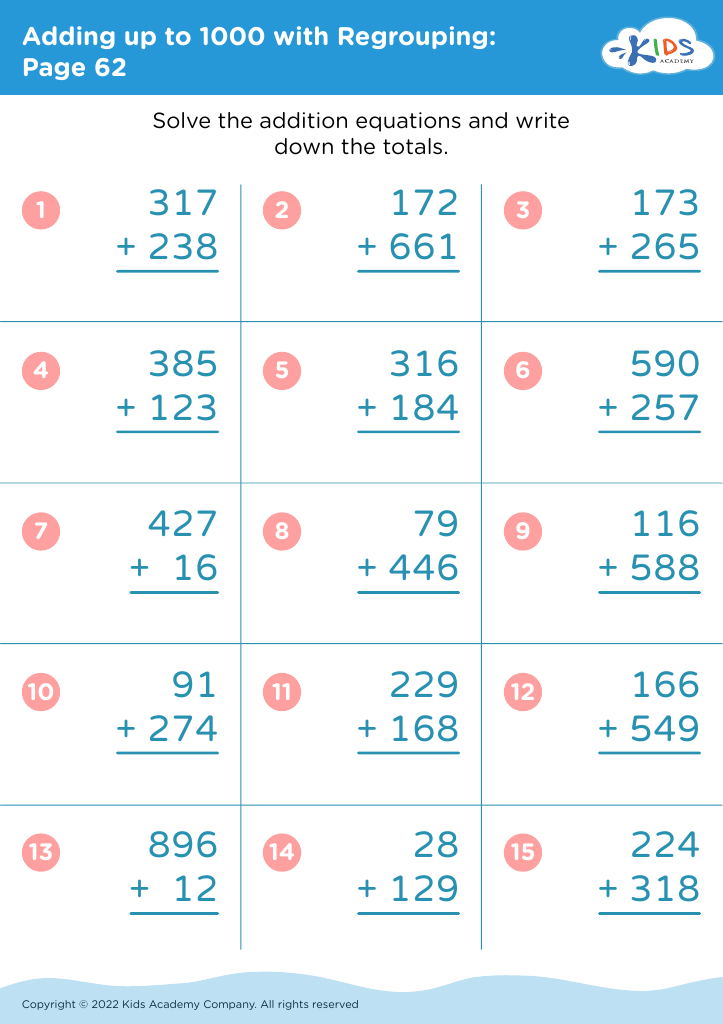
Adding up to 1000 with Regrouping: Page 62
Worksheet
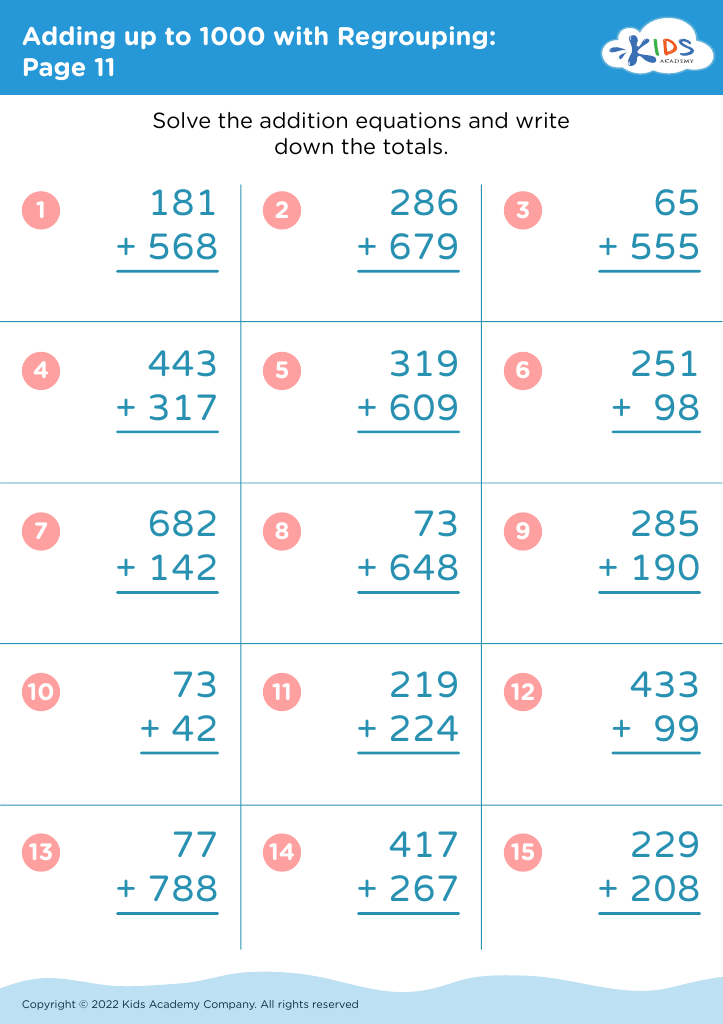
Adding up to 1000 with Regrouping: Page 11
Worksheet
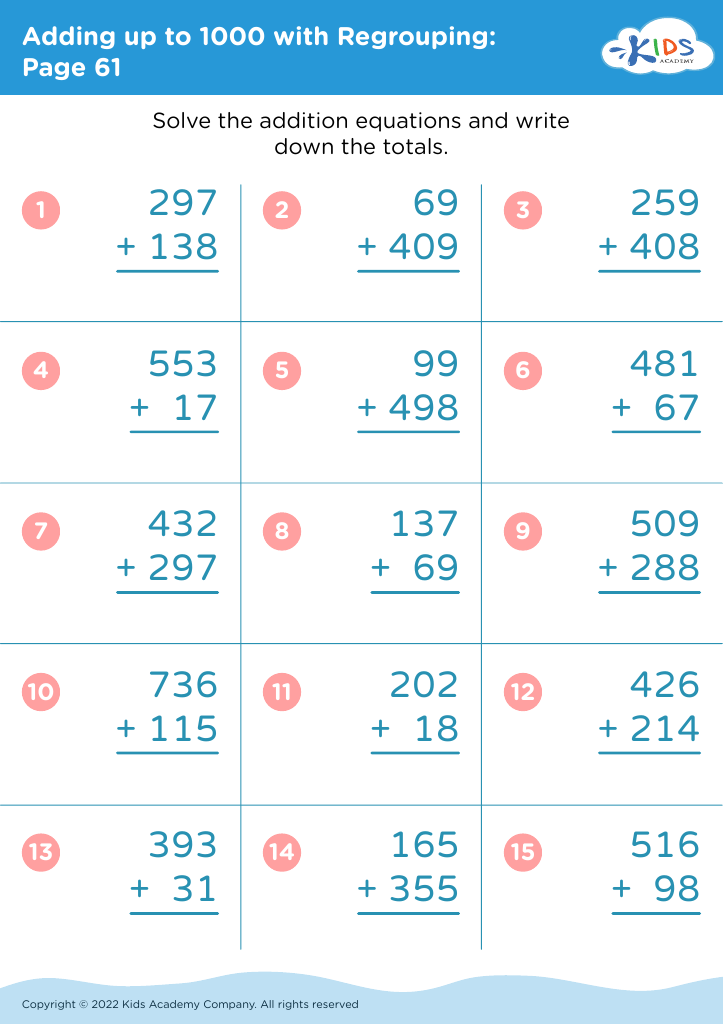
Adding up to 1000 with Regrouping: Page 61
Worksheet
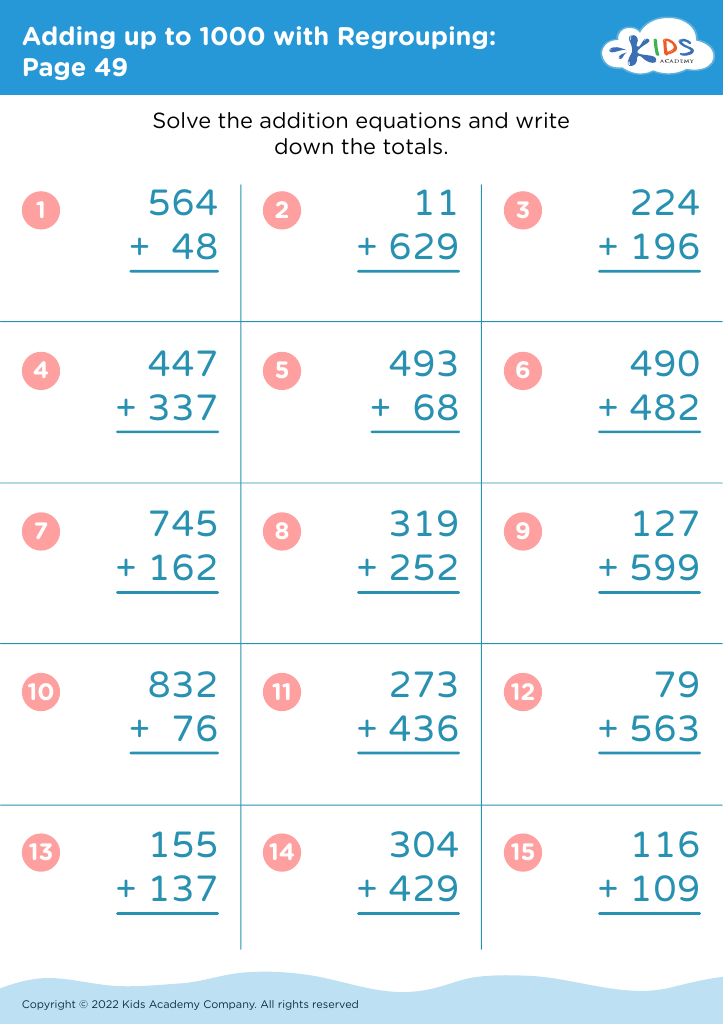
Adding up to 1000 with Regrouping: Page 49
Worksheet
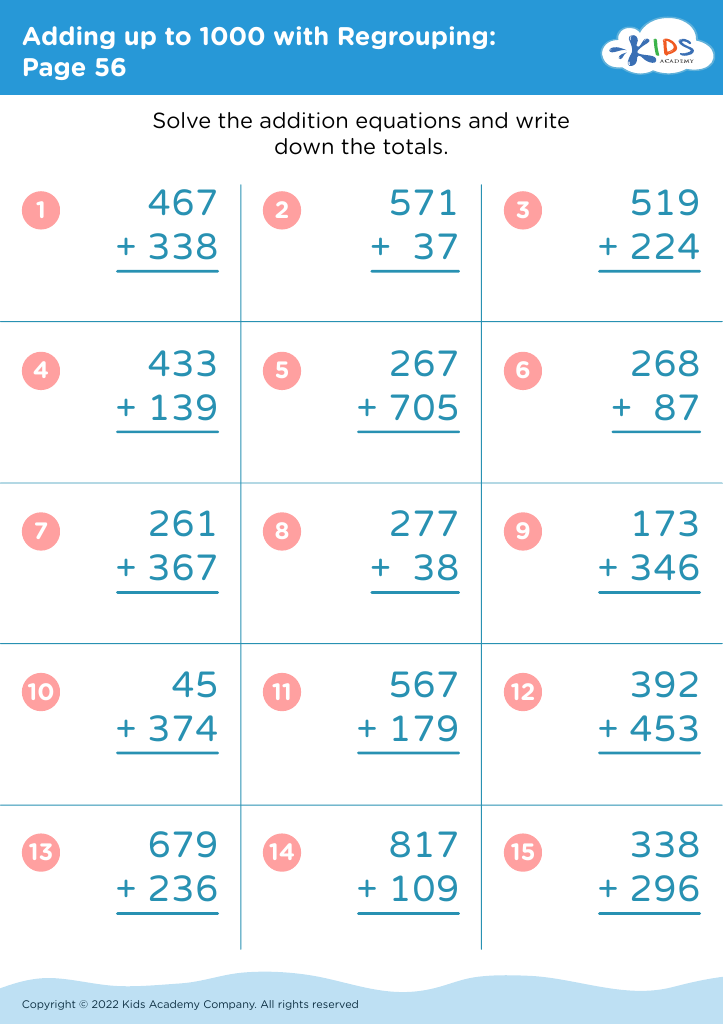
Adding up to 1000 with Regrouping: Page 56
Worksheet
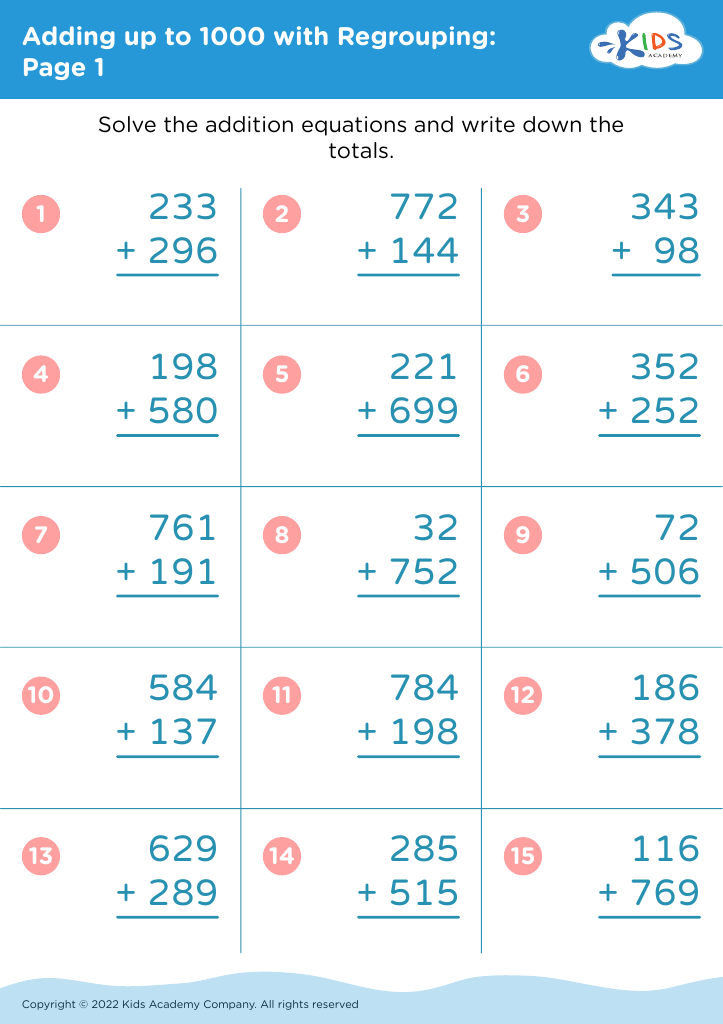
Adding up to 1000 with Regrouping: Page 1
Worksheet
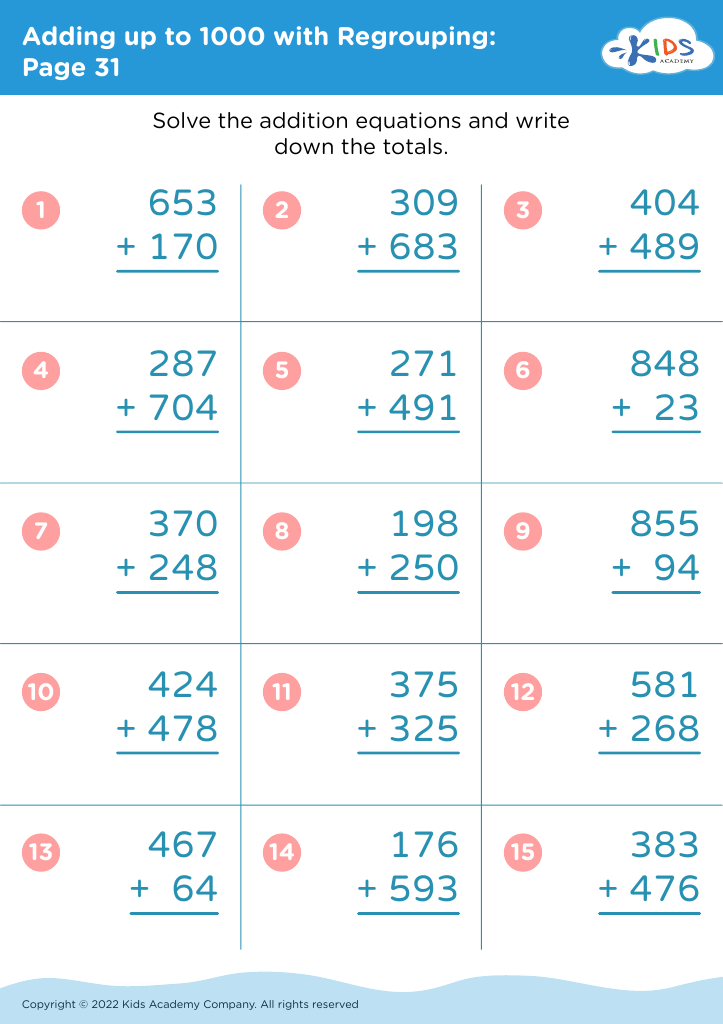
Adding up to 1000 with Regrouping: Page 31
Worksheet
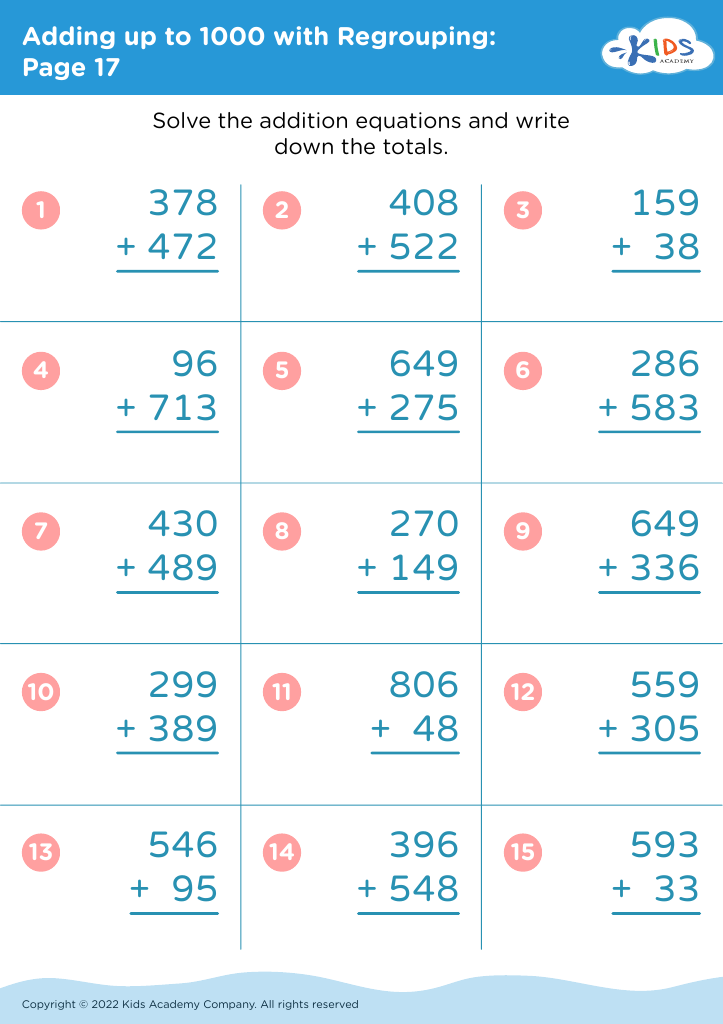
Adding up to 1000 with Regrouping: Page 17
Worksheet
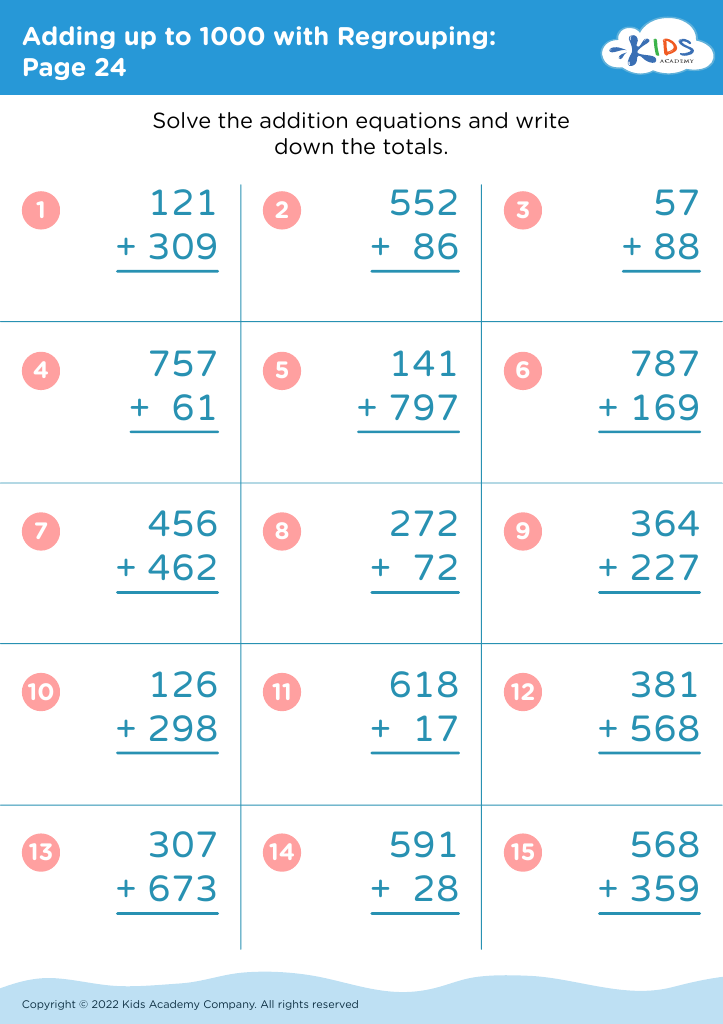
Adding up to 1000 with Regrouping: Page 24
Worksheet
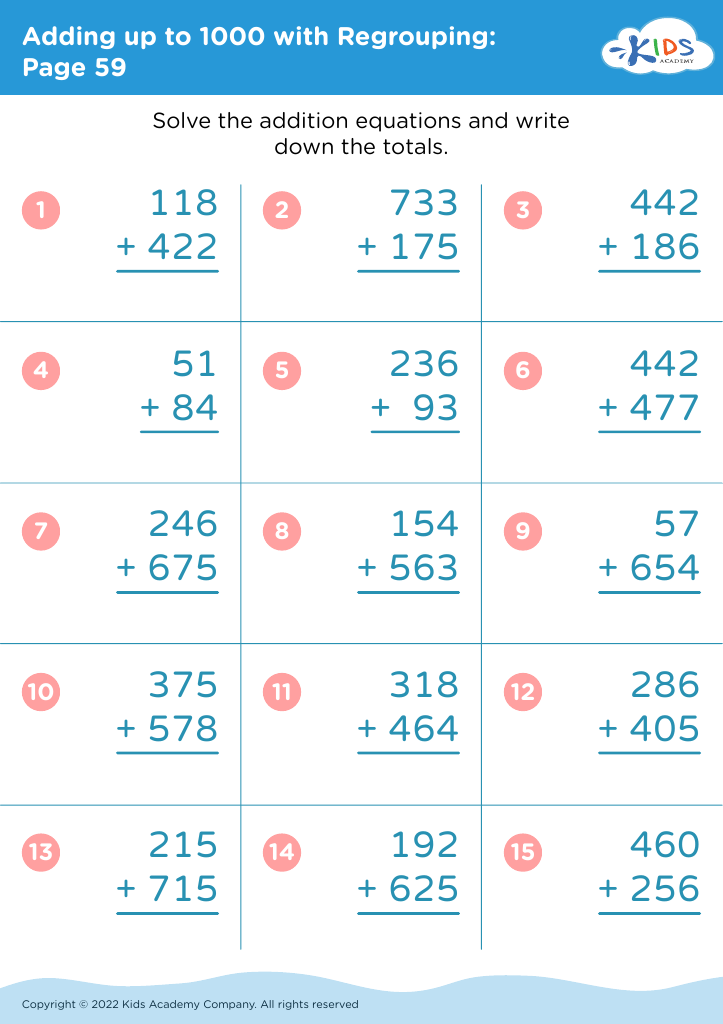
Adding up to 1000 with Regrouping: Page 59
Worksheet
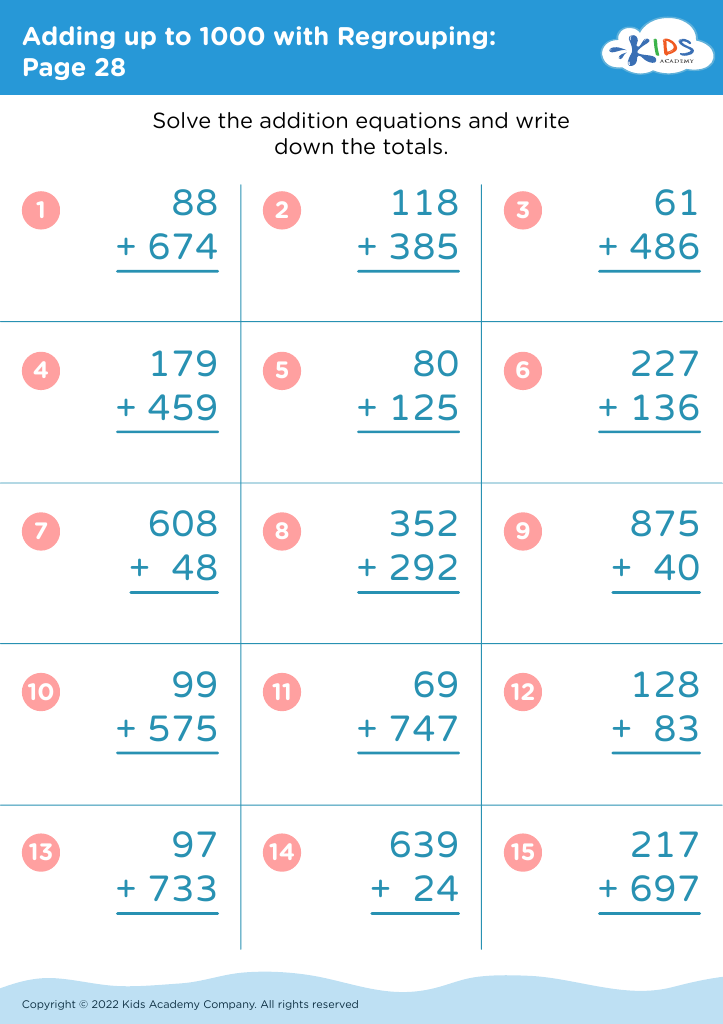
Adding up to 1000 with Regrouping: Page 28
Worksheet
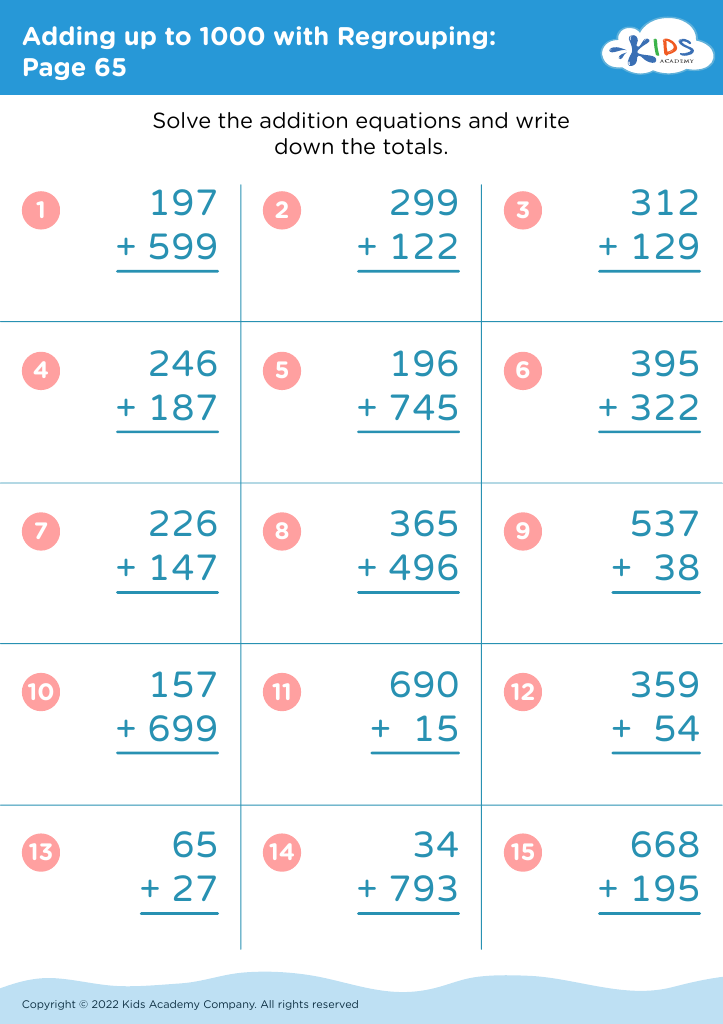
Adding up to 1000 with Regrouping: Page 65
Worksheet
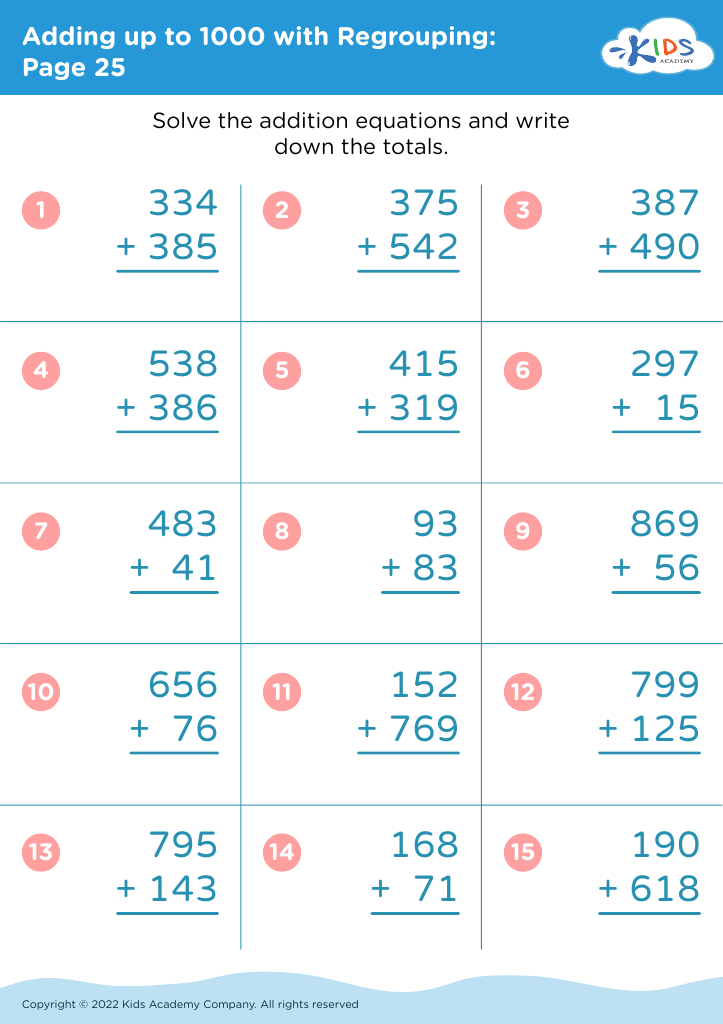
Adding up to 1000 with Regrouping: Page 25
Worksheet
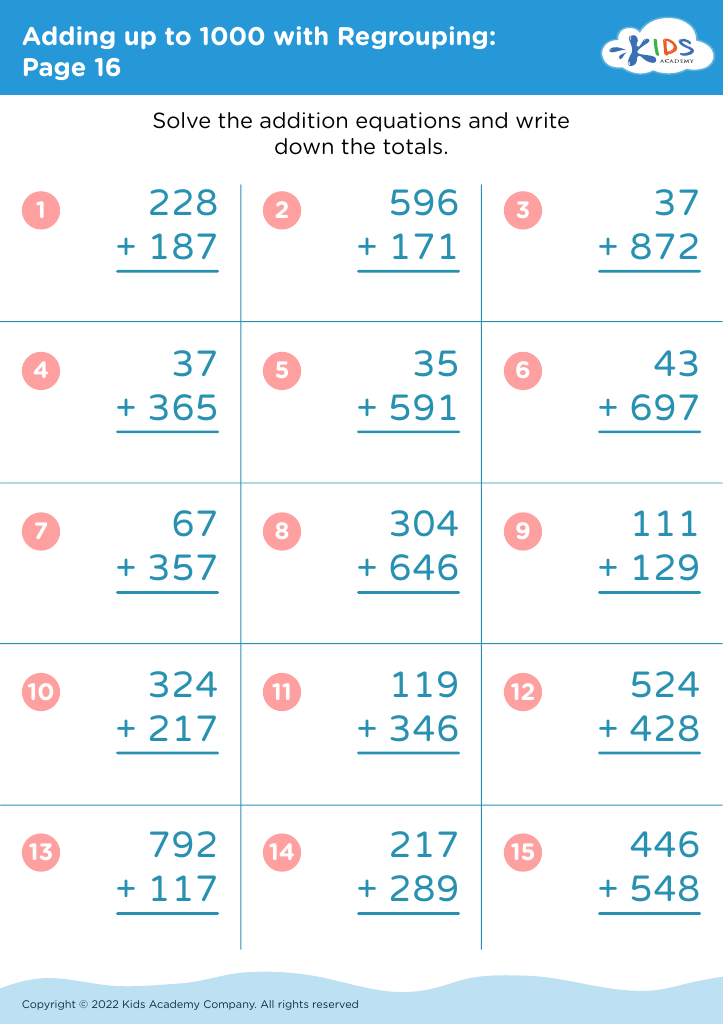
Adding up to 1000 with Regrouping: Page 16
Worksheet


Understanding fractions, particularly when adding up to 1000 with regrouping, is essential for 9-year-olds as it lays the groundwork for more advanced mathematical concepts and real-life applications. At this age, children are transitioning into more complex numeracy skills, and mastering fractions helps them develop critical thinking and problem-solving abilities. It also boosts their confidence in math, a subject that many students find challenging.

Regrouping in fractions introduces children to the concept of working with parts of a whole and encourages them to understand relationships between numbers. Proficiency in this area empowers them to solve everyday problems, such as when cooking (adjusting recipes) or sharing (dividing equally), demonstrating the relevance of math in daily life.

Parents and teachers should prioritize this skill because it aids in the child's ability to comprehend more advanced topics, such as decimals and percentages, which they will encounter in future grades. Additionally, fostering a strong foundation in fractions nurtures a positive attitude towards mathematics, encouraging lifelong learning. As parents and teachers support children in this journey, they not only enhance their academic success but also cultivate essential skills that transcend the classroom.