Alphabet Recognition Adding up to 1000 Without Regrouping Worksheets for 9-Year-Olds
3 filtered results
-
From - To
Alphabet Recognition Adding up to 1000 Without Regrouping Worksheets for 9-Year-Olds are designed to enhance both math and literacy skills. These engaging worksheets provide fun, interactive exercises focusing on addition without regrouping, while incorporating alphabet recognition tasks. Perfect for 9-year-olds, they offer a dual approach to learning by reinforcing basic math operations and letter identification simultaneously. Kids will love the challenge of combining math with spelling, improving their analytical and analytical skills. Ideal for classroom use or at-home practice, these worksheets make learning enjoyable and effective, ensuring a well-rounded educational experience for young learners.
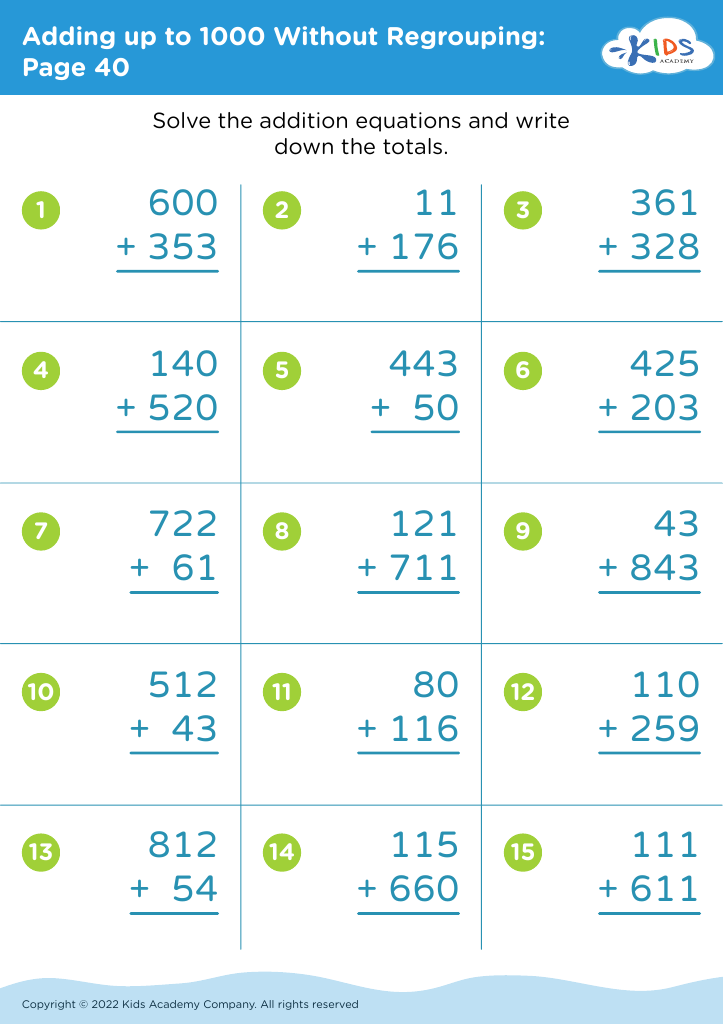
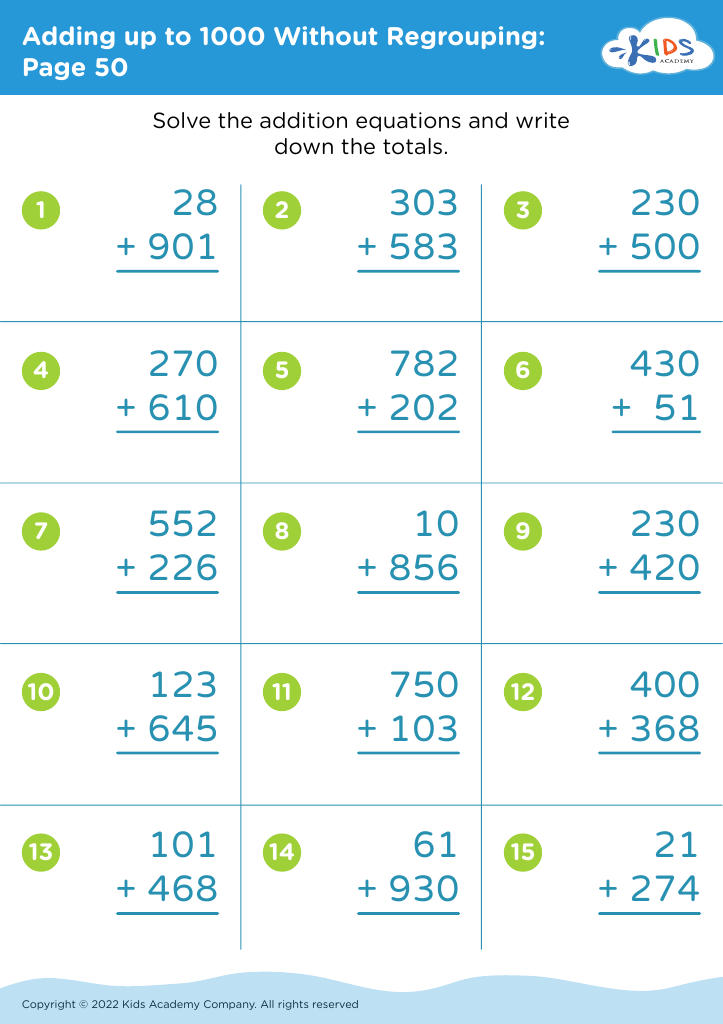
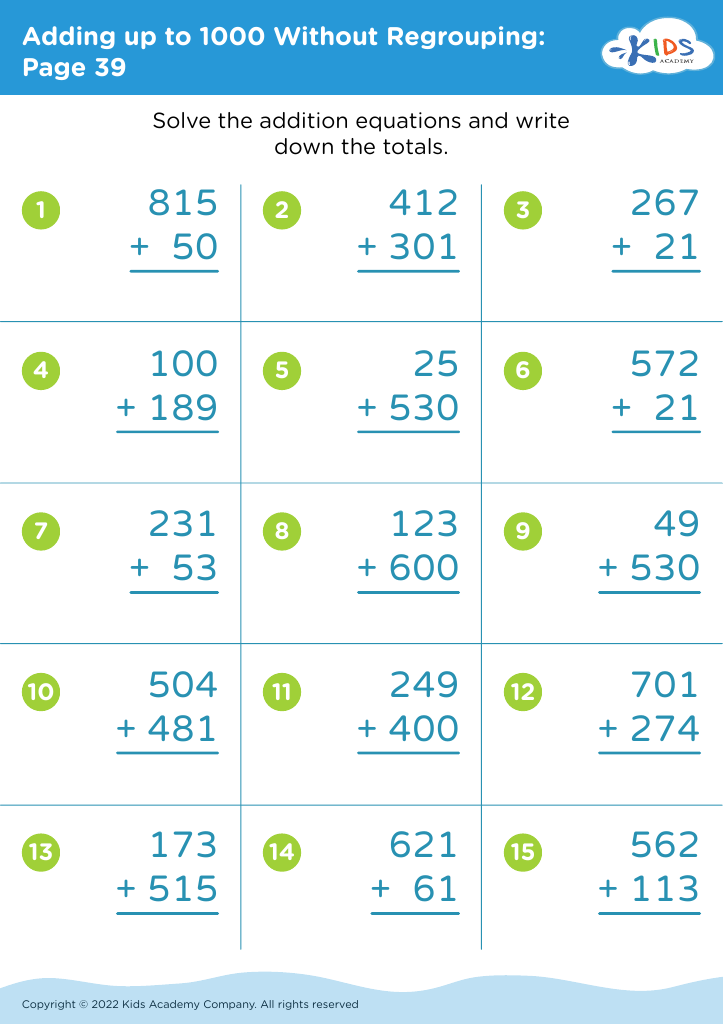


Alphabet recognition and basic arithmetic are foundational skills that set 9-year-olds up for a lifetime of learning success. Understanding why these skills matter underscores the important role that parents and teachers play in supporting children's educational growth.
Alphabet recognition is essential because it is the gateway to literacy. Mastering the alphabet allows children to read and write, which are critical skills for all other learning. When children know the letters and their sounds, they can decode words, improving reading fluency and comprehension. This foundation is especially important by age 9, as the curriculum becomes more complex and reading across subjects like science and history becomes necessary.
Adding up to 1000 without regrouping is equally crucial. It builds a strong number sense, promotes logical thinking, and prepares children for more advanced math operations. Mastering this skill means children can efficiently perform addition, understand place value, and develop problem-solving strategies. These math skills are fundamental not only for more complex arithmetic and geometry but also for daily life activities such as budgeting and time management.
Parents and teachers nurturing these skills early can identify and address learning gaps quickly. They can tailor supportive learning approaches that strengthen these key areas, ultimately fostering a love for learning and helping children achieve academic success.