Comparing Fractions Adding up to 1000 Without Regrouping Worksheets for 9-Year-Olds
3 filtered results
-
From - To
Explore our engaging "Comparing Fractions Adding up to 1000 Without Regrouping" worksheets designed specifically for 9-year-olds! These interactive activities help young learners understand how to compare fractions effectively while mastering addition skills without the need for regrouping. Each worksheet is crafted to make learning fun and accessible, fostering critical thinking and enhancing mathematical foundation. With step-by-step guidance and visually appealing formats, students will confidently approach comparing fractions within the context of larger sums. Perfect for classroom settings or at-home practice, our resources support your child's journey towards arithmetic proficiency. Start building a solid math foundation today!
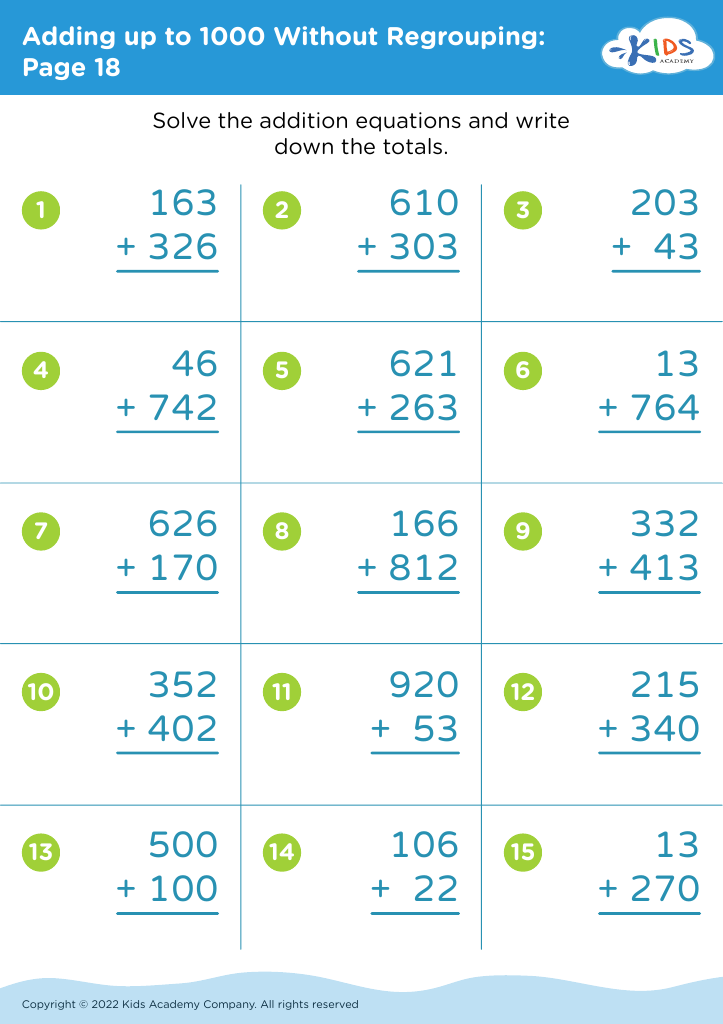
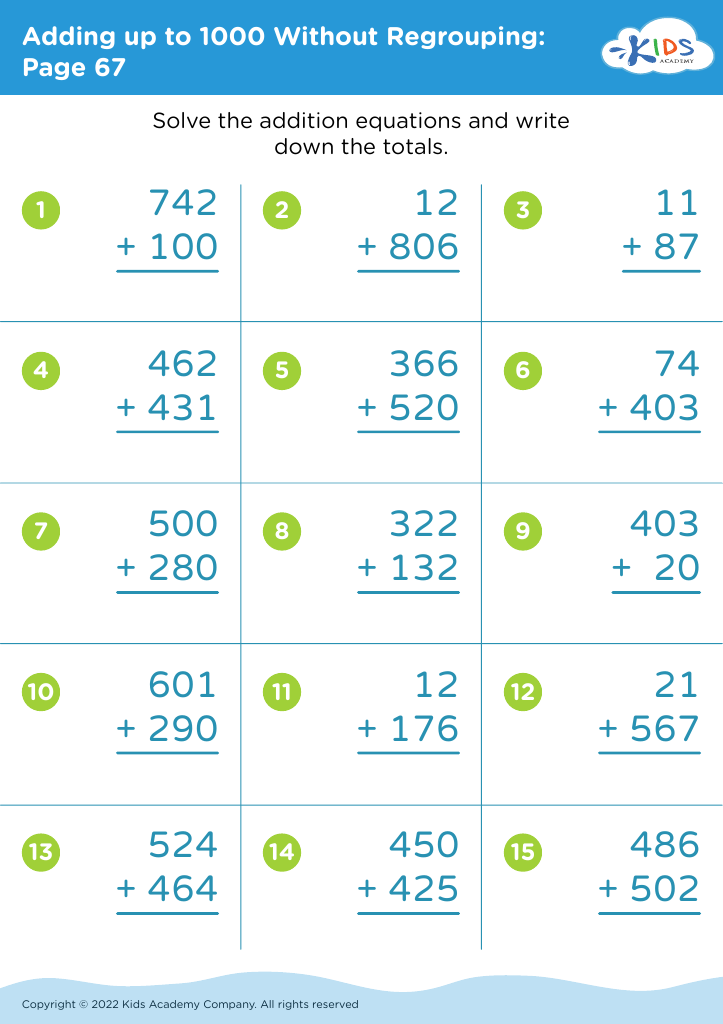
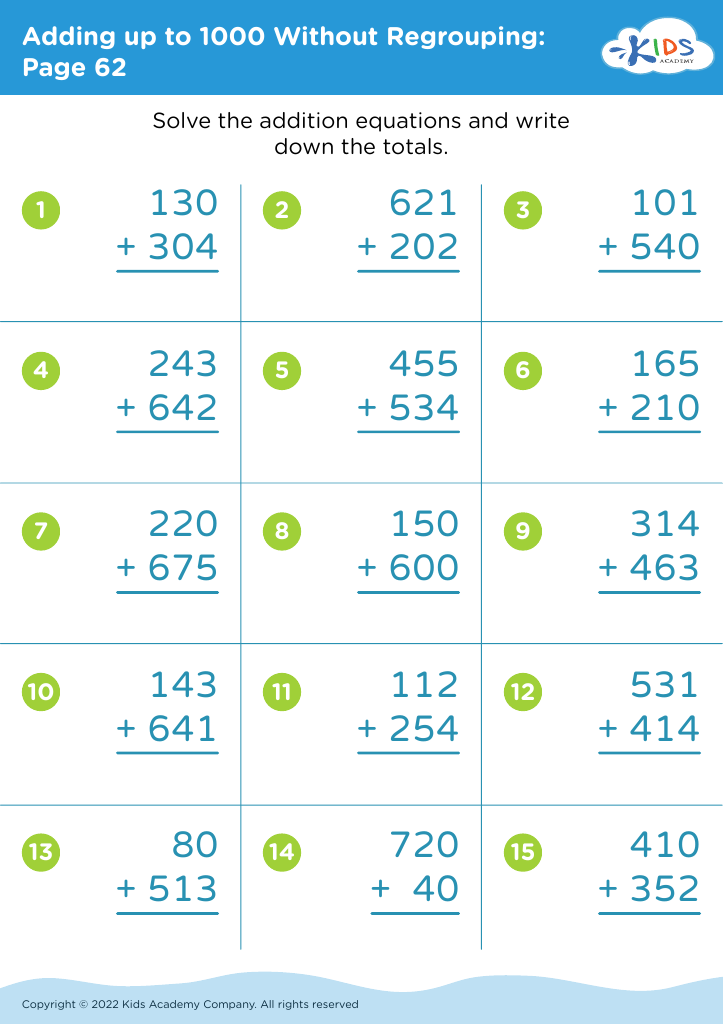


Understanding how to compare fractions and successfully add them—specifically those adding up to 1,000 without regrouping—is vital for 9-year-olds for several reasons. First, mastering these skills fosters critical mathematical thinking, allowing students to grasp key concepts essential for higher-level mathematics. It promotes numeracy, encouraging children to analyze numbers more effectively in various contexts, from everyday decisions to more complex academic challenges.
Furthermore, comparing fractions helps students understand proportions and part-to-whole relationships—a fundamental concept in numerous real-life situations, such as cooking, budgeting, or understanding statistics in school projects. When children engage with fractions and addition, they develop perseverance and problem-solving skills, essential for their overall intellectual growth.
Teachers and parents play crucial roles in nurturing these attributes. With thoughtful guidance, they can encourage interaction and exploration of fractions in a supportive environment, enhancing children's learning experiences. Additionally, a solid foundation in comparing and adding fractions will prepare children for future mathematical concepts, minimizing frustration as they progress through school. Ultimately, pointing out the relevance of these skills—both academic and practical—can cultivate a lifelong appreciation for mathematics among children.