Fraction comparison Adding up to 1000 Without Regrouping Worksheets for 9-Year-Olds
4 filtered results
-
From - To
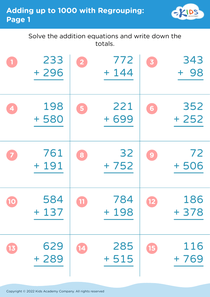
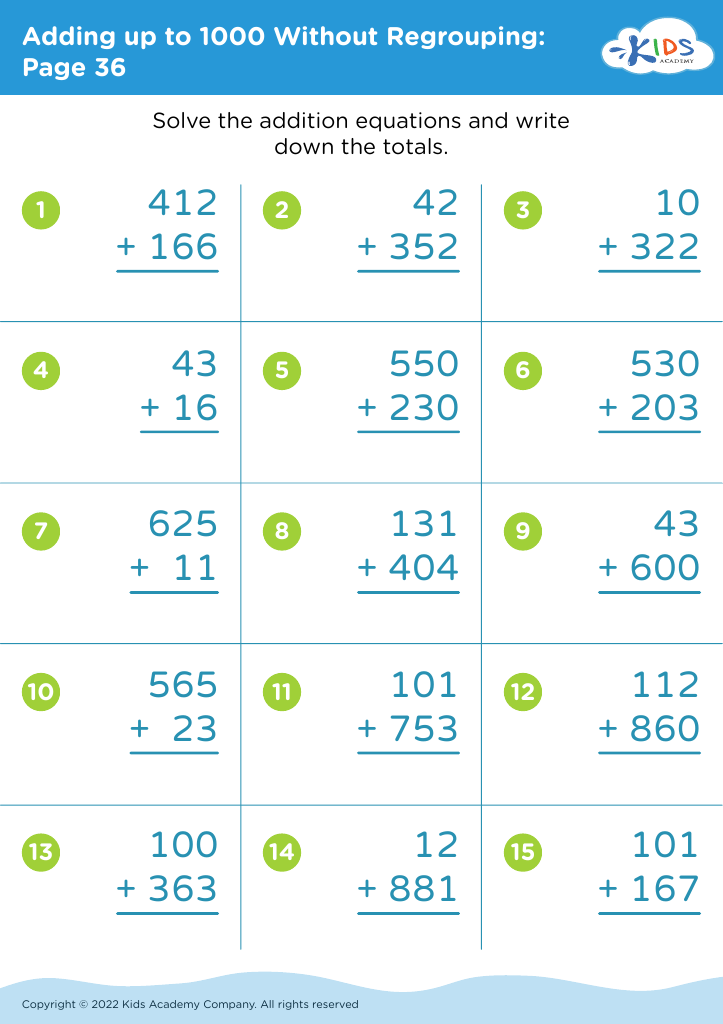
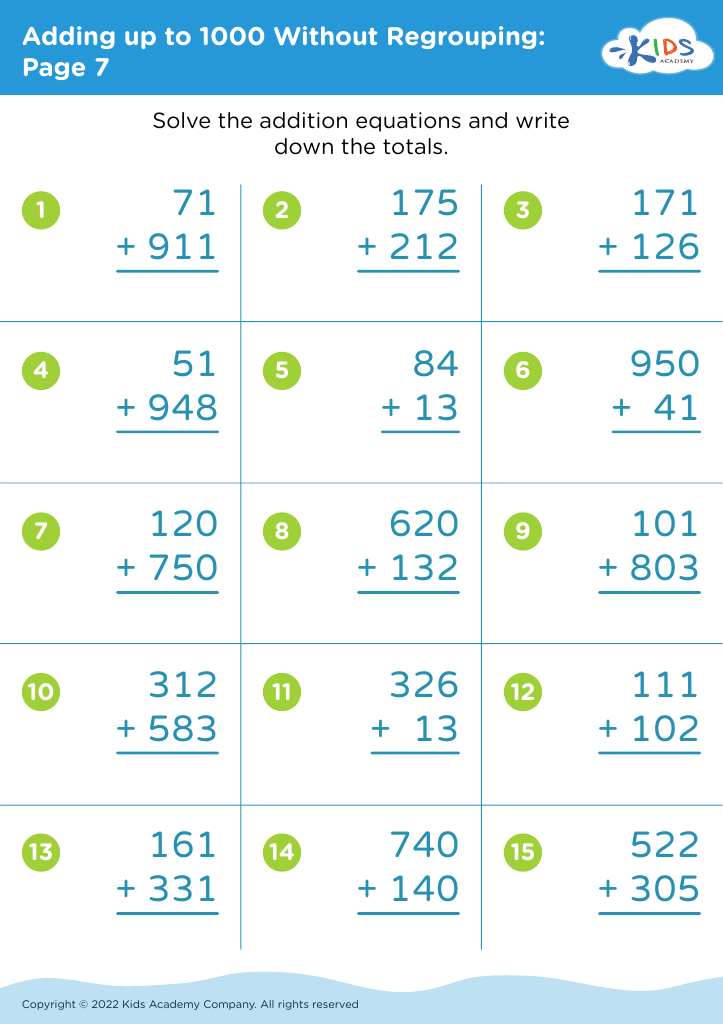
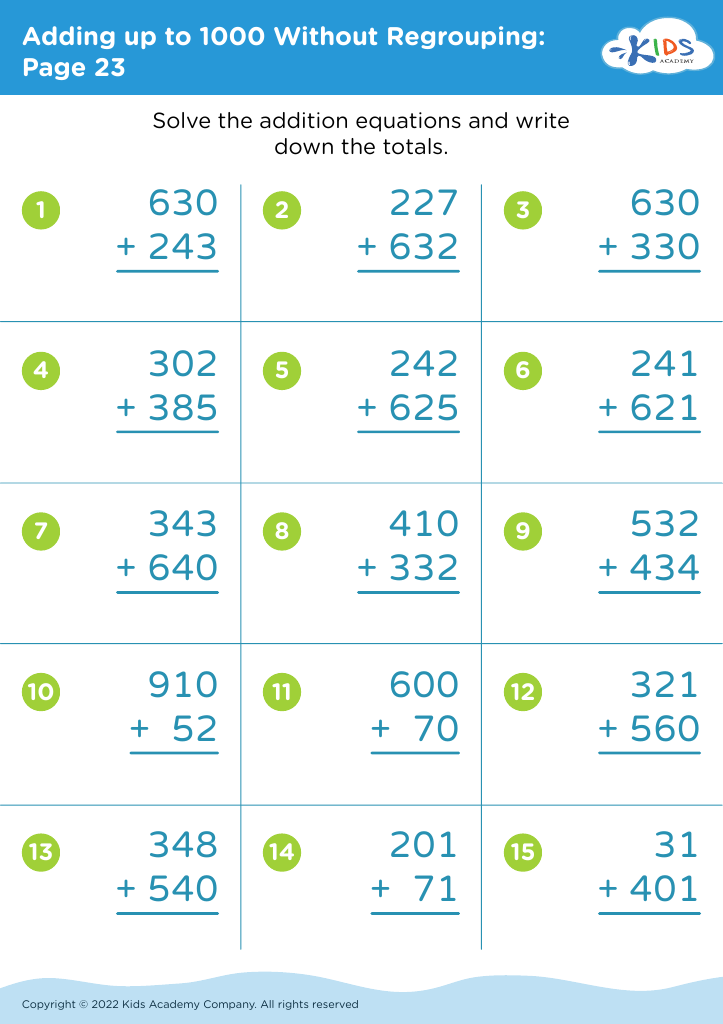
Enhance your 9-year-old's math skills with our "Fraction Comparison Adding Up to 1000 Without Regrouping Worksheets!" These engaging worksheets are designed to help young learners confidently explore fraction comparisons while practicing addition. With age-appropriate exercises, children will develop a deeper understanding of numerical relationships and improve critical thinking skills. Each worksheet offers clear instructions and vibrant visuals to make learning enjoyable and accessible. Perfect for classroom use or at-home learning, these resources will empower students to master fraction concepts and enhance their arithmetic abilities without the complexity of regrouping. Download now to give your child the math foundation they need!
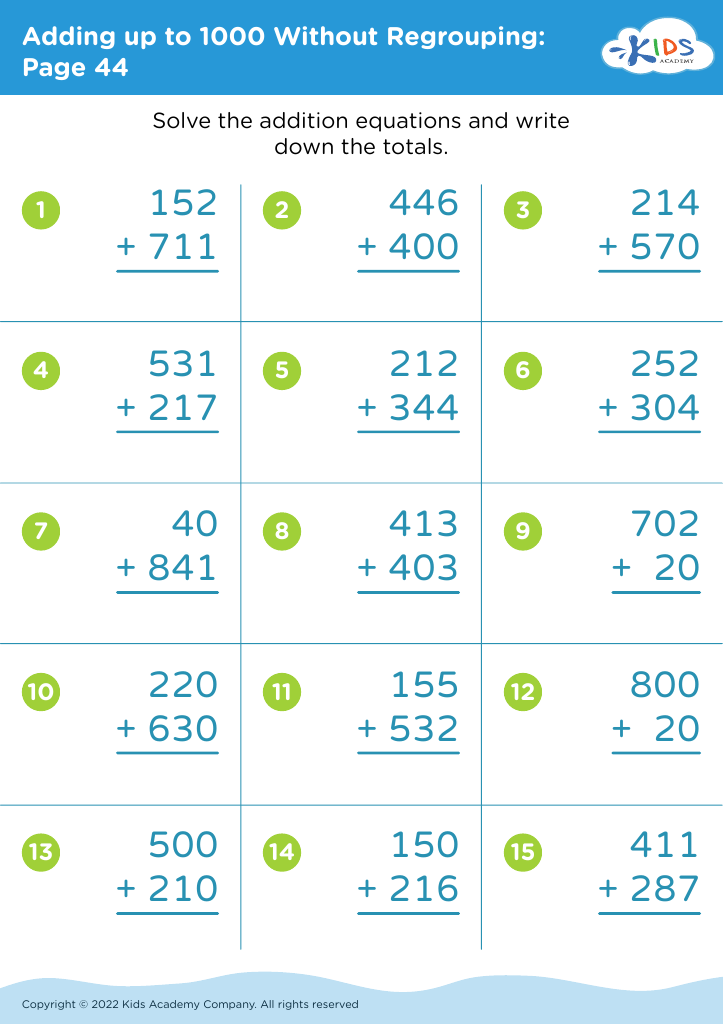


Understanding fraction comparison and addition is vital for 9-year-olds as it lays the foundation for more advanced math concepts they will encounter later. At this age, children transition from concrete math skills to more abstract reasoning, and mastering these concepts helps enhance critical thinking and problem-solving abilities.
When children learn to compare fractions, they develop a deeper understanding of numerator and denominator relationships. This skill is essential in everyday life, enabling them to make informed decisions about amounts, sharing, and measurements. For instance, knowing which of two pizzas is larger helps children respect fairness and equal sharing, critical social skills.
Additionally, the ability to add numbers up to 1000 without regrouping challenges children to practice their addition fluency and reinforces their understanding of place value. As they engage with these operations, they build confidence and a positive attitude towards math, which is crucial for long-term academic success.
By emphasizing these concepts, parents and teachers not only help children succeed academically today but also prepare them for future challenges in mathematics and beyond. As numeracy skills are linked to overall cognitive development, nurturing a strong grasp of fractions directly contributes to a child's educational journey.