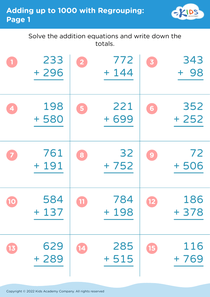
Reading comprehension Adding up to 1000 Without Regrouping Worksheets for 9-Year-Olds
4 filtered results
-
From - To
Explore our engaging "Reading Comprehension Adding Up to 1000 Without Regrouping Worksheets" designed specifically for 9-year-olds! These worksheets not only enhance students' math skills by focusing on addition without regrouping but also incorporate reading comprehension exercises. Kids will tackle a variety of word problems that challenge their critical thinking and understanding of mathematical concepts. Ideal for classroom use or extra practice at home, these resources help learners connect math with reading while building confidence in their abilities. Encourage your child's academic growth today with these fun and educational worksheets that promote both numeracy and literacy skills! Perfect for young learners!
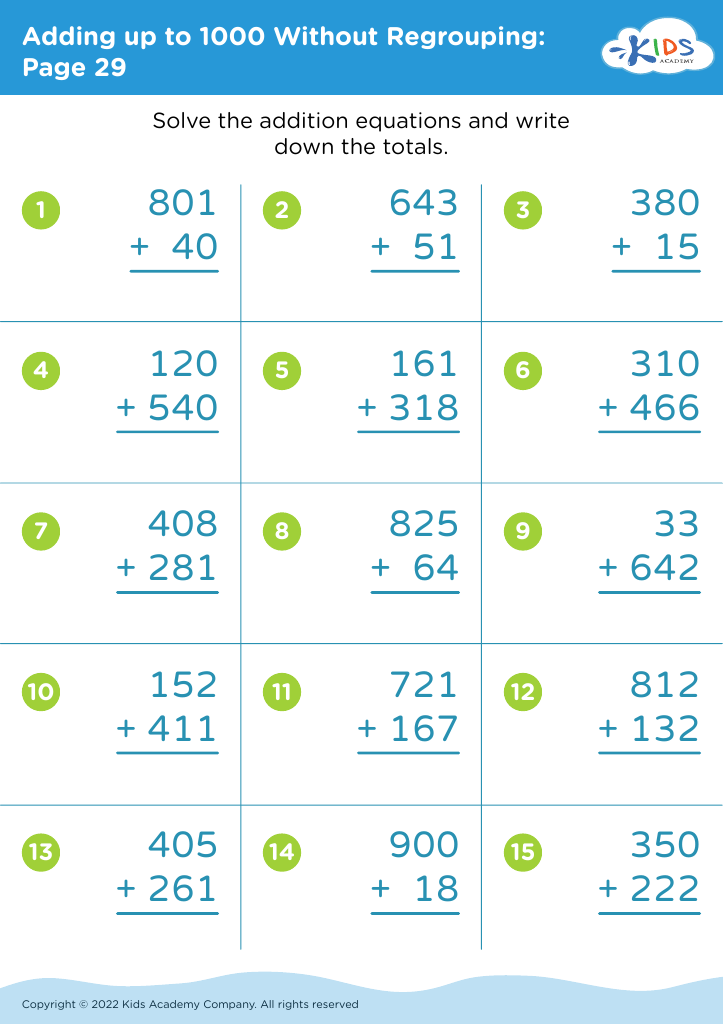
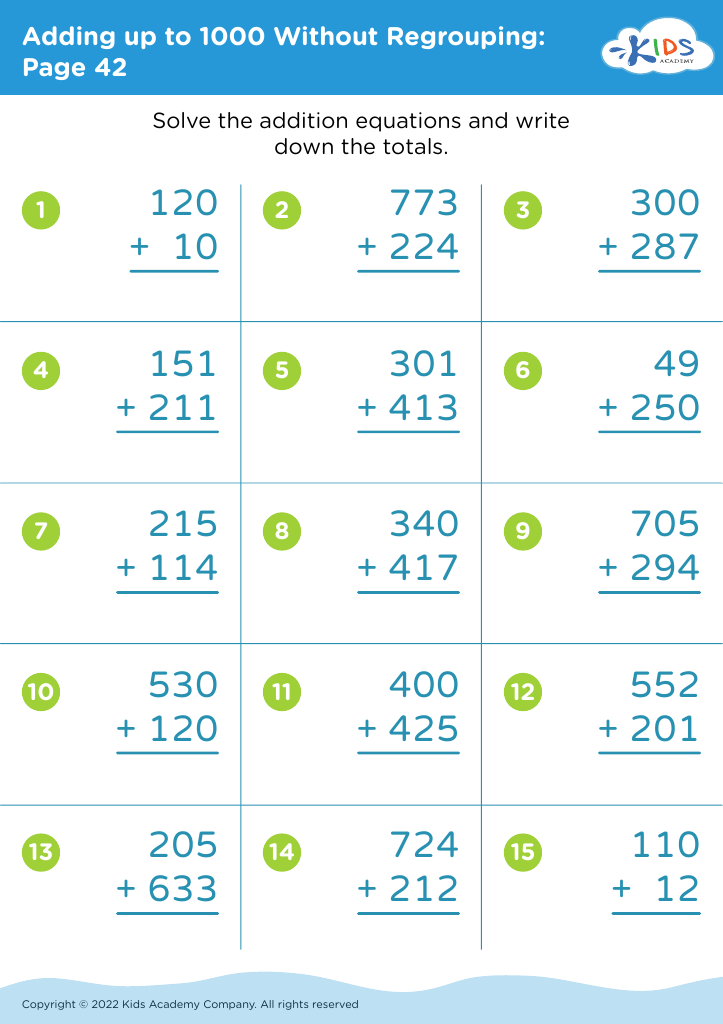
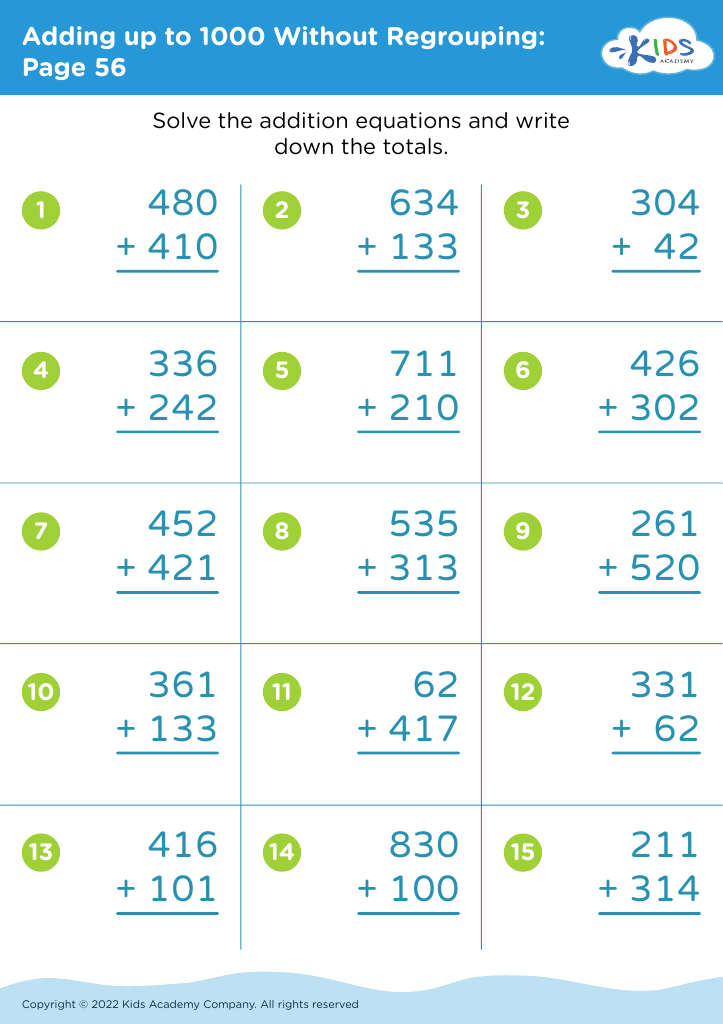
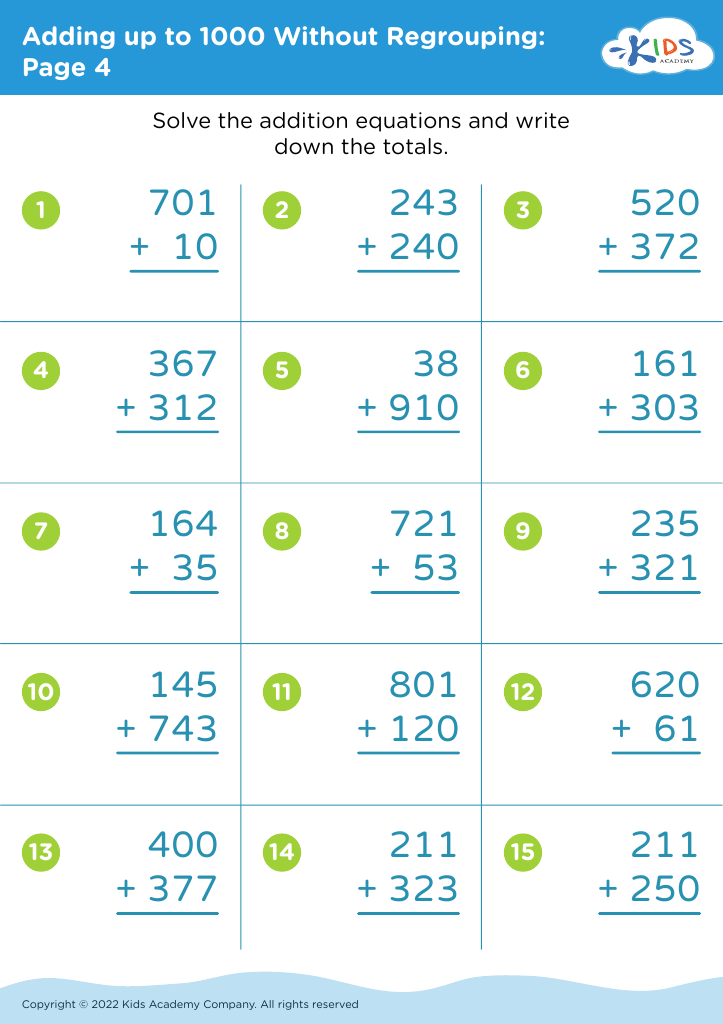


Reading comprehension and basic arithmetic skills, like adding up to 1000 without regrouping, are foundational components of a child's education. For 9-year-olds, mastering these skills is crucial for several reasons.
Firstly, strong reading comprehension enables children to understand and retain information more effectively. It fosters critical thinking, allowing them to analyze texts, make connections, and express their thoughts clearly. This skill is vital not just in language arts, but across all subjects, as it helps students grasp complex concepts.
Secondly, mastering addition without regrouping builds a solid foundation for more advanced math concepts. By practicing addition to 1000, students enhance their number sense and problem-solving abilities. This skill promotes confidence in math, making them more adept at tackling future mathematical challenges, including subtraction and multiplication.
Together, reading comprehension and arithmetic skills equip children with the tools they need for academic success and daily life. Parents and teachers should prioritize these skills, as they are critical not only for immediate educational goals but also for long-term cognitive development and lifelong learning. By nurturing these abilities, we can help children become well-rounded individuals capable of critical thought and effective communication.