Color Identification Adding up to 1000 Worksheets for 9-Year-Olds
6 filtered results
-
From - To
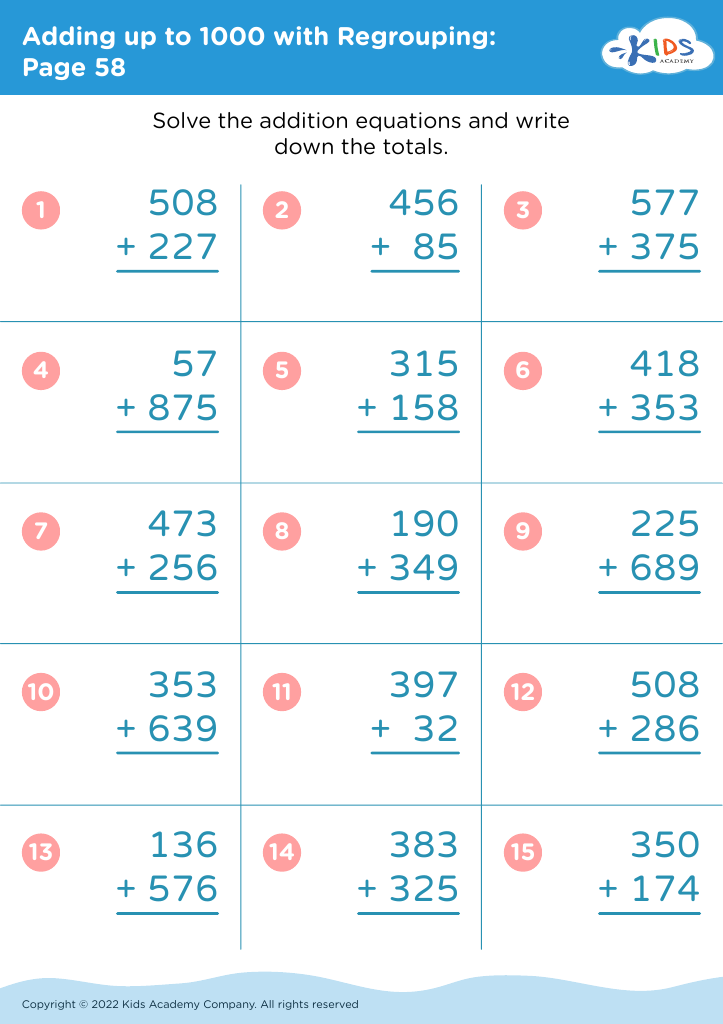
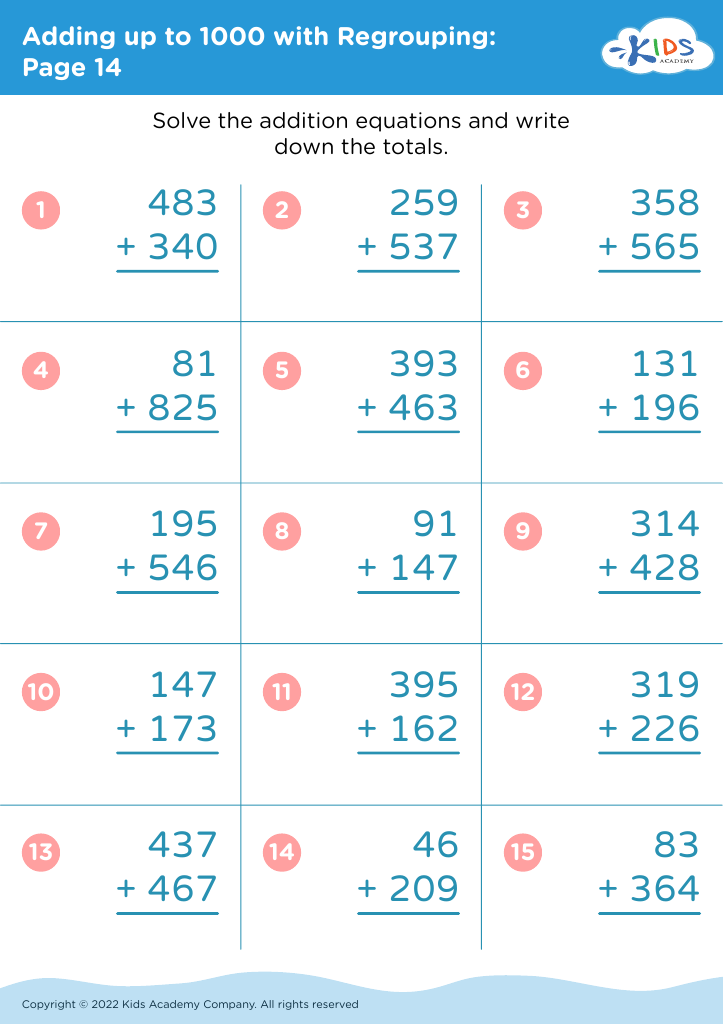
Enhance your child's learning experience with our engaging "Color Identification Adding Up to 1000 Worksheets" designed specifically for 9-year-olds! These worksheets combine fun and education, helping children master their math skills while learning to identify and use colors effectively. Each activity encourages critical thinking and creativity as children tackle addition problems up to 1000, all while discovering the properties of color. Perfect for both classroom use and at-home practice, these resources promote cognitive development in a playful way. Give your child the tools they need to succeed in math and develop a love for learning with our vibrant worksheets!
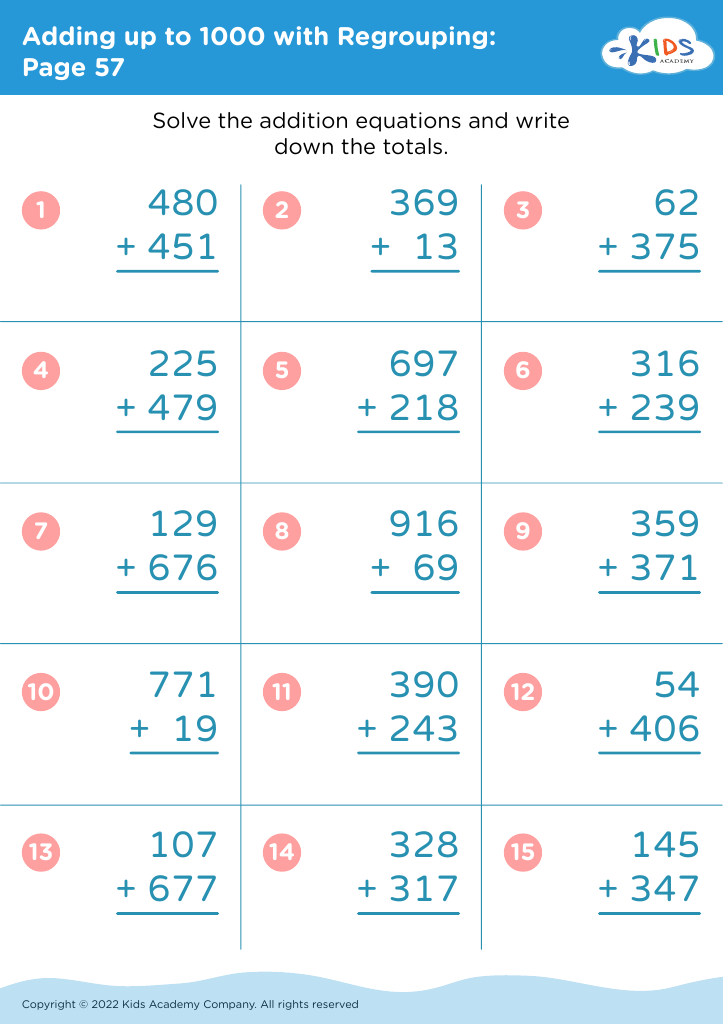
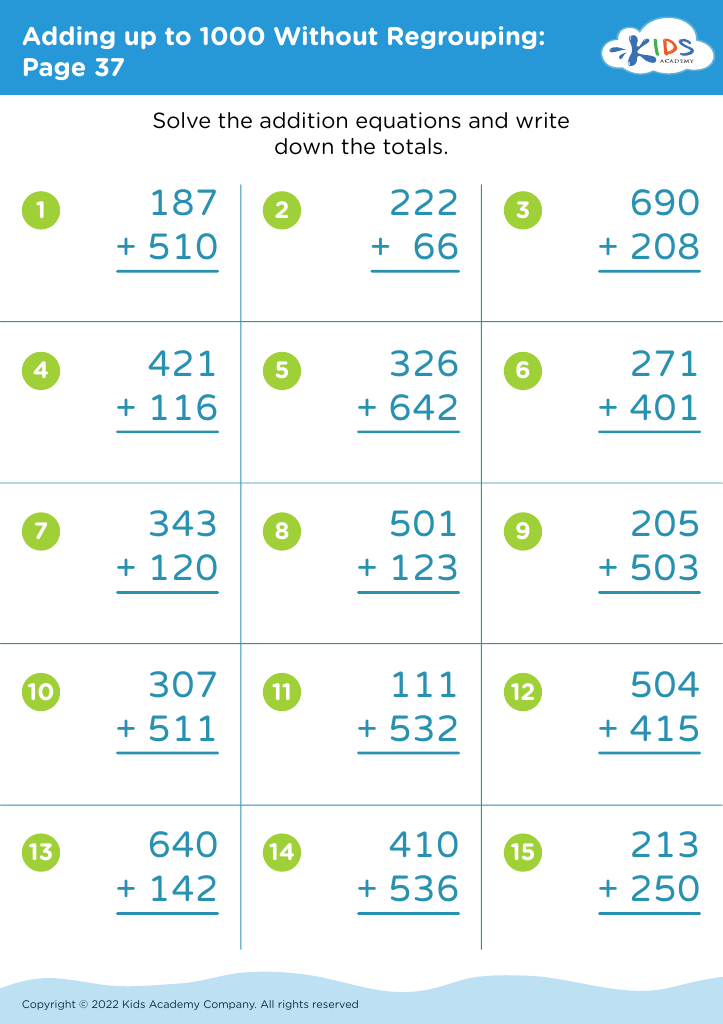
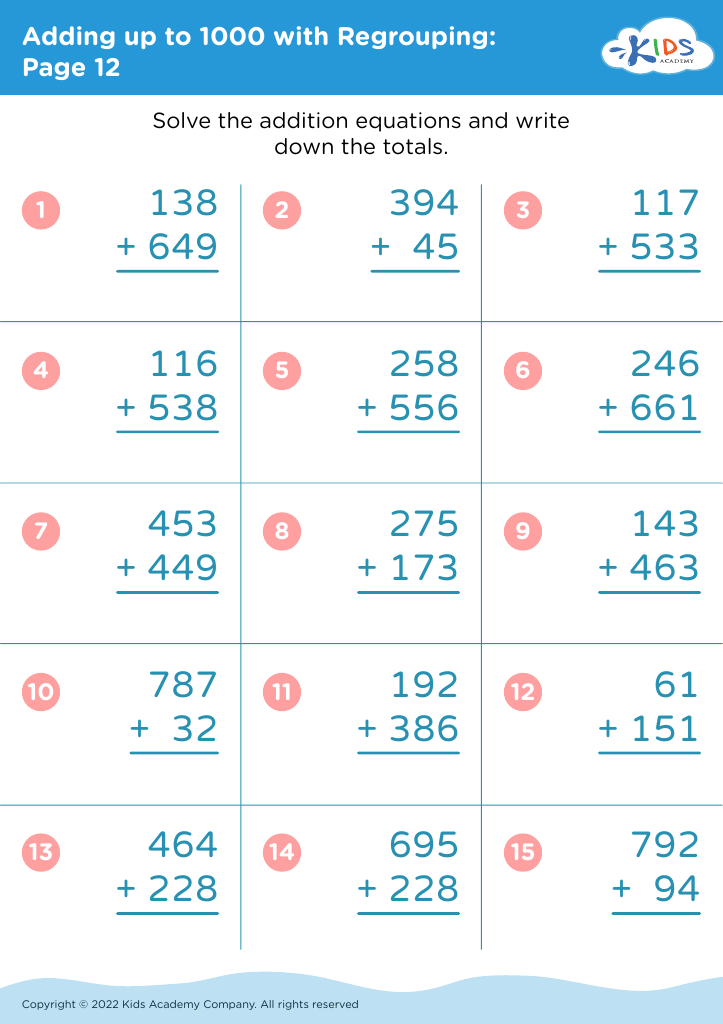
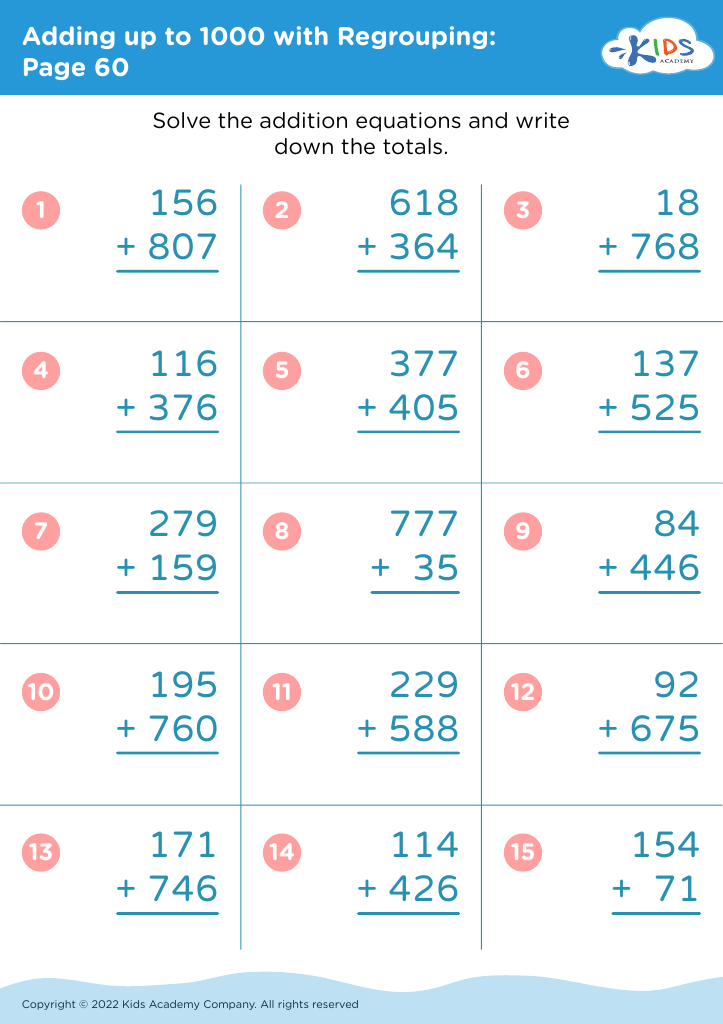



Color identification is a fundamental aspect of early childhood learning that goes beyond mere recognition; it enriches children’s cognitive and social development. For 9-year-olds, mastering color identification serves as a gateway to enhancing critical thinking and observation skills. As children learn to classify and differentiate colors, they sharpen their ability to group objects, recognize patterns, and and develop problem-solving strategies that set the groundwork for more complex concepts in math and science.
Moreover, color plays a pivotal role in emotional development. Children often associate specific colors with feelings or experiences, which helps them articulate emotions and relate to others. Understanding color can also inspire creativity and self-expression, fostering artistic skills and encouraging imaginative play.
From an academic perspective, relevant activities like art projects or sorting games can support learning in subjects like math, where children understand addition and subtraction through visualization with colored objects. By incorporating color identification into diverse learning contexts, parents and teachers provide holistic support to a child’s development, creating a multi-faceted educational experience that goes beyond the basics, encouraging exploration, interaction, and emotional intelligence. Fostering these skills equips children for future academic success, social engagement, and lifelong learning.








