Color recognition Adding up to 1000 Worksheets for 9-Year-Olds
3 filtered results
-
From - To
Enhance your 9-year-old's learning experience with our engaging Color Recognition Adding up to 1000 Worksheets! These expertly designed worksheets combine the fun of color exploration with essential math skills, helping young learners recognize, sort, and utilize colors while practicing addition. With a variety of exercises tailored for this age group, children will confidently tackle math problems up to 1000 while developing their visual and critical thinking abilities. Our colorful and interactive approach not only makes learning enjoyable but also reinforces key math concepts. Access these printable worksheets today and watch your child gain confidence in both math and color recognition!
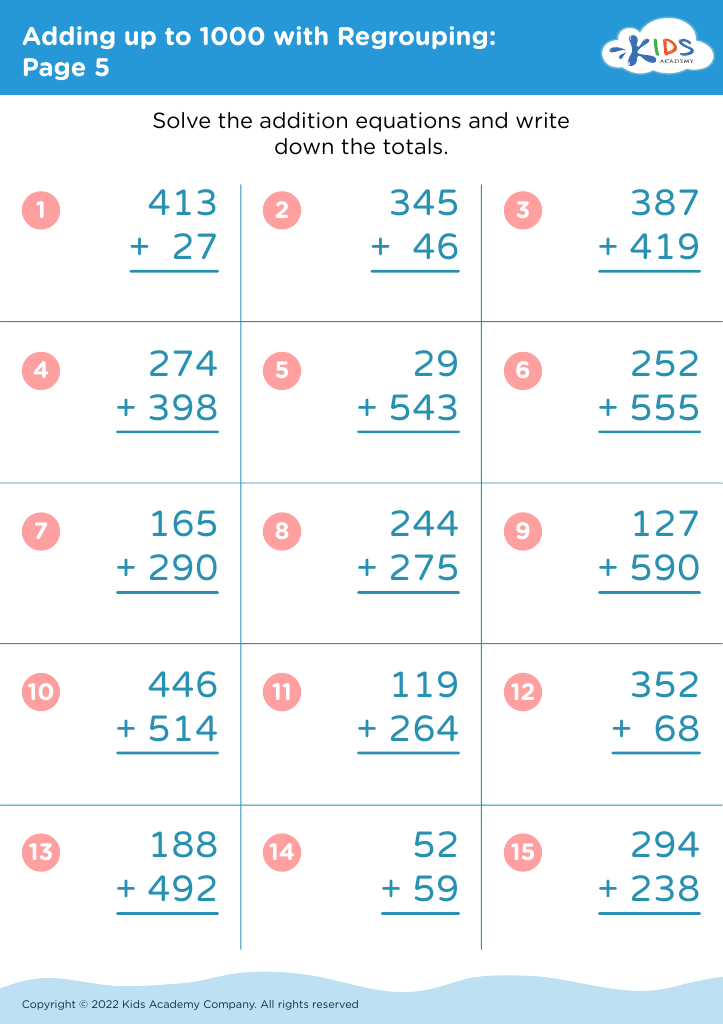
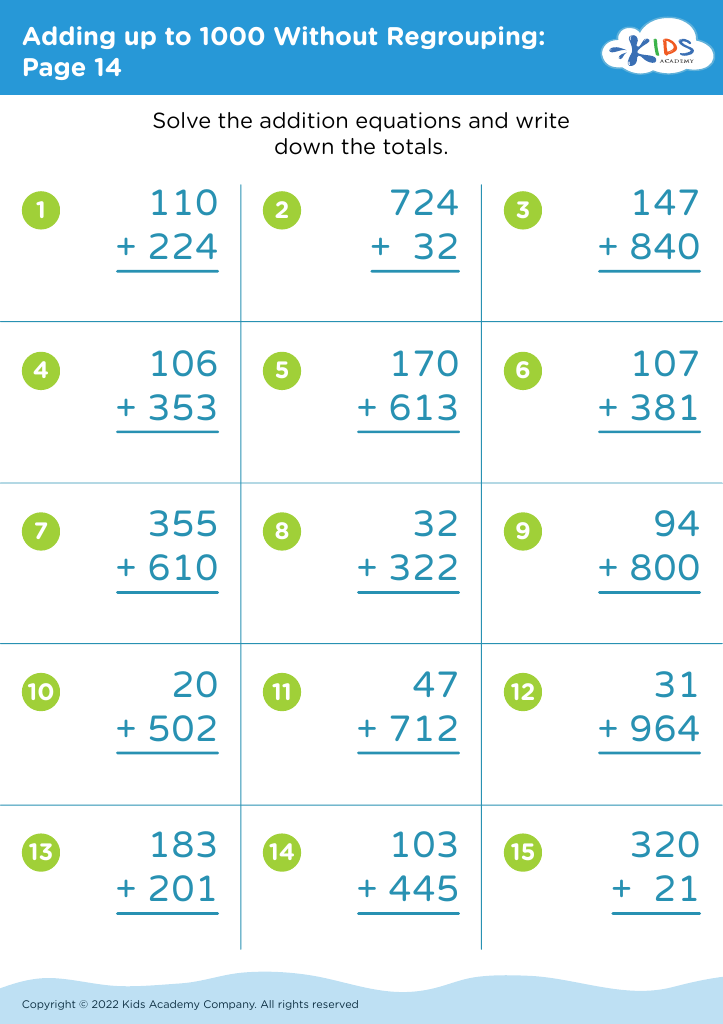
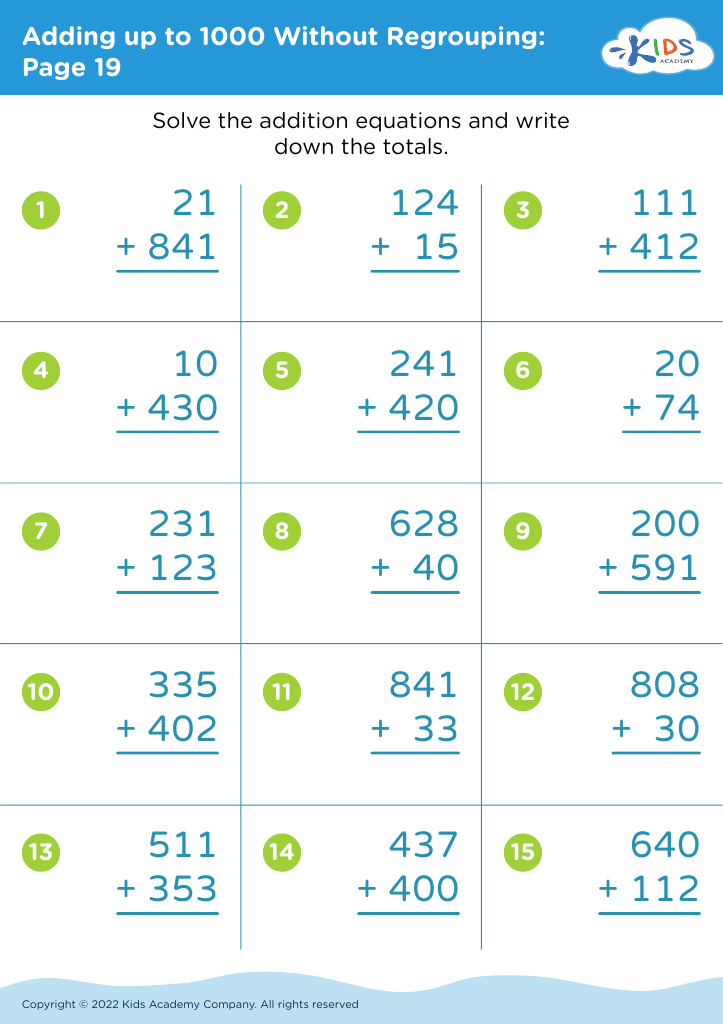



Color recognition plays a crucial role in the cognitive and emotional development of children, making it vital for parents and teachers to emphasize its importance, especially for 9-year-olds who are developing key skills in learning and creativity. First, recognizing colors contributes to language development, as children learn the names and attributes of various colors, thereby enhancing their vocabulary and communication skills.
Additionally, color recognition aids in visual learning, allowing children to better understand and interpret the world around them. It is foundational in subjects like art, science, and math, where color differentiation helps in categorizing objects and understanding concepts. Furthermore, studies show that engaging with colors can improve memory retention, since colored visuals are easier to recall.
On a social-emotional level, colors often evoke feelings; thus, understanding their meanings can aid children in expressing emotions and engaging in social interactions.
In the classroom, incorporating color-based activities can make learning fun and interactive, fostering a love for learning. Therefore, both parents and teachers should prioritize color recognition in education, as it enriches children's experiences, enhances their abilities, and lays the groundwork for lifelong skills.








