Introduce your 9-year-old to the exciting world of fractions with our "Comparing Fractions Adding up to 1000 Worksheets." These specially designed exercises enhance essential math skills by engaging kids in comparing and identifying equivalent fractions as they add up to 1000. Perfect for young learners, our worksheets blend fun with educational value, ensuring children grasp fraction concepts in an enjoyable manner. Each worksheet provides interactive practice, helping students build a strong foundation in math. Ideal for classroom use or at-home learning, these activities are a valuable resource for teachers and parents committed to their child's mathematical success.
Check out this FREE Trial Lesson on Adding up to 1000 for age 9!

Z

Favorites
With answer key
Interactive
  • 9
  • Comparing Fractions
  • Adding up to 1000
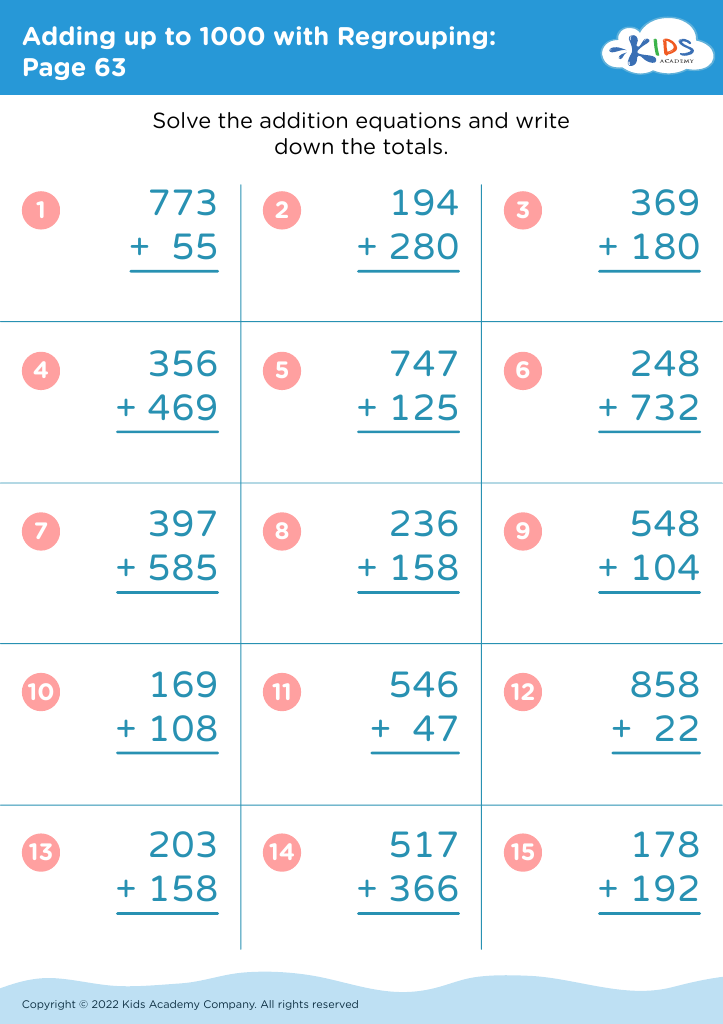
Adding up to 1000 with Regrouping: Page 63
Worksheet
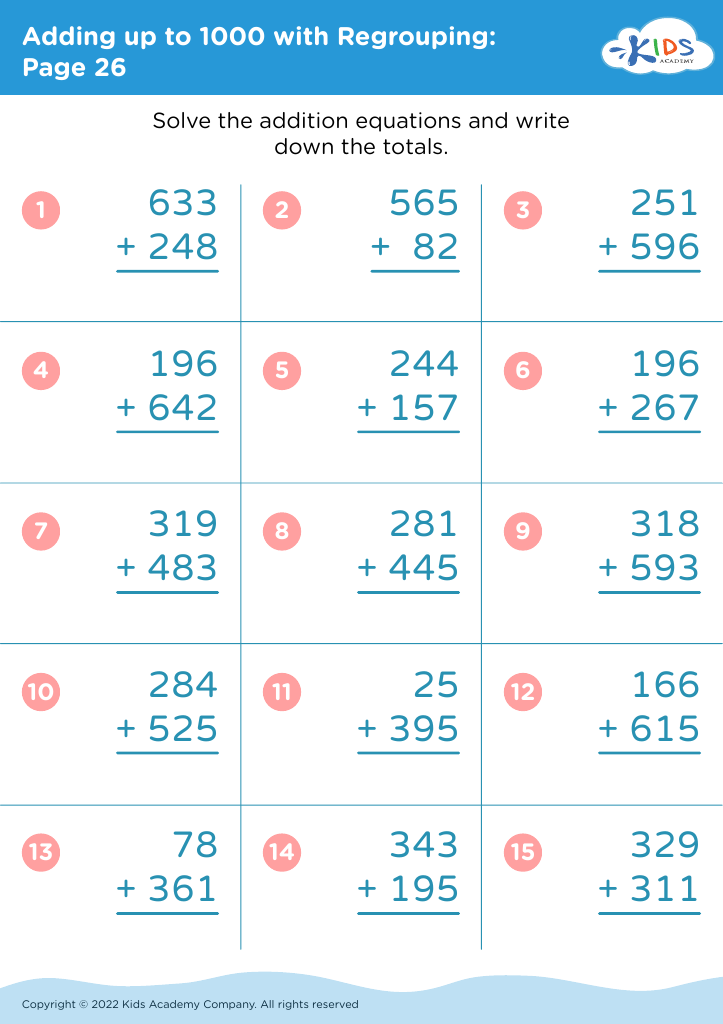
Adding up to 1000 with Regrouping: Page 26
Worksheet
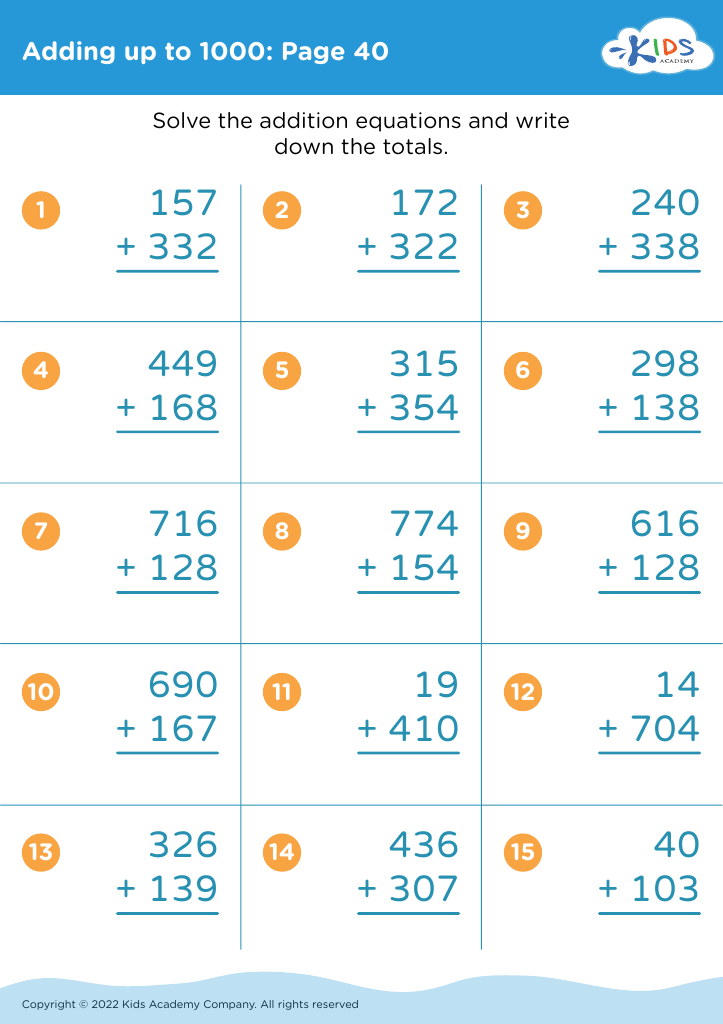
Adding up to 1000: Page 40

Adding up to 1000: Page 40

Adding up to 1000: Page 40
Worksheet
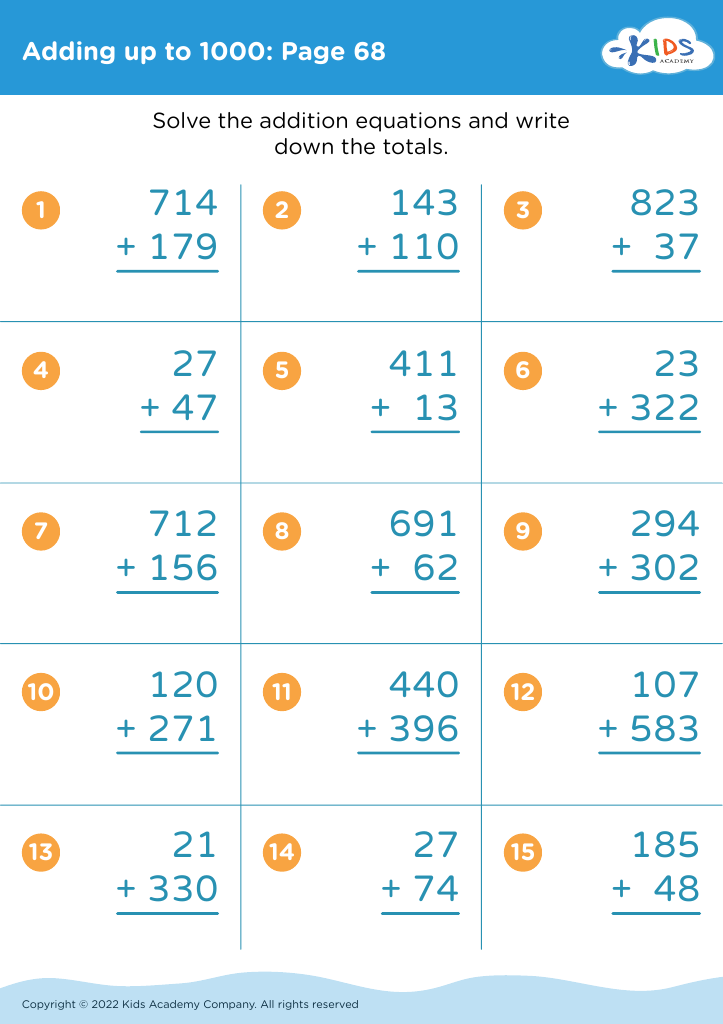
Adding up to 1000: Page 68

Adding up to 1000: Page 68

Adding up to 1000: Page 68
Worksheet
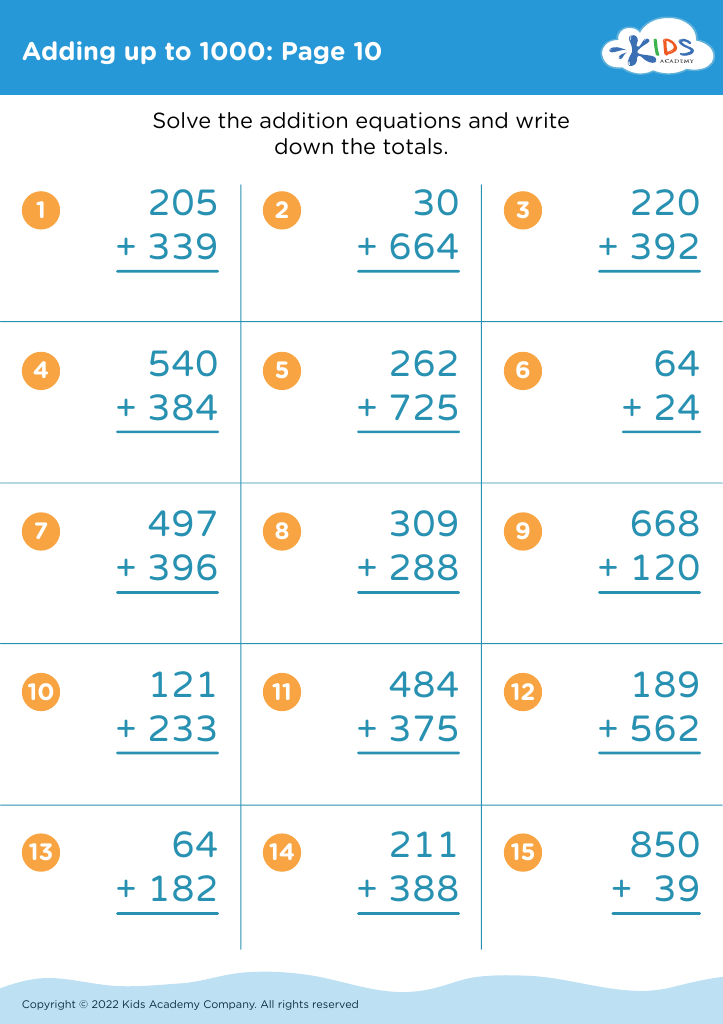
Adding up to 1000: Page 10

Adding up to 1000: Page 10

Adding up to 1000: Page 10
Worksheet
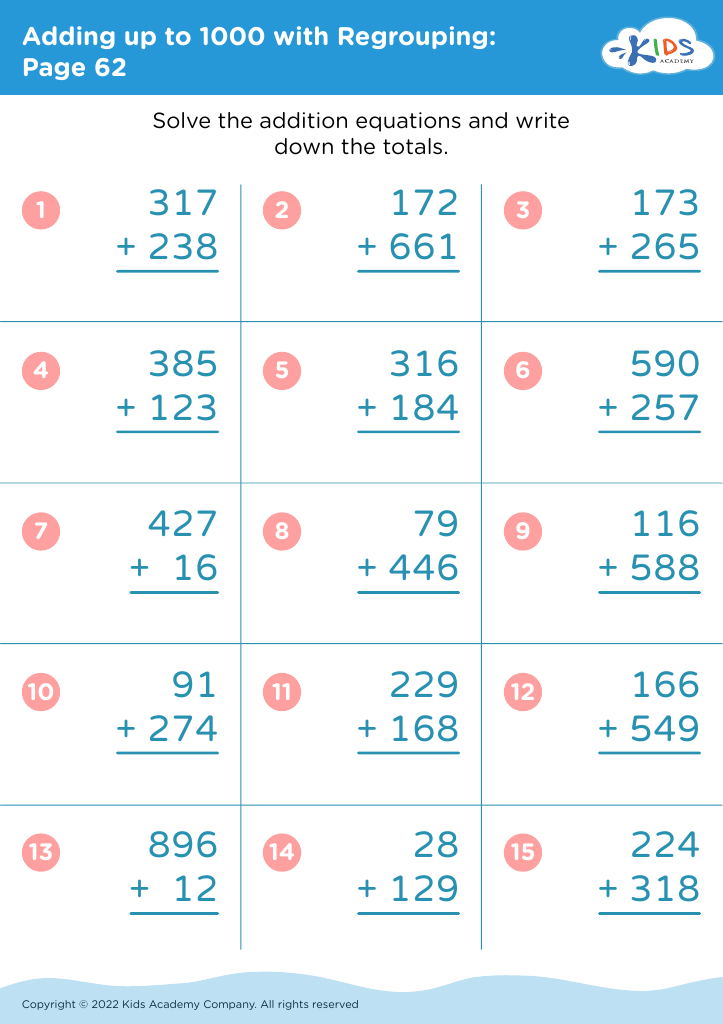
Adding up to 1000 with Regrouping: Page 62
Worksheet
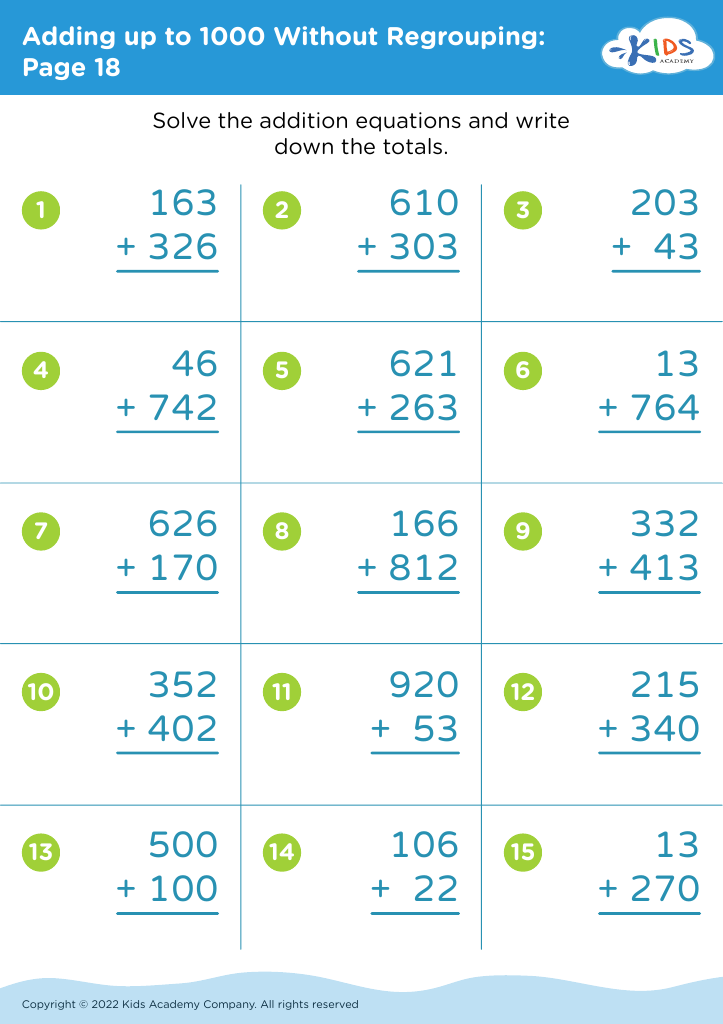
Adding up to 1000 Without Regrouping: Page 18
Worksheet
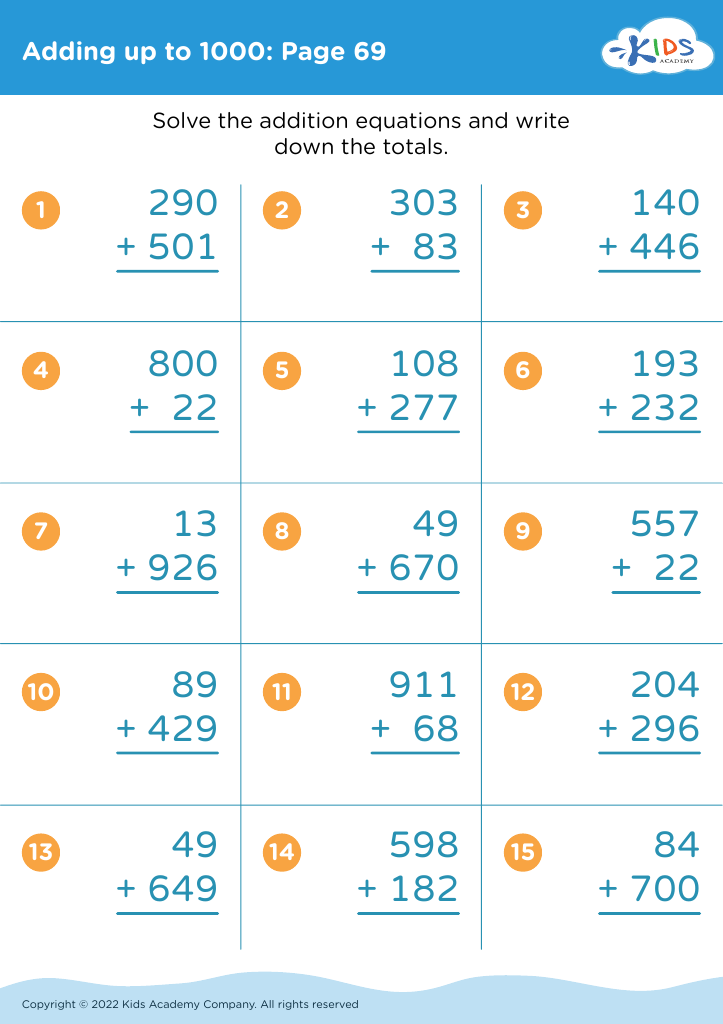
Adding up to 1000: Page 69

Adding up to 1000: Page 69

Adding up to 1000: Page 69
Worksheet
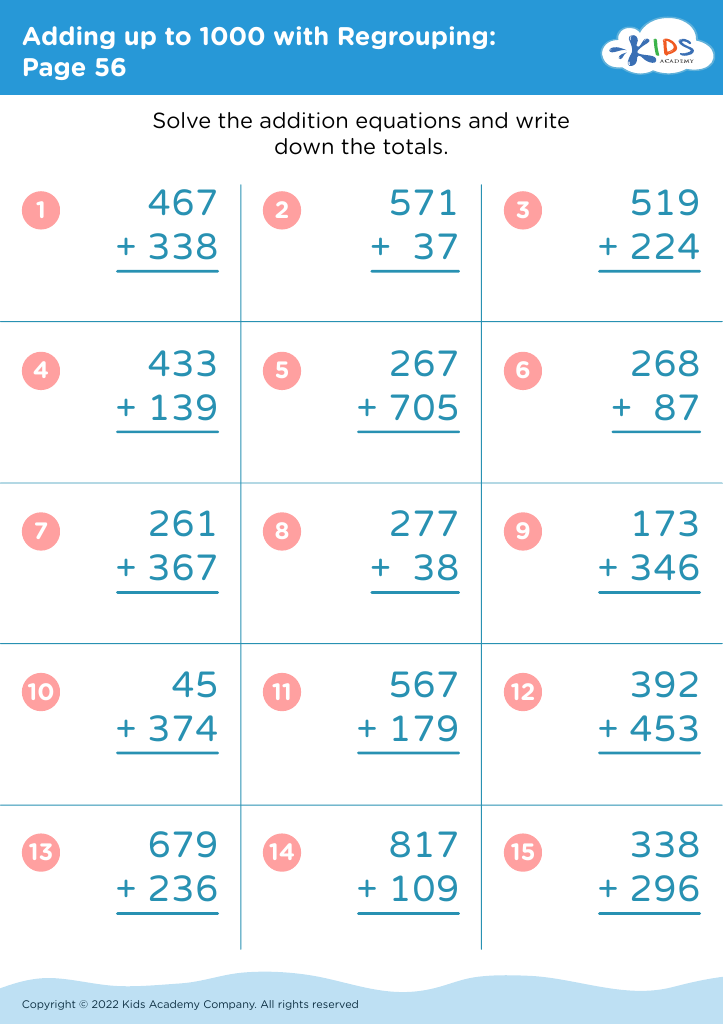
Adding up to 1000 with Regrouping: Page 56
Worksheet
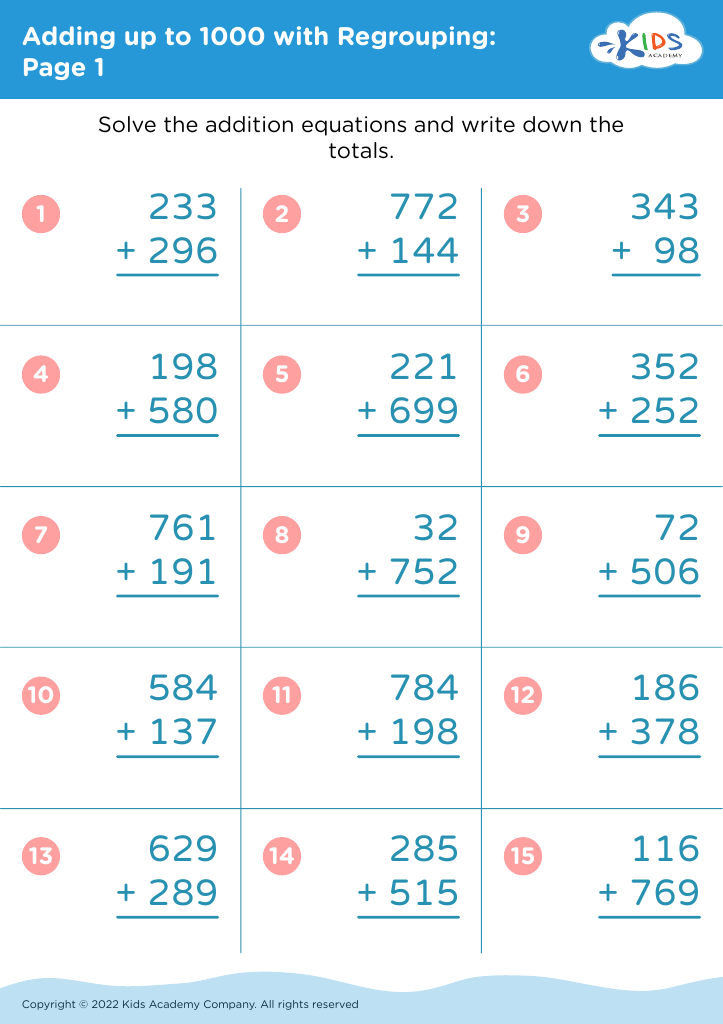
Adding up to 1000 with Regrouping: Page 1
Worksheet
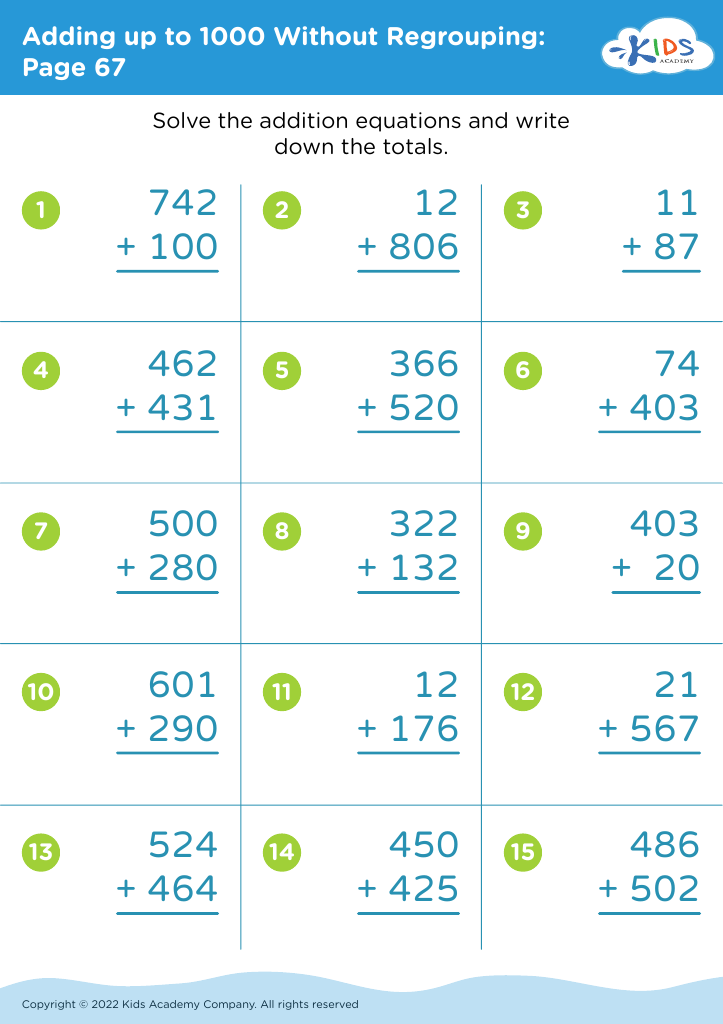
Adding up to 1000 Without Regrouping: Page 67
Worksheet
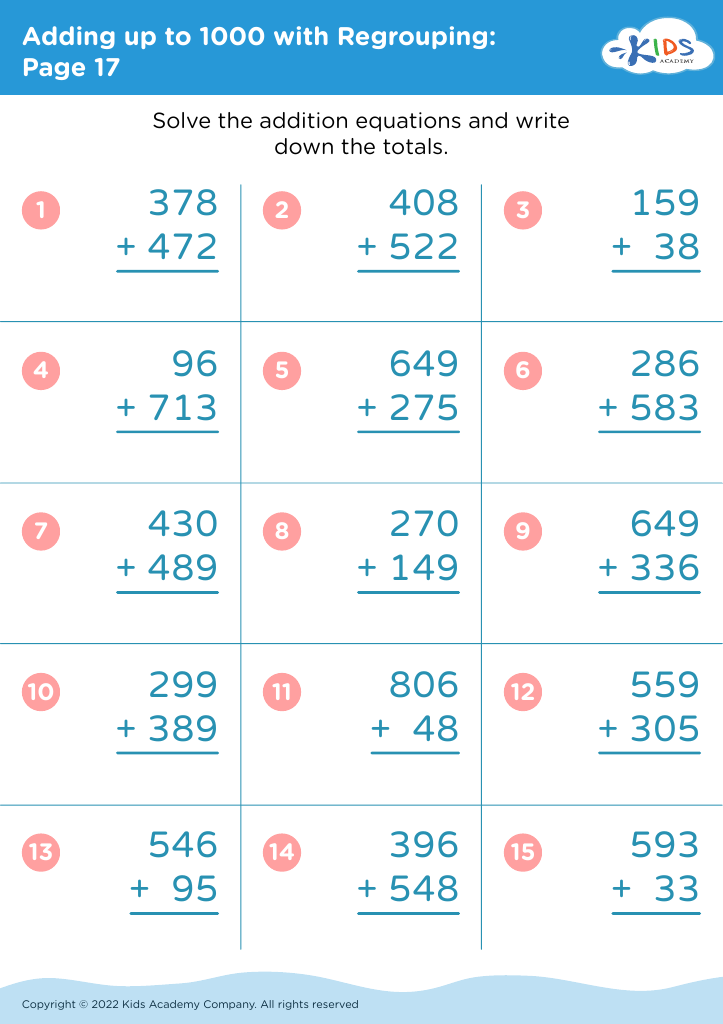
Adding up to 1000 with Regrouping: Page 17
Worksheet
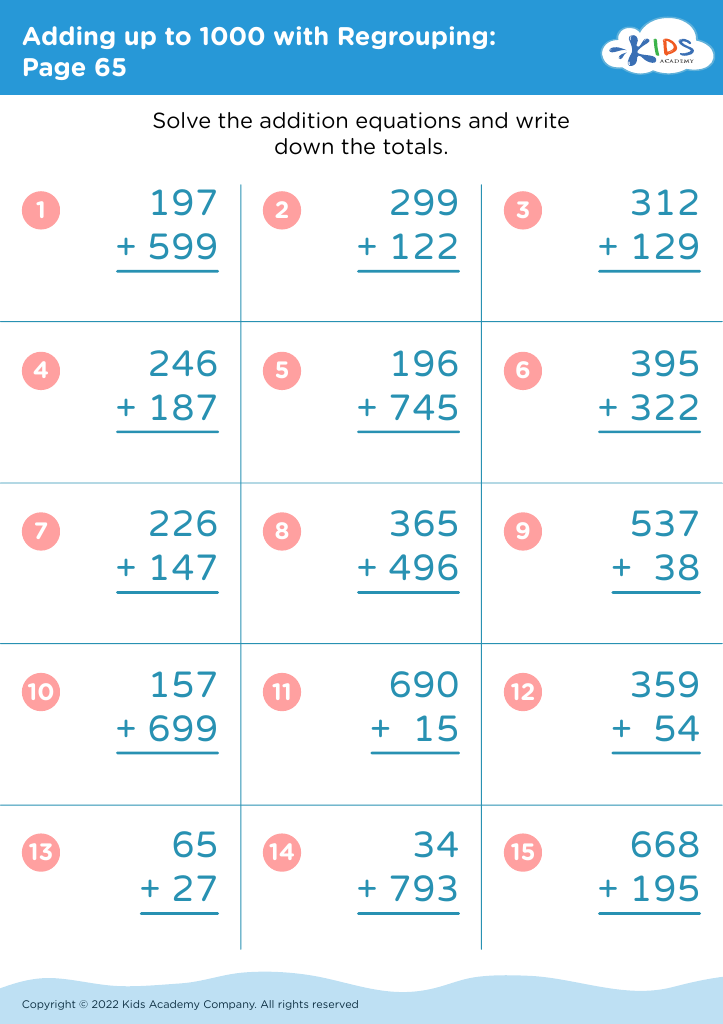
Adding up to 1000 with Regrouping: Page 65
Worksheet
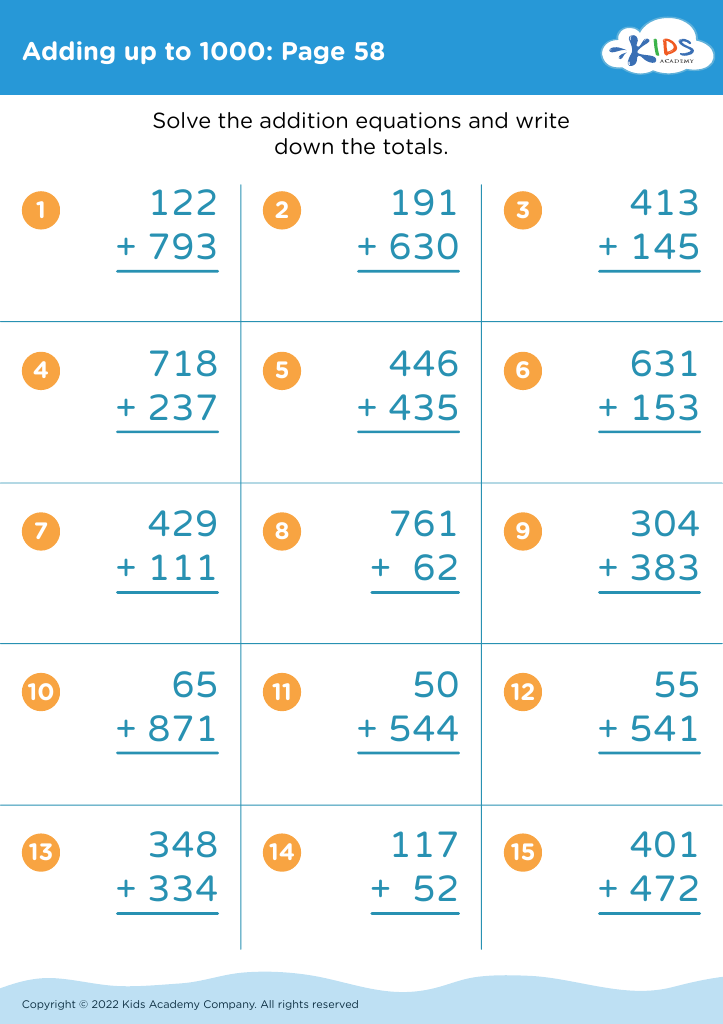
Adding up to 1000: Page 58

Adding up to 1000: Page 58

Adding up to 1000: Page 58
Worksheet
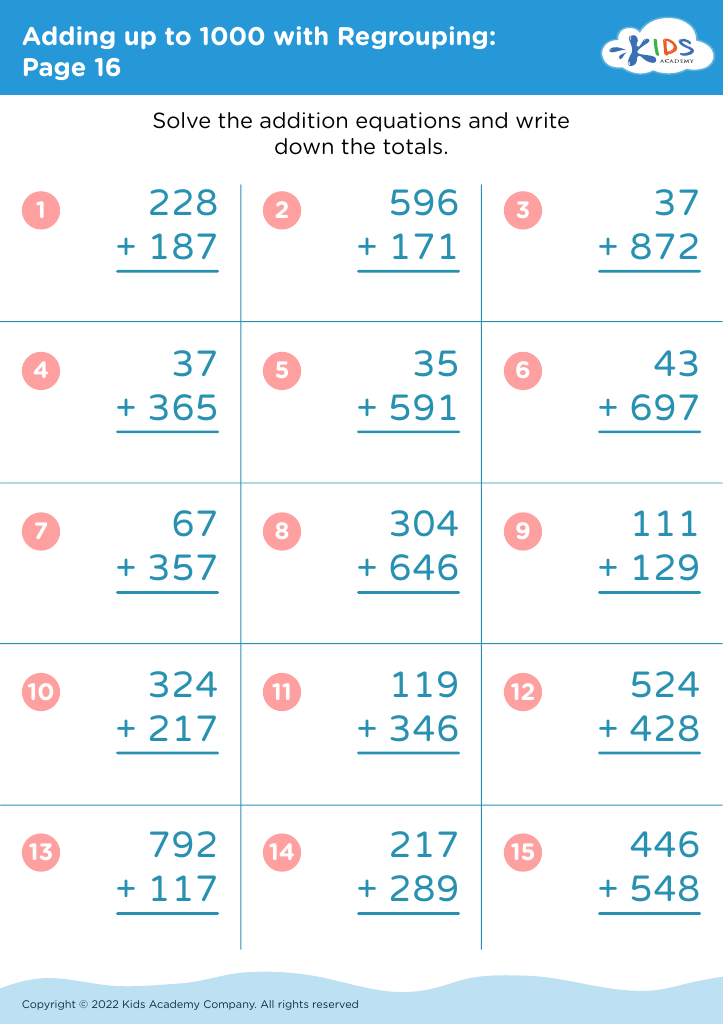
Adding up to 1000 with Regrouping: Page 16
Worksheet
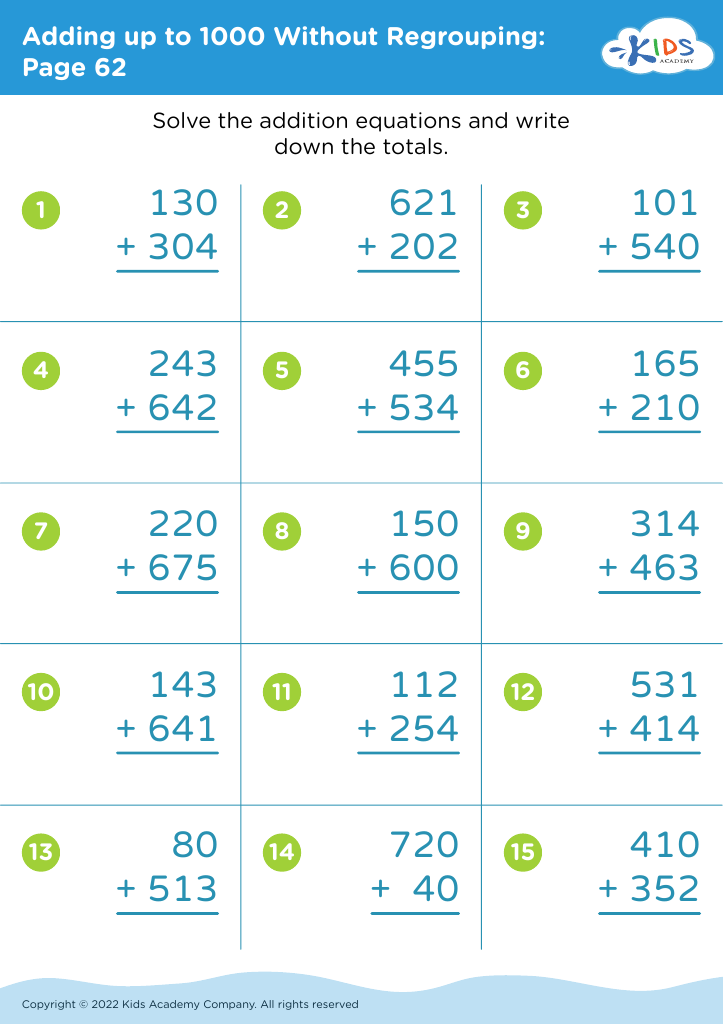
Adding up to 1000 Without Regrouping: Page 62
Worksheet


Understanding how to compare fractions and work with large sums, such as adding numbers up to 1000, is crucial for 9-year-olds in their mathematical development. For teachers and parents, fostering these skills can have profound benefits on a child's overall math proficiency and cognitive growth.

At this stage, comparing fractions introduces the concept of ratios, equivalency, and the idea that different fractions can represent the same value (e.g., 1/2 is the same as 2/4). This foundational understanding not only enhances their fraction sense but also plays a critical role in future math topics such as algebra, probability, and even real-life scenarios like cooking or dividing things evenly.

Simultaneously, guiding 9-year-olds in adding numbers up to 1000 sharpens their mental arithmetic and number sense. This practice reinforces place value comprehension and the ability to handle larger sums with confidence, which is essential as they progress to more advanced calculations.

These exercises also promote persistence and problem-solving skills. When children master phrases like, "adding fractions or large numbers," they gain the confidence to tackle complex problems more efficiently. Overall, prioritizing these topics ensures that children develop strong, versatile math skills that will support their academic success and daily reasoning for years to come.