Math problem-solving Adding up to 1000 Worksheets for 9-Year-Olds
4 filtered results
-
From - To
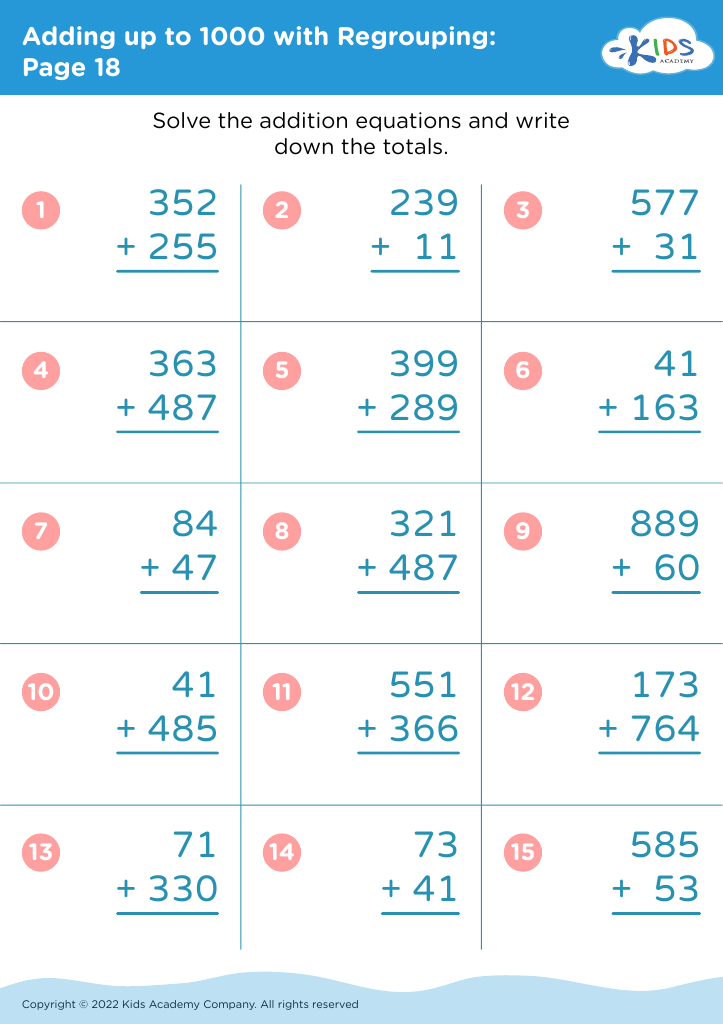
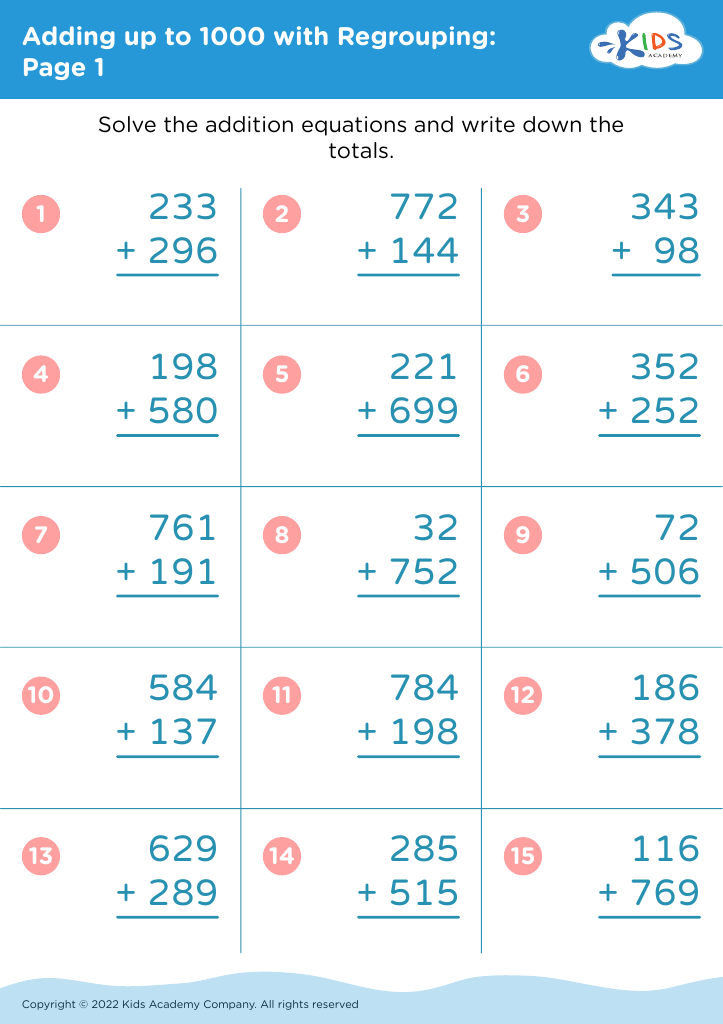
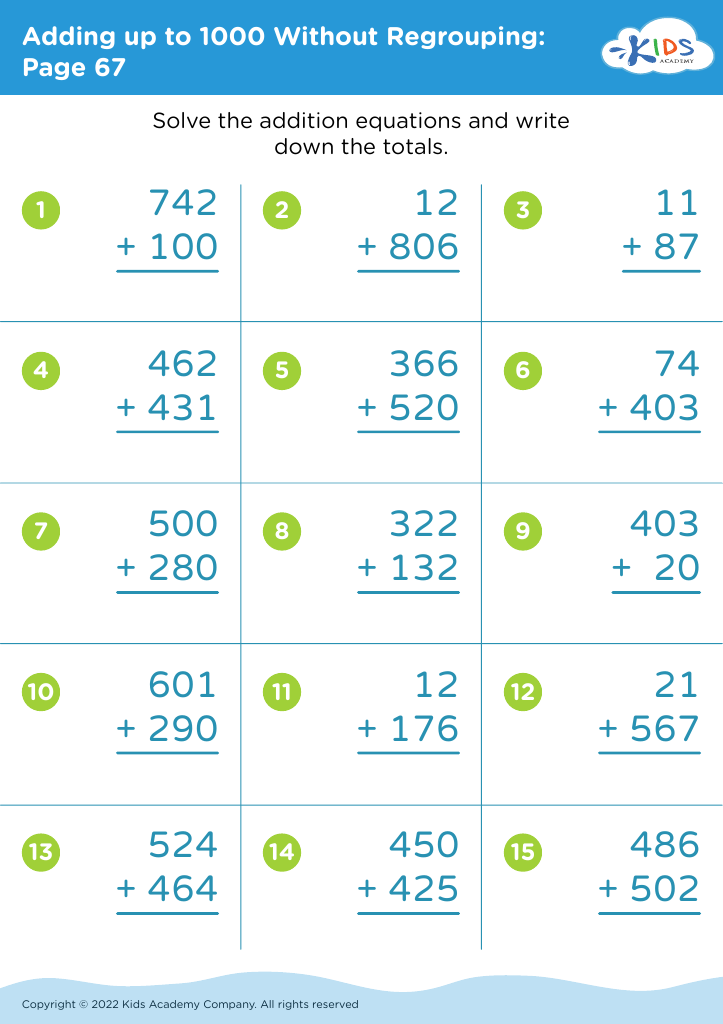
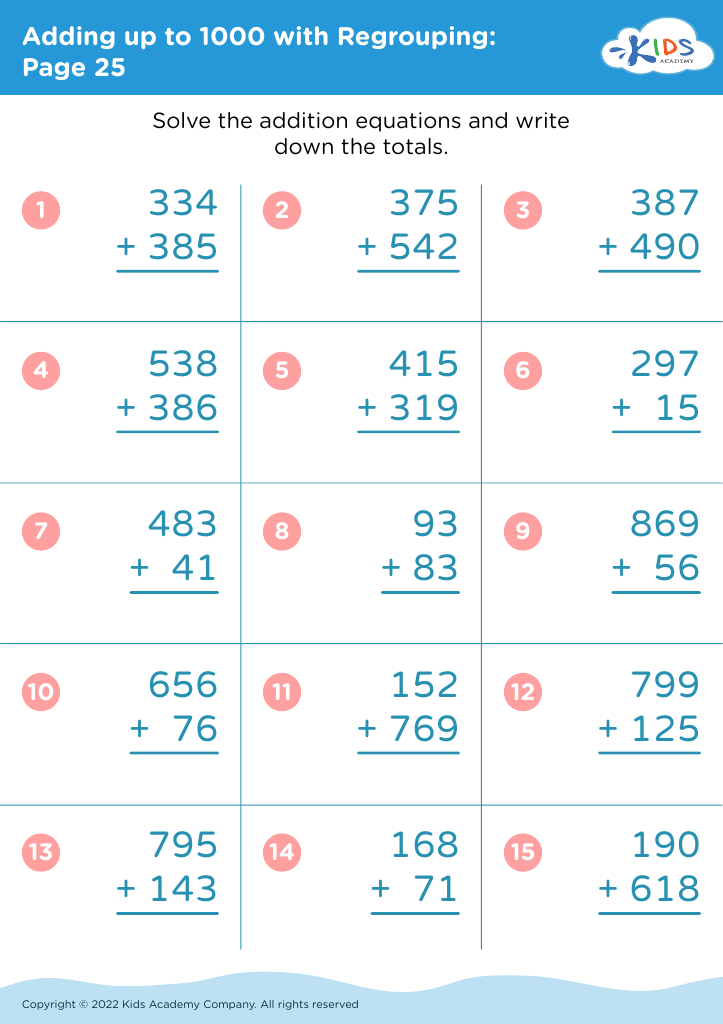
Boost your 9-year-old child's mathematical abilities with our engaging Math Problem-Solving Adding up to 1000 Worksheets! These printable resources are skillfully designed to enhance addition skills, logical thinking, and problem-solving strategies. Perfect for young learners, each worksheet presents fun and challenging exercises to reinforce adding up to 1000 using various methods. Whether your child is in school or homeschooling, these worksheets are an excellent way to build confidence and proficiency in math. Foster a love for learning and watch as your child solves multi-digit problems with ease and enjoyment. Download and start practicing today!



Why Parents and Teachers Should Care About Math Problem-Solving for 9-Year-Olds
Early exposure to math problem-solving, such as learning to add up to 1000, is crucial for 9-year-olds because it builds a solid foundation in mathematics, essential for future academic success. Understanding basic arithmetic enables children to tackle more complex math concepts in later grades, making their transition to higher levels much smoother. For parents and teachers, nurturing these skills early helps identify potential learning gaps and provides opportunities for individually tailored interventions.
Mastering addition enhances a child's logical thinking and problem-solving abilities. It encourages them to approach challenges methodically, fostering a systematic thought process that is beneficial beyond mathematics. Cognitive skills such as memory, attention to detail, and the ability to follow multi-step processes are rigorously exercised when children engage in adding numbers up to 1000.
Additionally, early math competence instills confidence in young learners. A child who can solve addition problems effectively is more likely to view math positively, potentially cultivating a lifelong interest in STEM (Science, Technology, Engineering, and Mathematics) fields.
In conclusion, prioritizing math problem-solving for 9-year-olds sets the stage for their academic future, hones essential cognitive skills, and builds the confidence needed for lifelong learning and curiosity.








