Number identification Adding up to 1000 Worksheets for 9-Year-Olds
3 filtered results
-
From - To
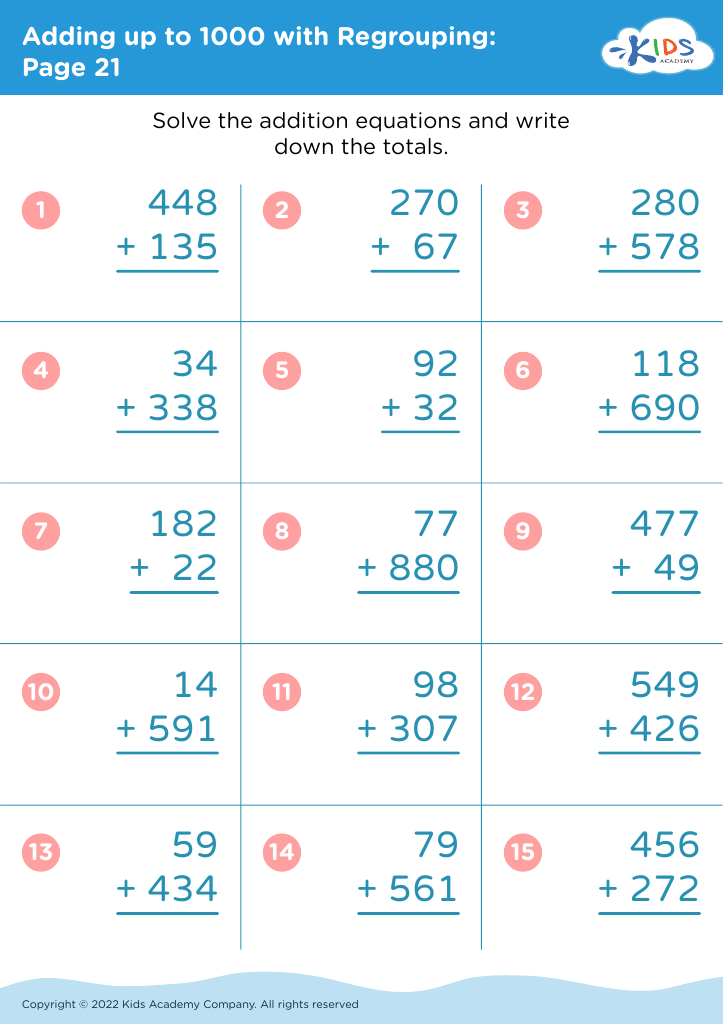
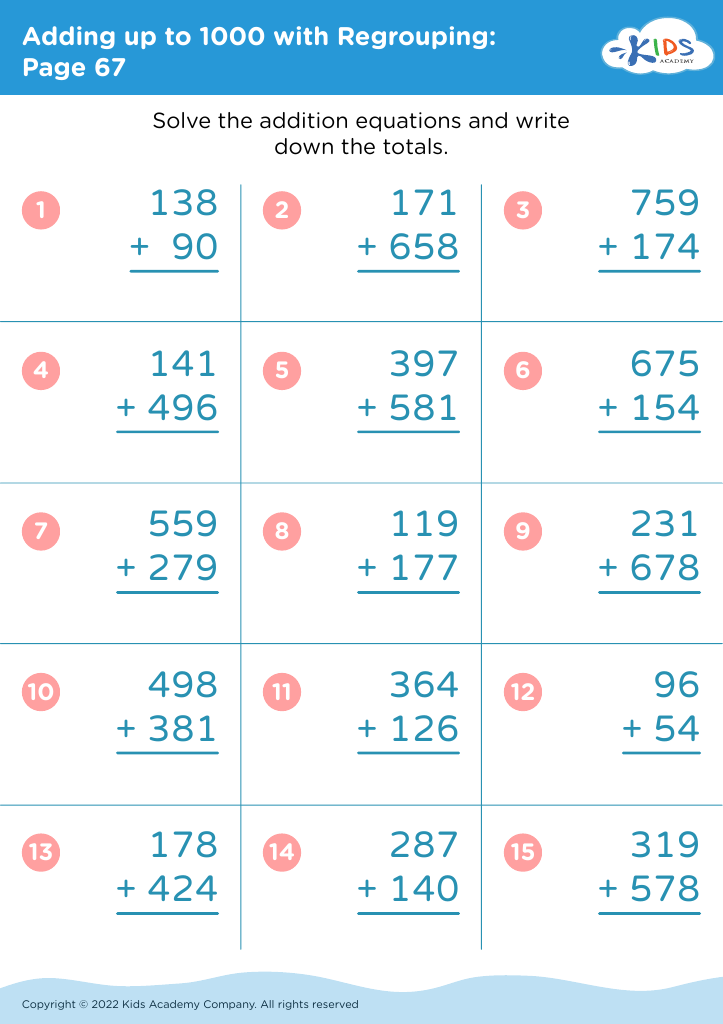
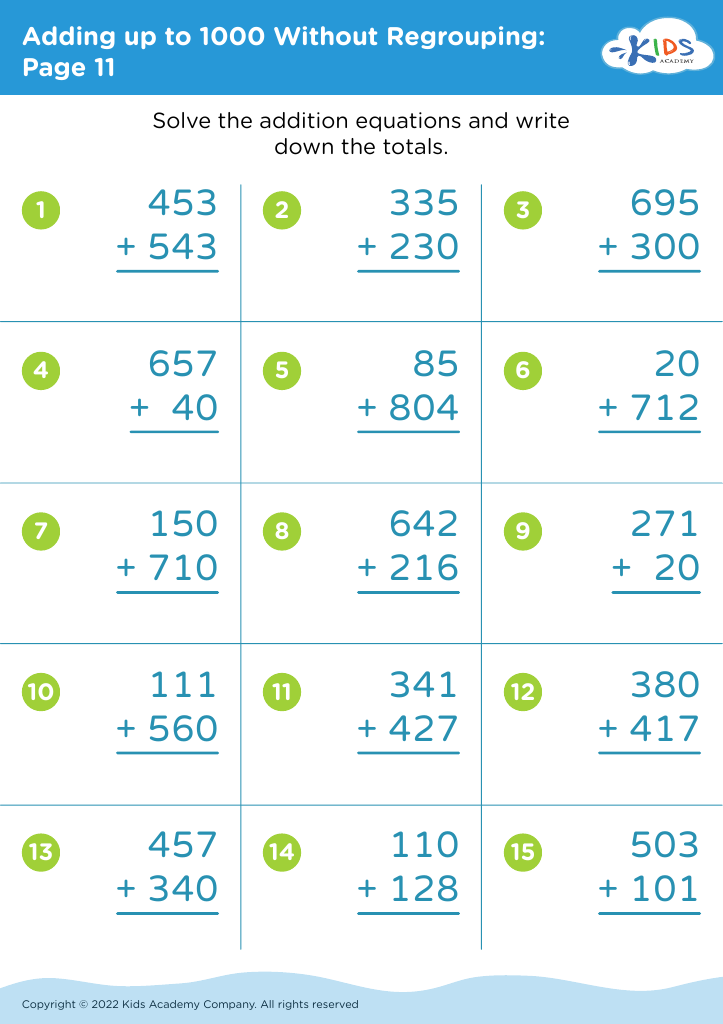
Unlock comprehensive number identification skills with our dynamic "Adding up to 1000 Worksheets for 9-Year-Olds." These expertly crafted worksheets offer fun and interactive exercises designed to help children master the foundational math skill of identifying and adding large numbers. Tailored for young learners, the activities promote confidence in number recognition and arithmetic. Each worksheet is bursting with challenging yet engaging problems to encourage consistent practice and enhance mathematical fluency. Perfect for classroom use or at-home learning, these worksheets provide essential support in developing crucial math skills for young minds. Start your child's journey towards math mastery today!



Number identification skills and the ability to add numbers up to 1,000 are invaluable for 9-year-olds, forming foundational math competencies that facilitate academic and everyday life success. For starters, these skills advance cognitive development by enhancing problem-solving abilities and logical thinking. A child adept at number identification and addition within this range can approach more complex math concepts with confidence later, such as multiplication, division, and understanding large number operations.
Practically, understanding numbers up to 1,000 makes a child more adept at handling real-world scenarios like counting money, reading time, or measuring ingredients. Such numerical proficiency lays the groundwork for more advanced tasks, nurturing independence and self-confidence, thus encouraging academic enthusiasm and curiosity.
For parents and teachers, honing these skills early can spotlight strengths and diagnose areas needing intervention. It helps customize support and guidance, fostering a healthy learning environment tailored to each child’s needs. Overall, focusing on number identification and addition skills ensures that children acquire essential life skills, peak academic preparedness, and a strong mathematical foundation, thus influencing educational success and long-term opportunities positively.








