Number Recognition Adding up to 1000 Worksheets for 9-Year-Olds - Page 2
31 filtered results
-
From - To
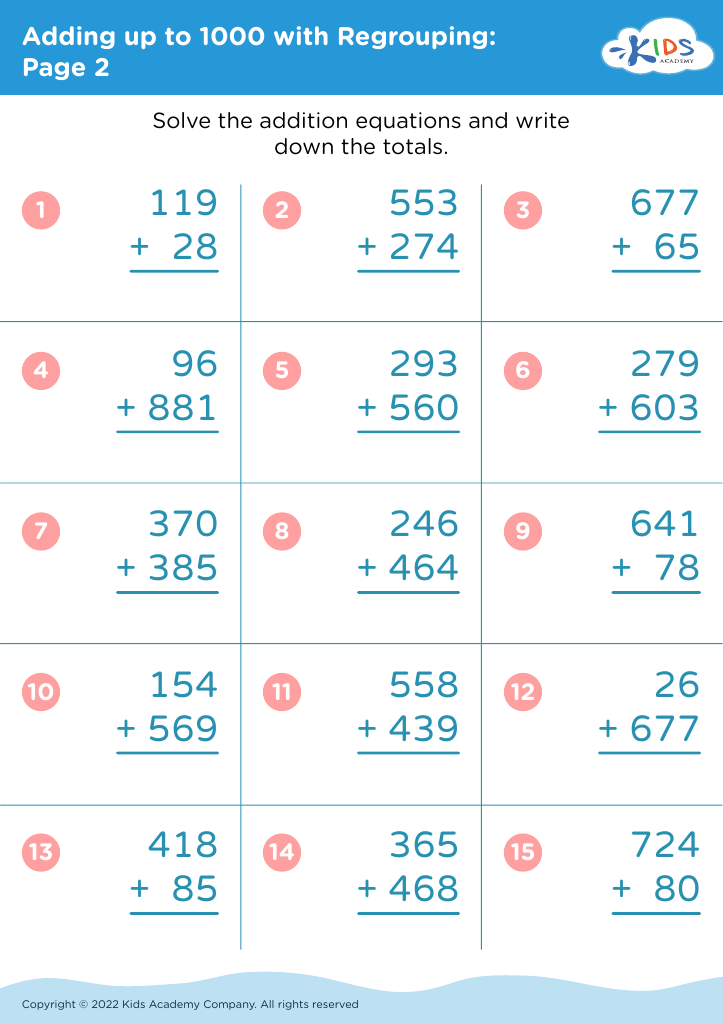
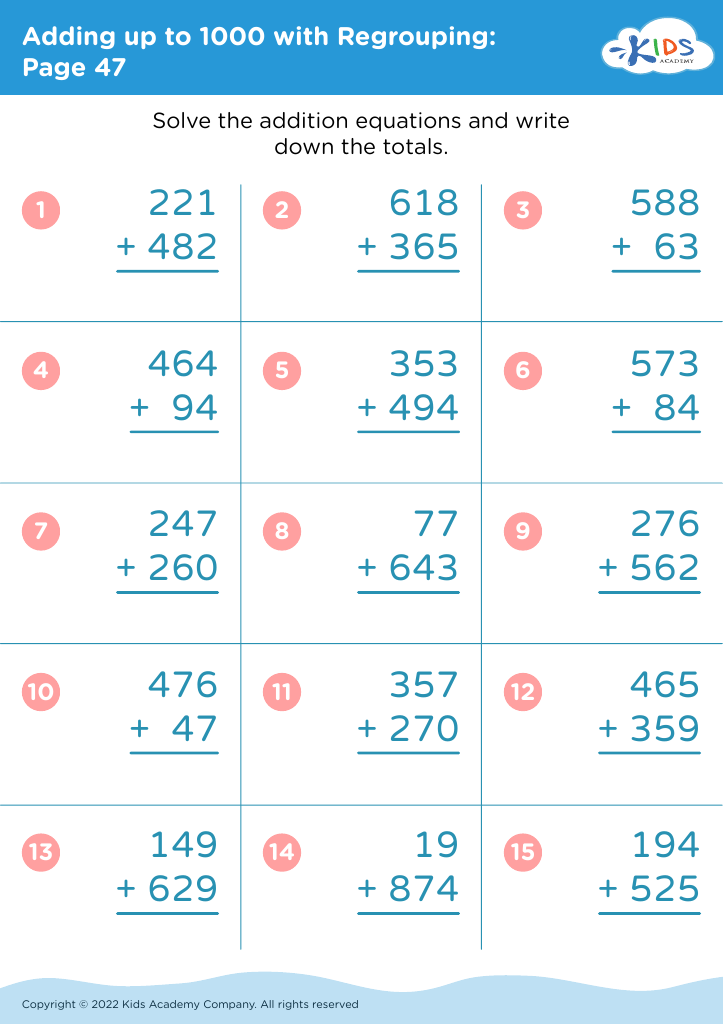
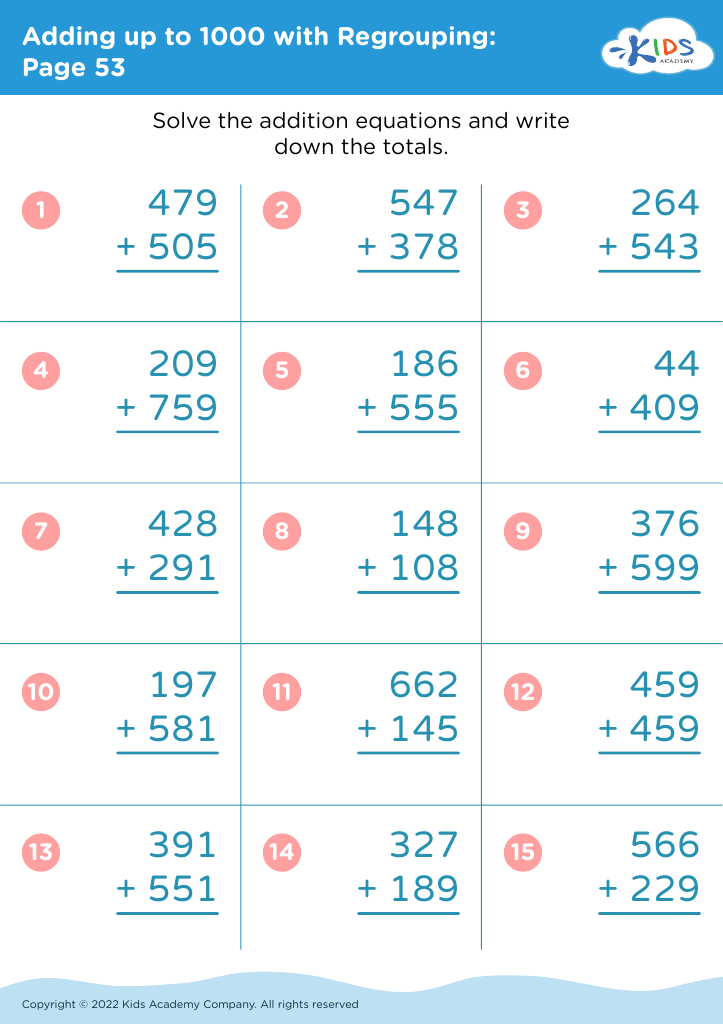
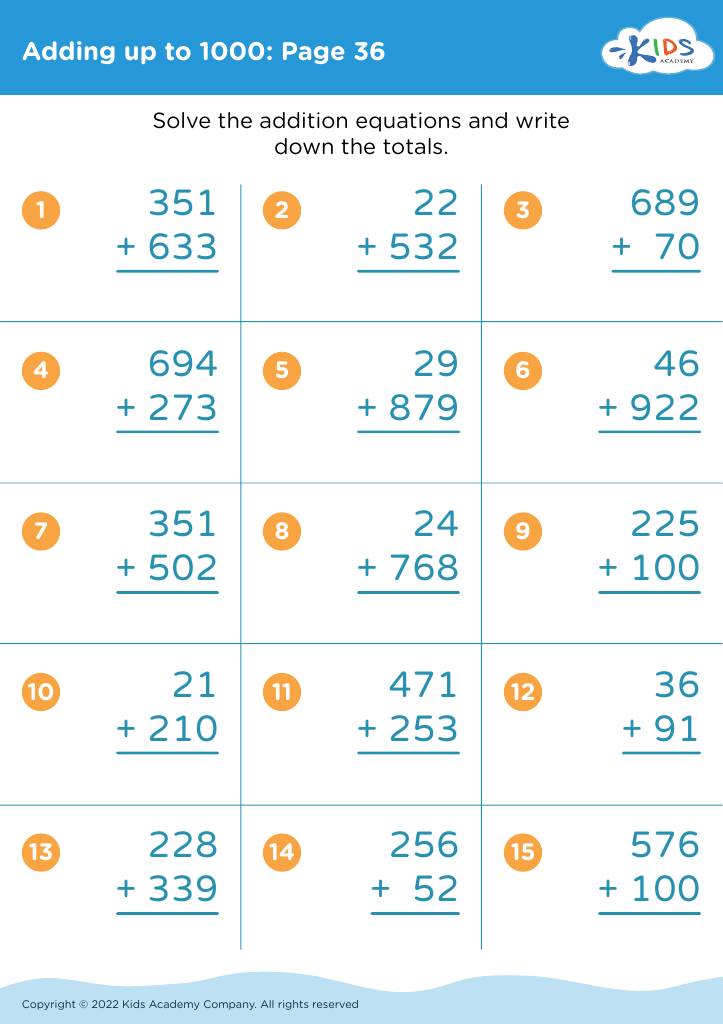
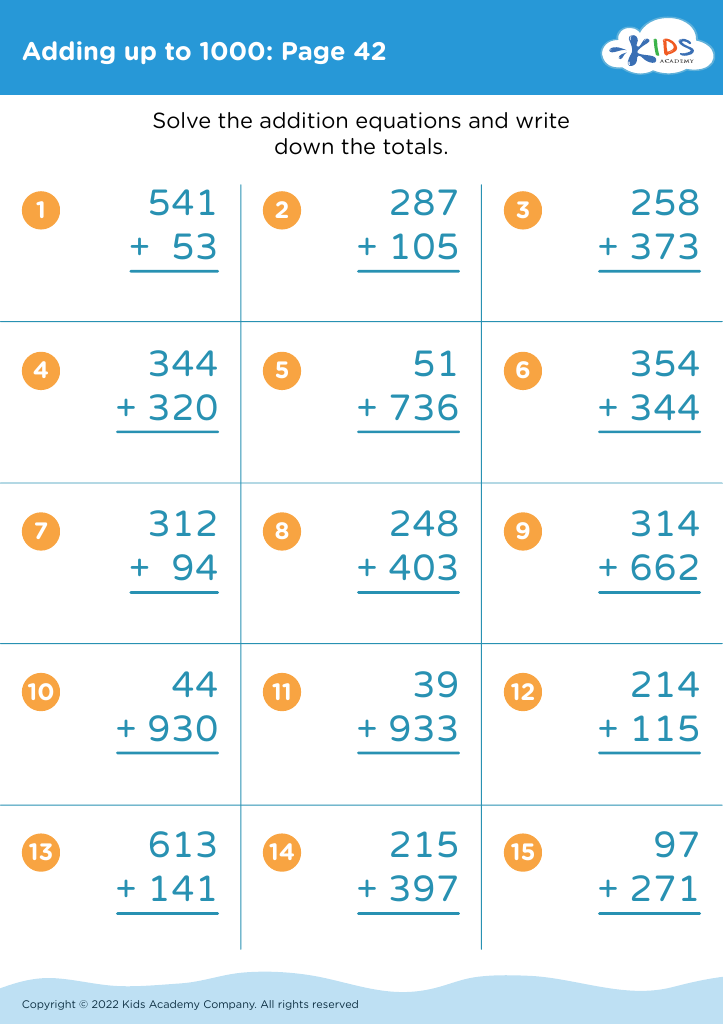
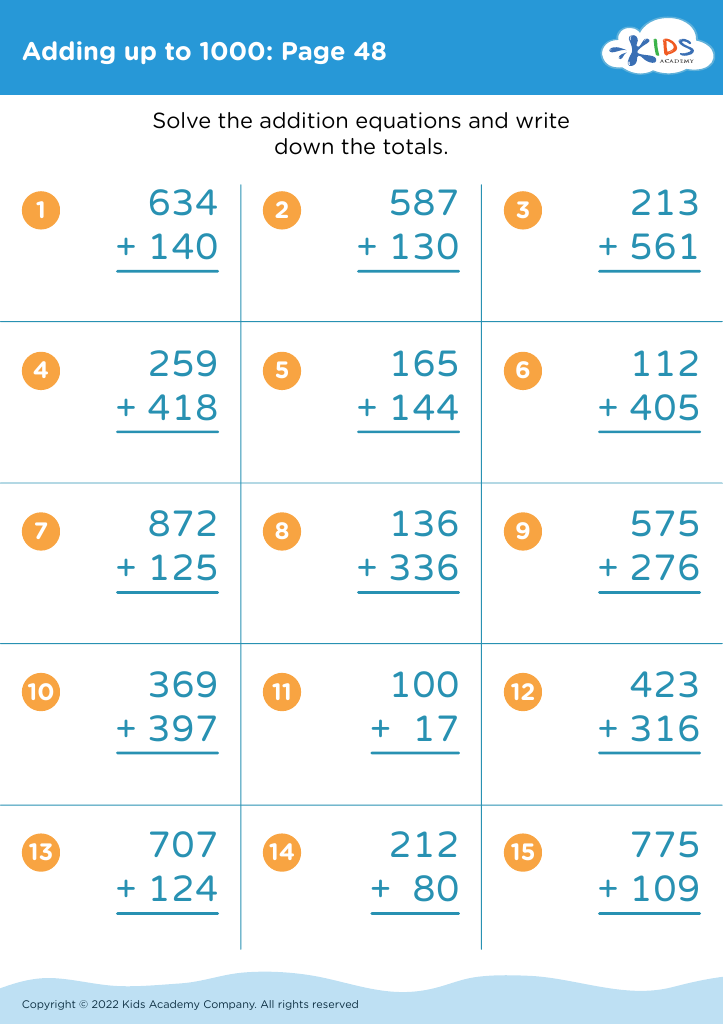
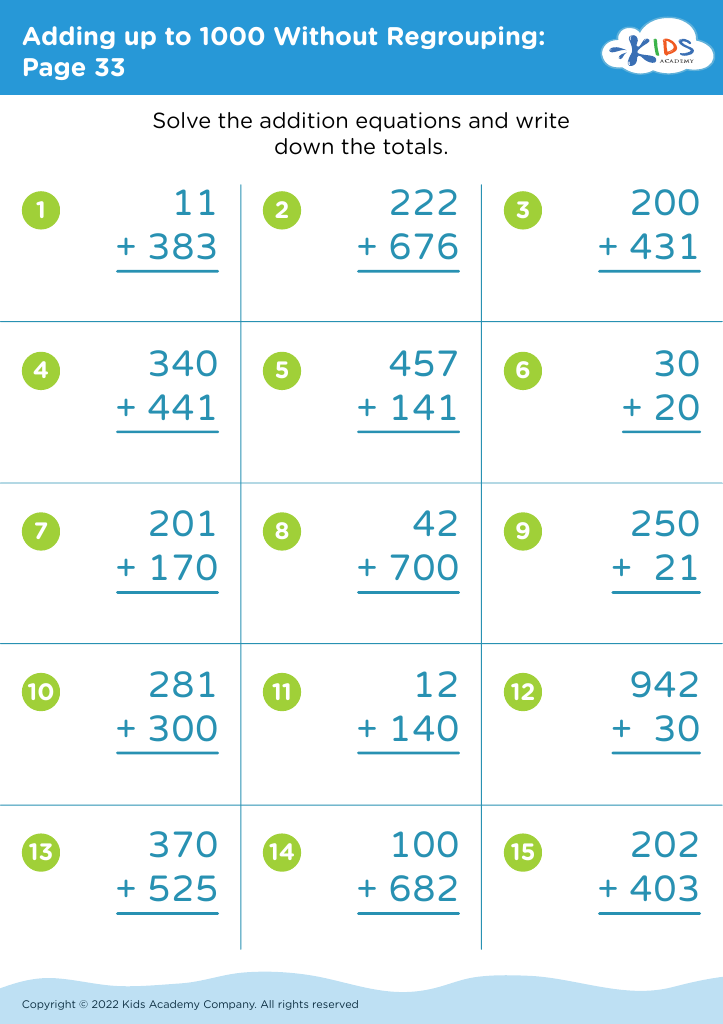




Number recognition is crucial for 9-year-olds as it serves as the foundation for more complex mathematical concepts, particularly as they approach higher levels of arithmetic, such as numbers up to 1000. At this age, children are developing their numeracy skills, which can significantly impact their confidence and ability to engage with math in real-world situations.
Understanding number recognition up to 1000 empowers children to read, write, and compare larger numbers, enhancing their ability to solve problems and perform operations like addition and subtraction effectively. When children recognize numbers easily, they can focus on learning mathematical concepts rather than getting bogged down by deciphering the numbers themselves. This fluency is critical for success in more advanced topics such as multiplication, division, and even fractions.
Moreover, number recognition fosters critical thinking and reasoning skills necessary for everyday tasks, like budgeting, shopping, or cooking, which require an understanding of quantities and measurements. By ensuring that children are proficient in recognizing numbers up to 1000, parents and teachers are promoting a strong mathematical foundation that will carry through to their academic careers and daily lives, ultimately fostering a love for math and lifelong learning.








