Problem-solving abilities Adding up to 1000 Worksheets for 9-Year-Olds
5 filtered results
-
From - To
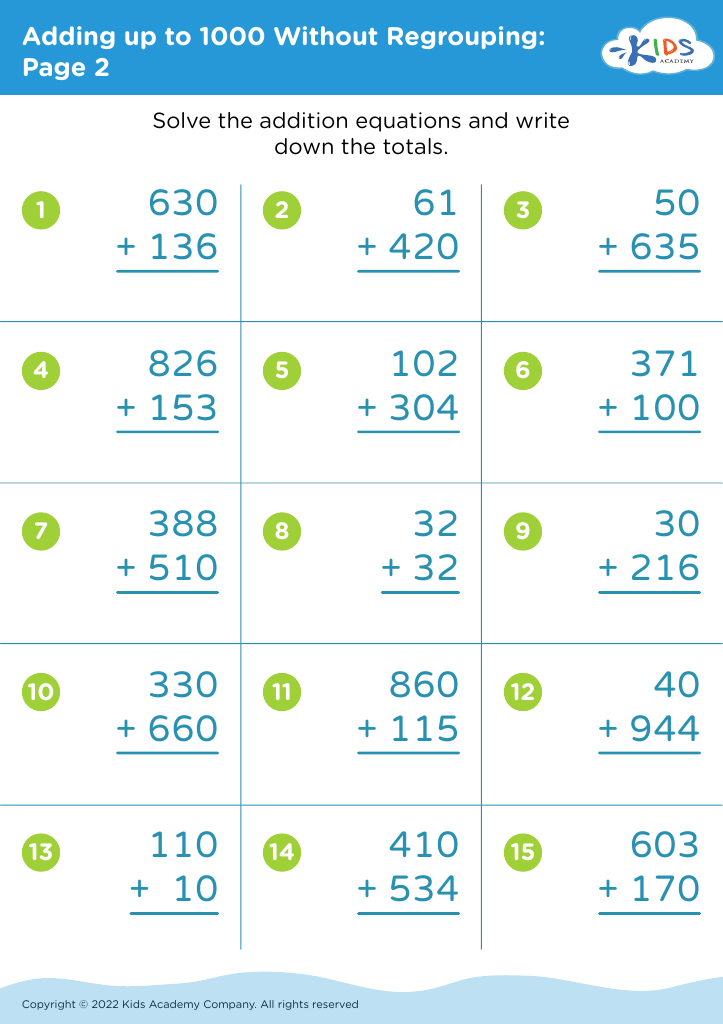
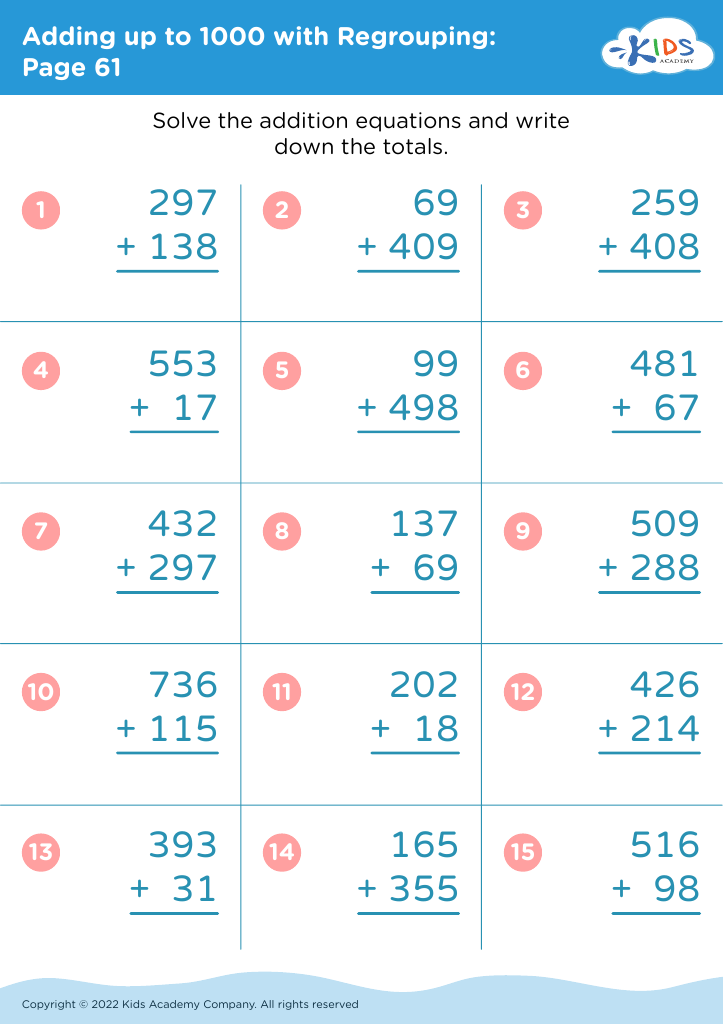
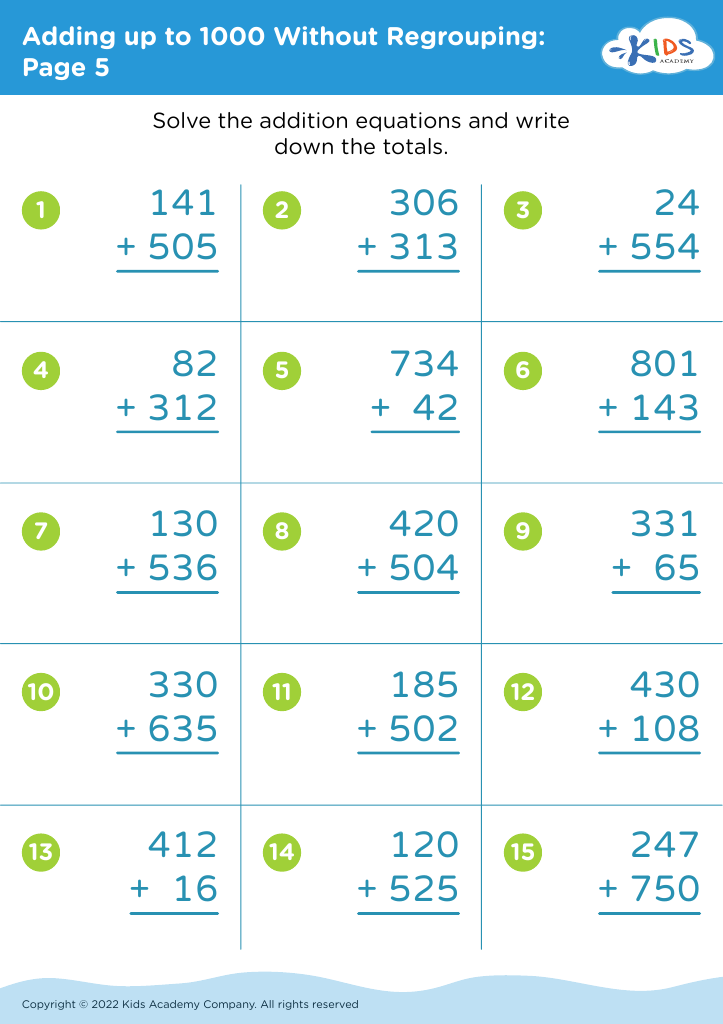
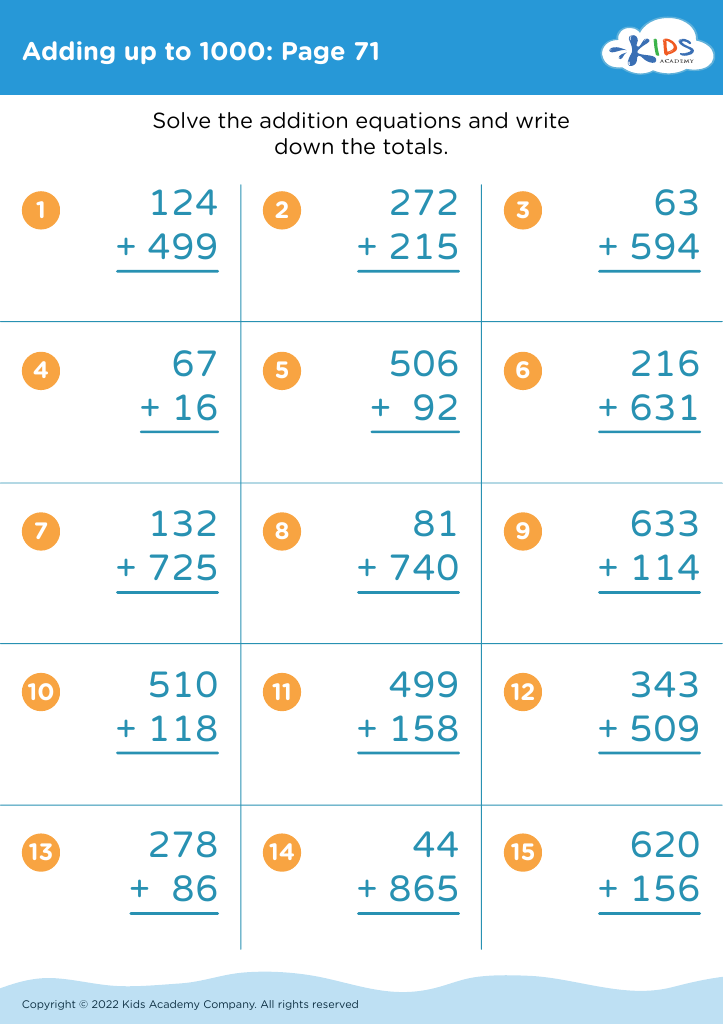
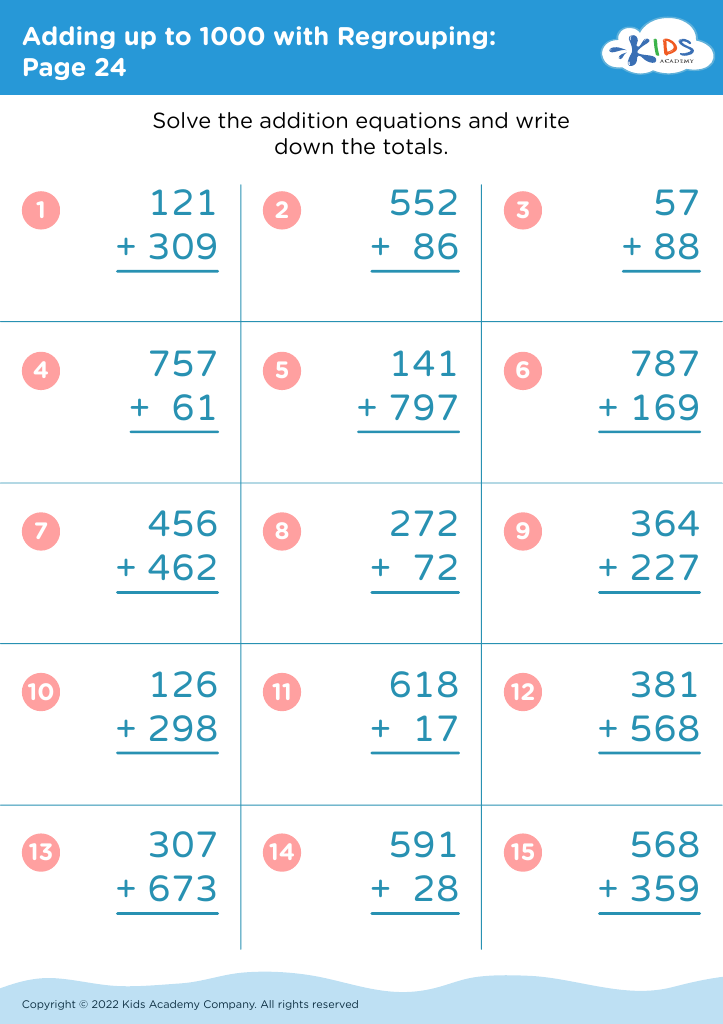
Discover our "Problem-Solving Abilities: Adding Up to 1000 Worksheets" designed specifically for 9-year-olds. These engaging worksheets foster critical thinking and enhance math skills as children tackle real-world problems through addition. Each activity promotes logical reasoning and promotes confidence in solving equations that amount to 1000. With a variety of fun exercises, students will gain valuable experience that builds a strong foundation in mathematics. Perfect for classroom learning or at-home practice, our worksheets offer a comprehensive approach to mastering addition while developing essential problem-solving abilities. Empower your child with the skills they need to succeed in math and beyond!



Problem-solving abilities are crucial for the development of 9-year-olds, significantly impacting their academic performance and everyday life. This is the age when children begin to think more critically, approach challenges with logic, and explore the world around them. Enhancing problem-solving skills instills confidence, inspiring children to tackle difficult situations independently.
Teaching children to solve problems can lead to improved academic abilities, particularly in subjects like math and science, where critical thinking is essential. Parents and teachers play a vital role in this process by providing a supportive environment that encourages exploration and perseverance. Helping children learn how to break down complex problems into smaller, manageable parts enables them to approach tasks systematically.
Moreover, problem-solving fosters creativity and innovation. As children learn to devise multiple solutions to a single issue, they develop the ability to think outside the box. This skill set will be invaluable as they transition into higher grades and, eventually, adulthood where complex decision-making is a routine part of life.
In summary, nurturing problem-solving abilities in 9-year-olds is pivotal for fostering self-efficacy, academic success, and essential life skills, making it imperative for parents and teachers to prioritize this development.








