Reading analog clocks Adding up to 1000 Worksheets for 9-Year-Olds
3 filtered results
-
From - To
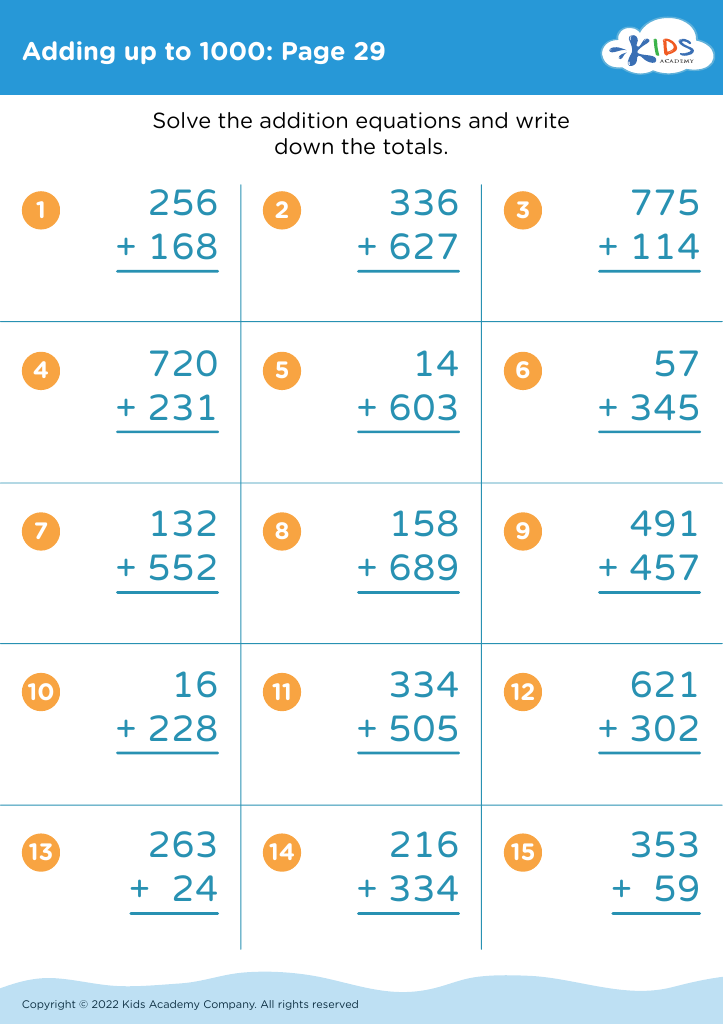
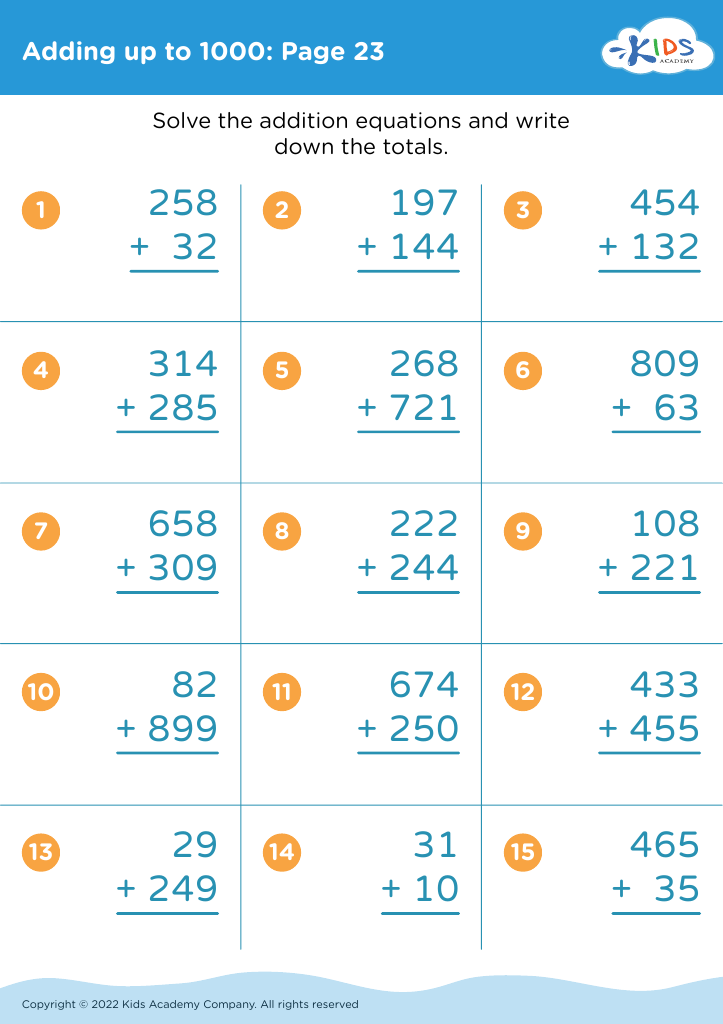
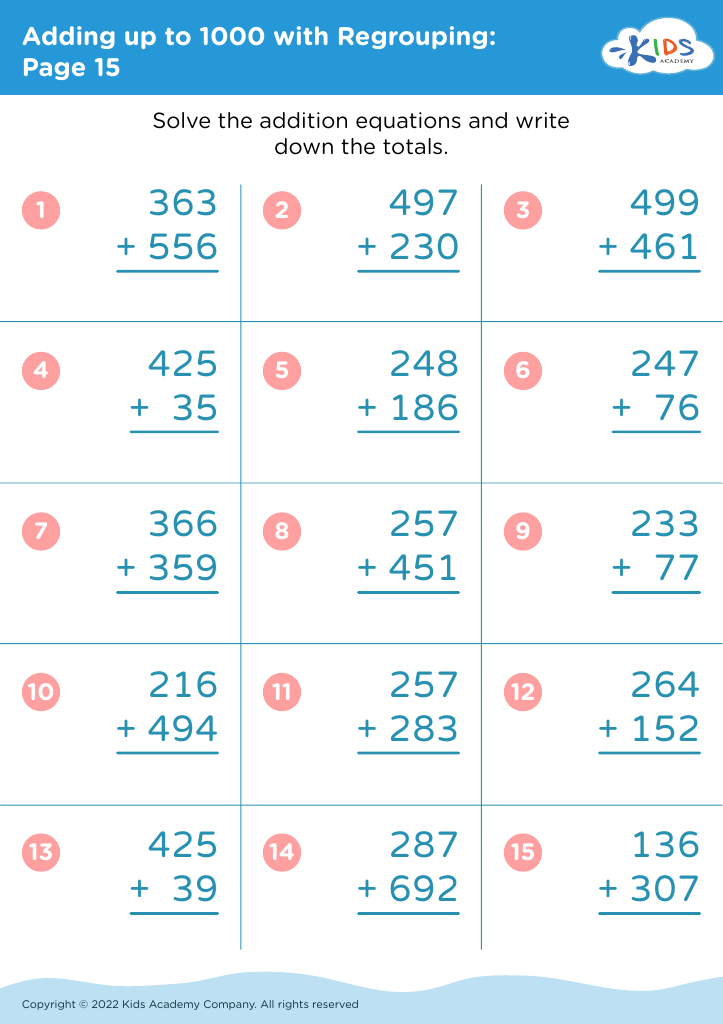
Enhance your 9-year-old's math skills with our "Reading Analog Clocks Adding Up to 1000 Worksheets"! Designed to make learning fun, these worksheets combine the fundamental concepts of reading analog clocks with adding numbers up to 1000. Your child will engage with interactive exercises that develop both time-telling abilities and addition skills, ensuring a holistic learning experience. These resources promote essential cognitive development while keeping students motivated and focused. Perfect for at-home practice or classroom use, our worksheets cater to young learners by providing clear visuals and step-by-step guidance. Help your child build confidence in math and time management today!



Teaching 9-year-olds to read analog clocks is crucial for their cognitive and practical development. First, understanding how to read analog clocks helps children comprehend the concept of time, leading to essential life skills such as punctuality and planning. Unlike digital clocks, analog timepieces encourage kids to engage in math skills, as they learn to infer the hour and minute hands, making connections to fractions and counting practices.
Moreover, this skill fosters critical thinking and problem-solving abilities. When children read an analog clock, they develop their spatial awareness, as they learn to visually interpret positions and relationships between the clock hands. These skills are not just limited to reading time but extend to other subjects, including geometry and arithmetic.
For parents and teachers, teaching this skill also enhances pedagogical variety by integrating practical experiences into learning. Children who can interpret an analog clock often feel a sense of accomplishment, boosting their confidence in tackling other academic challenges.
Ultimately, ensuring that 9-year-olds can read analog clocks is more than just about telling time; it lays a foundation for lifelong skills that encourage responsibility, independence, and a deeper understanding of the world around them.








