Shape identification Adding up to 1000 Worksheets for 9-Year-Olds
6 filtered results
-
From - To
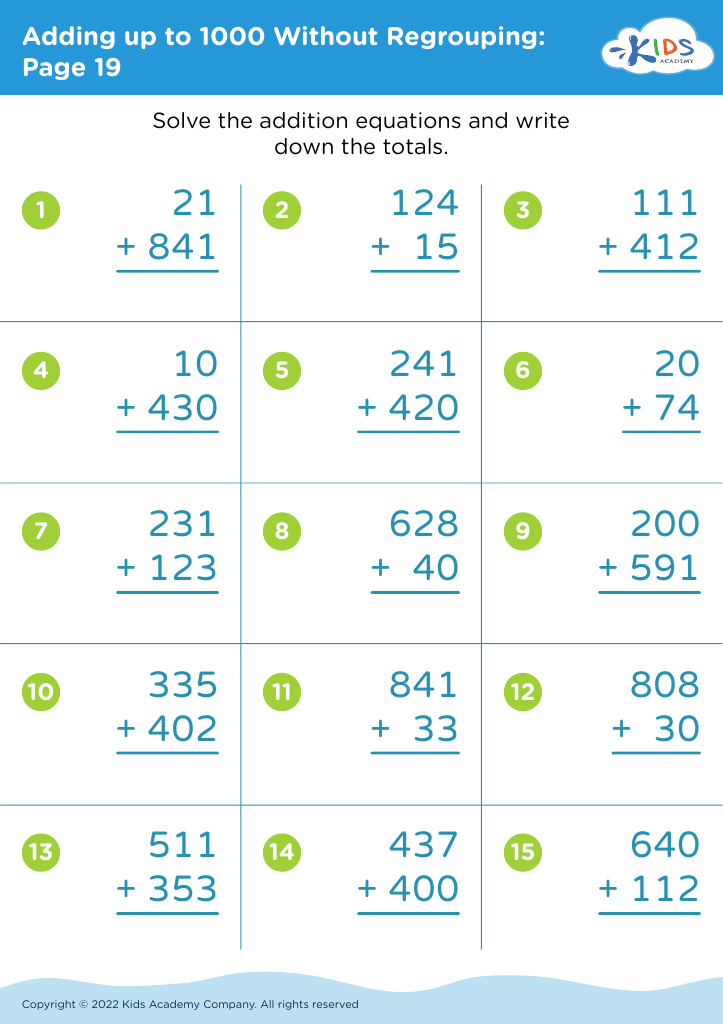
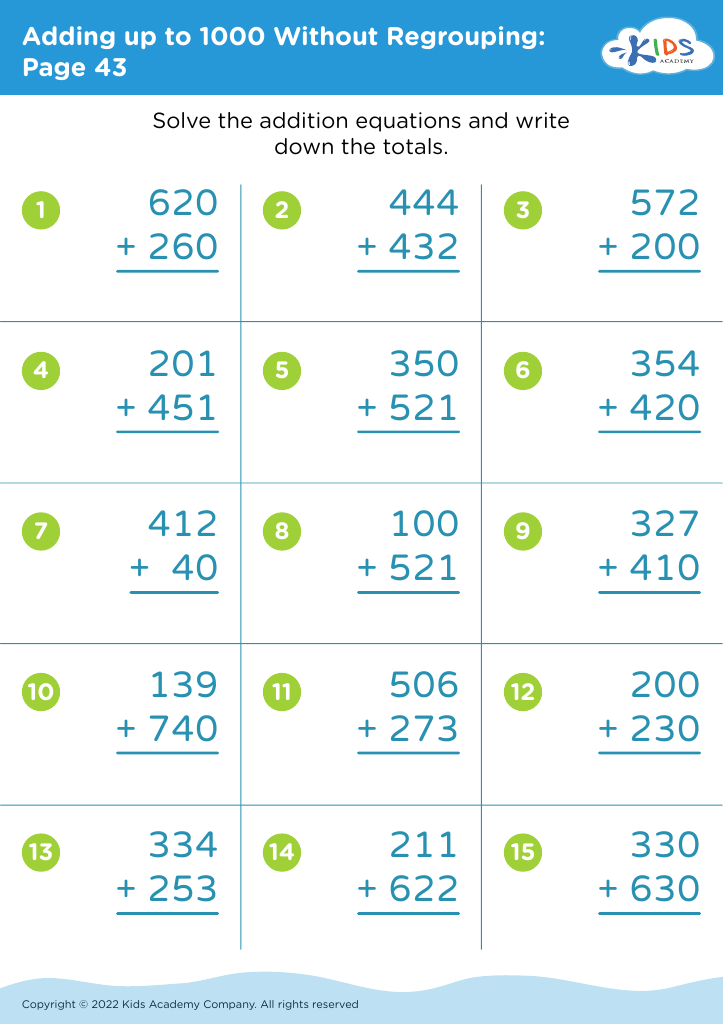
Discover engaging "Shape Identification Adding up to 1000 Worksheets for 9-Year-Olds" designed to enhance math and geometry skills simultaneously! These worksheets offer a unique blend of adding up to 1000 problems intertwined with shape identification exercises. Geared towards 9-year-olds, students will strengthen their arithmetic abilities while recognizing shapes—making learning both fun and educational. With vibrant images and clear instructions, these printable worksheets from Kids Academy ensure a comprehensive practice experience. Boost your child’s confidence in math and their understanding of geometric forms. Ideal for at-home practice or supplementary classroom material, watch your young learner thrive!
Find these resources at https://www.kidsacademy.mobi/printable-worksheets/age-9/math/adding-up-to-1000/learning-skills/shape-identification/
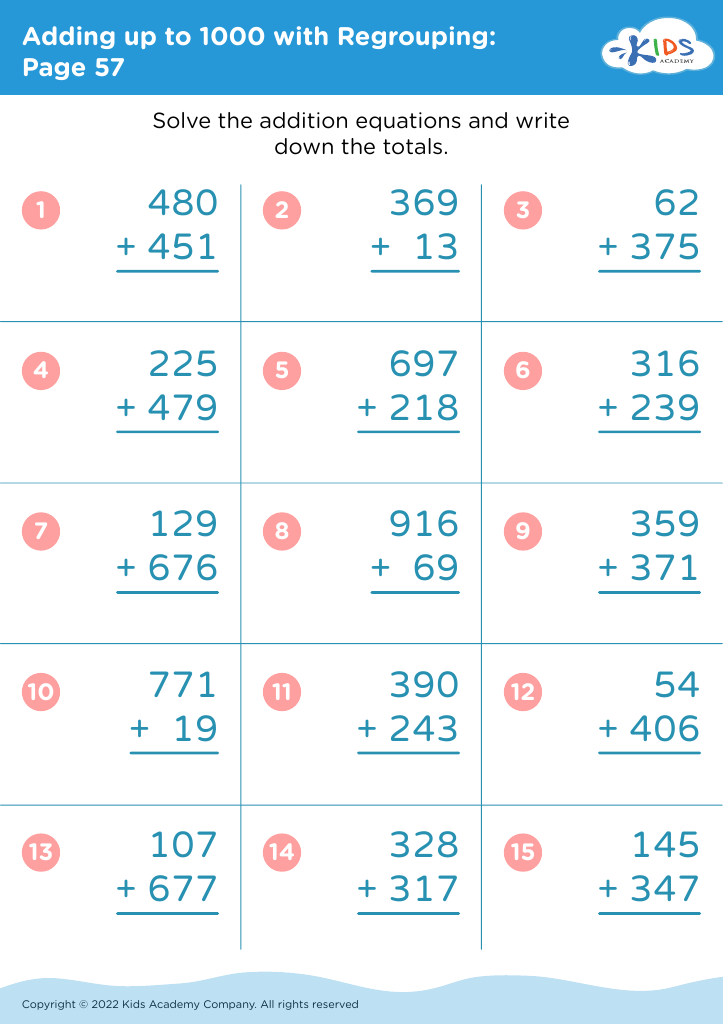
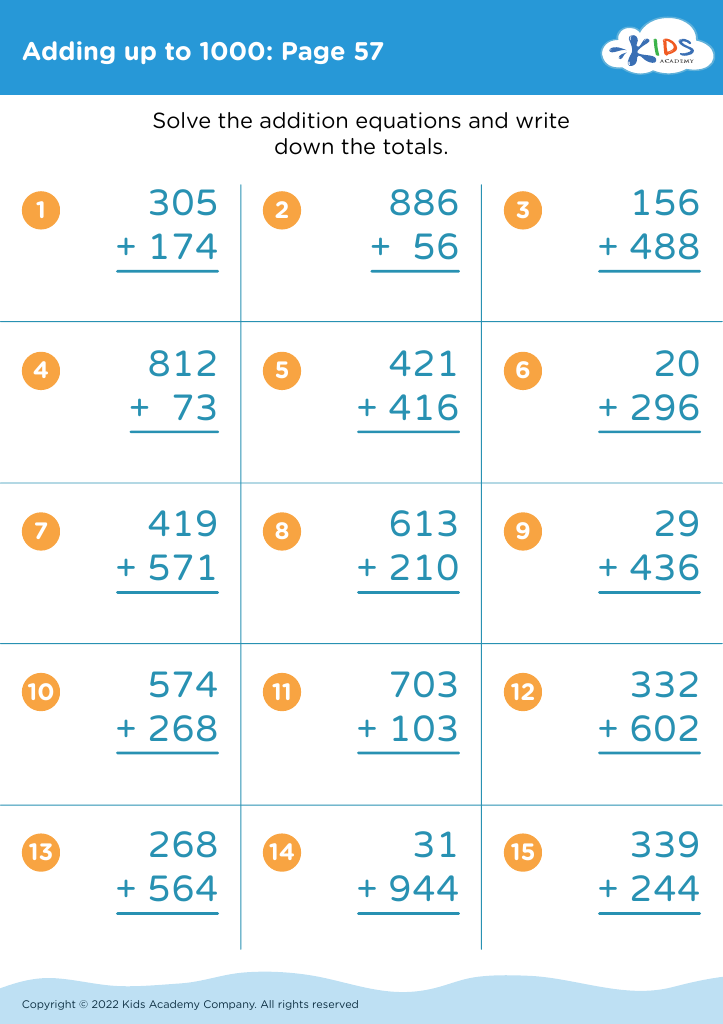
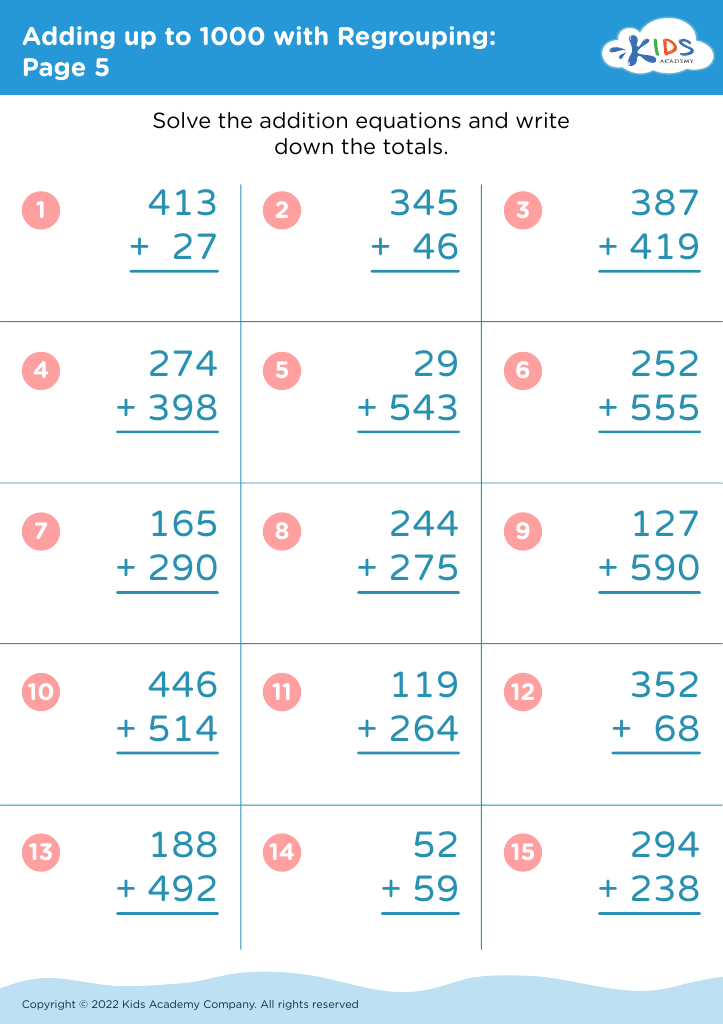
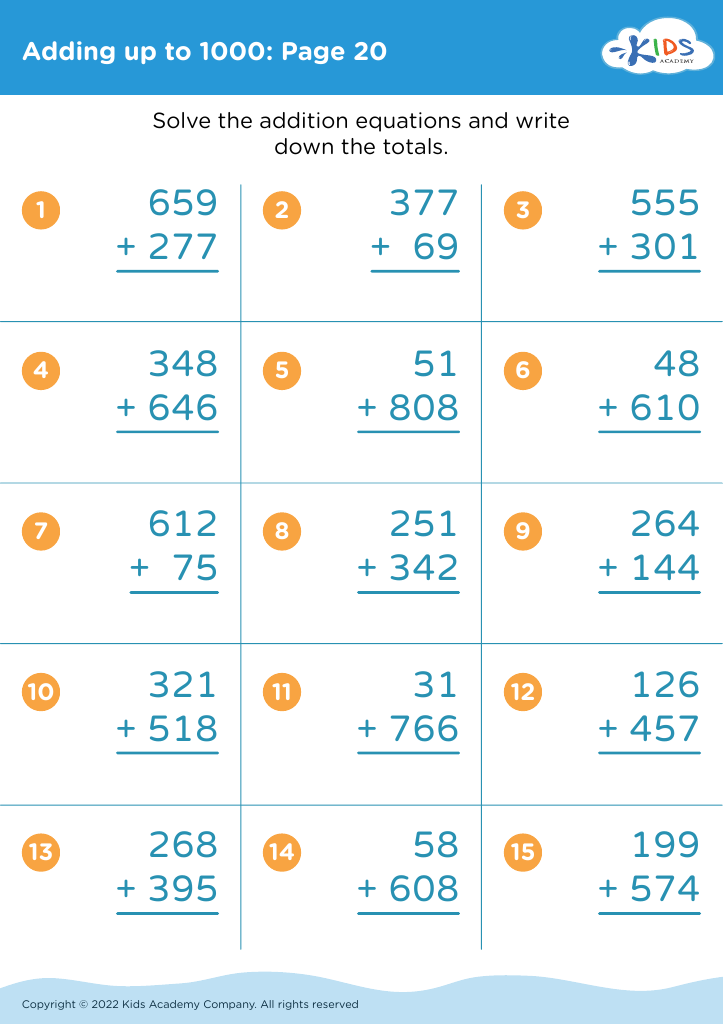



As parents and teachers, fostering strong foundational skills in shape identification and numerical understanding in children is crucial, especially for 9-year-olds who are at a pivotal stage of cognitive and academic development. Shape identification is more than just recognizing circles or squares; it enhances spatial awareness, critical thinking, and problem-solving abilities. Children learn to observe, differentiate, and categorize, which are essential skills in mathematics, science, and daily life.
Adding up to 1000 is another fundamental math skill that supports a child's understanding of number sense, mental math, and computational strategies. Mastery of this skill not only prepares children for more advanced math topics but also boosts their confidence in tackling complex problems. It promotes logical thinking and helps in the practical application of math in real-world scenarios, like making decisions related to money, time, and measurements.
By emphasizing these two areas, parents and teachers help build a solid math foundation. This approach contributes to a child's overall academic growth and is instrumental in developing a lifelong appreciation for learning, ultimately paving the way for success in and out of the classroom. Prioritizing these skills helps ensure that children can navigate both their present and future academic challenges with confidence and proficiency.








