Understand patterns Adding up to 1000 Worksheets for 9-Year-Olds
3 filtered results
-
From - To
Explore our "Understand Patterns Adding up to 1000 Worksheets for 9-Year-Olds" designed to make math both fun and educational. Tailored for young learners, these engaging worksheets help children grasp addition patterns up to 1000, enhancing their problem-solving abilities and number sense. With a variety of visually appealing activities, kids will practice identifying and continuing arithmetic patterns, and build a strong foundation for advanced math concepts. Perfect for classroom use or at-home practice, these resources foster a love for math while boosting confidence and proficiency. Unlock your child’s potential with our expertly crafted worksheets today!
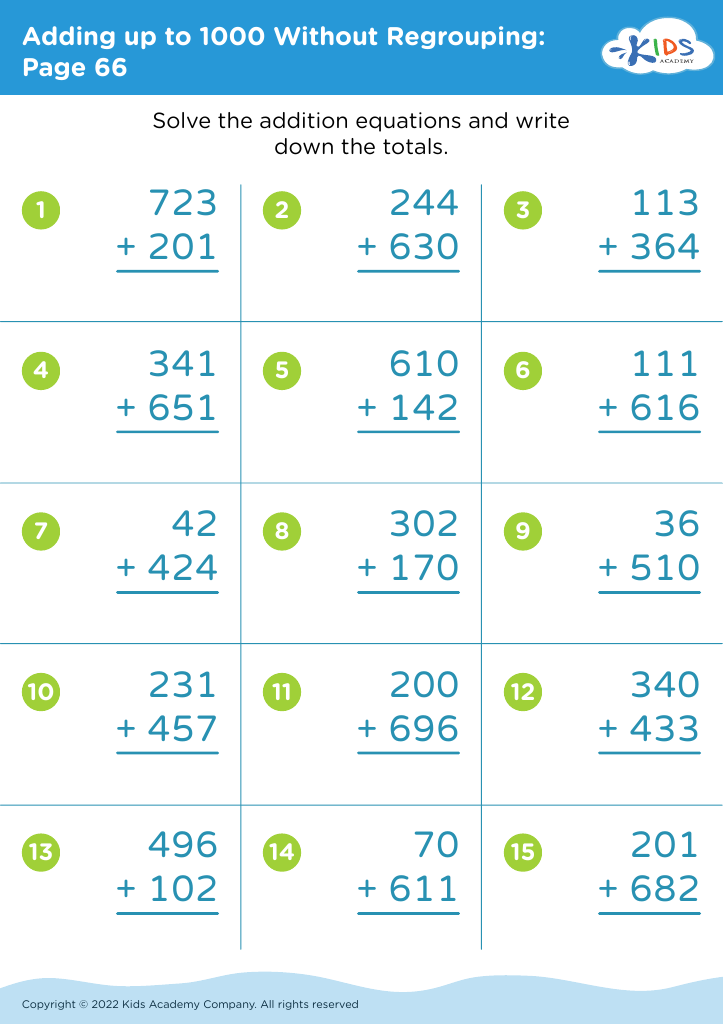
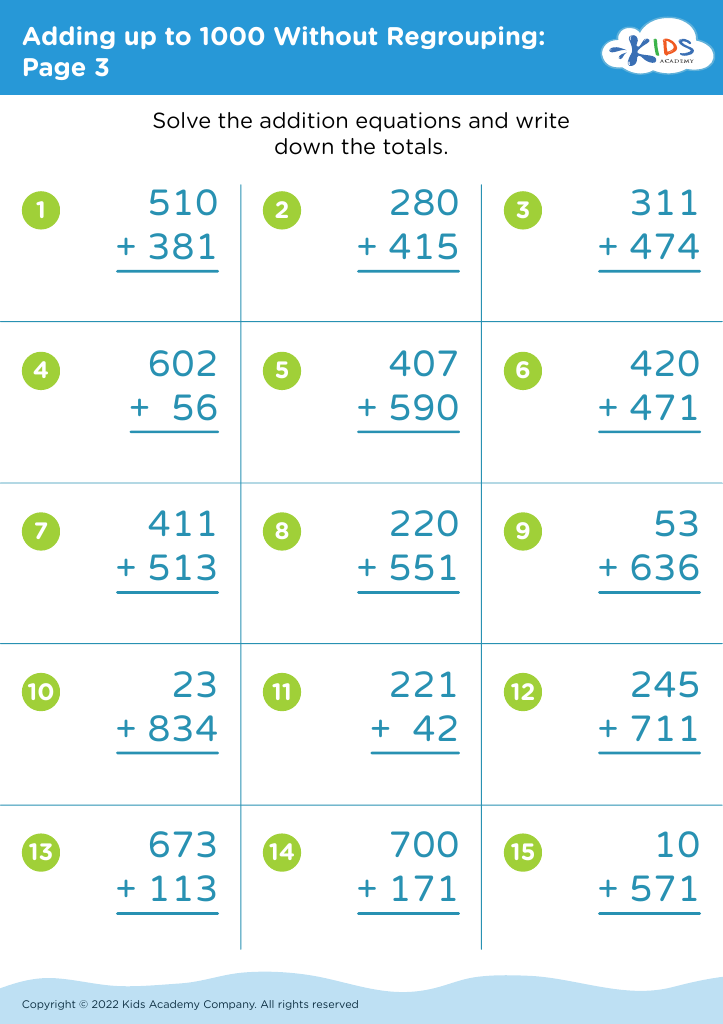
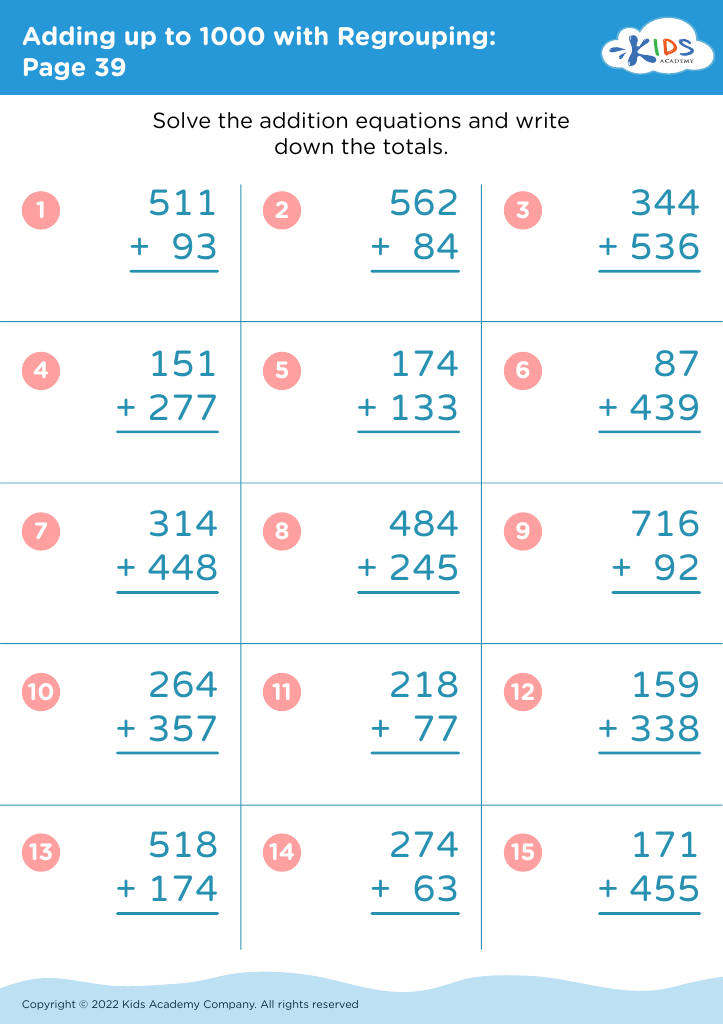



Understanding patterns and the ability to add numbers up to 1000 are fundamental math skills for 9-year-olds that carry significant long-term benefits. Firstly, these skills foster critical thinking and problem-solving abilities. By identifying patterns, children can predict outcomes and draw connections between concepts, which is crucial for more advanced topics in mathematics and science.
When children can add up to 1000, they grasp foundational numeracy skills that are essential for daily life. It's not just about performing arithmetic; it's about understanding place value, estimation, and the properties of numbers. These operations form the basis for more complex calculations and algebra in higher grades. Accuracy in basic math helps build confidence, allowing students to tackle more challenging topics without fear.
Moreover, studying patterns and better understanding numbers improves reading comprehension and logical reasoning, skills that cross over into other academic subjects like reading and social studies. This interdisciplinary benefit reinforces learning and helps students excel across the curriculum.
Lastly, early success in math fosters a growth mindset. Children who see themselves succeed in math are more likely to approach schooling with curiosity and perseverance. Therefore, parents and teachers should prioritize these skills to set a strong educational foundation, promote lifelong learning, and empower children to achieve their full potential.








