Understanding division Adding up to 1000 Worksheets for 9-Year-Olds
3 filtered results
-
From - To
Discover our "Understanding Division Adding Up to 1000 Worksheets" specially designed for 9-year-olds! These engaging resources help young learners grasp the concept of division through a variety of problems that reinforce their math skills. Each worksheet includes vibrant illustrations and interactive activities that make learning fun and effective. Children will practice dividing numbers and understanding the relationship between division and addition, while building confidence in their mathematical abilities. Ideal for classroom use or at-home learning, our worksheets provide valuable practice and encourage critical thinking. Empower your child’s learning journey today with our comprehensive division worksheets!
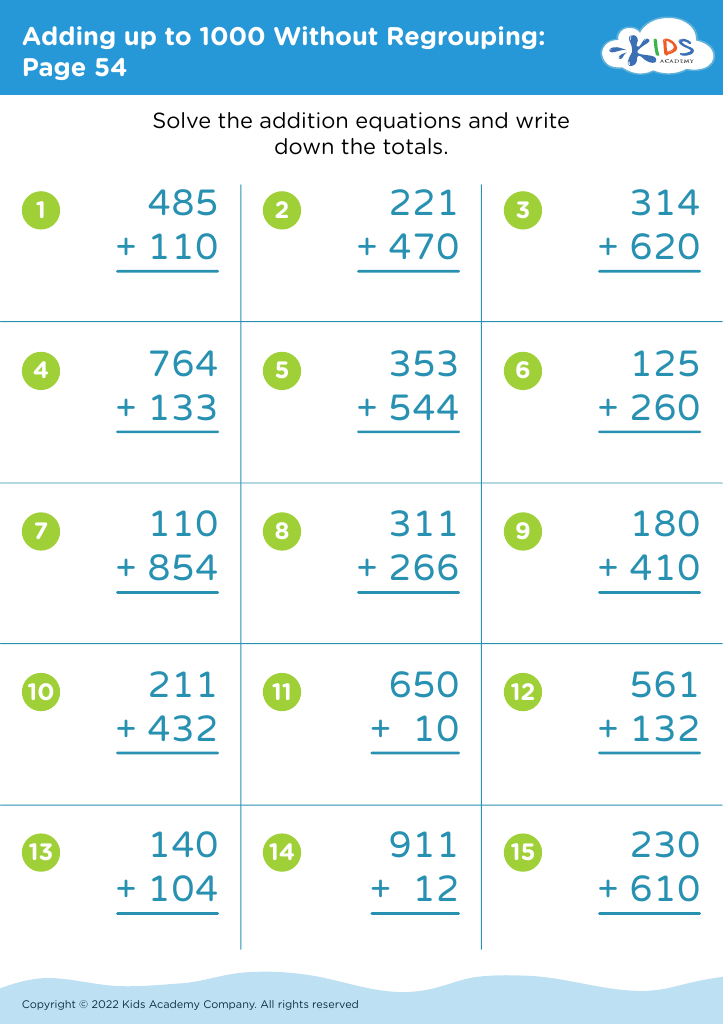
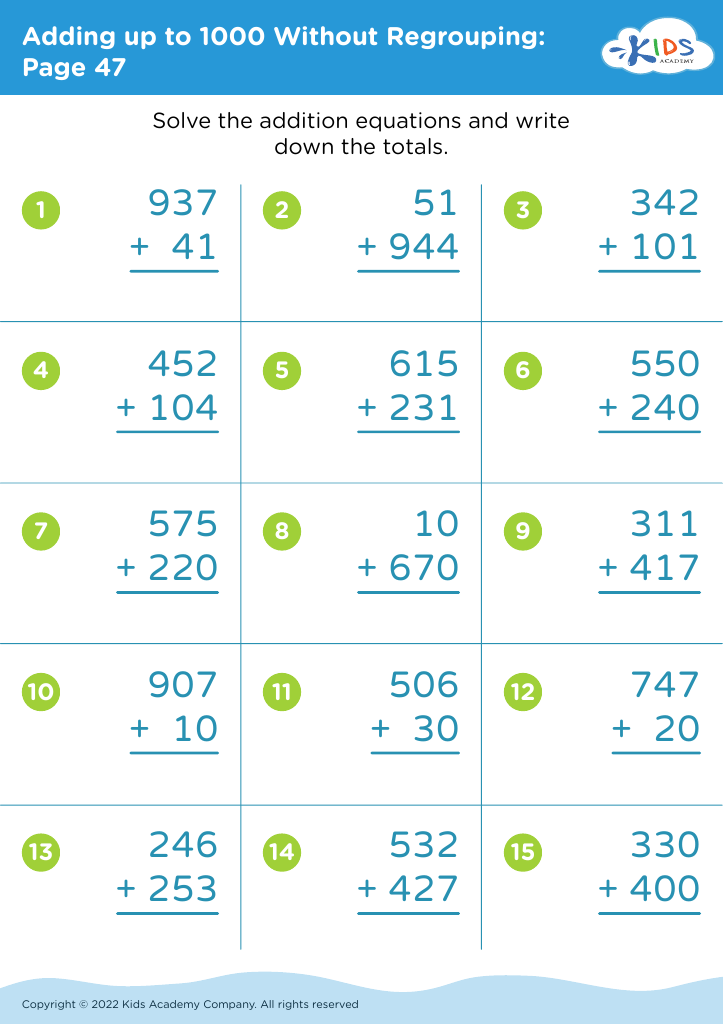
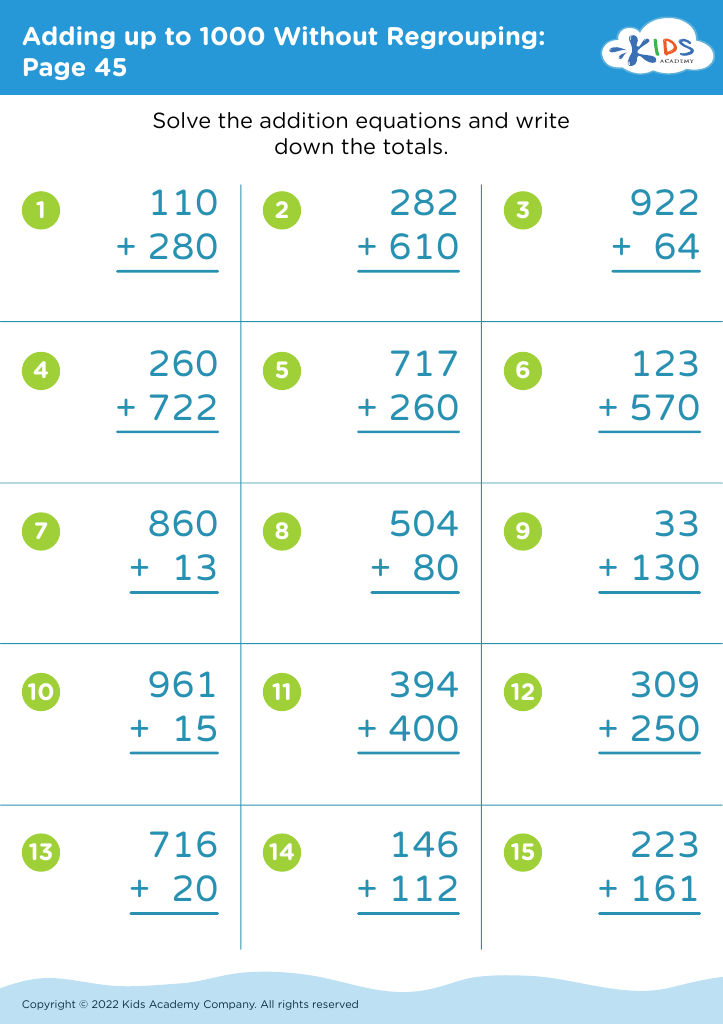



Understanding division and addition, especially with numbers up to 1000, is crucial for 9-year-olds as it lays the foundation for advanced mathematical concepts. At this age, children transition from basic arithmetic to more complex operations, and a solid grasp of these foundational skills is essential for their academic success.
Division teaches children to distribute quantities evenly, enhancing their problem-solving skills and fostering logical thinking. It introduces concepts such as remainders and fractions, crucial for higher-level math. Likewise, mastering addition up to 1000 helps children develop mental math skills and promotes number sense.
For parents and teachers, nurturing these skills can significantly boost a child's confidence and motivation. A firm understanding of these operations not only prepares them for more complex subjects like multiplication and division but also supports critical life skills, such as budgeting, resource allocation, and time management.
Additionally, children who excel in math at an early age often have better experiences in academically rigorous environments, enhancing their overall education. Therefore, prioritizing division and addition exercises makes a profound difference in a child's mathematical journey and prepares them for real-world applications, ensuring they are equipped for future challenges.








