Discover our "Understanding Fractions Adding up to 1000 Worksheets for 9-Year-Olds" designed to enhance your child's math skills. These engaging worksheets provide a fun and educational way for young learners to master the complexities of fractions and addition up to 1000. Tailored for 9-year-olds, the exercises promote critical thinking, problem-solving, and a deeper grasp of mathematical concepts. Perfect for classroom use or at-home practice, these worksheets ensure kids build a strong foundation in essential math skills, preparing them for future academic success. Boost your child's confidence in math with our expertly crafted resources!
Check out this FREE Trial Lesson on Adding up to 1000 for age 9!

Match Exactly the Same

Favorites
With answer key
Interactive
  • 9
  • Understanding fractions
  • Adding up to 1000
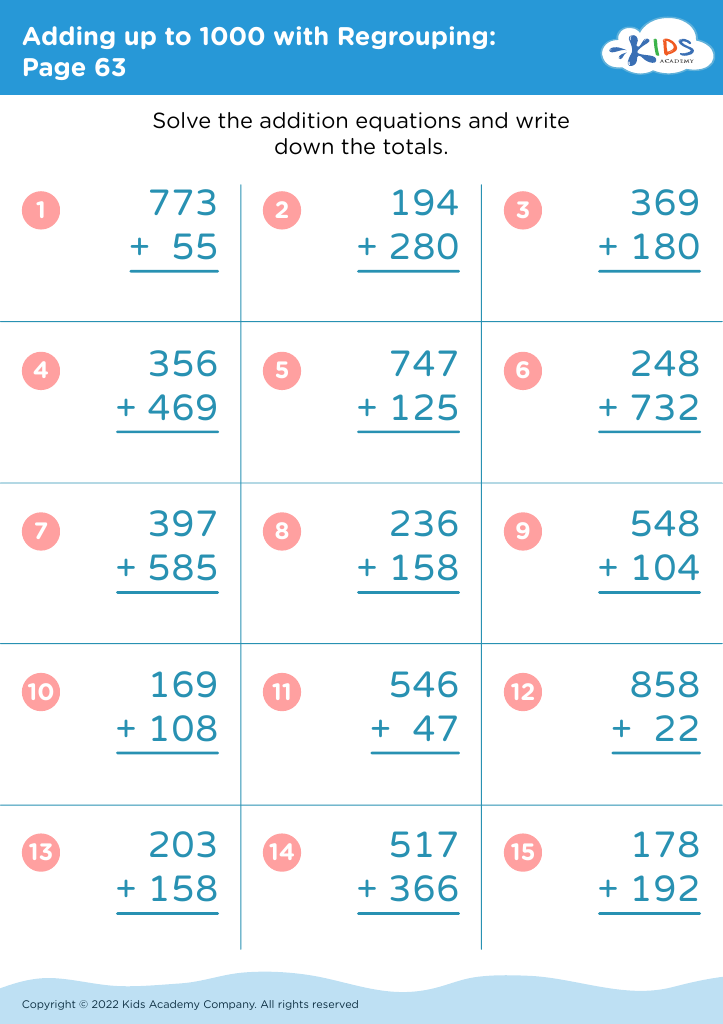
Adding up to 1000 with Regrouping: Page 63
Worksheet
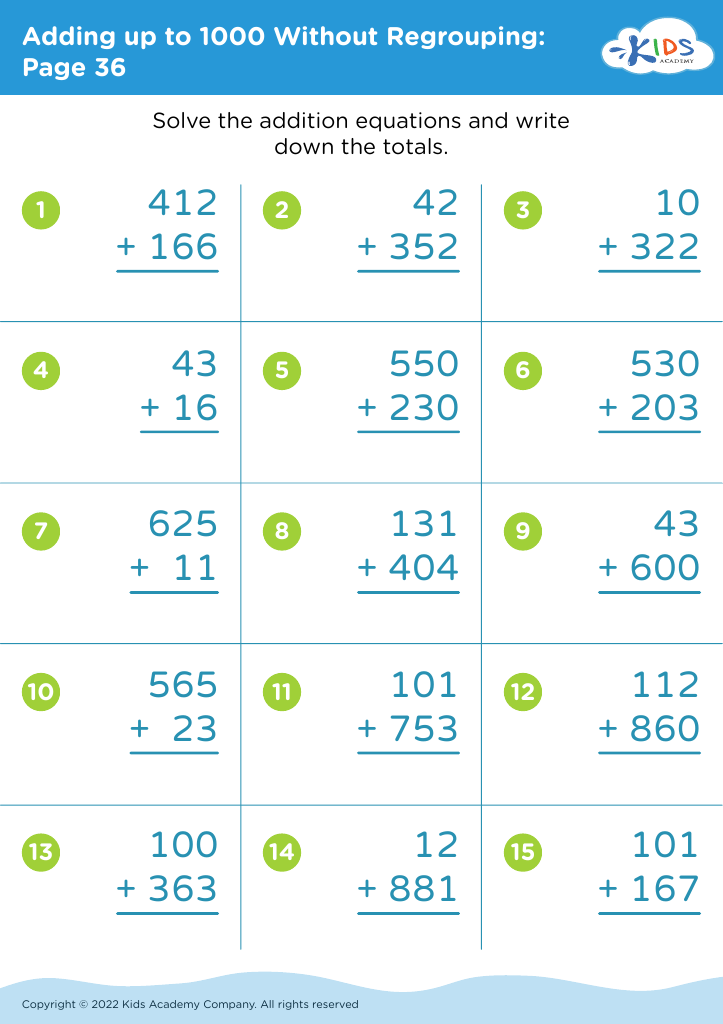
Adding up to 1000 Without Regrouping: Page 36
Worksheet
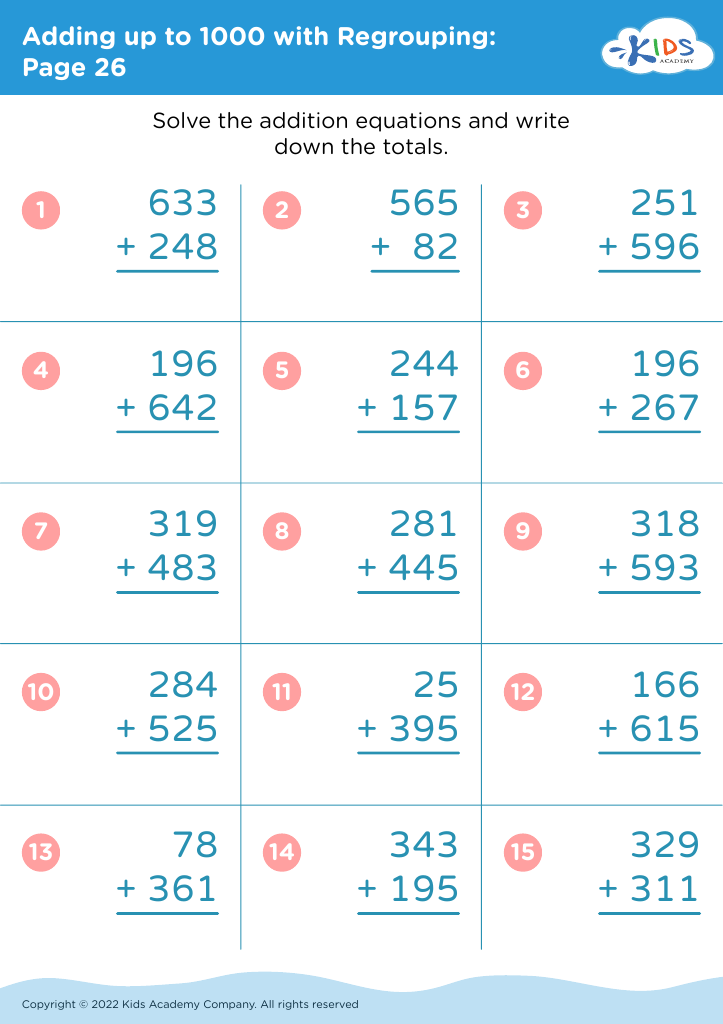
Adding up to 1000 with Regrouping: Page 26
Worksheet
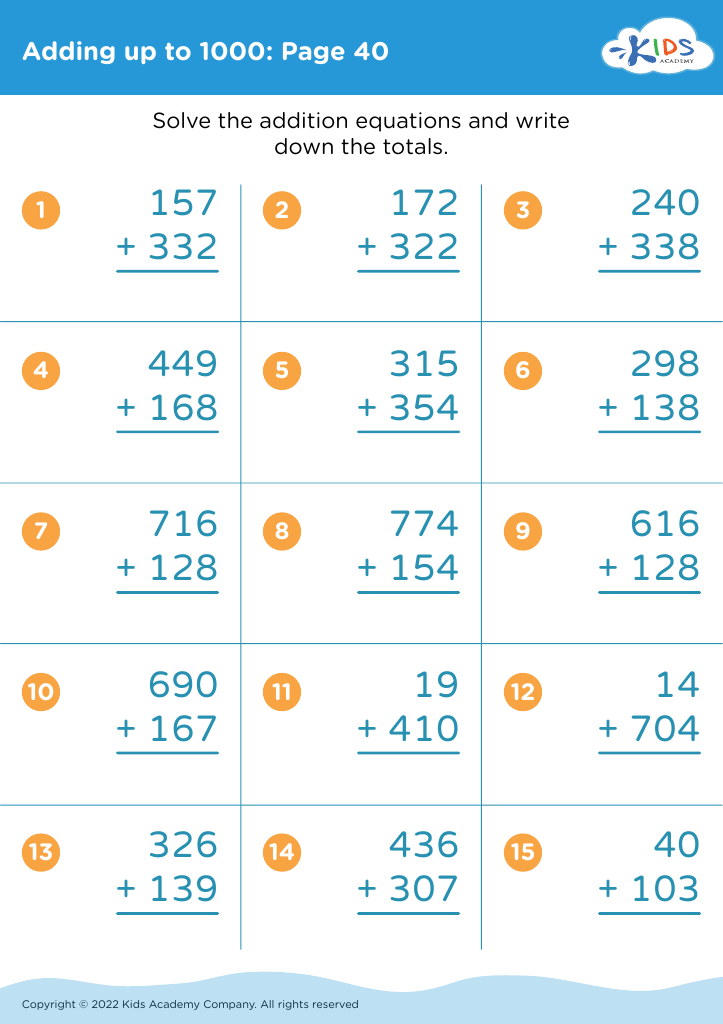
Adding up to 1000: Page 40

Adding up to 1000: Page 40

Adding up to 1000: Page 40
Worksheet
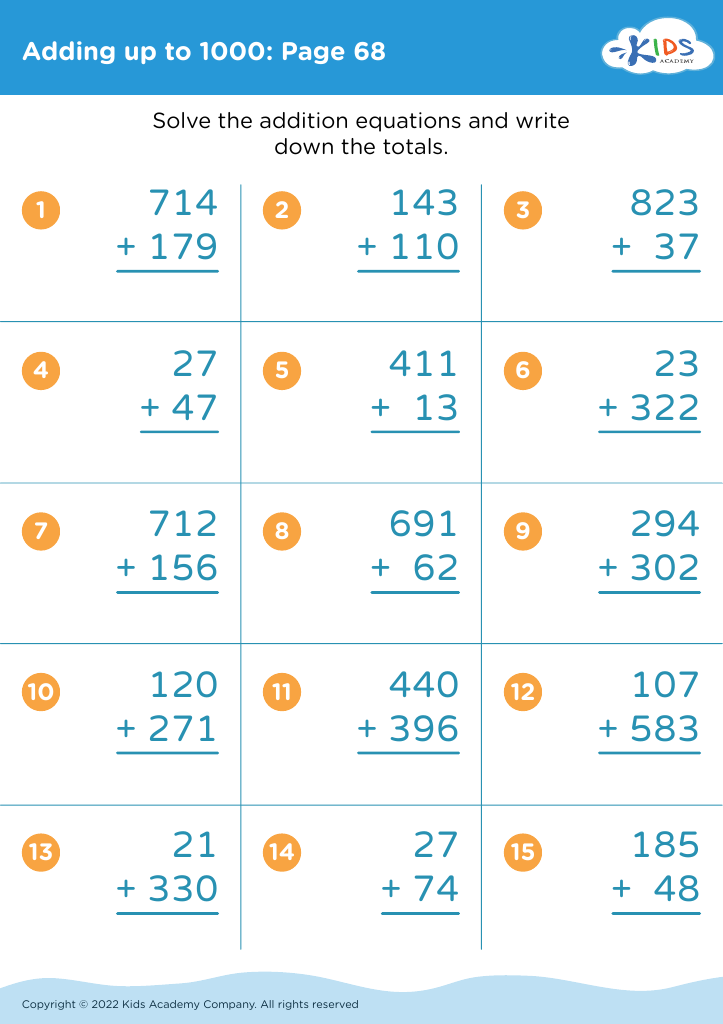
Adding up to 1000: Page 68

Adding up to 1000: Page 68

Adding up to 1000: Page 68
Worksheet
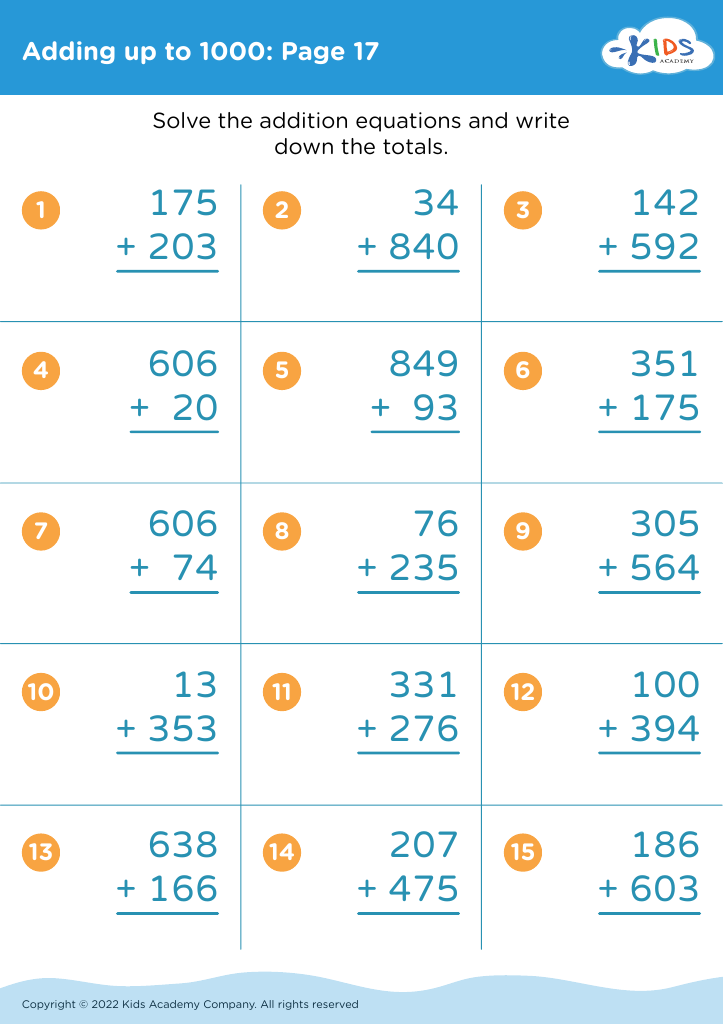
Adding up to 1000: Page 17

Adding up to 1000: Page 17

Adding up to 1000: Page 17
Worksheet
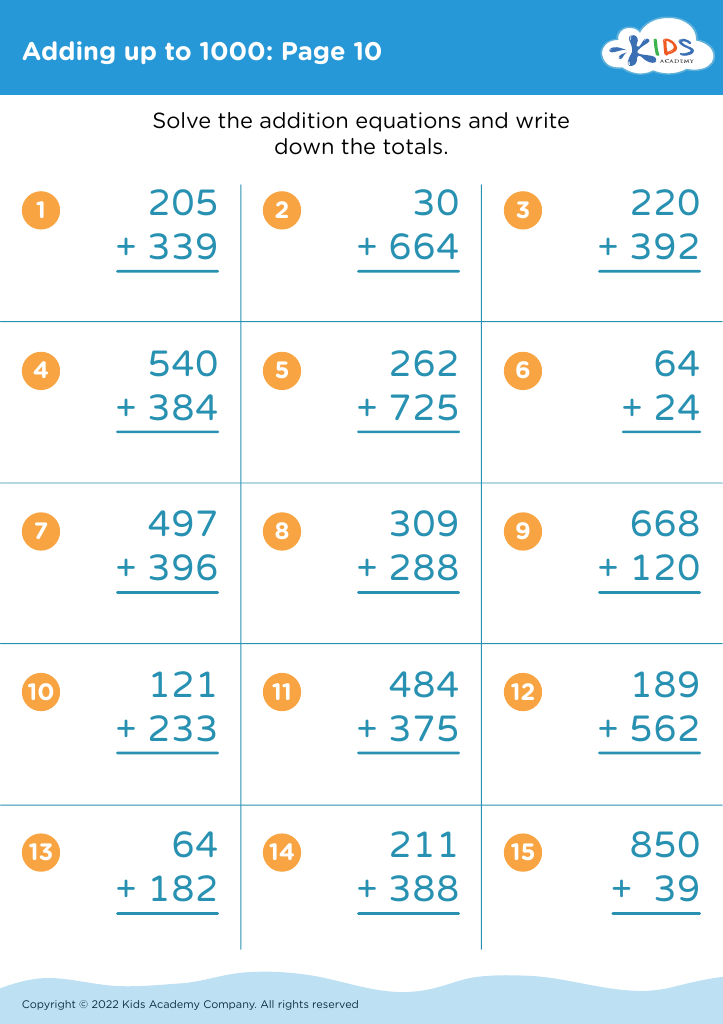
Adding up to 1000: Page 10

Adding up to 1000: Page 10

Adding up to 1000: Page 10
Worksheet
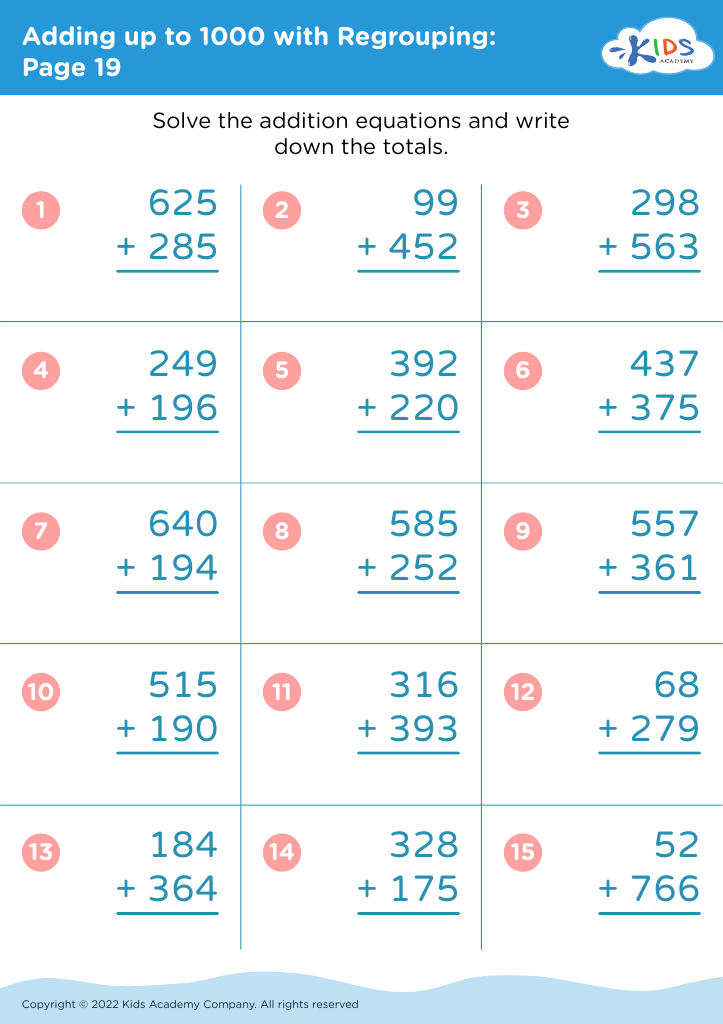
Adding up to 1000 with Regrouping: Page 19
Worksheet
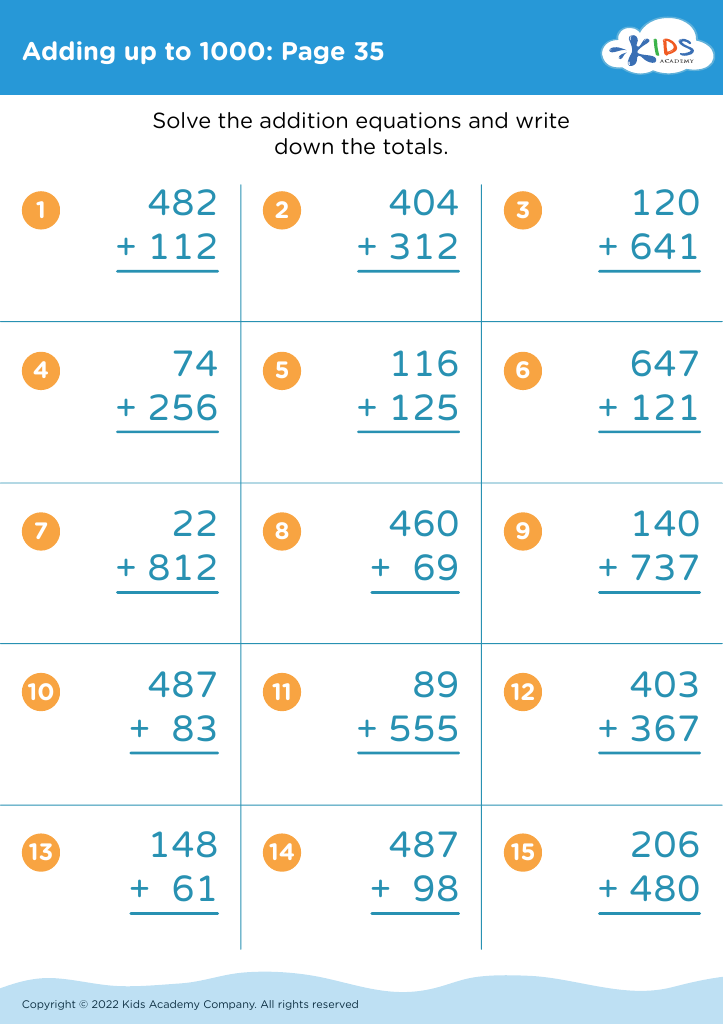
Adding up to 1000: Page 35

Adding up to 1000: Page 35

Adding up to 1000: Page 35
Worksheet
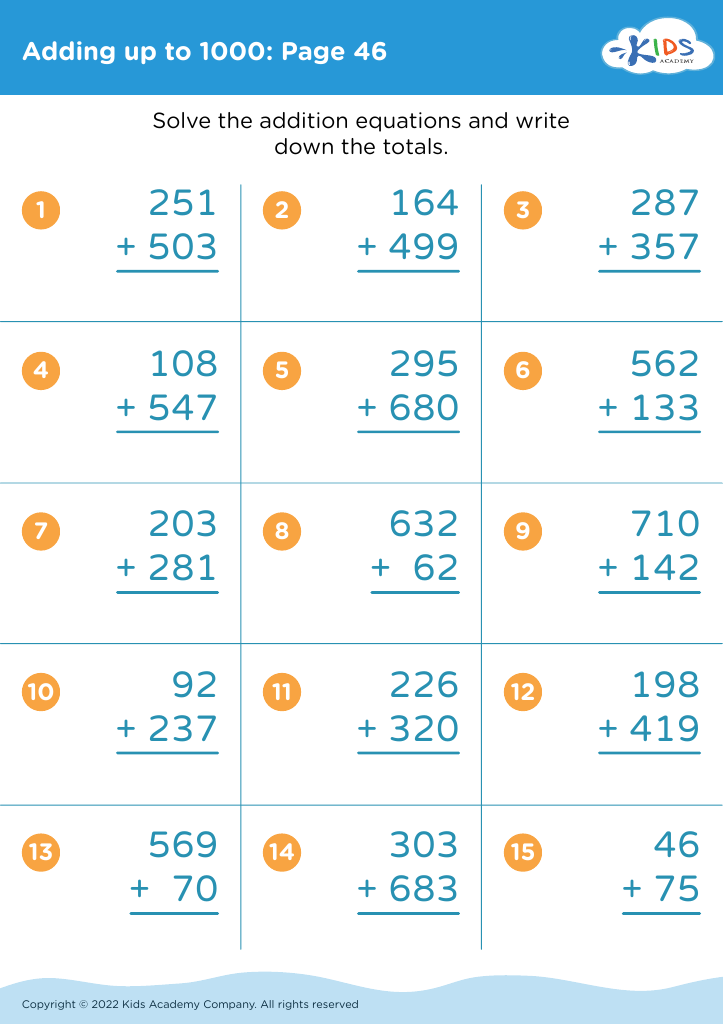
Adding up to 1000: Page 46

Adding up to 1000: Page 46

Adding up to 1000: Page 46
Worksheet
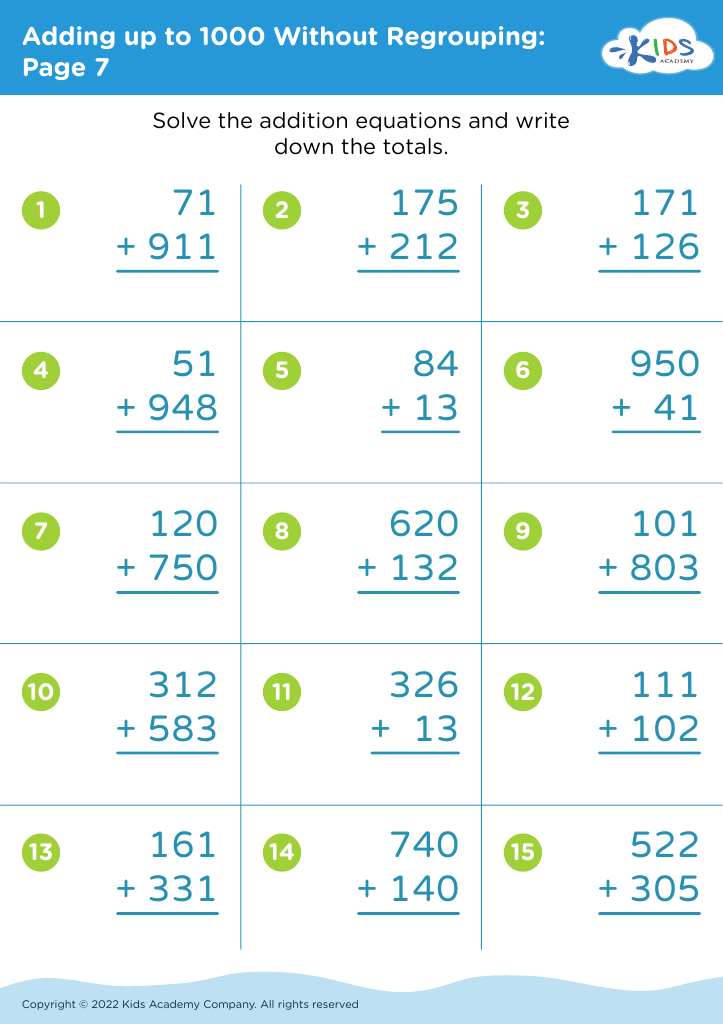
Adding up to 1000 Without Regrouping: Page 7
Worksheet
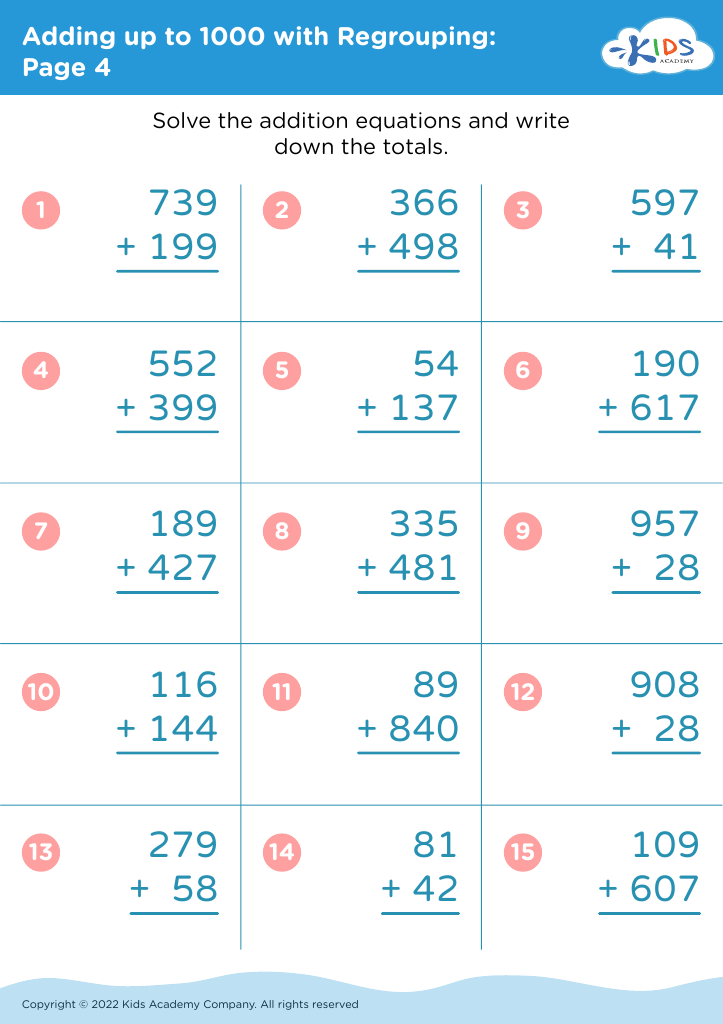
Adding up to 1000 with Regrouping: Page 4
Worksheet
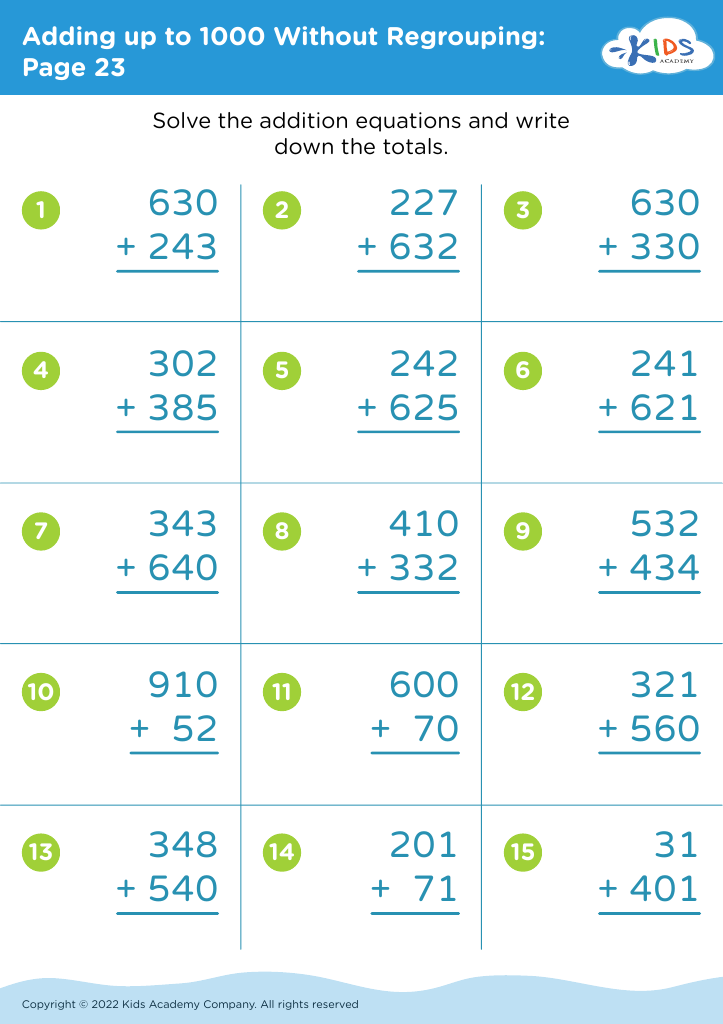
Adding up to 1000 Without Regrouping: Page 23
Worksheet
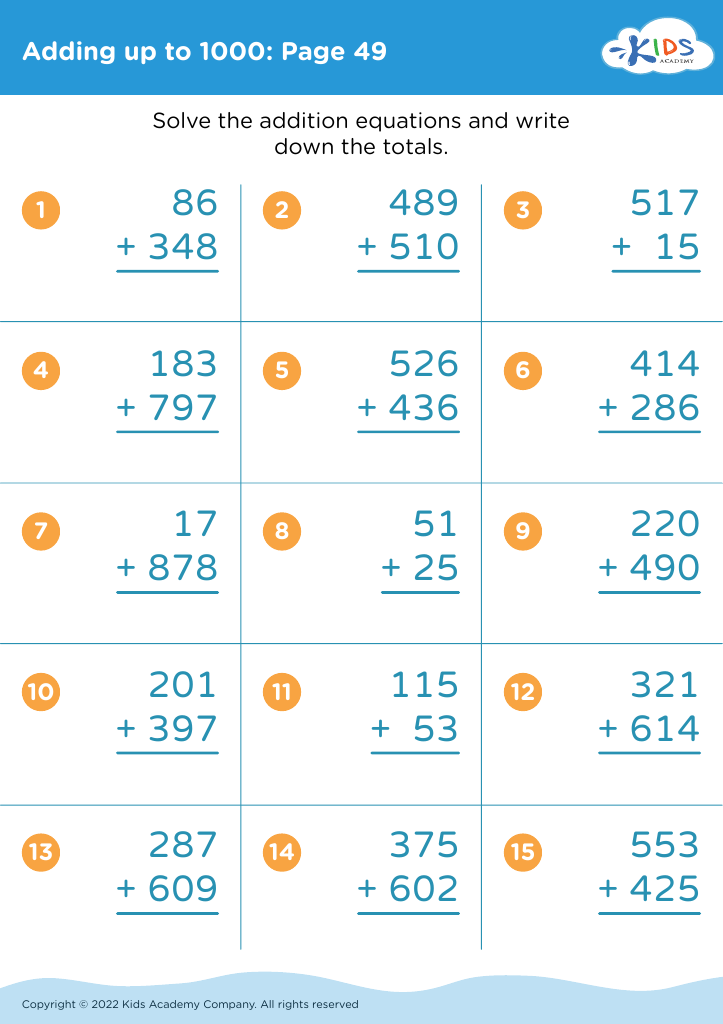
Adding up to 1000: Page 49

Adding up to 1000: Page 49

Adding up to 1000: Page 49
Worksheet
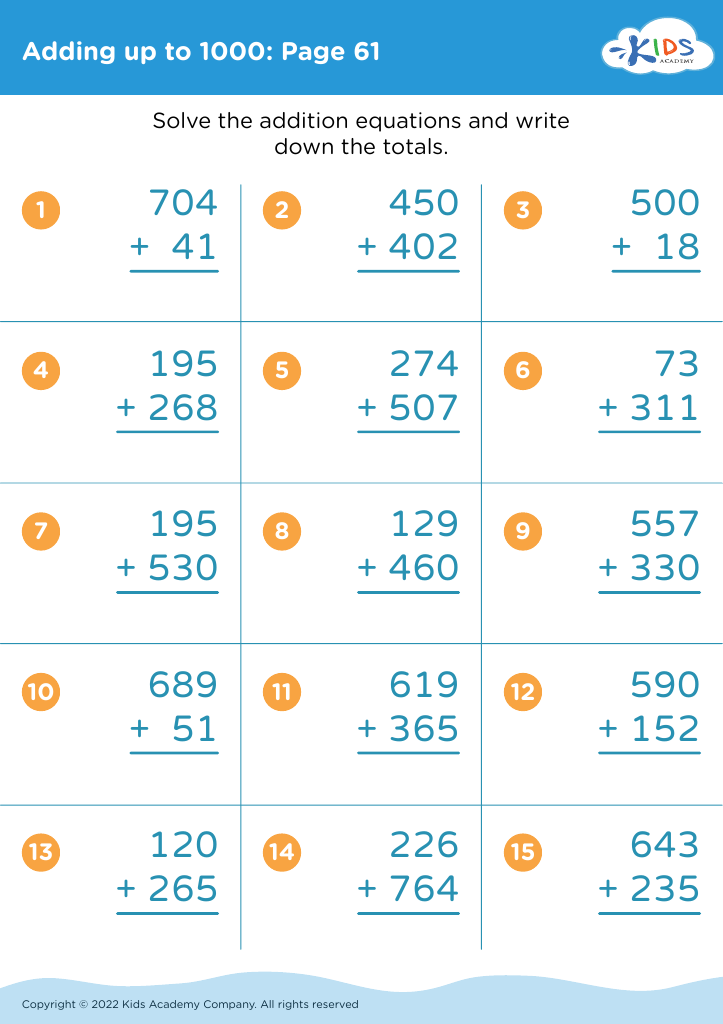
Adding up to 1000: Page 61

Adding up to 1000: Page 61

Adding up to 1000: Page 61
Worksheet
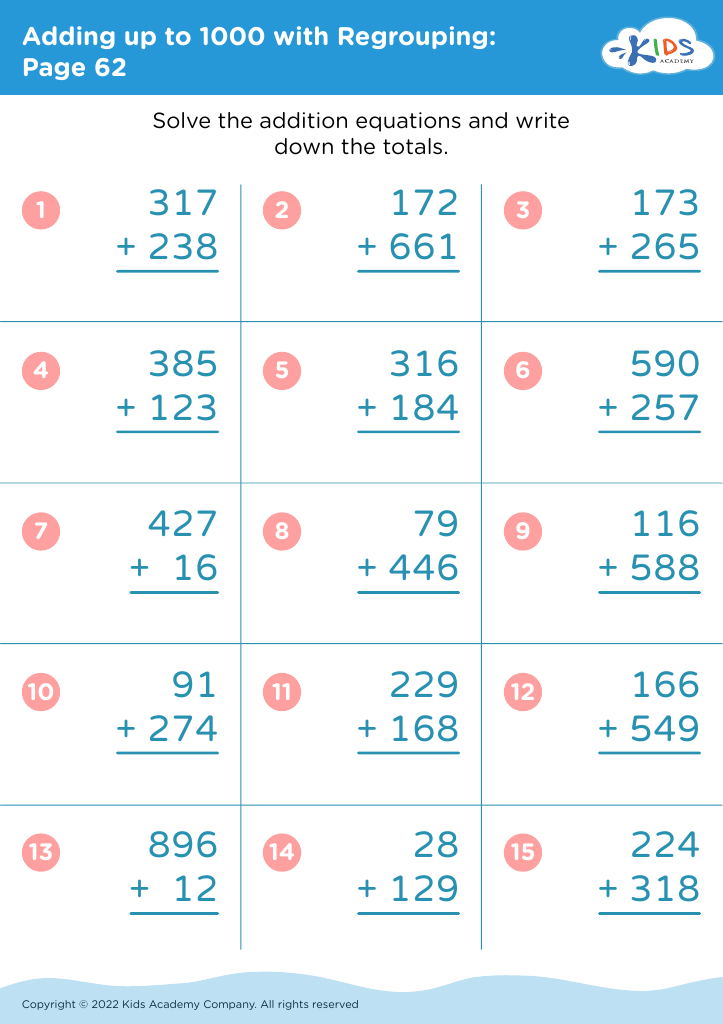
Adding up to 1000 with Regrouping: Page 62
Worksheet
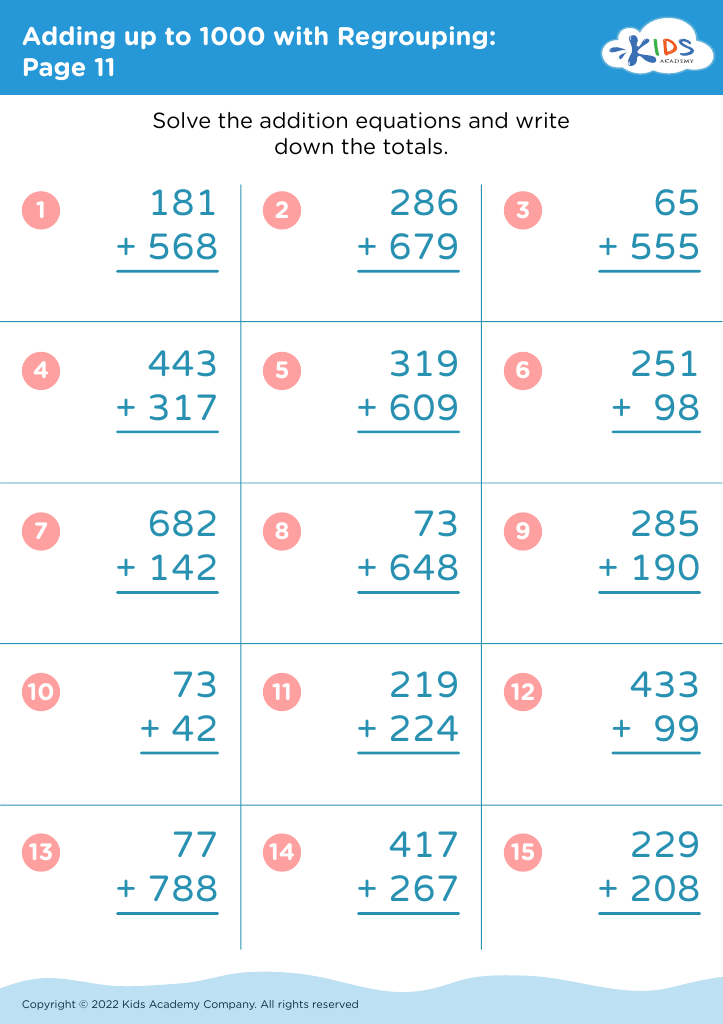
Adding up to 1000 with Regrouping: Page 11
Worksheet
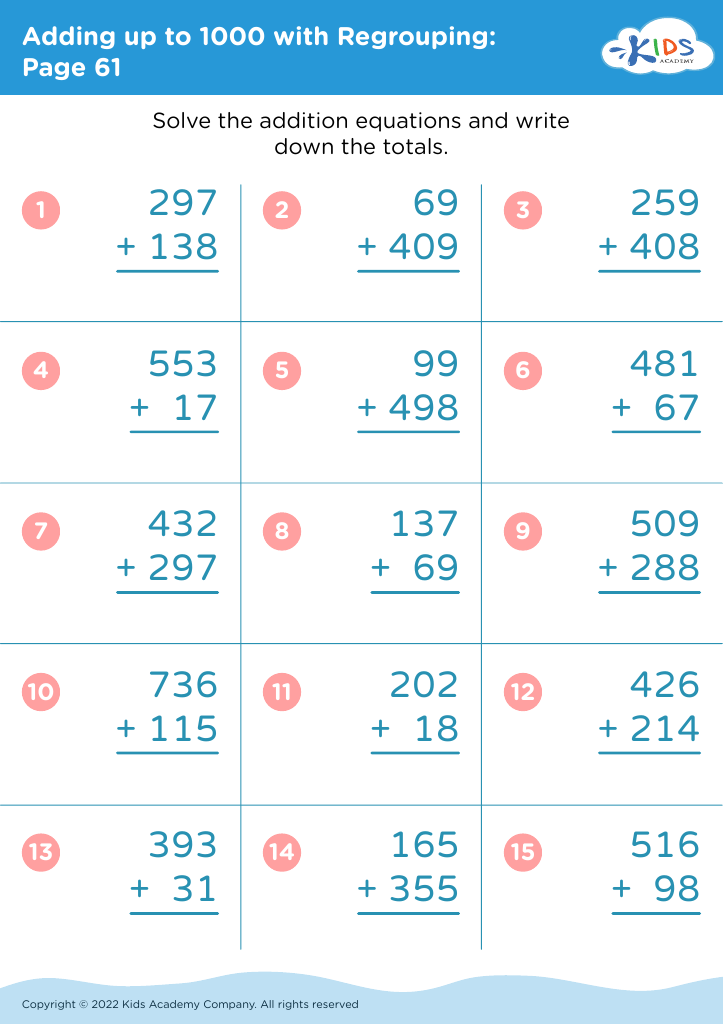
Adding up to 1000 with Regrouping: Page 61
Worksheet
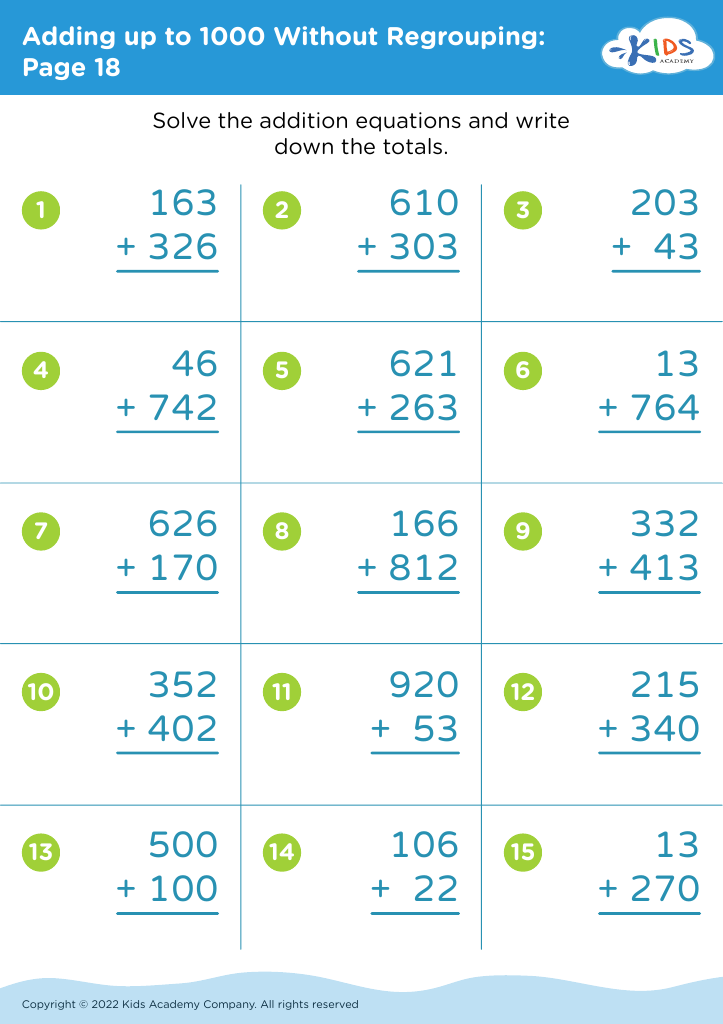
Adding up to 1000 Without Regrouping: Page 18
Worksheet
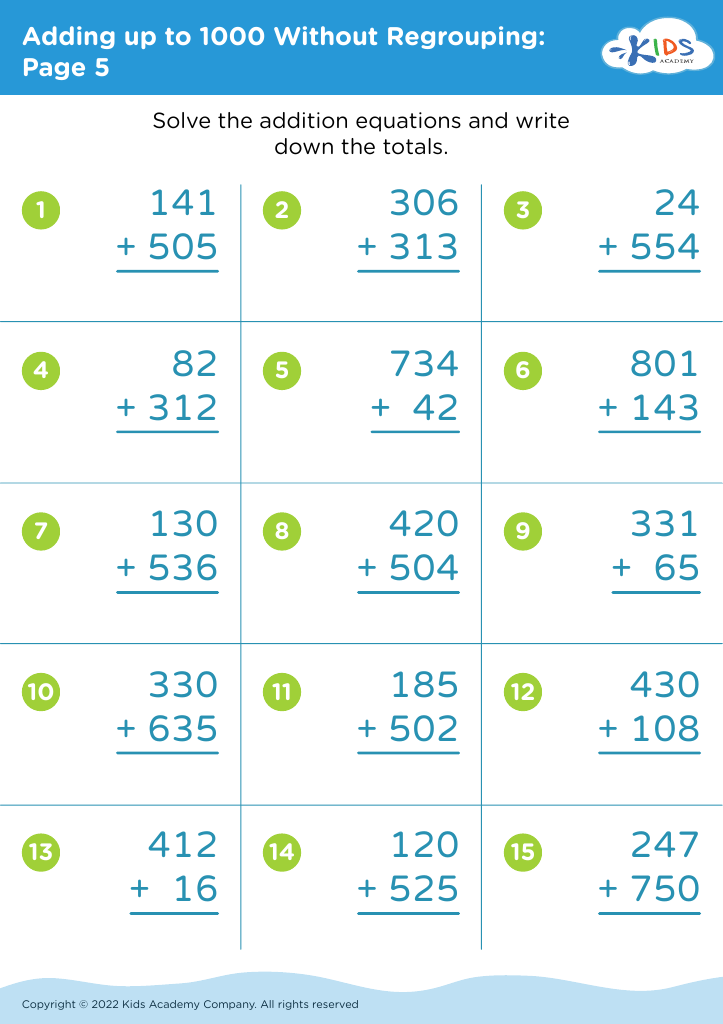
Adding up to 1000 Without Regrouping: Page 5
Worksheet
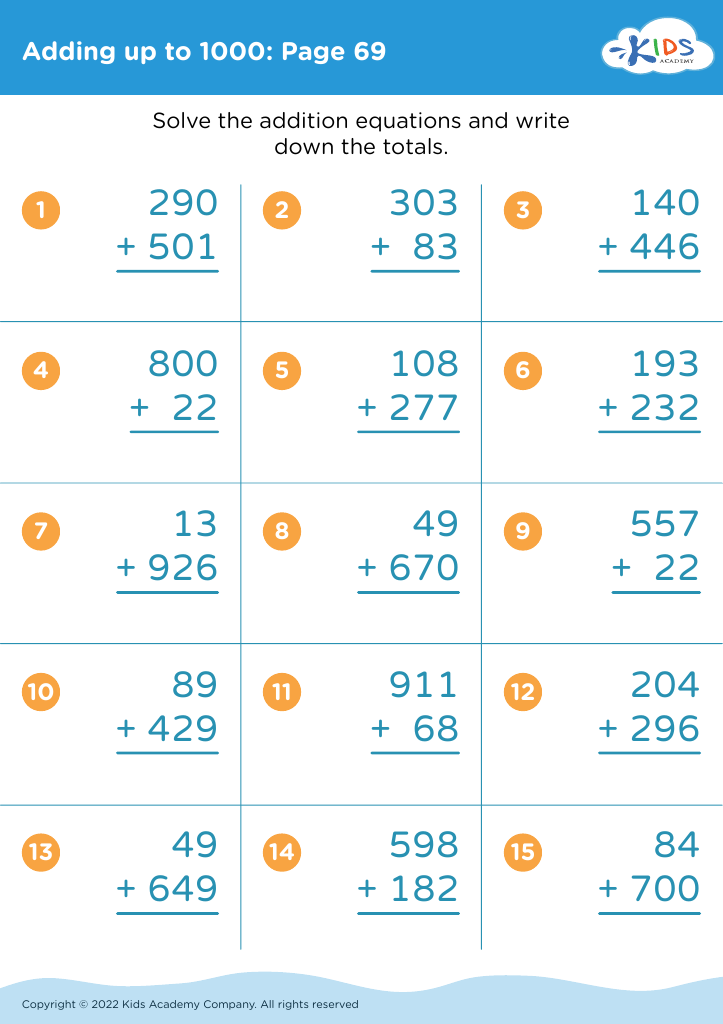
Adding up to 1000: Page 69

Adding up to 1000: Page 69

Adding up to 1000: Page 69
Worksheet
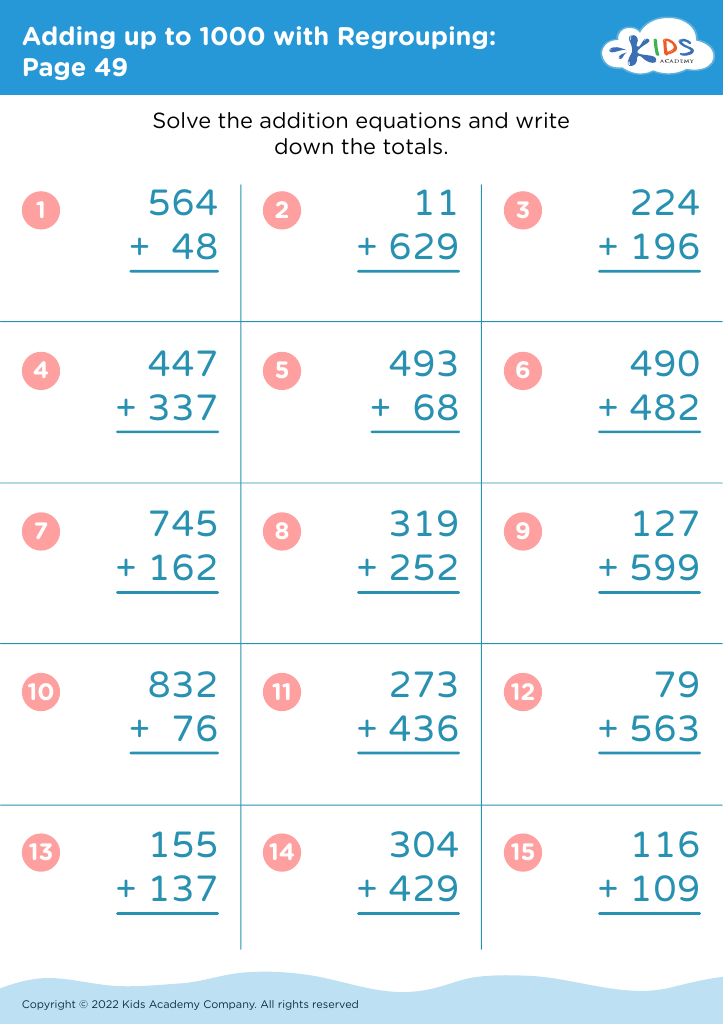
Adding up to 1000 with Regrouping: Page 49
Worksheet
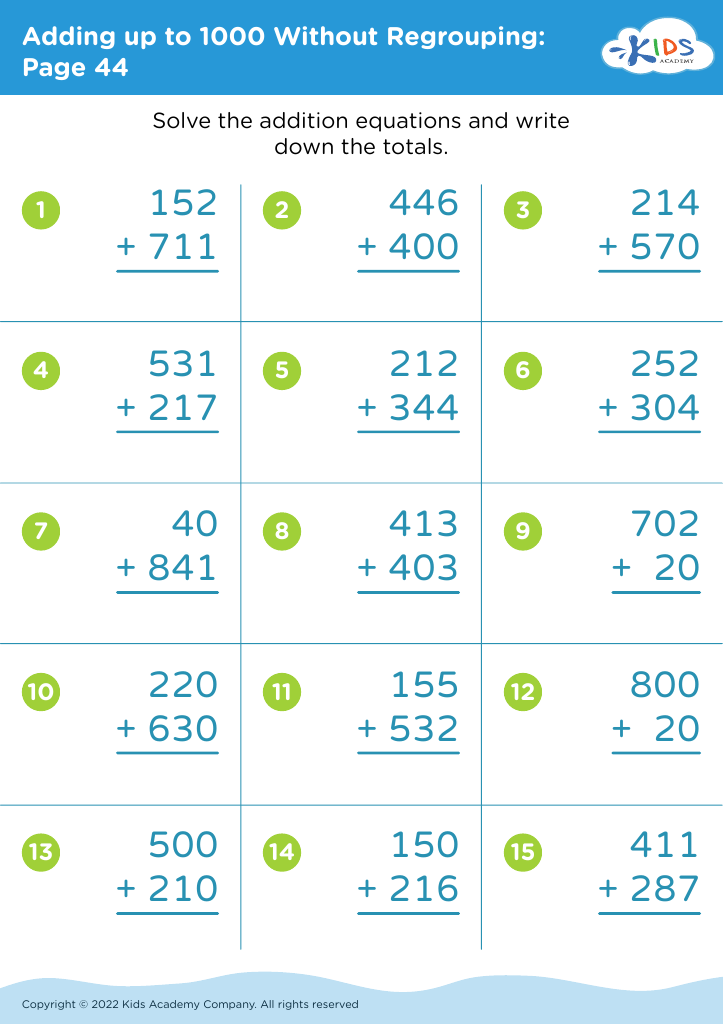
Adding up to 1000 Without Regrouping: Page 44
Worksheet
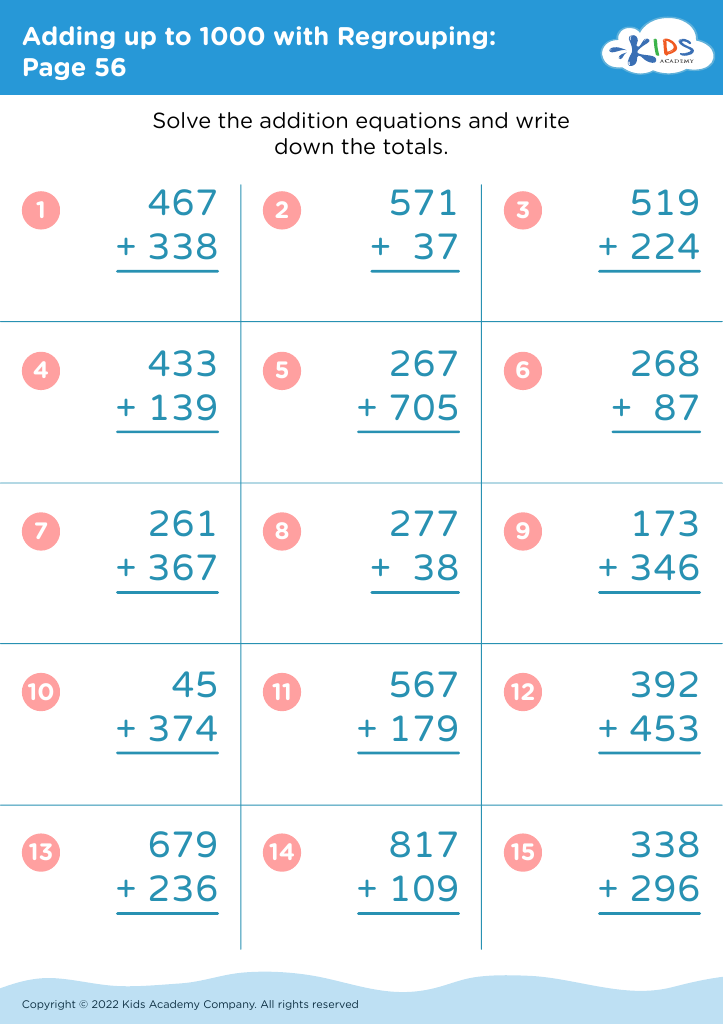
Adding up to 1000 with Regrouping: Page 56
Worksheet


Understanding fractions is essential for 9-year-olds as it lays the foundation for more complex mathematical concepts and real-world applications. Parents and teachers should care about this because integrating fractions into early education supports cognitive development, problem-solving skills, and mathematical literacy.

Firstly, grasping fractions boosts numerical understanding beyond whole numbers, helping children make sense of parts and wholes. This knowledge is applicable in everyday scenarios like cooking, dividing items, and understanding time, making math more relevant and engaging.

Secondly, fractions are building blocks for advanced topics such as ratios, percentages, and algebra, which will be crucial in their later education. A solid foundation in fractions ensures students are well-prepared for higher-level math, reducing anxiety and improving confidence.

Moreover, fractions encourage logical thinking and precision. Understanding how to manipulate and add fractions enhances a child's ability to reason quantitatively. This skill is transferable to various academic disciplines and everyday life.

Adding fractions up to larger quantities, even up to 1000, challenges students to apply these concepts in more complex problems. It strengthens their computational skills and ability to handle larger numbers with ease, preparing them for future mathematical challenges.

By fostering a strong grasp of fractions, parents and teachers equip children with essential skills that contribute to their overall academic success and life readiness.