Understanding patterns Adding up to 1000 Worksheets for 9-Year-Olds
5 filtered results
-
From - To
Discover engaging "Understanding Patterns: Adding Up to 1000" worksheets designed specifically for 9-year-olds. These worksheets support young learners in recognizing and applying number patterns, enhancing their mathematical skills. Through various exercises, students will develop a foundational understanding of how numbers relate, paving the way for more complex equations. The resources are crafted to be fun and interactive, keeping children motivated and eager to learn. With an emphasis on visual learning, these worksheets foster critical thinking as students explore addition strategies and patterns in numbers. Dive into a fun educational experience that builds confidence and competence in math today!
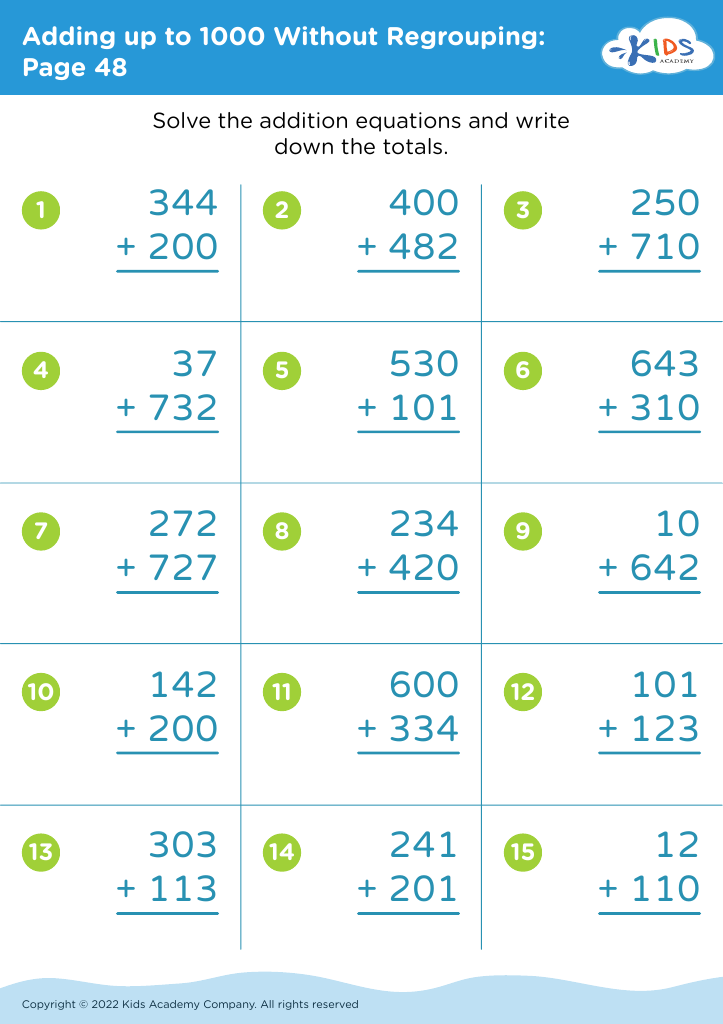
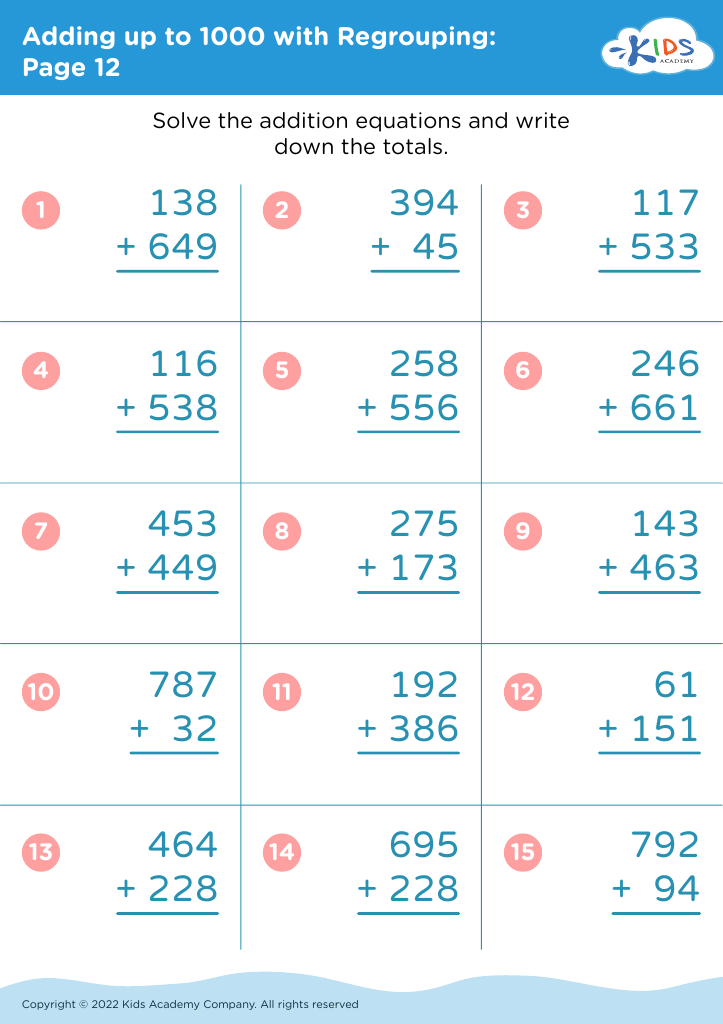
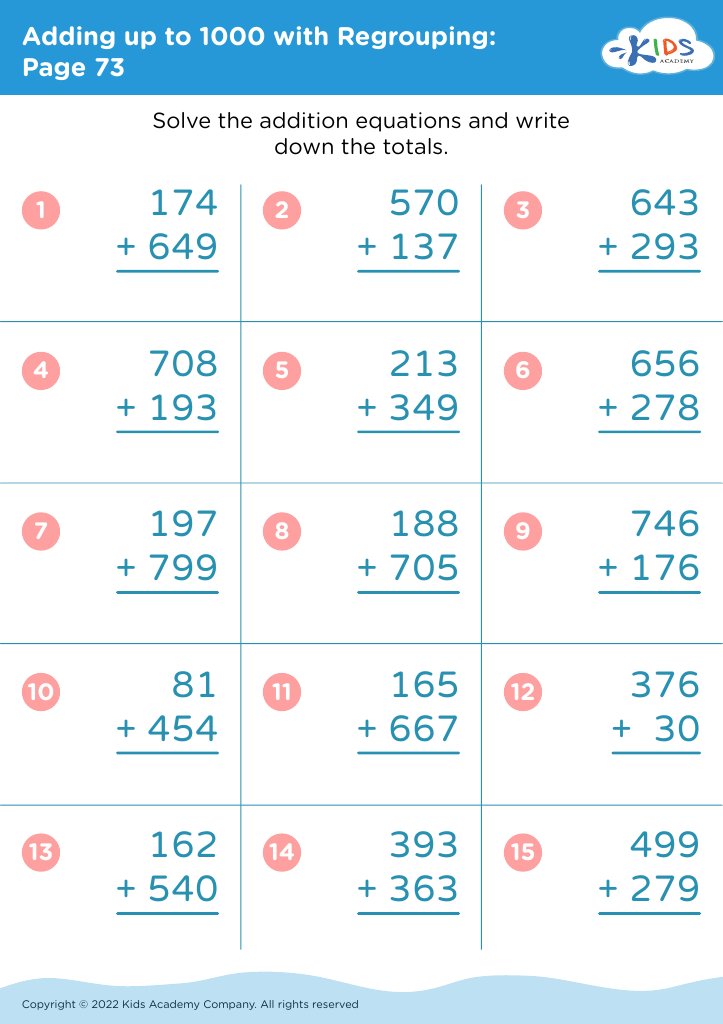
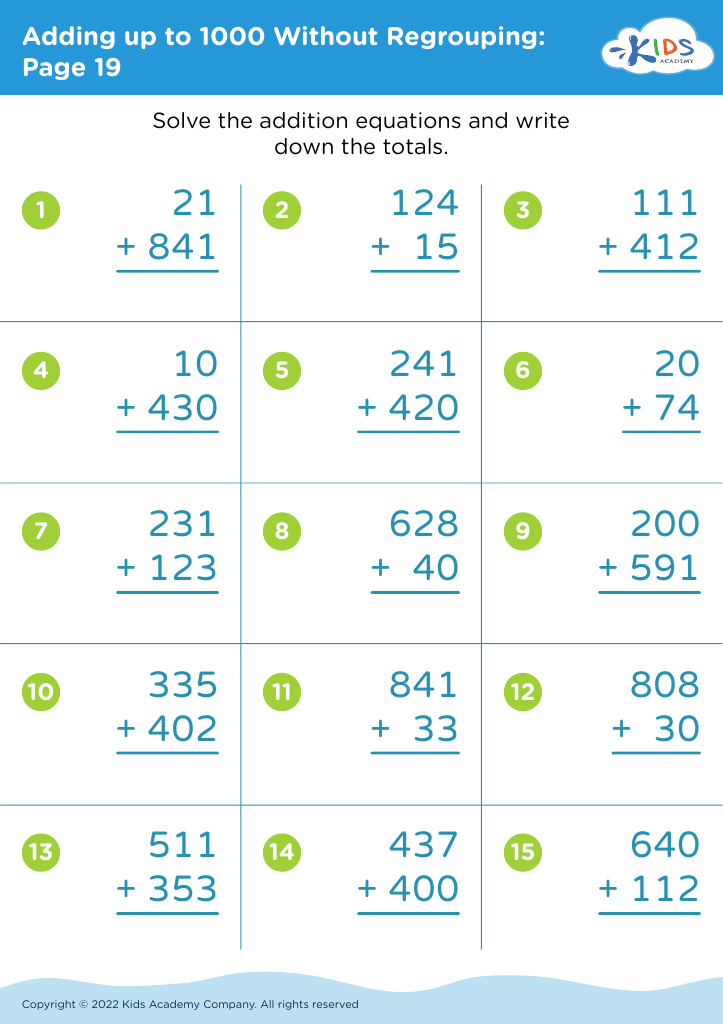
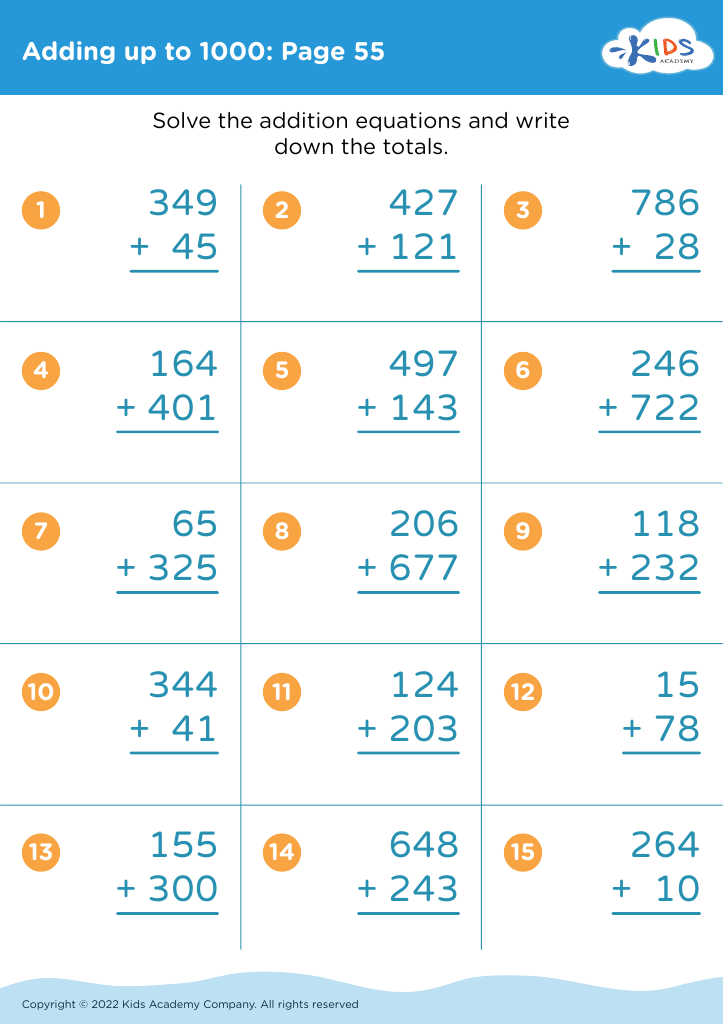



Understanding patterns when adding up to 1000 is crucial for 9-year-olds as it lays the foundation for advanced mathematical concepts. At this age, children start to transition from basic arithmetic to more complex problem-solving that requires understanding relationships between numbers. Identifying patterns helps them recognize how numbers interact, which promotes mental math skills, efficiency in calculations, and enhances their number sense.
Parents and teachers play a vital role in fostering this understanding. By emphasizing patterns, educators can make arithmetic more relatable and engaging, transforming what may seem like rote memorization into an exciting Discovery. When students see that 1000 can be broken down into various combinations (such as 500 + 500, 600 + 400, etc.), they become equipped to tackle larger numbers and fractions in the future.
Furthermore, a solid grasp of these patterns reinforces other mathematical skills, such as multiplication and division. It helps them recognize and apply strategies when solving word problems, leading to improved critical thinking skills. Caring about these concepts means investing in a child’s overall academic success, ensuring they build confidence in math, which is essential for their educational journey. Ultimately, nurturing this understanding inside and outside the classroom will set children up for future achievements in mathematics.








