Understanding Sequences Adding up to 1000 Worksheets for 9-Year-Olds
6 filtered results
-
From - To
Discover engaging and educational worksheets designed for 9-year-olds, focused on understanding sequences that add up to 1000. These expertly crafted worksheets help young learners recognize patterns and improve their problem-solving skills through fun, interactive problems. With these resources offered by Kids Academy, children can confidently practice and enhance their mathematical abilities by learning to identify, extend, and create numerical sequences. Perfect for both classroom and at-home learning, these worksheets make mastering sequences enjoyable and straightforward. Prepare your child for advanced math concepts while boosting their confidence and proficiency in addition—all through entertaining activities they’ll love!
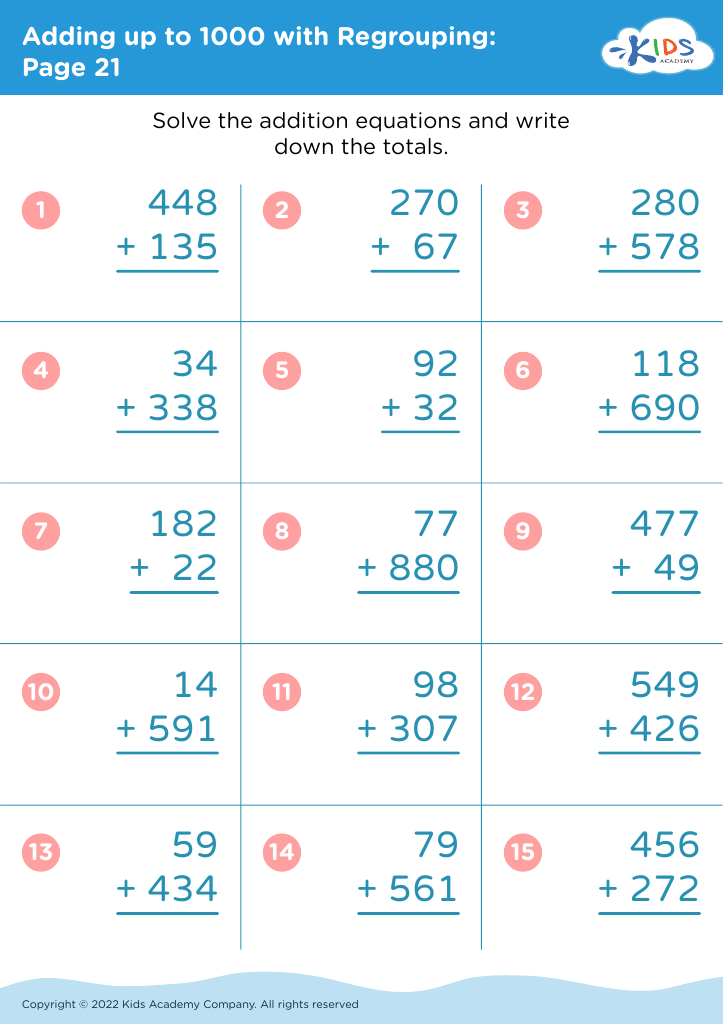
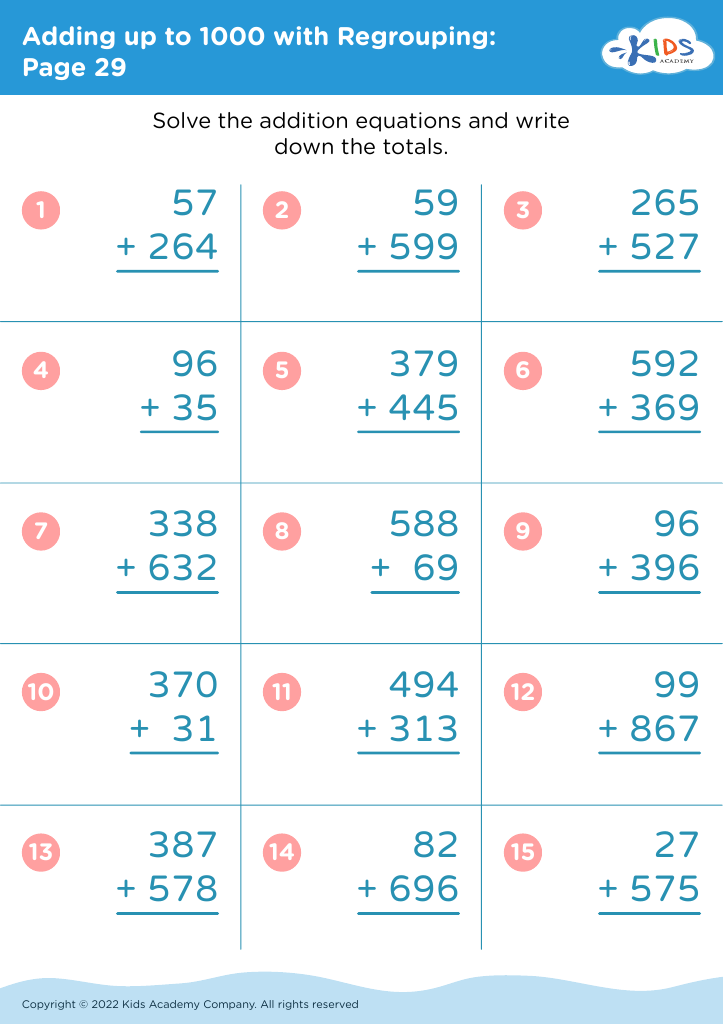
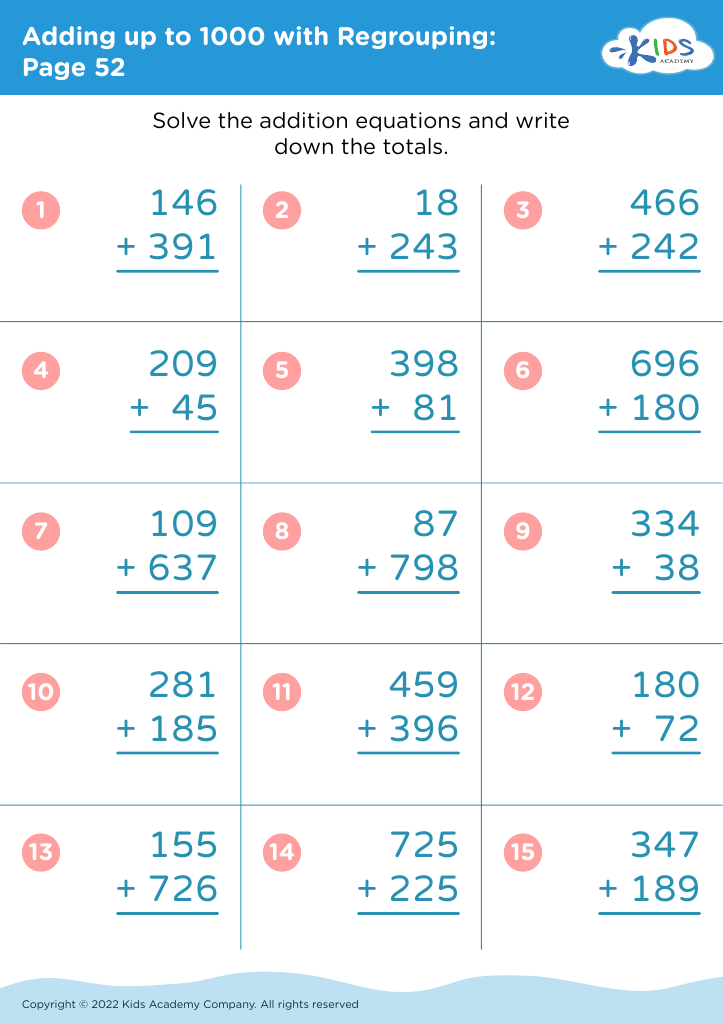
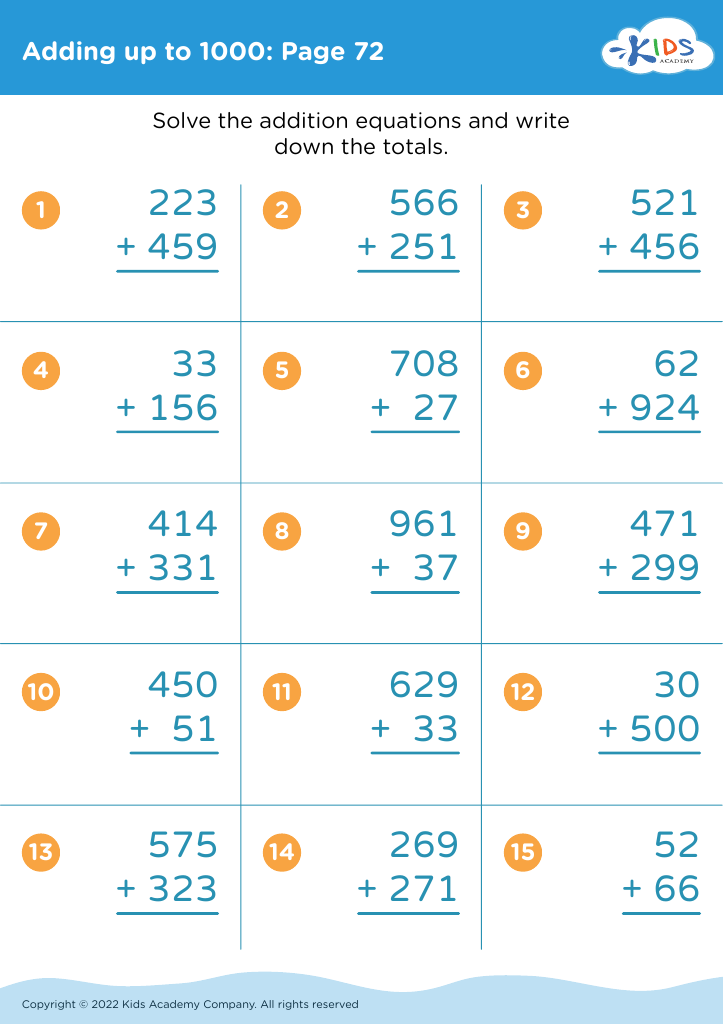
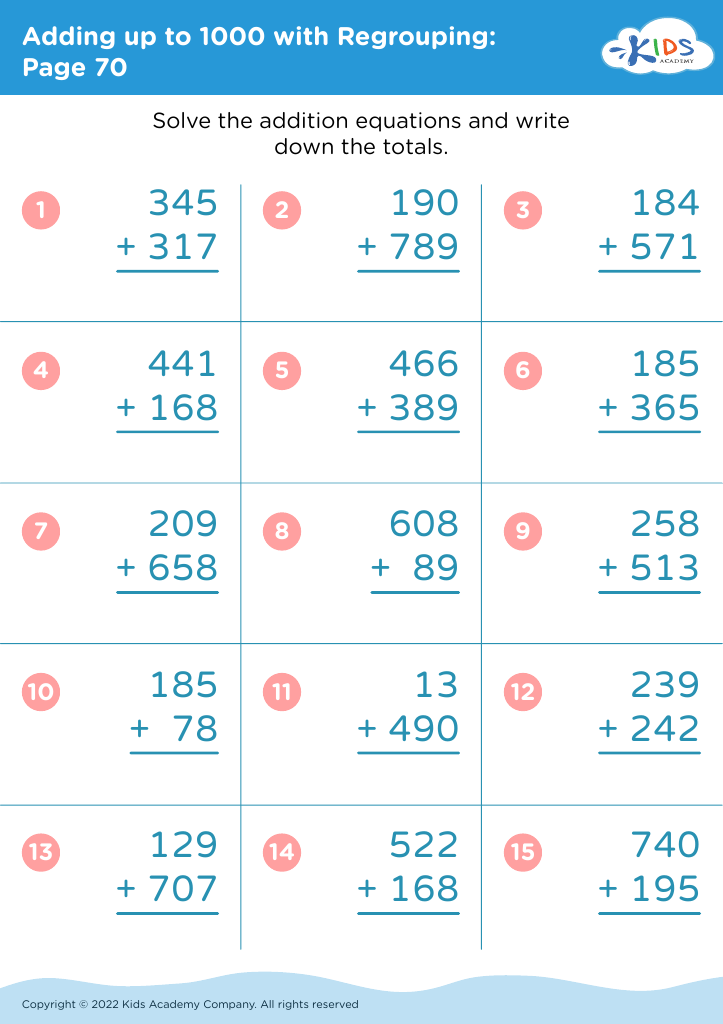
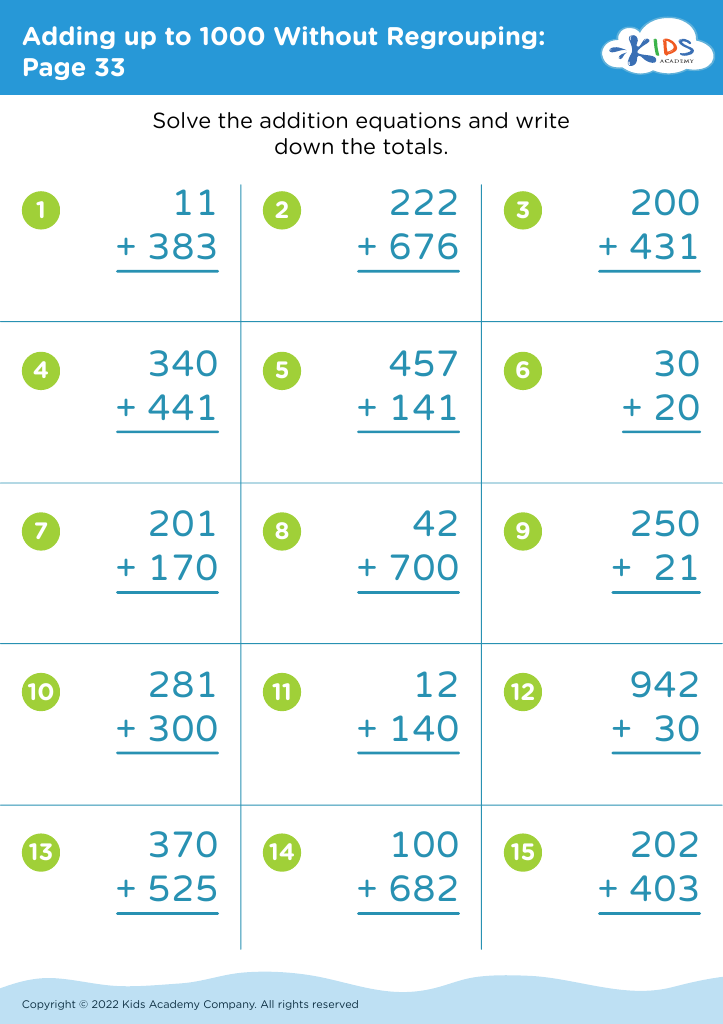



Understanding sequences that add up to 1000 at the age of nine can be a pivotal learning experience for children, offering a blend of mathematical concept understanding as well as cognitive development. When 9-year-olds engage with such problems, they learn the fundamental skills of patterns and number relationships, which are essential concepts in mathematics. These sequences enhance their ability to perform computations, understand algebraic thinking, and recognize the significance of order and structure.
For parents and teachers, pushing boundaries beyond basic arithmetic fosters critical thinking and problem-solving abilities in children. It cultivates their logical reasoning and strategy development, skills that are applicable beyond the math classroom. Understanding large number sequences also builds determination, as children practice perseverance through trial and error to achieve the total of 1000.
Moreover, incorporating sequences and patterns into learning helps in the holistic brain development of children. It encourages a deep and structured mindset which is crucial in solving more complex problems as they progress in their education. Parents and teachers who introduce sequences in this manner are laying a foundational stone for academic success, allowing a child's curiosity and mathematical proficiency to flourish.








