Shape Recognition Addition Worksheets for 9-Year-Olds
12 filtered results
-
From - To
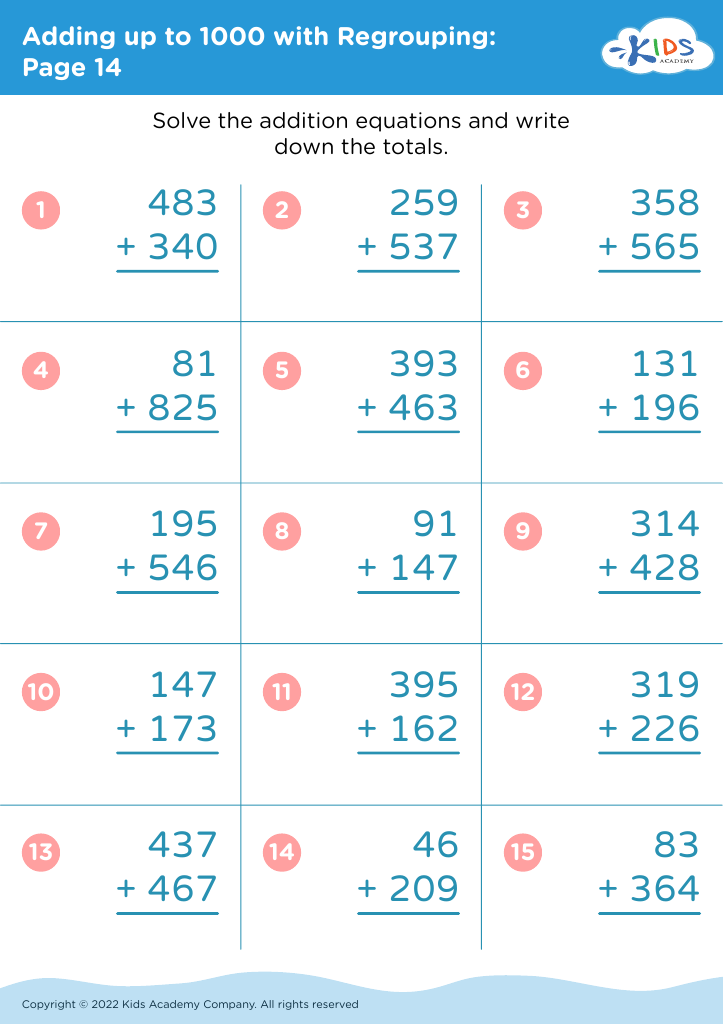
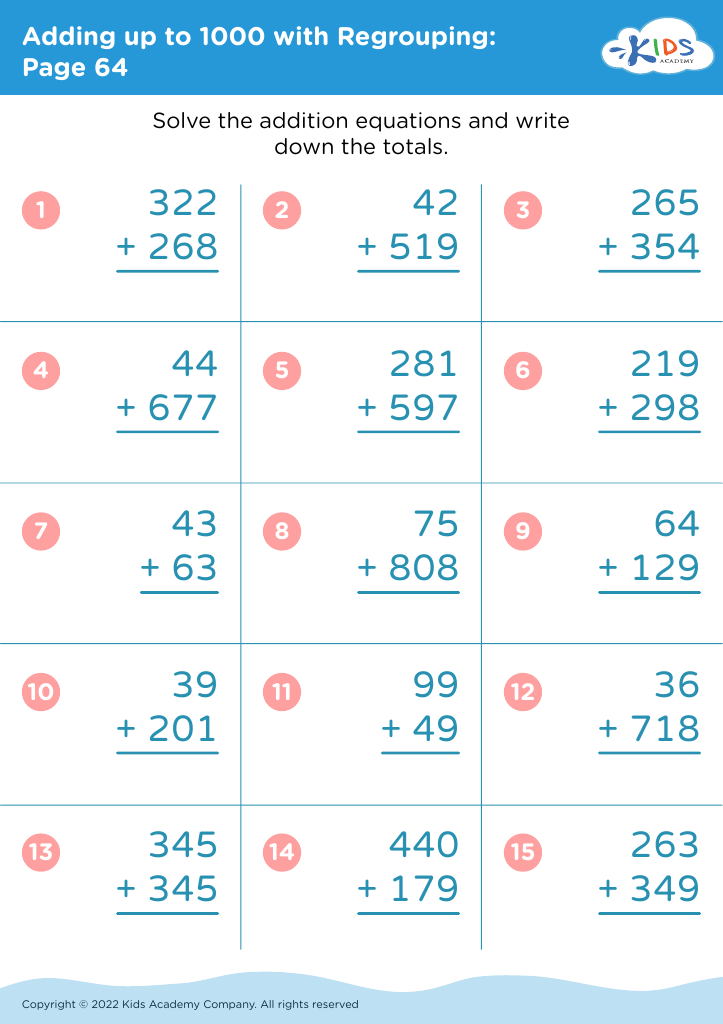
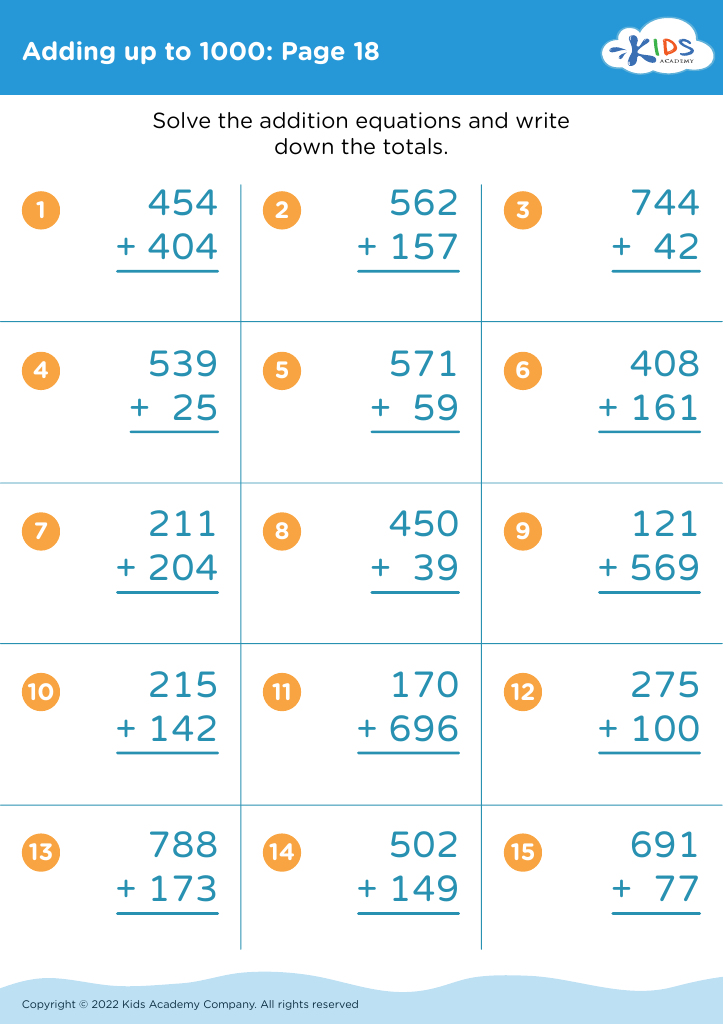
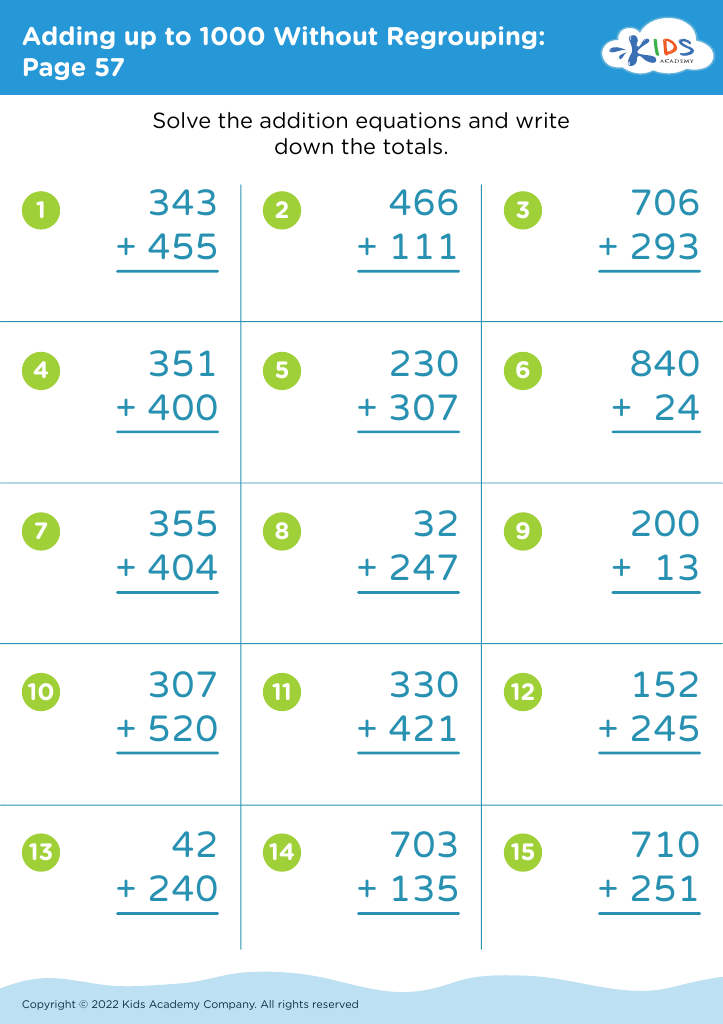
Enhance your child's mathematical skills with our Shape Recognition Addition Worksheets designed specifically for 9-year-olds. These engaging worksheets combine shape identification with addition practice, providing a fun and interactive way to learn. Children will explore various shapes while solving addition problems, boosting both their geometry understanding and arithmetic abilities. With colorful visuals and age-appropriate challenges, these resources make learning enjoyable and effective. Perfect for classroom use or at-home learning, our worksheets encourage critical thinking and reinforce vital math concepts. Give your child the tools they need for success in math while fostering a love for learning with our shape recognition activities!
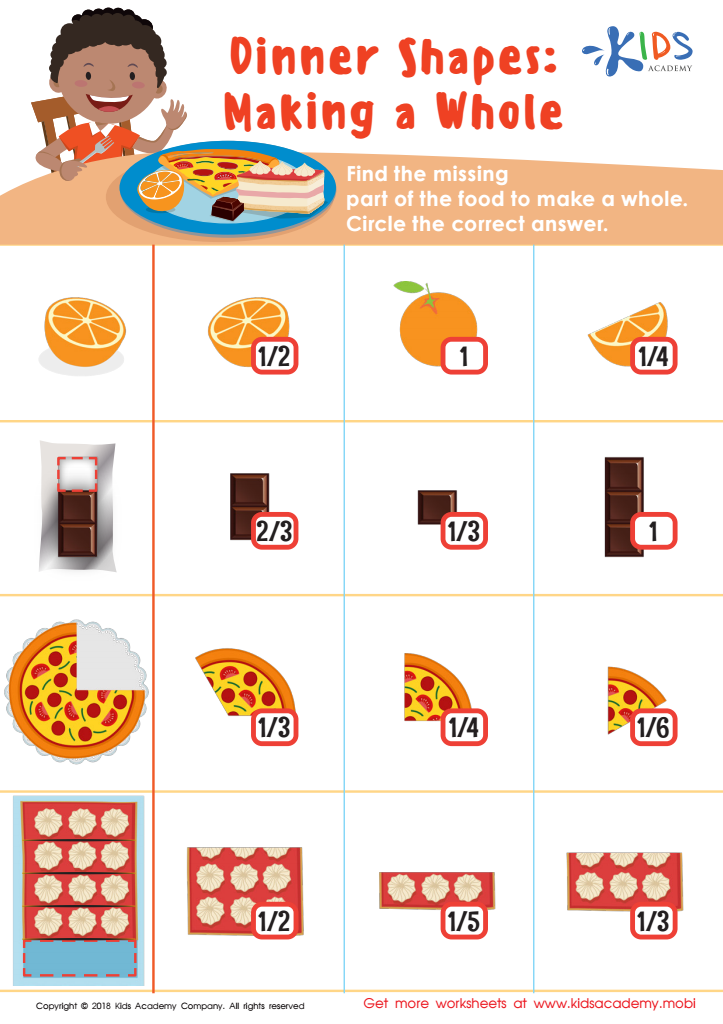
Dinner Shapes: Making a Whole Worksheet
 Assign to My Students


.jpg)





Shape recognition and addition are foundational skills that greatly influence a child's mathematical development and cognitive growth. For 9-year-olds, mastering these concepts is essential, as they not only enhance mathematical proficiency but also foster critical thinking and problem-solving abilities.
By understanding shapes, children improve their spatial awareness and learn to categorize and manipulate different geometric elements. This skill is crucial for more advanced math topics and everyday tasks, such as reading maps or designing objects. When paired with addition, children learn to combine numerical and spatial concepts, cultivating a well-rounded mathematical skill set. This integration nurtures a deeper understanding of mathematical operations and their practical applications.
Parents and teachers should care about these skills because they impact a child's confidence and enthusiasm for learning. Mastery in these areas can lead to success in higher educational pursuits and STEM fields, ensuring that children develop a strong foundation. Additionally, recognizing shapes and understanding addition equip students with life skills that extend beyond the classroom, supporting logical reasoning and decision-making in daily contexts. Fostering shape recognition and addition in young learners creates opportunities for growth and academic achievement, laying the groundwork for future success.








