Counting skills Graphs Worksheets for 9-Year-Olds
3 filtered results
-
From - To
Enhance your 9-year-old's counting skills with our engaging Counting Skills Graphs Worksheets! These thoughtfully designed printables help young learners develop essential math concepts while making learning fun. Through various activities, children will explore counting objects and interpreting data presented in graphs, fostering their critical thinking and analytical abilities. Our worksheets cater to different learning styles, ensuring that every child can build confidence in their counting skills. With colorful visuals and interactive challenges, your child will enjoy practicing math while reinforcing their understanding of graphs. Boost their excitement for learning with these resources designed to support their educational journey! Download and get started today!
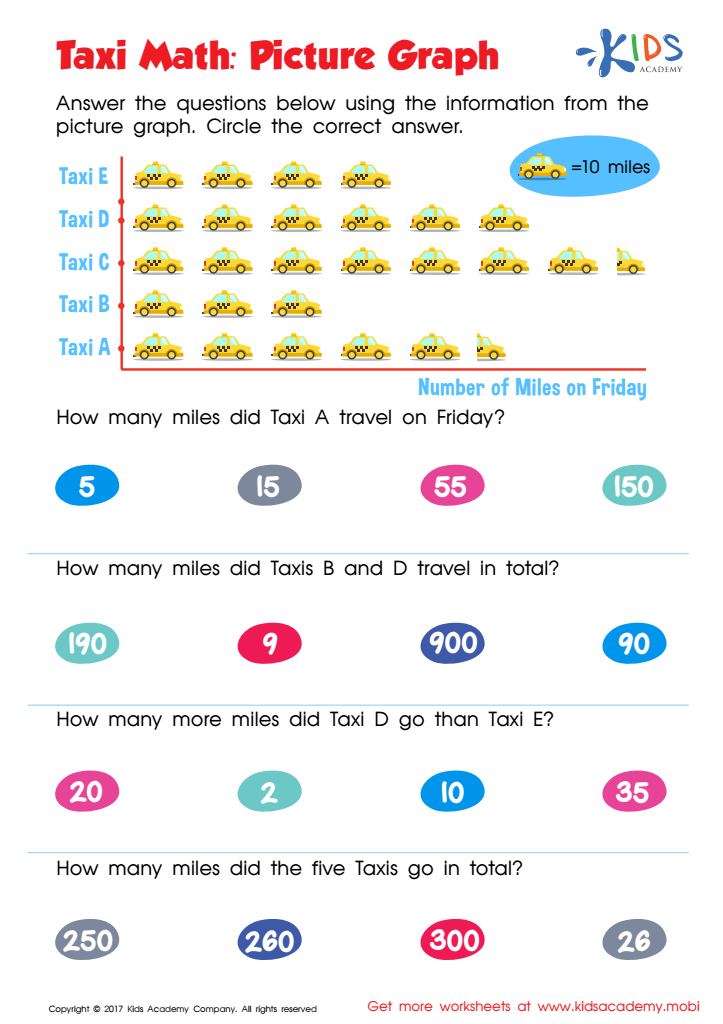
Taxi Math Worksheet
 Assign to My Students
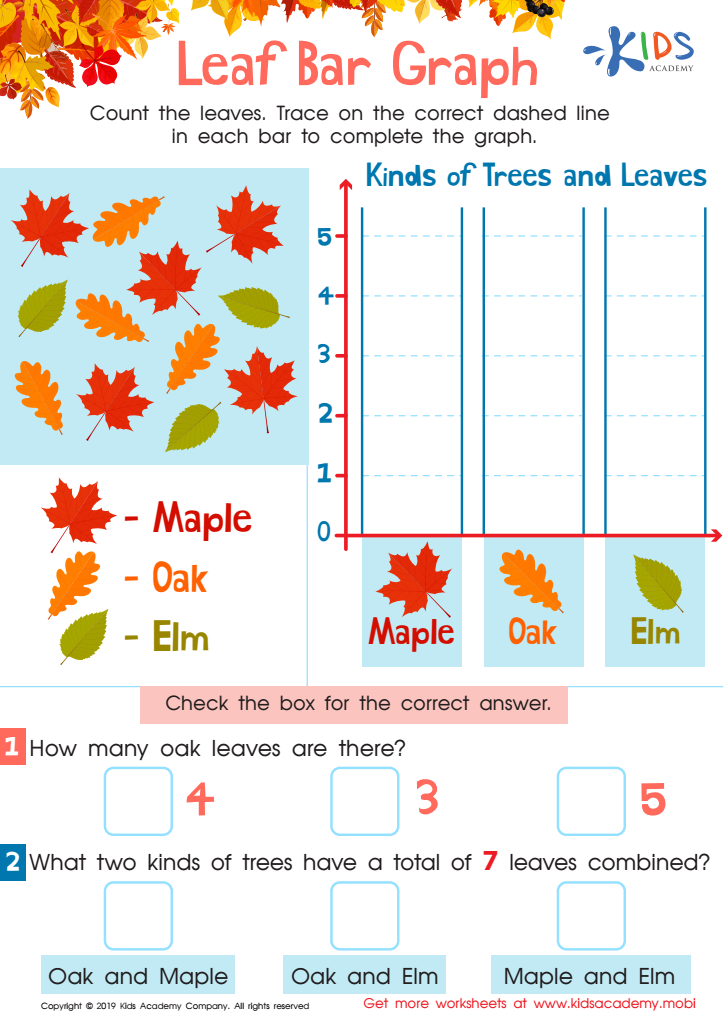
Leaf Bar Graph Worksheet
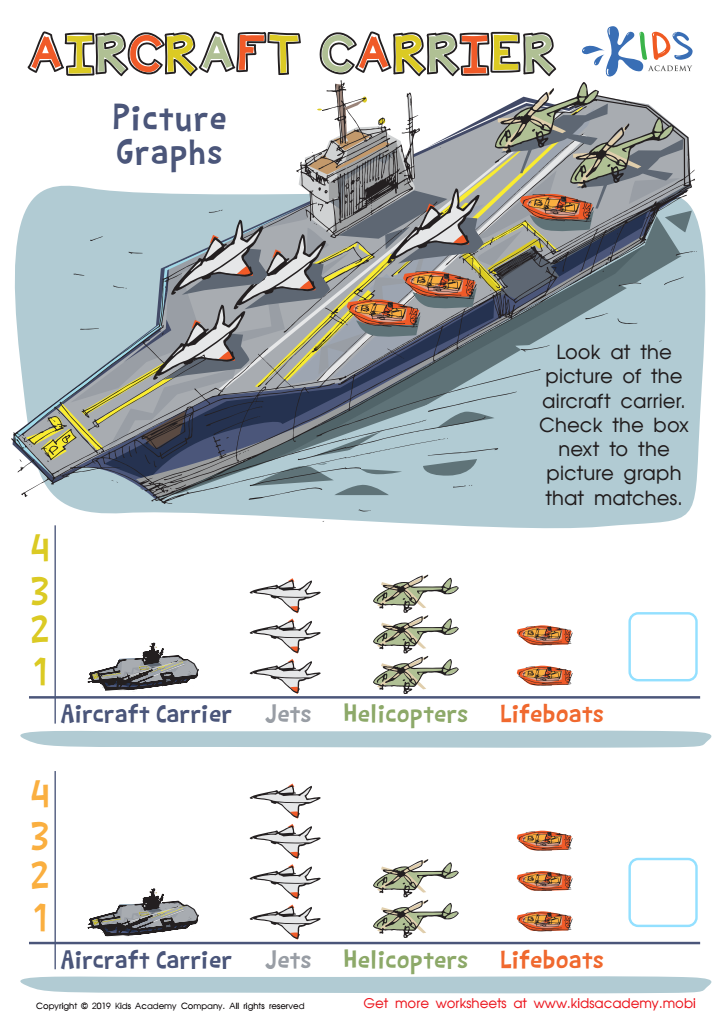
Aircraft Carrier Picture Graphs Worksheet








Counting skills and graphing are fundamental concepts that underlie a child's understanding of mathematics and data interpretation. For 9-year-olds, developing these skills is crucial for several reasons. First, counting is the foundation of all mathematical operations. As children advance in their learning, a strong grasp of counting allows them to excel in addition, subtraction, and more complex mathematical concepts.
Graphs provide a visual representation of data, making information easier to understand and analyze. Teaching children to create and interpret graphs fosters critical thinking and analytical skills. It helps them draw conclusions from visual data, recognize patterns, and make comparisons. These skills are increasingly essential in today's data-driven world.
Moreover, counting skills and graphing can enhance a child's confidence in mathematics. Engaging in these activities can promote problem-solving capabilities and build a child's ability to communicate mathematical ideas. For parents and teachers, prioritizing these skills can lead to better overall academic outcomes and prepare children for more complex concepts in higher grades. Ultimately, nurturing counting and graphing skills equips children with tools they will use throughout their education and everyday life, making it essential for adults to share this responsibility.








