
Mental arithmetic skills Times Tables Worksheets for 9-Year-Olds
3 filtered results
Difficulty Level
Grade
Age
-
From - To
Subject
Activity
Standards
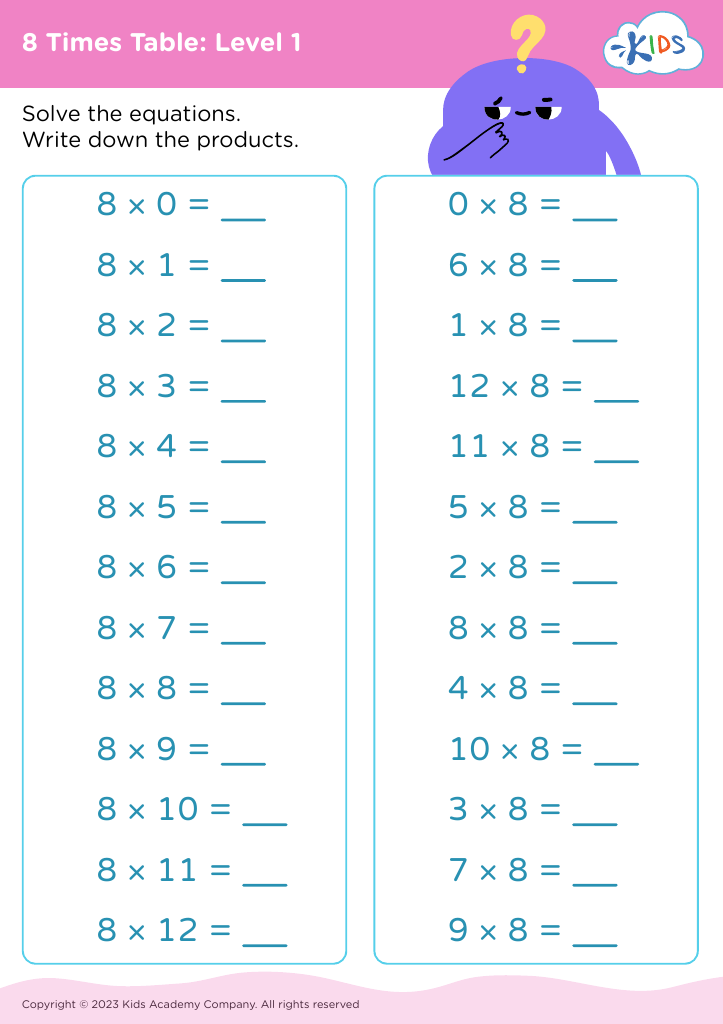
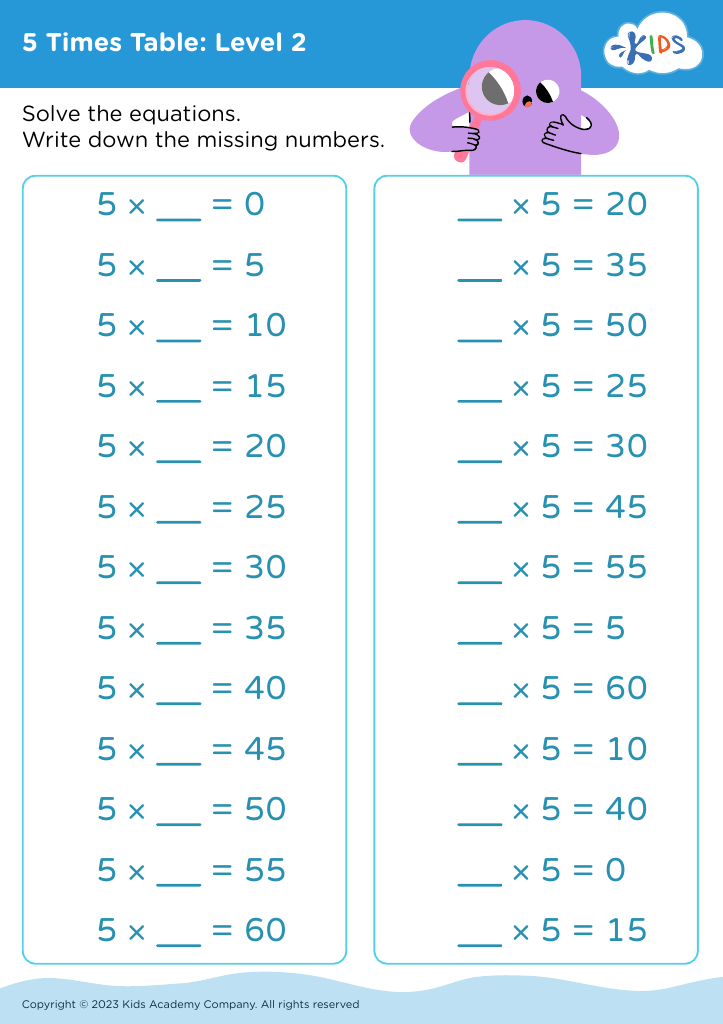
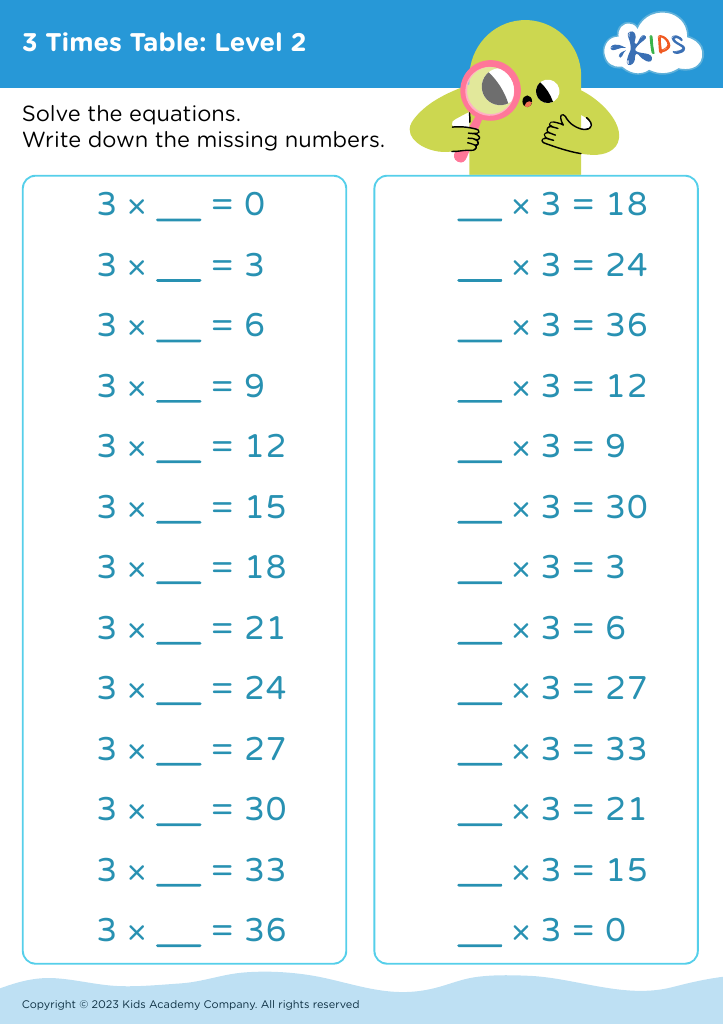
Boost your child's mental arithmetic skills with our engaging Times Tables Worksheets, specifically designed for 9-year-olds! These resources make learning multiplication fun and effective, helping young learners strengthen their math foundation. Our thoughtfully crafted worksheets encourage quick thinking and problem-solving, ideal for in-class or at-home practice. With a variety of exercises catering to different learning styles, kids can build confidence and fluency in their times tables. Perfect for enhancing classroom performance or reinforcing homework, these worksheets are a valuable tool for educational reinforcement. Unlock your child's math potential today and empower them with essential mental arithmetic skills!
Favorites
With answer key
Interactive
Join Kids Academy for Free
Who is primarily going to use this learning content?





Mental arithmetic skills, particularly with multiplication like times tables, are crucial for 9-year-olds as they form the foundation for more complex mathematical concepts. At this age, children are transitioning from concrete to abstract thinking, making it an ideal time to strengthen their understanding of numbers. Mastering times tables enhances their calculation speed and accuracy, reducing reliance on calculators during daily tasks and academic assessments.
Parents and teachers should care about these skills because they not only support current curriculum requirements but also build confidence in students. A solid grasp of times tables fosters problem-solving abilities, logical reasoning, and mental agility; skills that extend beyond mathematics and into everyday life.
Furthermore, when children are proficient in mental arithmetic, they can focus more on problem-solving and innovative thinking rather than the mechanics of calculation. This can lead to a positive attitude towards math—a subject often viewed with anxiety by many students. Engaging in times table activities can also create bonding opportunities for parents and children while reinforcing learning in a fun, interactive way. Thus, prioritizing mental arithmetic skills like times tables is a powerful investment in a child’s academic success and overall cognitive development.








