Times table familiarity Times Tables Worksheets for 9-Year-Olds
3 filtered results
-
From - To
Enhance your child's math skills with our engaging Times Tables Worksheets designed specifically for 9-year-olds! These worksheets aim to boost times table familiarity through fun exercises that make learning enjoyable. Featuring colorful graphics and interactive activities, students will practice multiplication concepts in an easy-to-understand format. Our resources help build confidence as children quickly recall times tables, improving their overall math performance. Whether for classroom use or at-home learning, our worksheets cater to various learning styles, ensuring every child masters their multiplication facts. Download and print today to turn math practice into a delightful and effective learning experience!
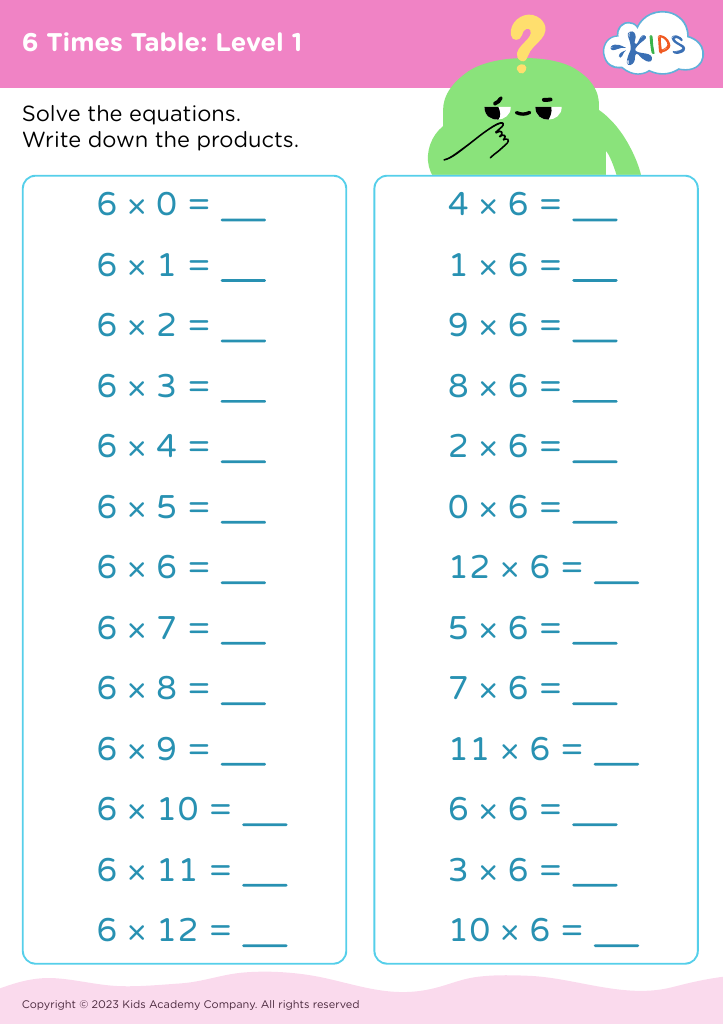
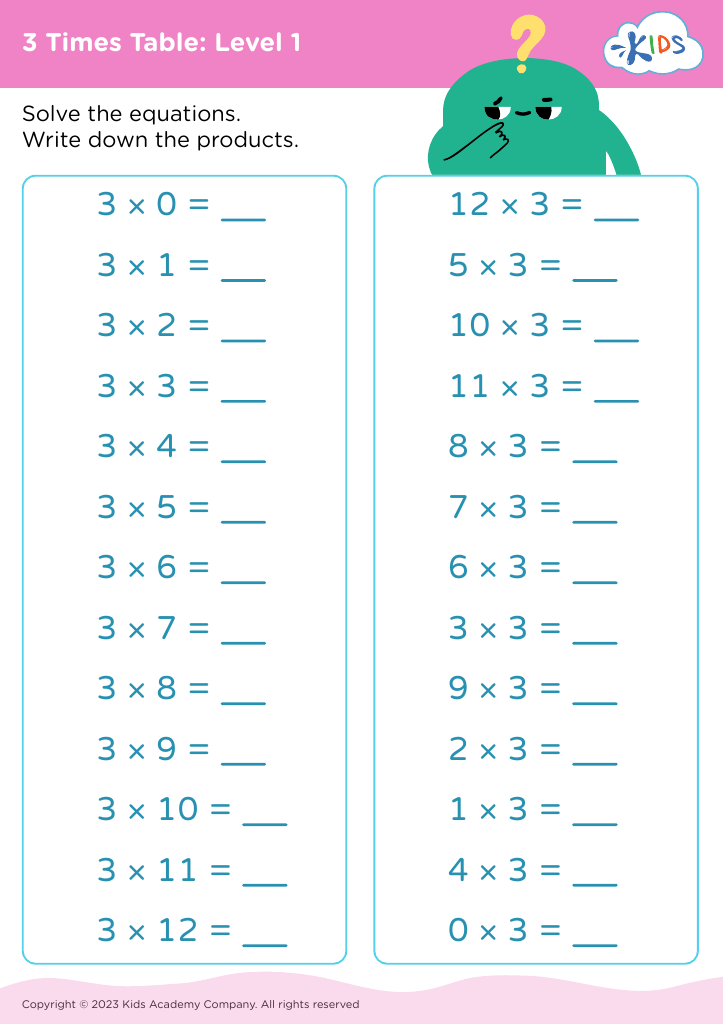
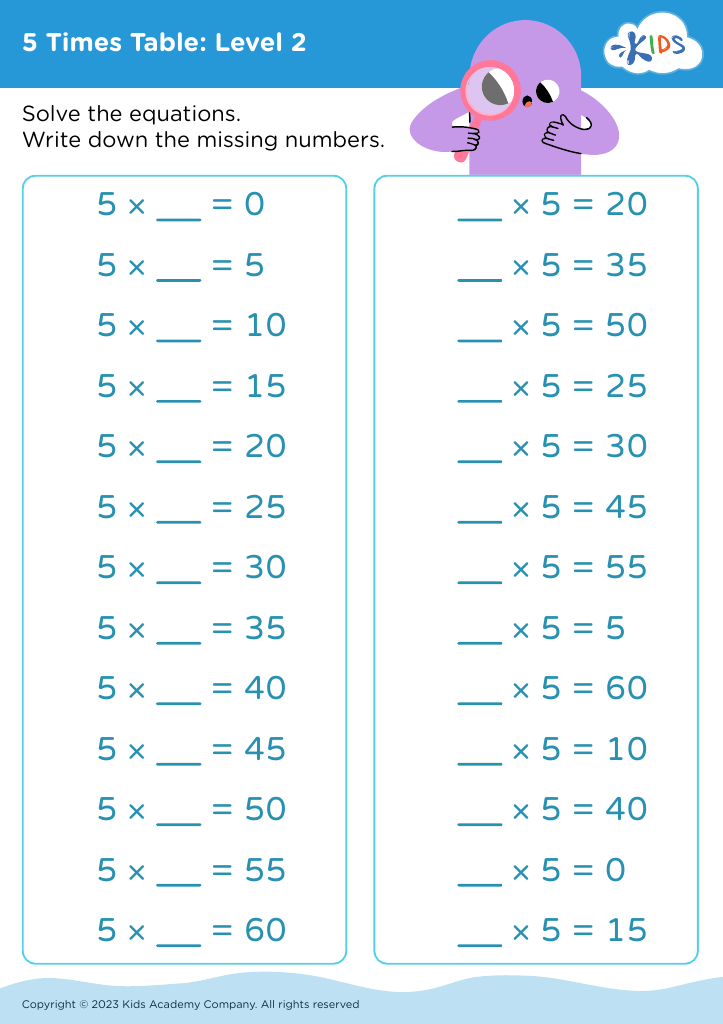





Parents and teachers should prioritize familiarity with times tables for 9-year-olds because it lays the foundation for future mathematical learning and problem-solving skills. Mastering multiplication tables is crucial, as these mathematical concepts are interconnected and serve as building blocks for algebra, fractions, and other more advanced topics. A strong grasp of times tables helps students develop confidence in their abilities, reducing math-related anxiety and fostering a positive attitude towards learning.
Furthermore, familiarity with times tables enhances mental calculation skills, allowing students to solve problems more efficiently and accurately. This skill not only aids in academics but also in everyday situations, such as shopping, cooking, or budgeting. Engaging students in fun and interactive ways, like games or songs, can motivate them to practice and reinforce their learning.
Additionally, students proficient in times tables are better equipped for collaborative activities and standardized testing, where quick mental calculations are often required. This proficiency can also support their peers by fostering teamwork during group projects. Thus, ensuring that children are comfortable and confident in their times tables is an essential investment in their educational and personal development. In sum, nurturing mathematical skills from an early age cultivates lifelong learners equipped for future challenges.








