Spelling practice Grammar Worksheets for Ages 4-7 - Page 2
34 filtered results
Difficulty Level
Grade
Age
-
From - To
Subject
Activity
Standards
Favorites
With answer key
Interactive
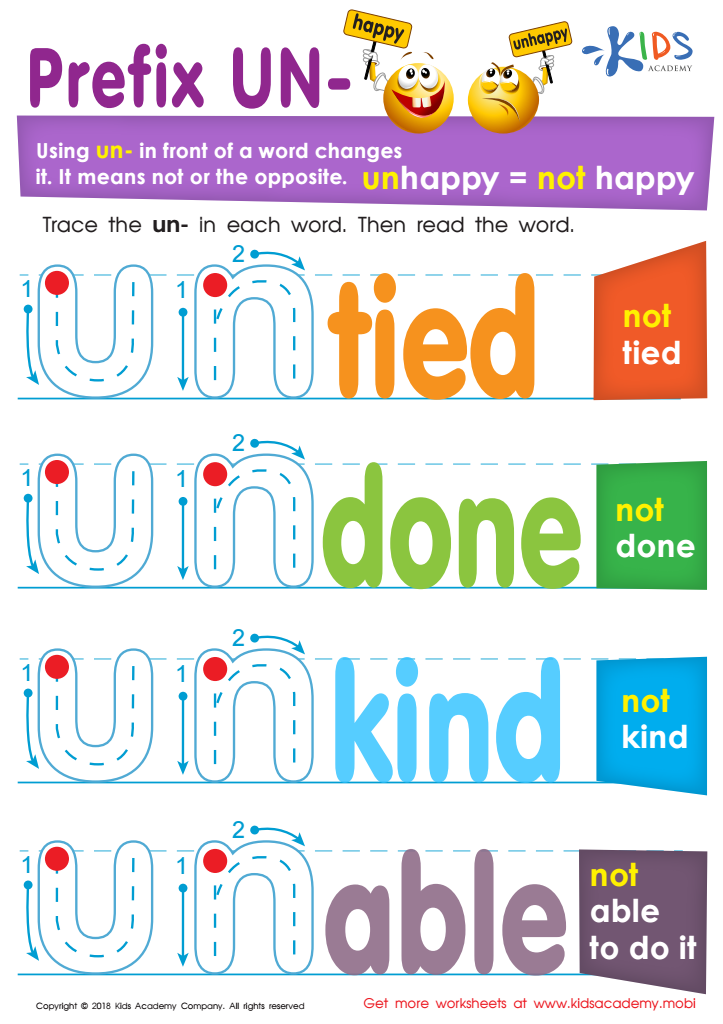
Prefix Un- Worksheet
Help your child understand the concept of adding "un-" to the front of words by giving examples such as "unhappy" (not happy) and "unserious" (not serious). Guide them in tracing the "un-" in each word and read it aloud together.
 Assign to My Students
Prefix Un- Worksheet
Worksheet
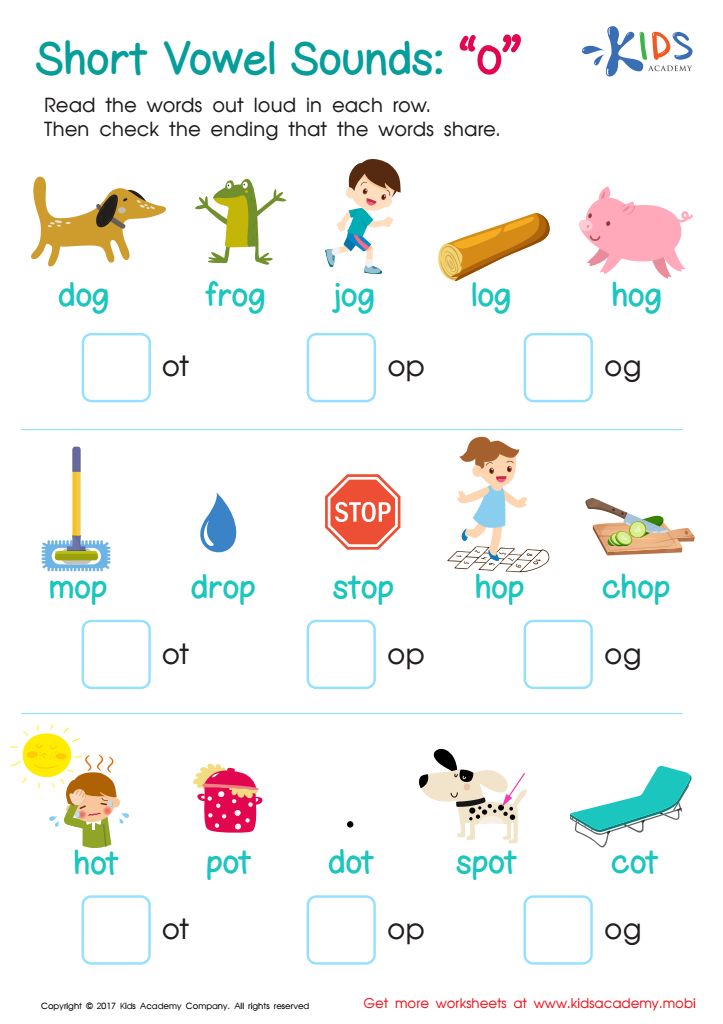
Short vowel Sounds "o" Spelling Worksheet
This worksheet will get your child thinking! Have them look at the pictures, read the words and check the ending of each. They'll learn to analyze words and vowel sounds using the Short Vowel Sounds "O" spelling worksheet.
Short vowel Sounds "o" Spelling Worksheet
Worksheet
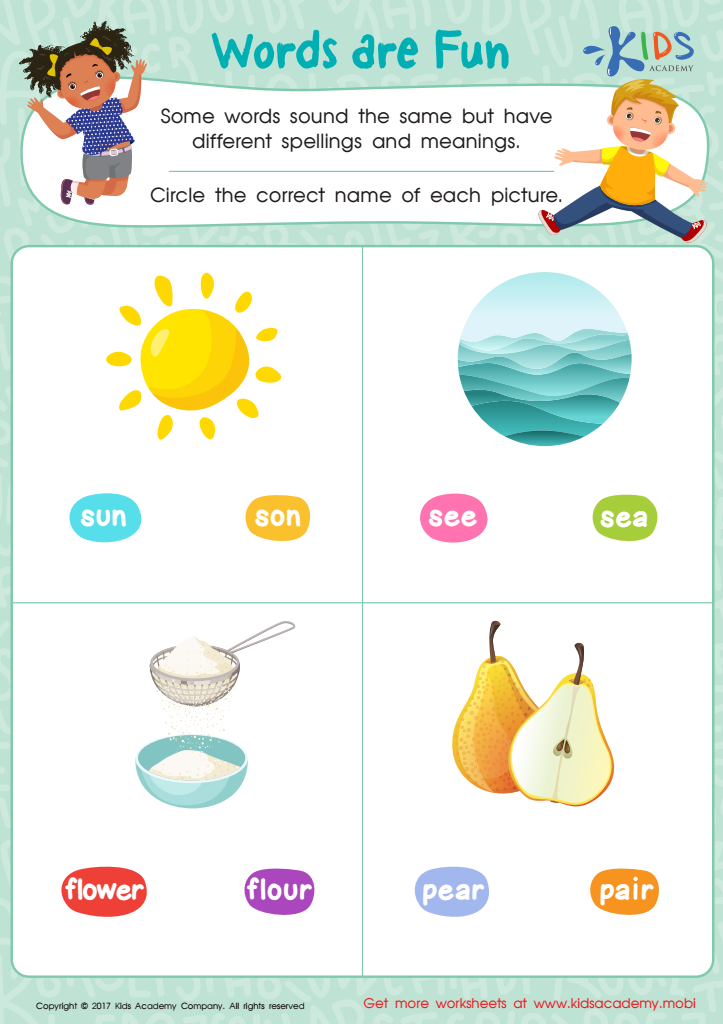
Words Are Fun Worksheet
Homonyms are words that sound the same but have different meaning and spelling. Young authors may get confused. This PDF worksheet helps them practice by matching the homonyms to pictures. They'll also build fine motor skills, important for legible writing.
Words Are Fun Worksheet
Worksheet
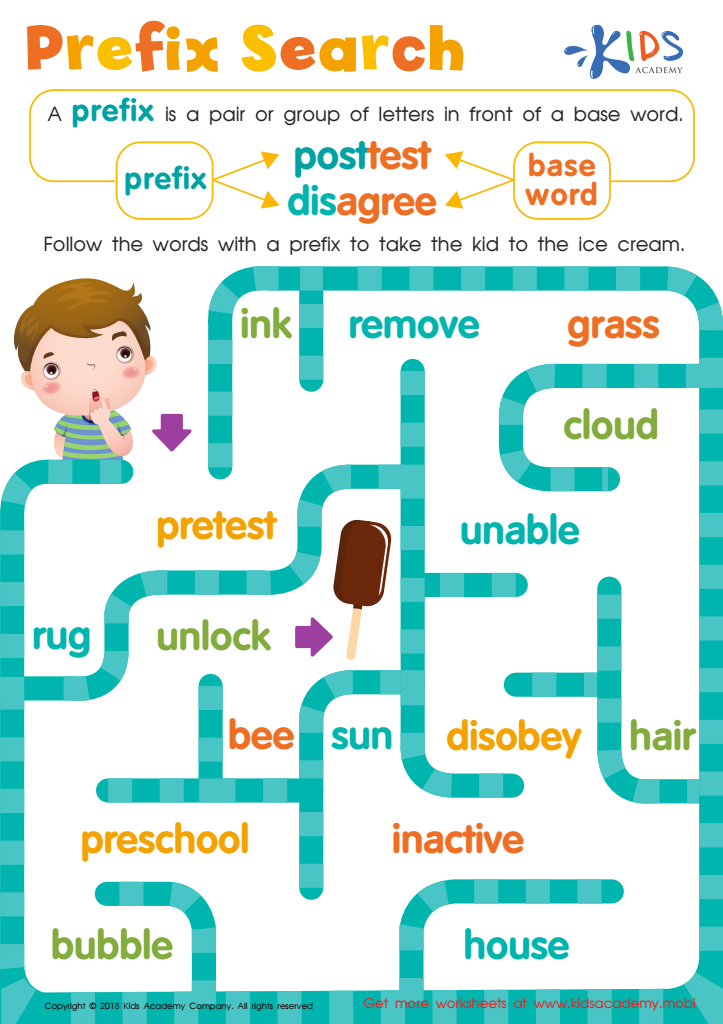
Reading: Prefix Search Worksheet
Maze your way through prefixes! This worksheet helps students practice reading new words with a prefix and figuring out the base word. An understanding of prefixes gives students the skills to comprehend new words. A fun and useful activity for the reading classroom!
Reading: Prefix Search Worksheet
Worksheet
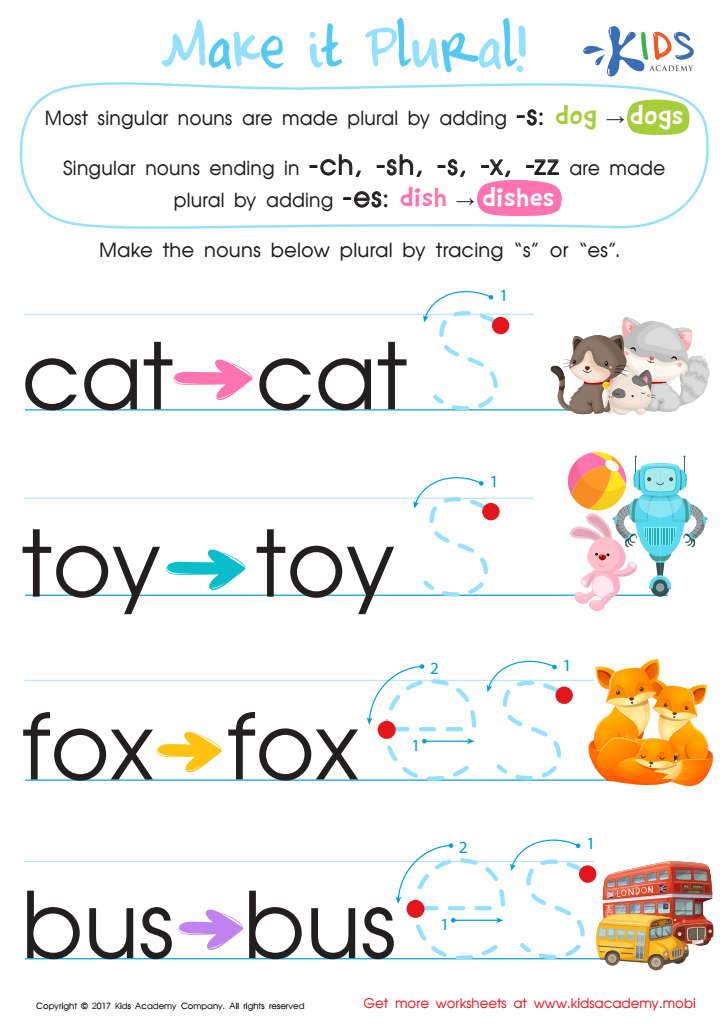
Make it Plural Worksheet
Changing words from singular to plural can be tricky as there are many word endings with special rules. Most words just need an -s, while endings like -ch, -sh, -s, -x or -zz need -es. This worksheet helps kids read words and trace the correct ending for each, making it easier to master these rules!
Make it Plural Worksheet
Worksheet
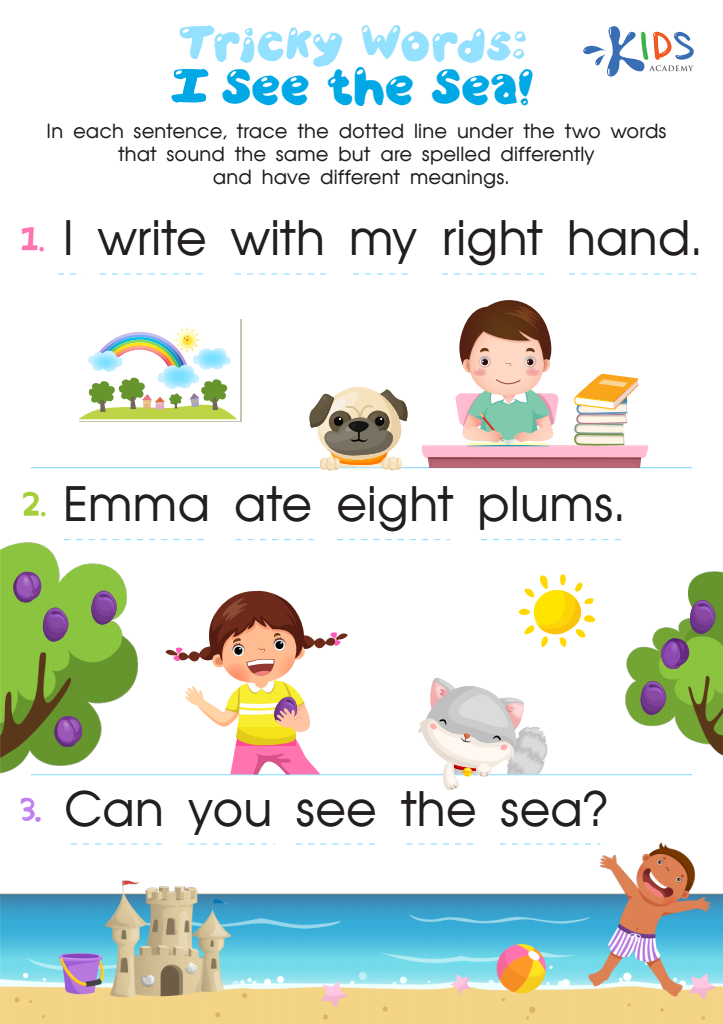
Tricky Words Worksheet
Young authors can find homonyms tricky - this brightly coloured worksheet will help them gain practice. Tracing lines to identify homonyms in easy-to-read sentences will also help improve their fine motor skills, essential for effective writing.
Tricky Words Worksheet
Worksheet
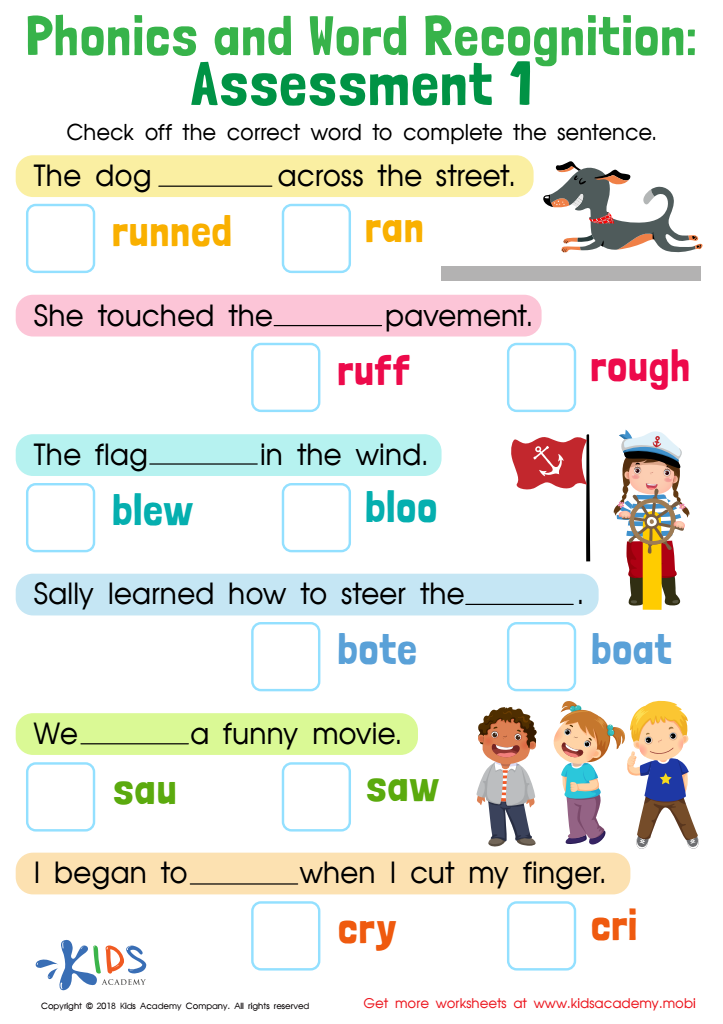
Phonics and Word Recognition: Assessment 1 Worksheet
This worksheet tests phonetics and word recognition. Students should be familiar with past tense verbs. Read incomplete sentences, then read multiple options and help students select the correct one.
Phonics and Word Recognition: Assessment 1 Worksheet
Worksheet
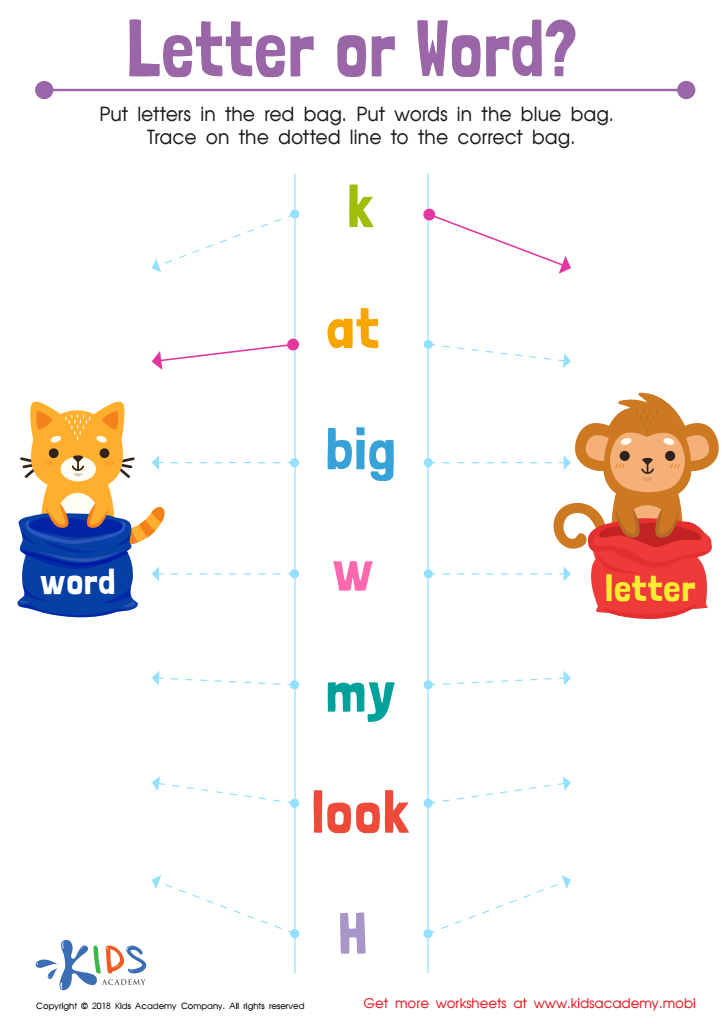
Letter or Word? Worksheet
Help your kids differentiate between words and letters. If they can recite their alphabets and identify common words, this tracing sheet will be a breeze. Have them trace on the dotted lines to place the letters in the red bag with the kitten, and the words in the blue bag with the monkey.
Letter or Word? Worksheet
Worksheet
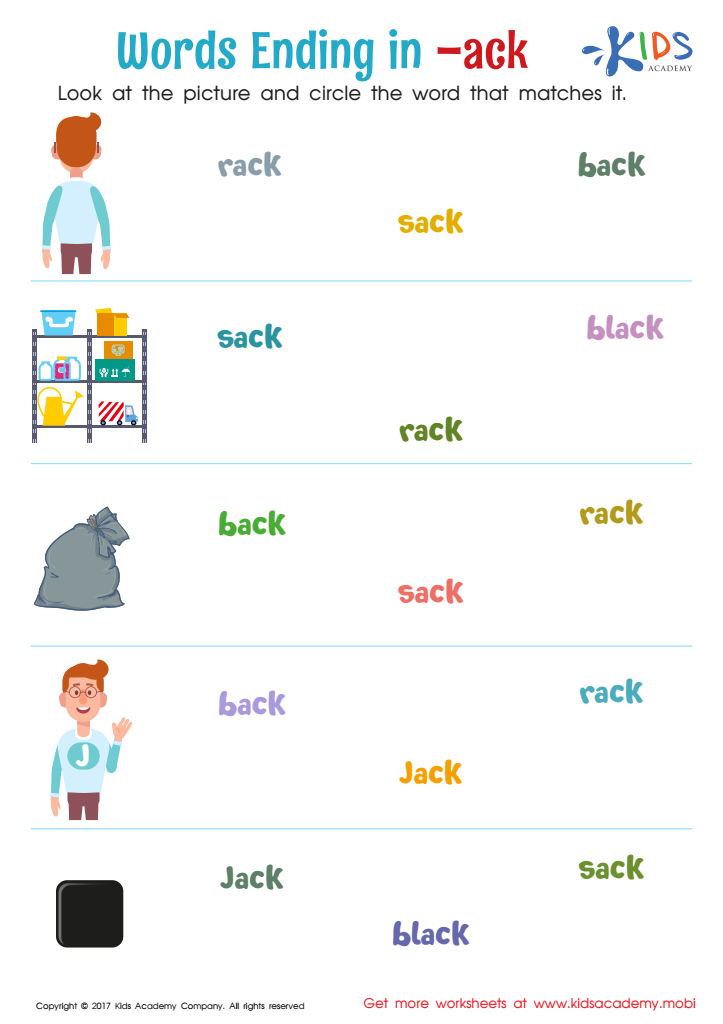
Words Ending in "ack" Spelling Worksheet
Worksheet
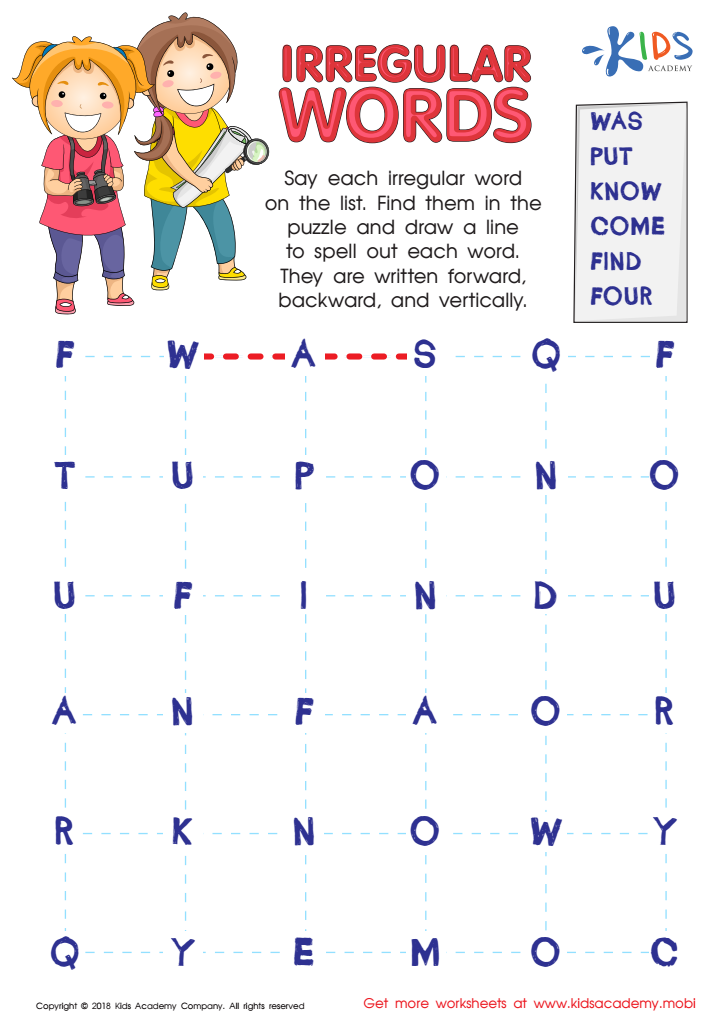
Irregular Words Worksheet
This fun word search worksheet helps kids practice reading irregular words and build their sight word banks. They'll also get practice with visual discrimination and fine motor skills as they hunt down the words.
Irregular Words Worksheet
Worksheet
Join Kids Academy for Free
Who is primarily going to use this learning content?