Reading Non-Fiction Worksheets for Ages 4-9 - Page 5
97 filtered results
-
From - To
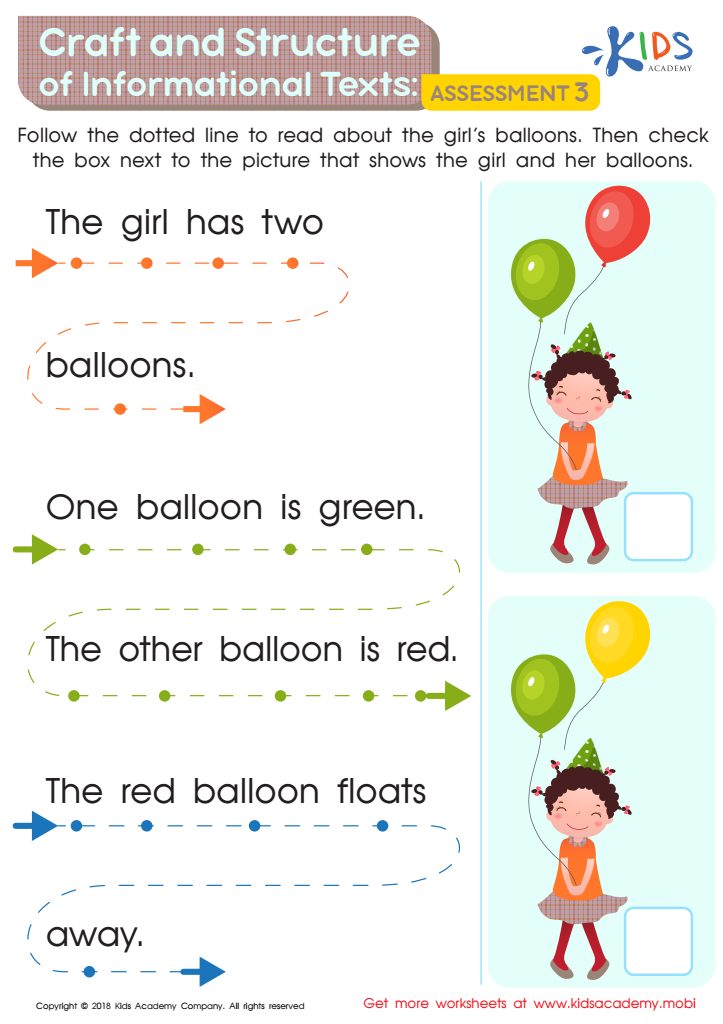
Craft and Structure of Informational Texts: Assessment 3 Worksheet
 Assign to My Students








Reading non-fiction for ages 4-9 is fundamental for fostering curiosity and building a strong knowledge base. Children's books in this genre introduce them to real-world concepts, helping them understand their environment and the broader world. This early exposure encourages critical thinking as children differentiate between reality and imagination.
Engaging with factual texts improves vocabulary and comprehension skills. Non-fiction books often include subject-specific terminology, enhancing children's language development. Moreover, they frequently contain illustrations, charts, and graphs that aid in visual literacy and interpretive skills.
Non-fiction nurtures a sense of inquiry and lifelong learning. Children learn to ask questions, seek answers, and think logically. Understanding diverse topics such as animals, space, history, or science fosters a well-rounded perspective and deepens their appreciation for different subjects.
Parents and teachers play a crucial role in guiding young readers. By integrating non-fiction into the reading routine, they can ignite a passion for learning and encourage independent exploration. Such foundational experiences can lead to heightened academic performance and better preparedness for future education. Addressing real-world challenges confidently and imaginatively starts with early exposure to informative literature. Thus, caring about non-fiction reading for young children equates to investing in a child's comprehensive cognitive and personal growth.








