Vowels and Consonants Worksheets for Ages 5-7 - Page 2
28 filtered results
-
From - To
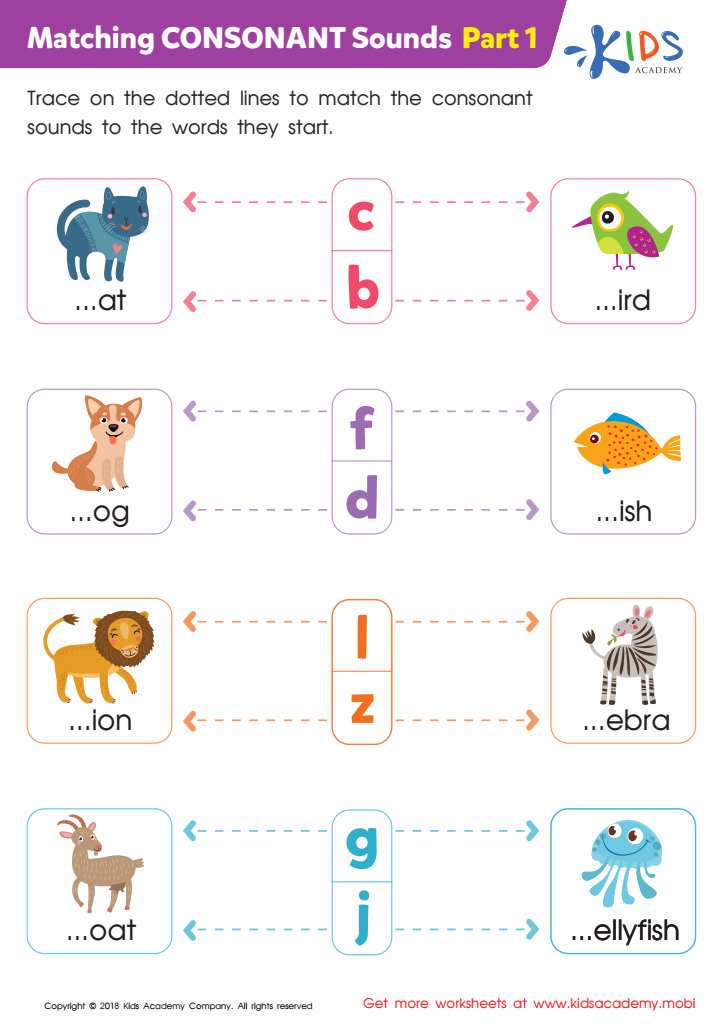
Matching Consonant Sounds: Part 1 Worksheet
 Assign to My Students
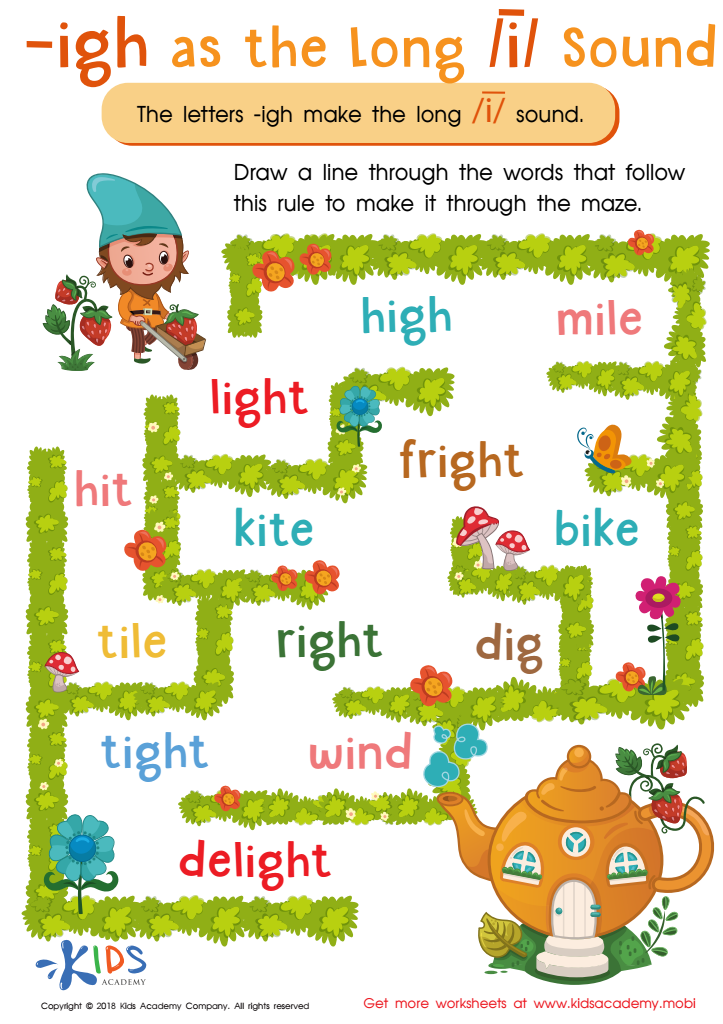
Reading: IGH as Long I Worksheet
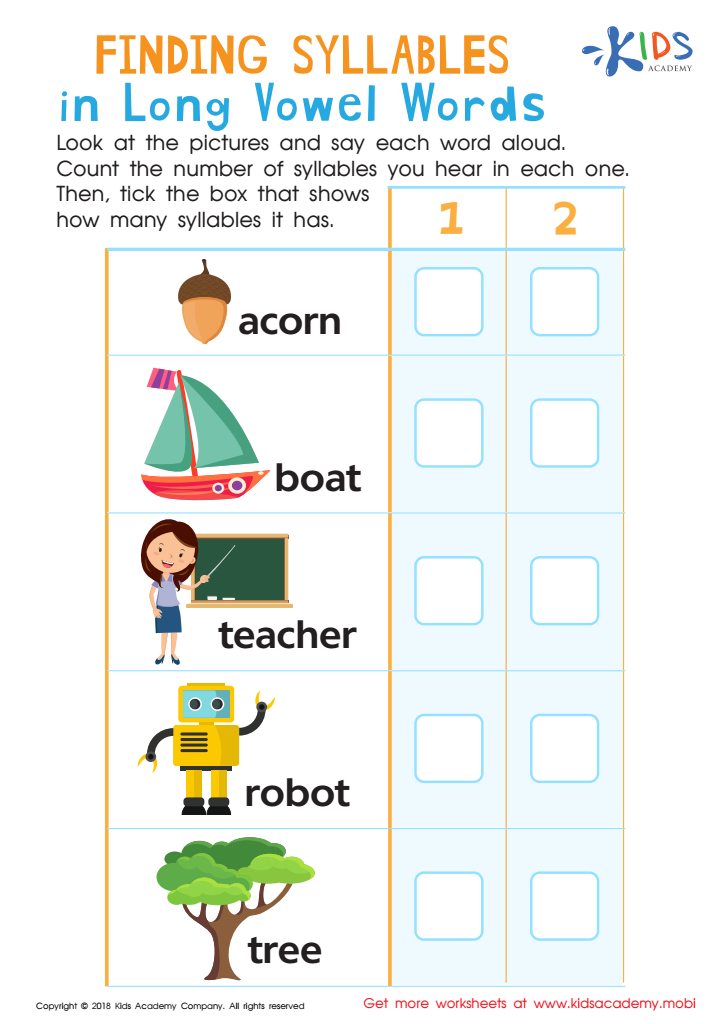
Finding Syllables in Long Vowel Words Worksheet
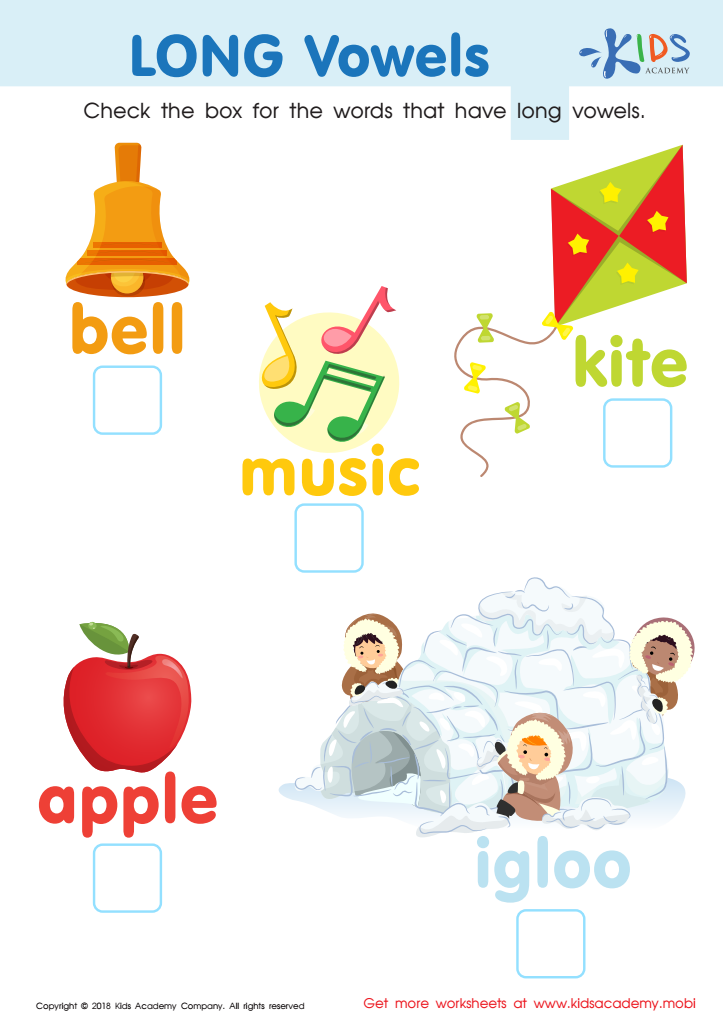
long vowels Worksheet



Understanding vowels and consonants is fundamental for young children learning to read and write. For ages 5-7, this is a critical period for developing literacy skills. Vowels (A, E, I, O, U) are essential for word formation and are the building blocks that help children decode and construct words. By knowing vowels, students can experiment with simple phonetic spelling, allowing them to express their thoughts in writing.
Consonants, on the other hand, provide structure to words and are pivotal in pronunciation. Learning both vowels and consonants helps children recognize letter sounds, which is crucial for phonics. This knowledge equips them to blend sounds together, supporting early reading skills, and enhancing poor phonological awareness which can lead to literacy difficulties later on.
Moreover, learning vowels and consonants through games and engaging activities fosters a love for reading and writing. It empowers children to confidently explore new words, express creativity, and develop foundational skills for academic success. Encouraging awareness of these language elements provides children with the tools they need to become proficient readers, spellers, and writers, ultimately leading to lifelong learning and communication skills. Therefore, parents and teachers should prioritize phonetic awareness in early education.







