Reading Non-Fiction Worksheets for Ages 5-7 - Page 4
74 filtered results
-
From - To
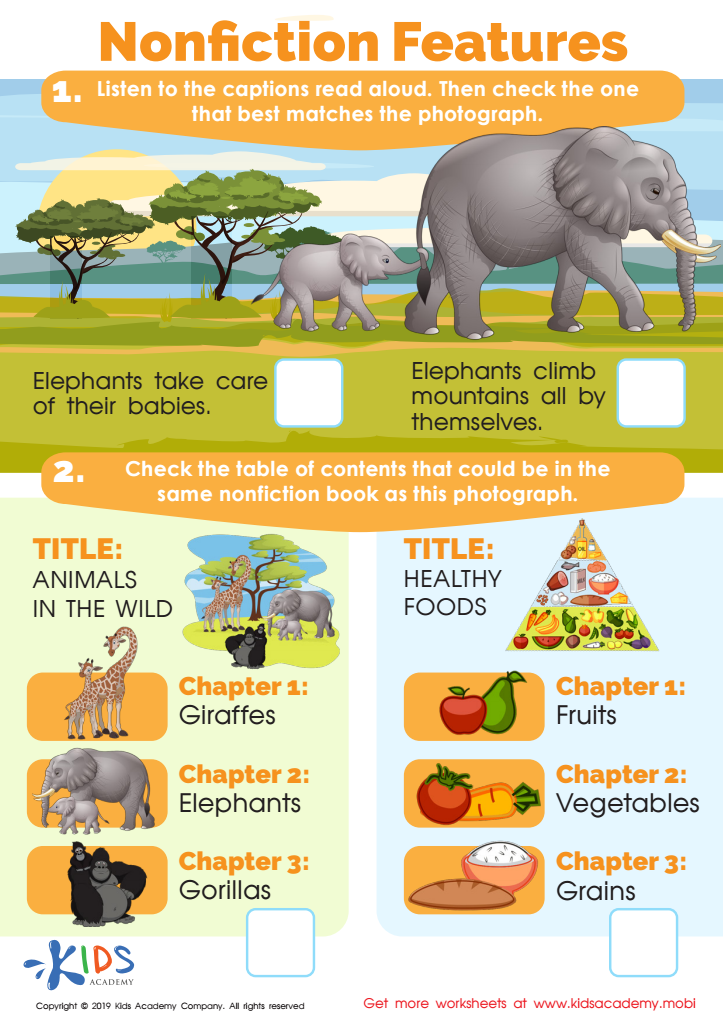
Nonfiction Features Worksheet
 Assign to My Students
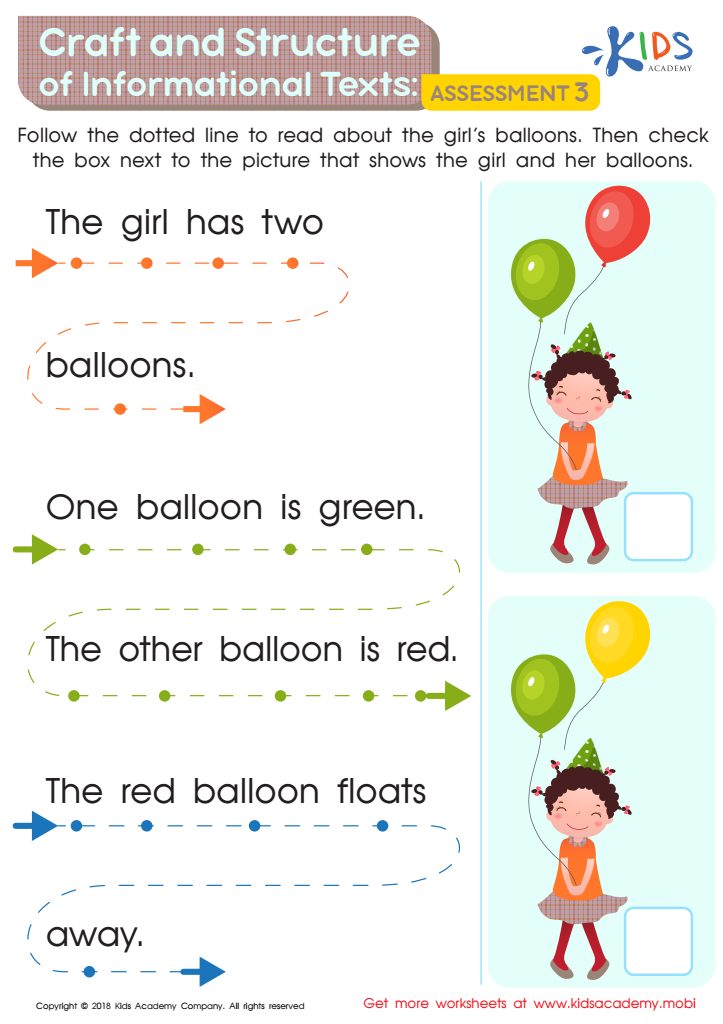
Craft and Structure of Informational Texts: Assessment 3 Worksheet







Parents and teachers should care about reading non-fiction to children aged 5-7 as it plays a crucial role in their development and prepares them for a well-rounded education. Non-fiction exposes young minds to real-world concepts, sparking curiosity and expanding knowledge beyond their immediate experiences. By learning about animals, places, science, and more, children develop a broader understanding of the world, which can cultivate a lifelong love for learning.
Non-fiction also enhances vocabulary by introducing specialized terminology that is often absent in fiction. This supports language development and improves comprehension skills. Additionally, it helps young readers differentiate between factual and fictional information, laying the foundation for critical thinking.
Reading non-fiction material as a group activity can promote engaging discussions and encourage children to ask questions, fostering a sense of inquiry and exploration. This not only sharpens their intellectual abilities but also boosts their confidence in how they process information and articulate their thoughts.
Moreover, non-fiction often includes features like charts, graphs, and captions, which help in the development of key literacy skills such as interpreting visual information and understanding text structures. This multidimensional learning approach ensures that children are not just reading, but comprehending and contextualizing, thereby prepping them for future academic success.








