Filters

88 filtered results

Clear all filters
Favorites
With answer key
Interactive

88 filtered results

Difficulty Level

Grade


Check out this FREE Trial Lesson on Reading Non-Fiction for age 6-9!

Paired Texts

Favorites
With answer key
Interactive
  • 6-9
  • With answer key
  • Reading Non-Fiction
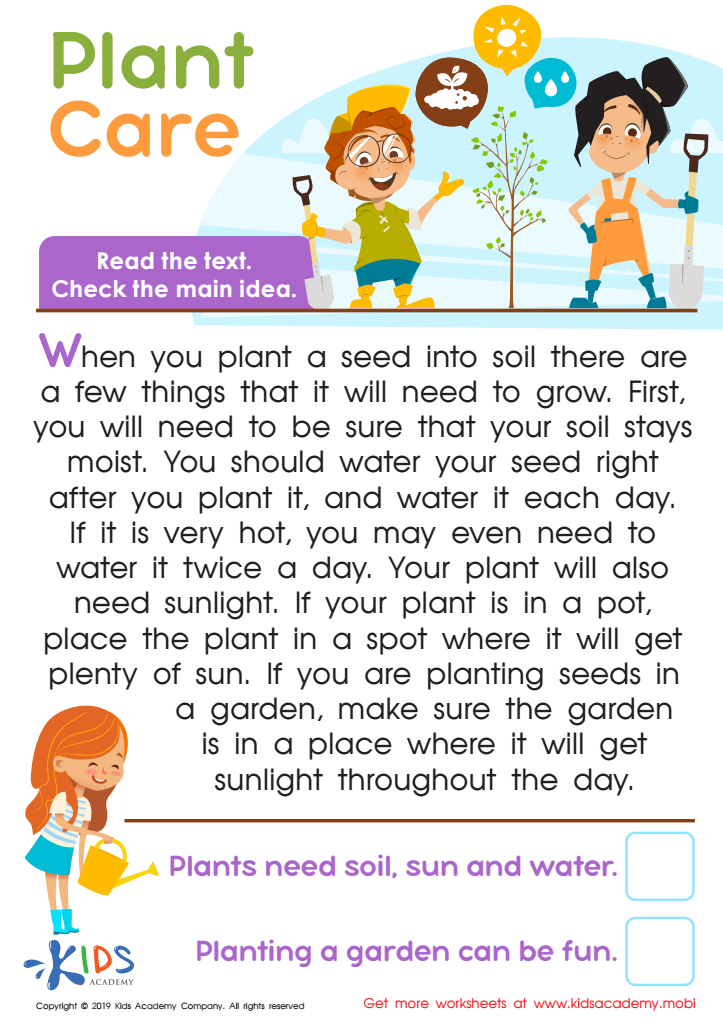
Plant Care Worksheet

Plant Care Worksheet

Encourage your children to read by helping them practice. Print out the worksheet and read the text with them. Help them understand the words and find the main idea. This will improve their reading skills and prepare them for school.
Plant Care Worksheet
Worksheet
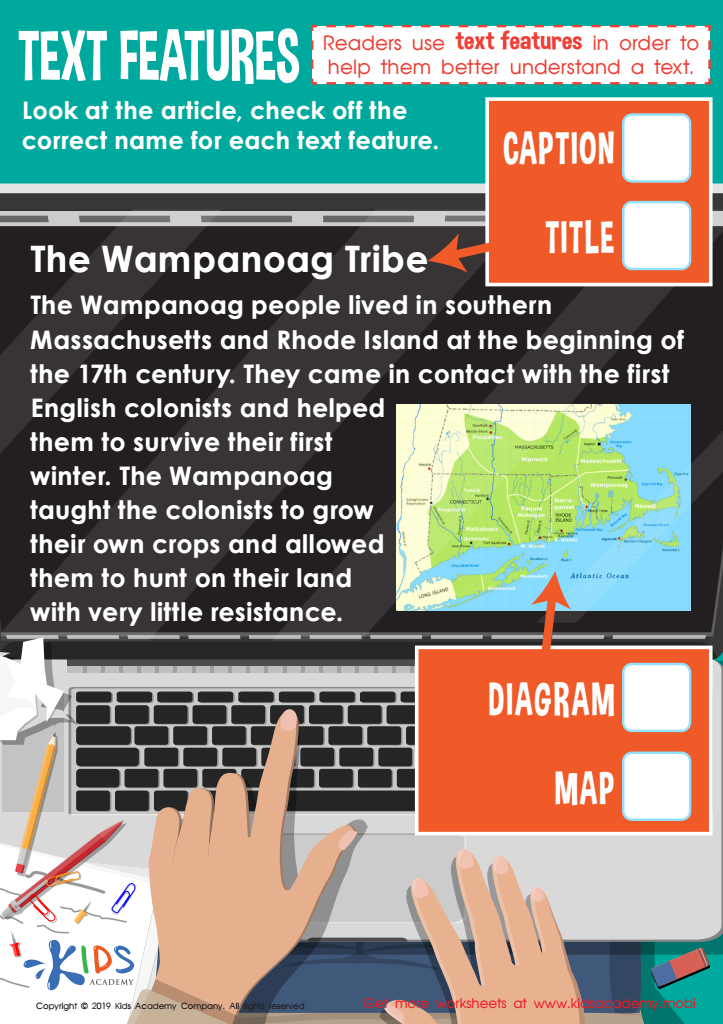
Text Features Worksheet

Text Features Worksheet

Encourage your child to read- it'll pay off! Reading teaches us new words, spelling, and information on various topics. Plus, readers use text features- such as tables, indexes, and diagrams- to help comprehend. Read the worksheet with your child and help them identify and understand the different features.
Text Features Worksheet
Worksheet
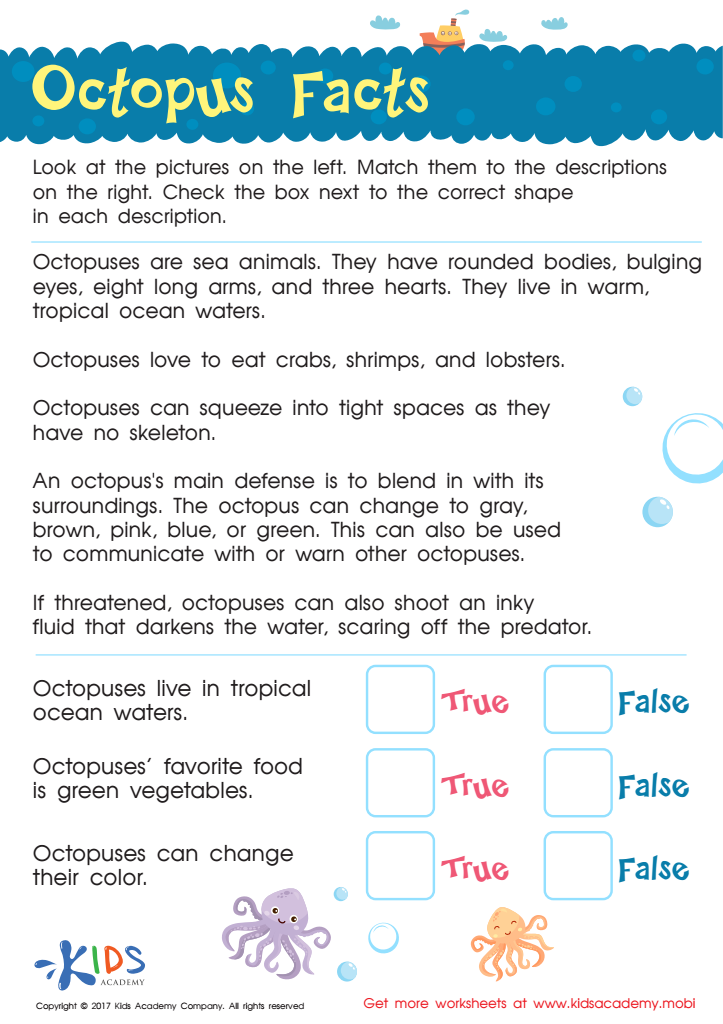
Octopus facts worksheet for kids

Octopus Facts Worksheet For Kids

Let your child dive into the world of octopuses with this fun worksheet. It offers invaluable practice in reading non-fiction texts, while they learn interesting facts about these strange sea creatures. It's a great way to help them hone their skills in reading comprehension.
Octopus Facts Worksheet For Kids
Worksheet
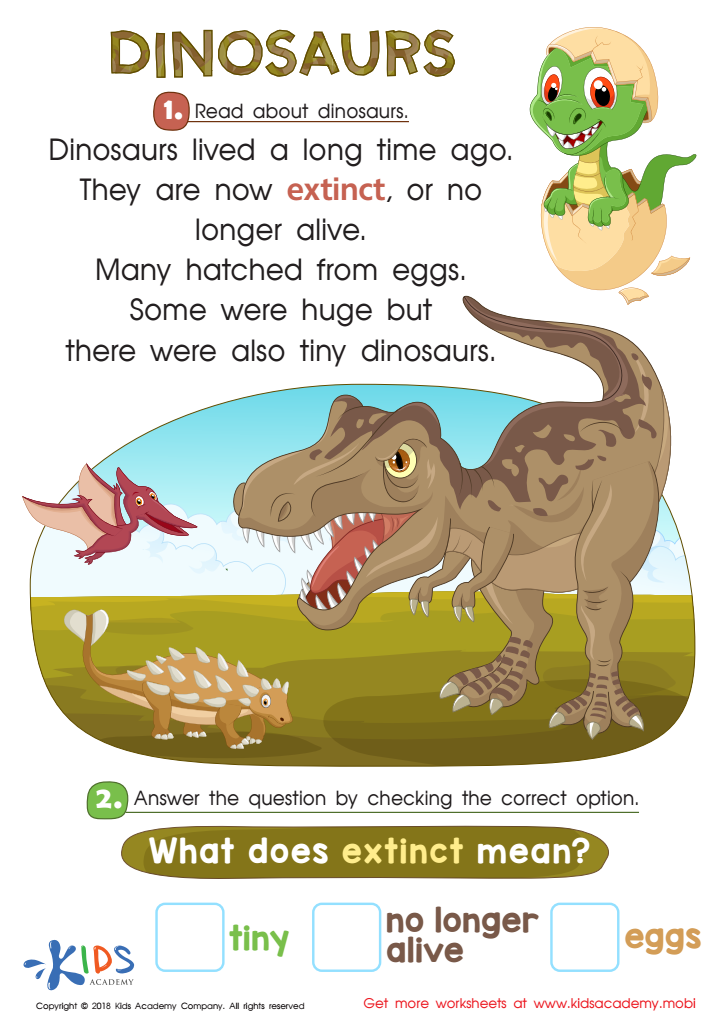
Dinosaurs Worksheet
Dinosaurs Worksheet

Dinosaurs Worksheet

Kids are often fascinated by dinosaurs, creatures that roamed the Earth before man. Sadly, they are now extinct. To learn more, read facts on this worksheet to your kids and help them answer the question at the end by selecting the correct option.
Dinosaurs Worksheet
Worksheet
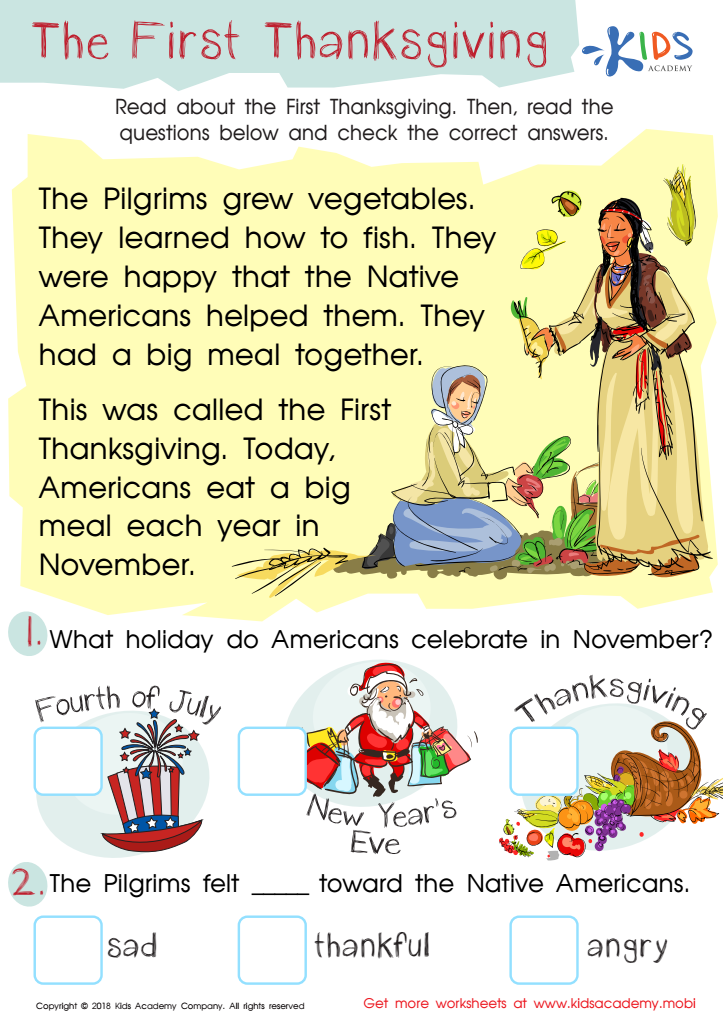
Assessment: First Thanksgiving Worksheet

Assessment: First Thanksgiving Worksheet

When the Pilgrims arrived in America in 1620, they met the Native Americans and formed a pact to live in harmony. The Native Americans taught the Pilgrims how to survive in the new land, which helped them celebrate the First Thanksgiving. Read this text to your children and help them answer the questions below.
Assessment: First Thanksgiving Worksheet
Worksheet
Cities: Finding Differences Worksheet
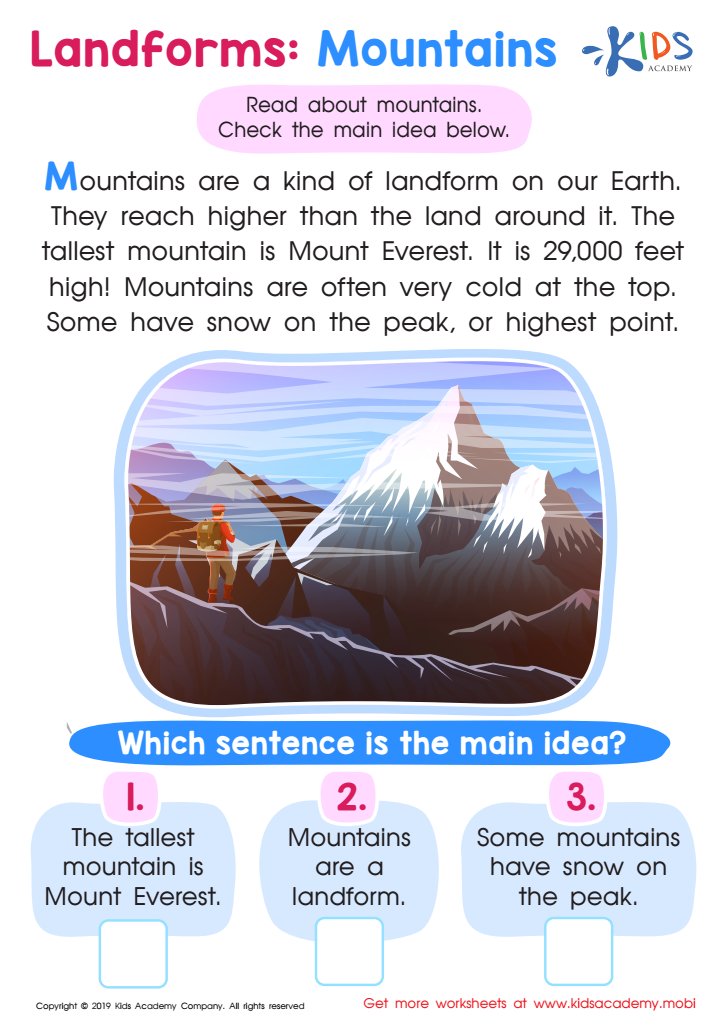

Cities: Finding Differences Worksheet

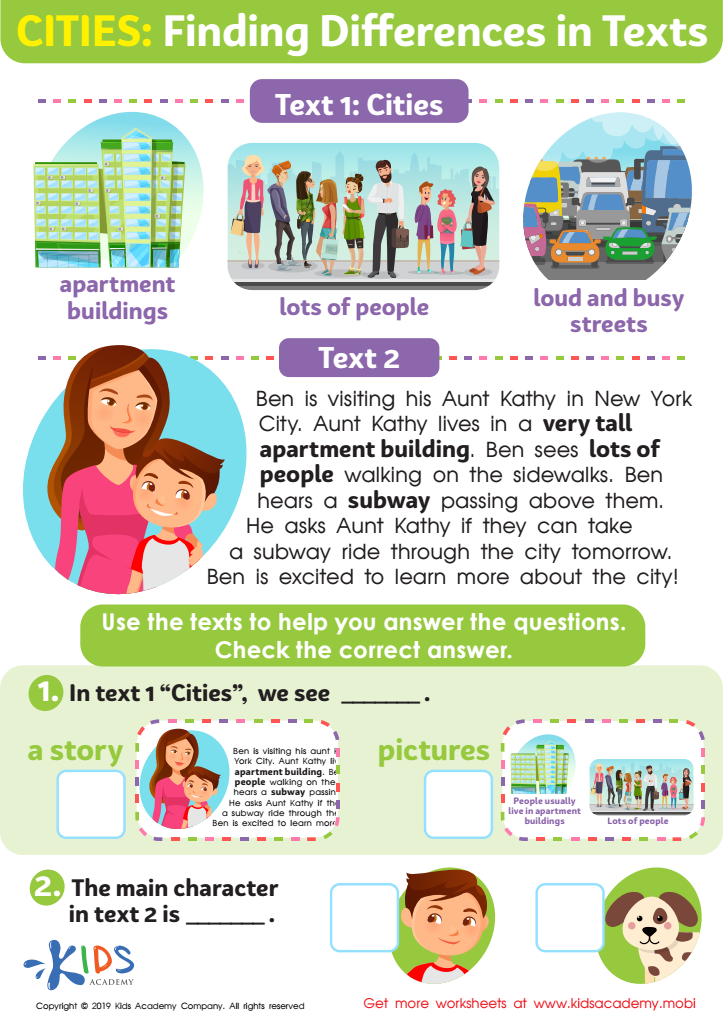
Critical thinking is essential for reading comprehension. New readers must be able to identify the key information in different text formats. This worksheet helps children learn what they might find in cities and how to differentiate between stories and pictures.
Cities: Finding Differences Worksheet
Worksheet
Landforms: Mountains Worksheet
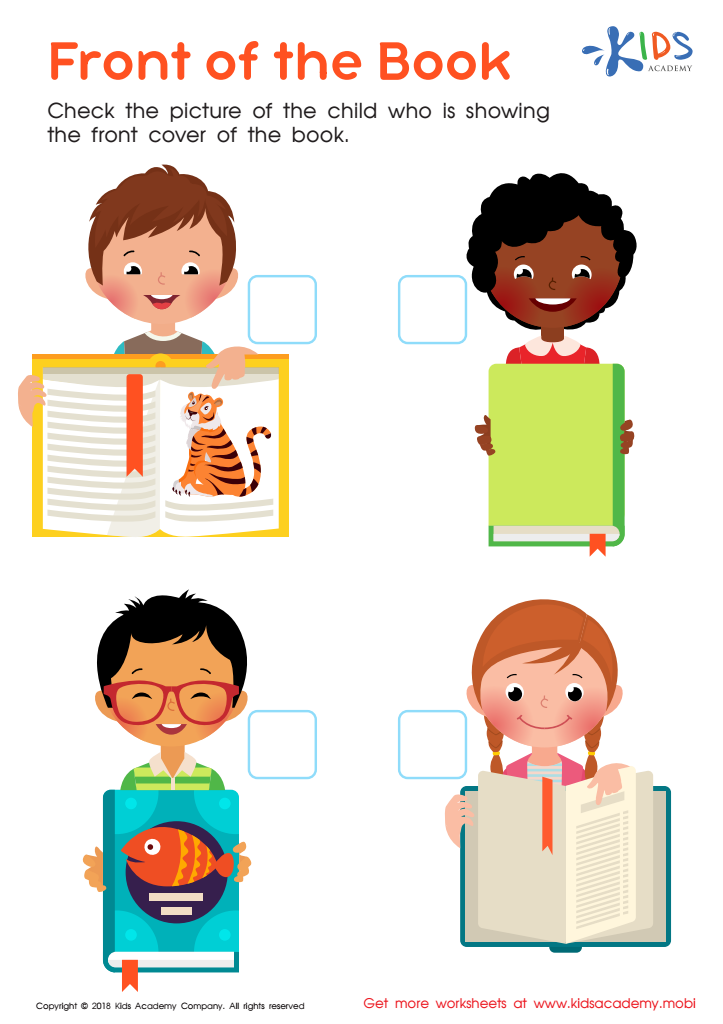

Landforms: Mountains Worksheet

Help your kid master informational texts about mountains by finding the main idea. Go through the text together, discuss what's been learned, and work together to identify the main idea. To mark the correct answer, check the answer at the bottom.
Landforms: Mountains Worksheet
Worksheet
Front of the Book Worksheet
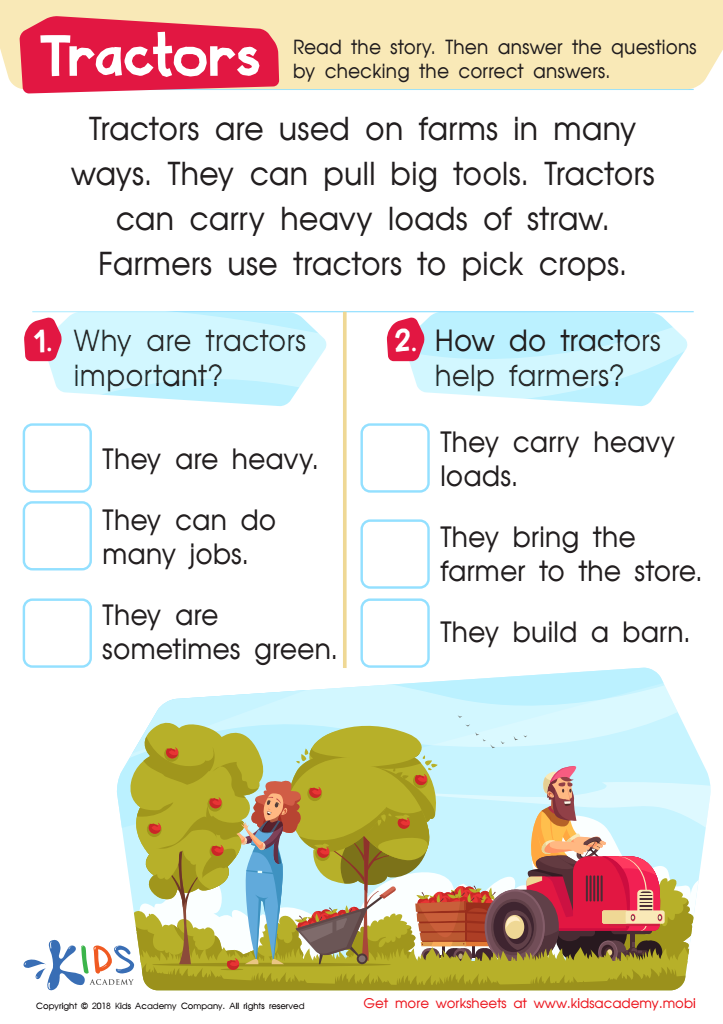

Front of the Book Worksheet

Help your child become a reader with this free worksheet! It's full of fun new friends and is designed to help kids understand concepts about the front of a book. They'll look at each picture and decide which friend is holding the book with the front cover, and check off the correct answer in the given boxes. Get your little one ready to be a reader!
Front of the Book Worksheet
Worksheet
Tractors Worksheet
Tractors Worksheet

Tractors Worksheet

Kids love tractors! Let them read about what they do, what they use, and who uses them with this free worksheet. After reading, they can answer reading comprehension questions to test their knowledge; multiple choices make it easy! Little do they know, they're boosting their literacy skills along the way!
Tractors Worksheet
Worksheet
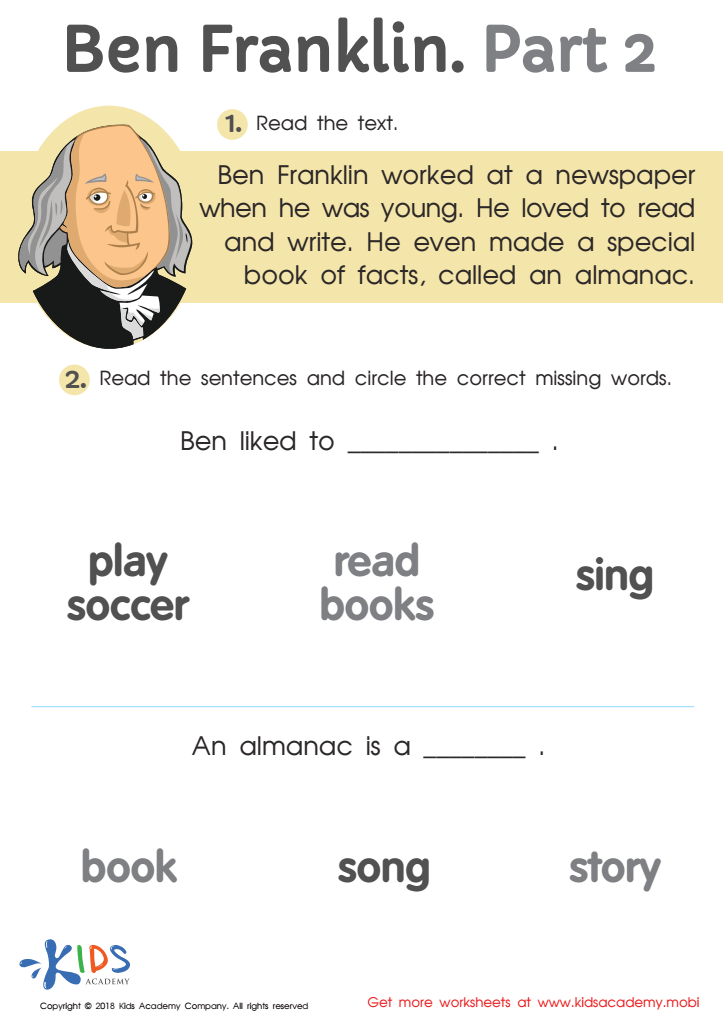
Ben Franklin Part 2 Worksheet

Ben Franklin Part 2 Worksheet

History is filled with great figures, like Benjamin Franklin. Let your kids in on the legacy by introducing them to the founder of the US fire department, diplomat, and inventor. Then, use a worksheet to have them fill in the blanks with the correct word to teach them more. Read the text, then read the sentences and have them circle the missing word.
Ben Franklin Part 2 Worksheet
Worksheet
Cities: Finding Similarities Worksheet

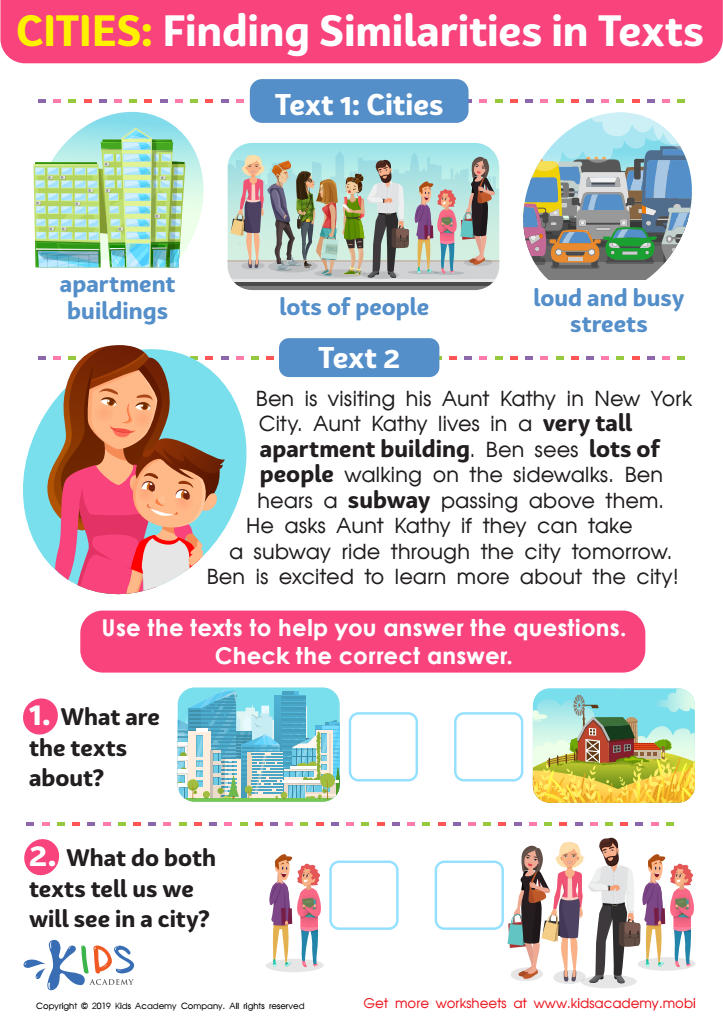
Cities: Finding Similarities Worksheet

This worksheet offers kids a chance to explore how information can be presented differently but still contain similar facts. They'll compare two texts and look for similarities, honing their reading comprehension and critical thinking skills.
Cities: Finding Similarities Worksheet
Worksheet
How Use Index Worksheet

How Use Index Worksheet

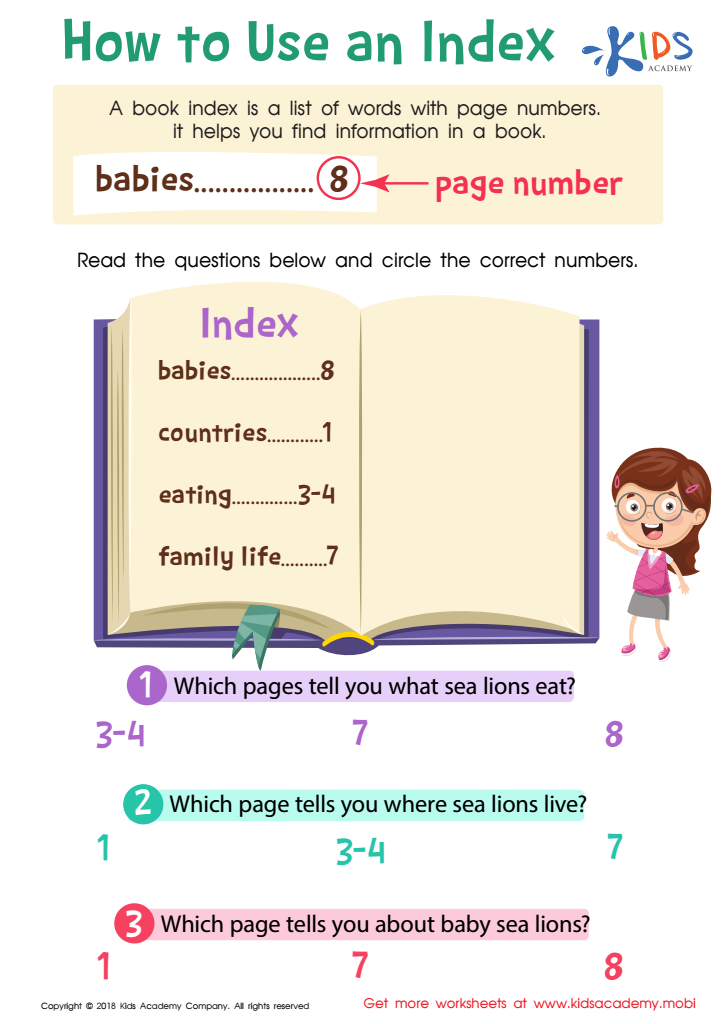
Hand your kids a book, point out the index and explain that it's a list of words with page numbers. Ask them to look at the index in the worksheet and circle the correct number to the questions. Every book must have an index to help readers find chapters or information they need.
How Use Index Worksheet
Worksheet
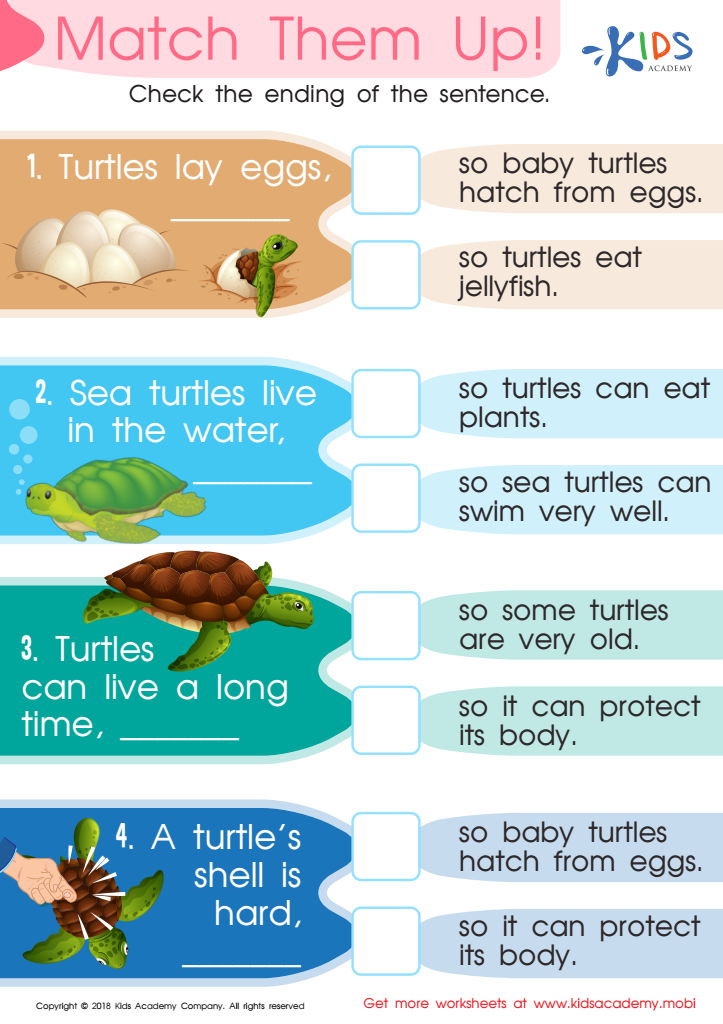
Match Them Up Worksheet

Match Them Up Worksheet

Reading offers a wealth of knowledge, but young readers may struggle to remember info from informational texts. Help your child practice comprehension with this fun turtle-related worksheet. Just read the sentence starters and select the correct ending from the options given. Check the box to indicate the right statement!
Match Them Up Worksheet
Worksheet
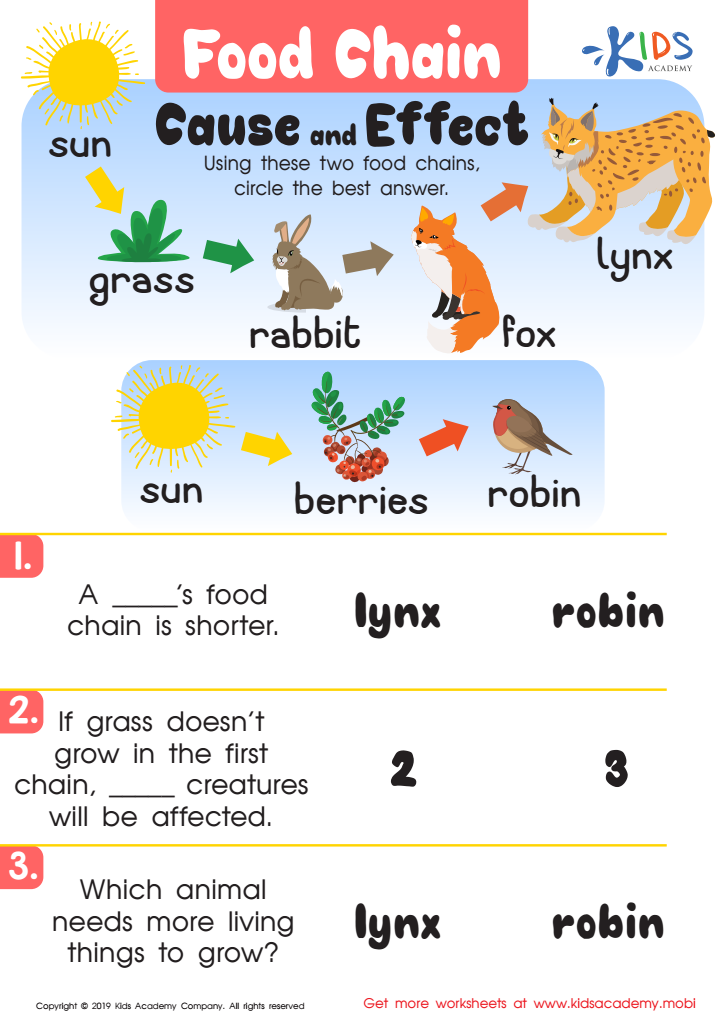
Food Chain Cause Worksheet

Food Chain Cause Worksheet

Help your little learner analyze ecosystems and compare food chains with this Kids Academy worksheet! Kids will compare a carnivore's and herbivore's food chain; which is longer and why? Questions at the bottom of the page will help them compare and circle the best answers. A great way to understand animal food chains!
Food Chain Cause Worksheet
Worksheet
Rabbit Facts Worksheet

Rabbit Facts Worksheet

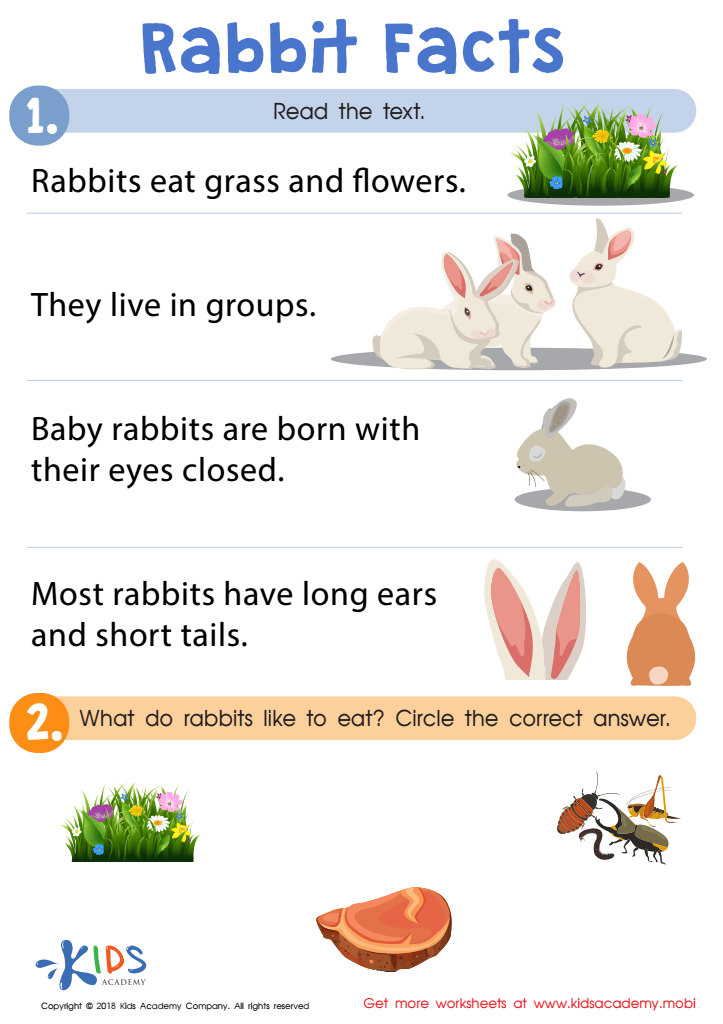
Informational texts offer great learning opportunities. Kids Academy's reading worksheet helps children read and recall important details from a text about bunnies. Kids will love it! Simply read the rabbit facts and circle the correct pictures to answer the questions.
Rabbit Facts Worksheet
Worksheet
Compare Two Sources Worksheet

Compare Two Sources Worksheet

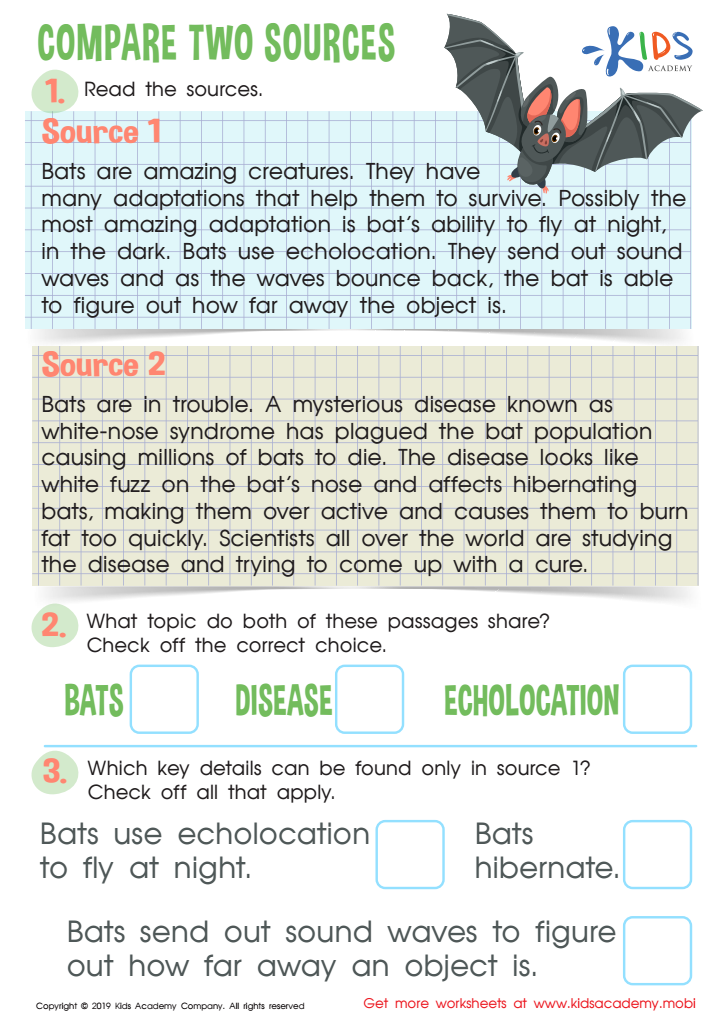
Reading exposes us to new words, spelling, and info about different topics. Kids can practice their reading skills, and learn about bats, with this worksheet. Read the two sources in the picture, then help your kids answer the questions at the bottom.
Compare Two Sources Worksheet
Worksheet


... 3 4

Parents and teachers should care about encouraging children aged 6-9 to read non-fiction because it plays a crucial role in their development and education. At this age, children are naturally curious and eager to learn about the world around them. Non-fiction books serve as invaluable resources that introduce young minds to a myriad of real-world concepts and facts.

Reading non-fiction helps children build a strong foundation in critical thinking and analytical skills. By engaging with factual content, children learn to differentiate between opinions and evidence-based information, fostering logical reasoning. For instance, reading books about animals, space, or history not only satiates their curiosity but also enriches their vocabulary and comprehension skills. Learning about different topics broadens their knowledge base and fosters a lifelong love of learning.

Moreover, non-fiction reading aligns with educational standards and helps students excel academically. Many school curriculums require students to understand and analyze informational texts. Exposure to non-fiction at an early age prepares children for future academic tasks and research projects. In addition, it cultivates resilience and problem-solving skills, as children encounter real-world scenarios and challenges.

In summary, engaging with non-fiction opens doors to learning, critical thinking, and an informed worldview, making it an essential part of a child’s reading repertoire.