Easy Graphs Worksheets for Ages 4-7
4 filtered results
-
From - To
Introduce your child to the exciting world of graphs with our Easy Graphs Worksheets, crafted specifically for ages 4-7! These engaging worksheets make learning fun and easy, helping young learners grasp basic concepts of categorizing, plotting, and interpreting data. Designed with colorful graphics and simple exercises, our collection ensures children build foundational math skills while enjoying the process. Perfect for parent-led activities or independent practice, these worksheets are an invaluable resource for developing early analytical abilities. Encourage your child’s love for math and data comprehension with our user-friendly, expertly-designed sheets from Kids Academy!
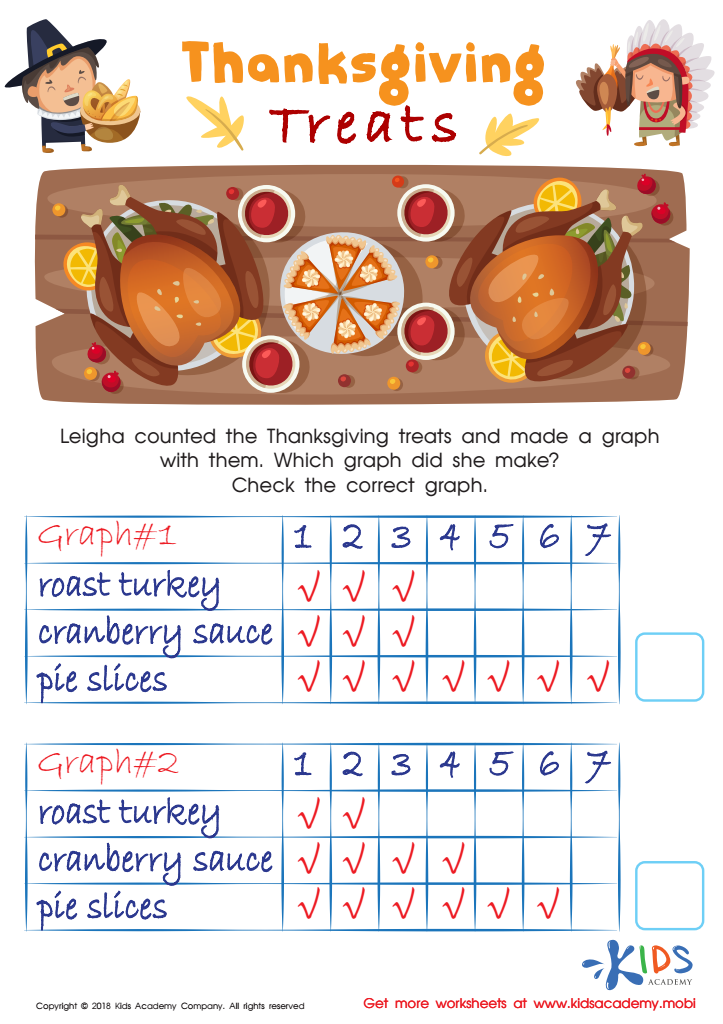
Graphs: Thanksgiving Treats Worksheet
 Assign to My Students
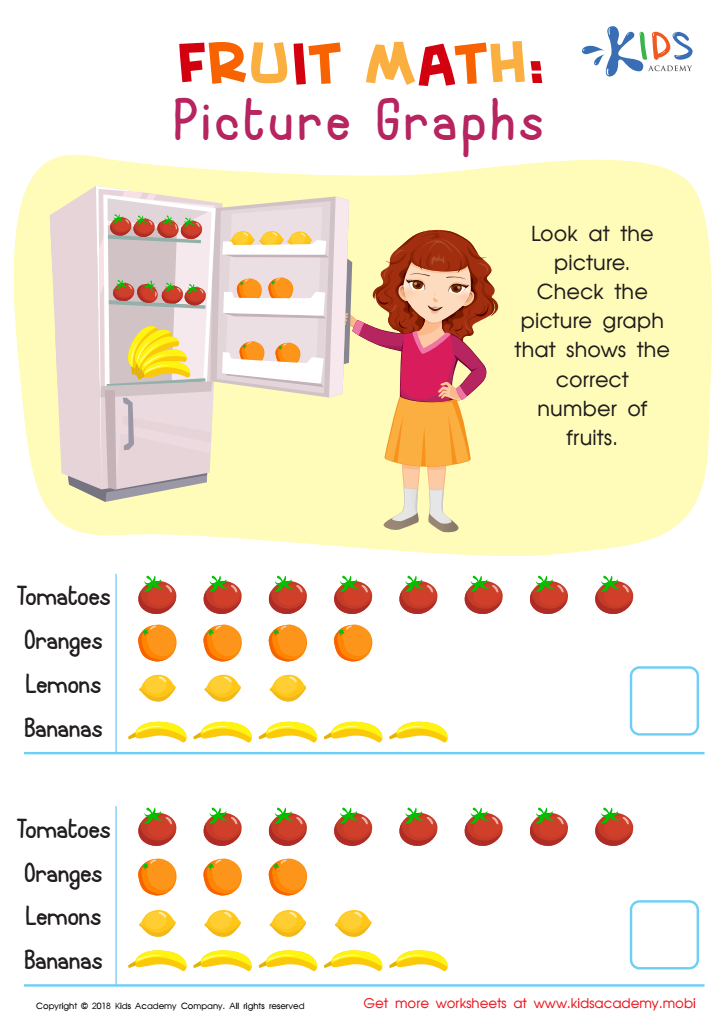
Fruit Math: Picture Graphs Worksheet
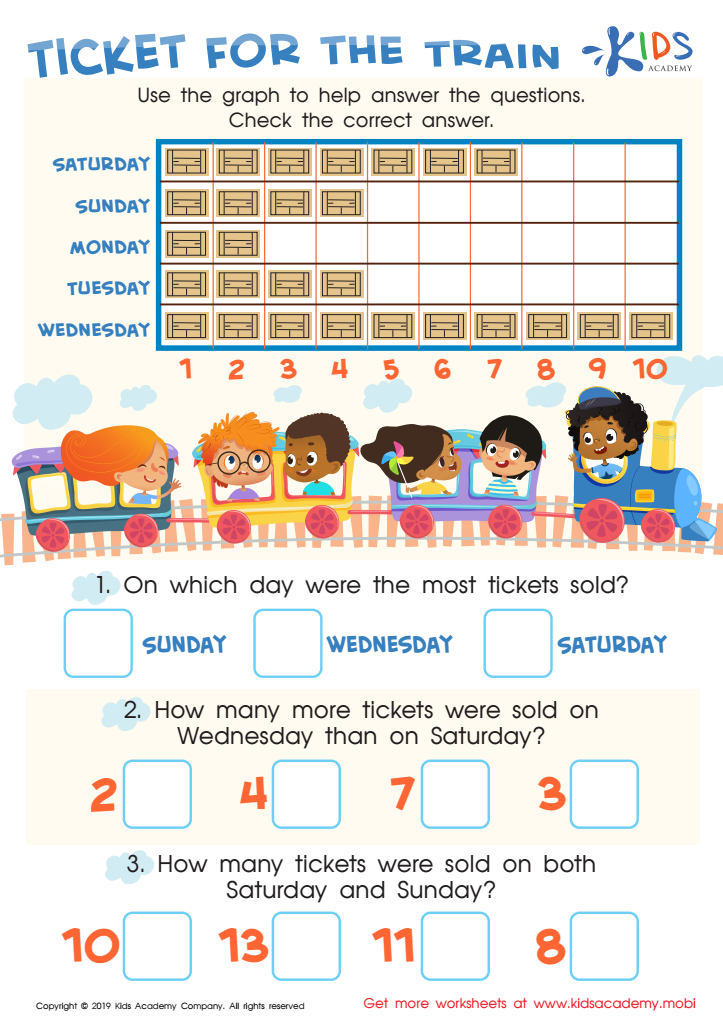
Ticket for the Train Worksheet
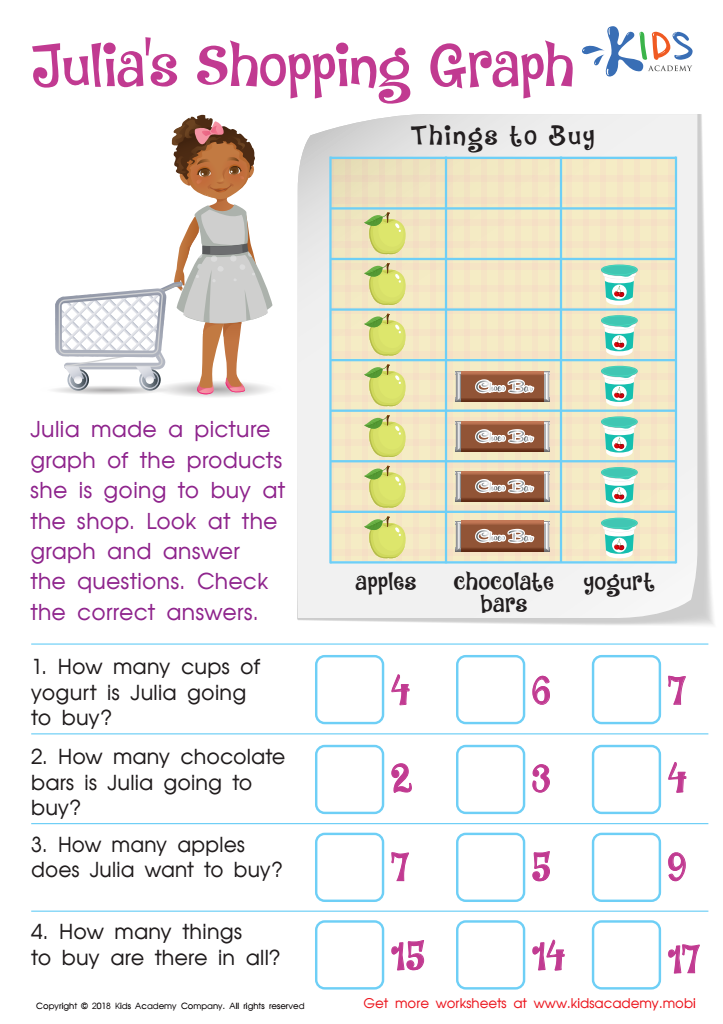
Julia's Shopping Graph Worksheet








Easy Graphs for Ages 4-7 are important educational tools that parents and teachers should prioritize. At this early age, children are rapidly developing foundational skills in mathematics, critical thinking, and problem-solving. Introducing graphing activities establishes a concrete understanding of basic concepts like counting, comparing, and pattern recognition.
For teachers, incorporating easy graphs aligns with curriculum standards that emphasize early numeracy skills. These activities promote active learning where kids visually engage with data, enhancing comprehension and retention. Graphing exercises can also diversify instructional strategies, catering to different learning styles and making math accessible and enjoyable rather than intimidating.
Parents can use easy graphs to actively participate in their child's education outside school, reinforcing what's taught in the classroom. Engaging in graph-making at home through simple tasks—like tracking daily weather, favorite snacks, or toy usage—provides meaningful, real-life contexts for children. This practical application bridges school learning and everyday experiences, solidifying their understanding.
Moreover, early exposure to graphs supports cognitive development, as it encourages logical thinking and helps children draw conclusions from visual information. As children interpret and create graphs, they build confidence and an early interest in math-related activities, setting a positive tone for future learning. Thus, easy graphs are invaluable tools in fostering well-rounded, critical-thinking young learners.








