Easy Two-step Word Problems Worksheets for Ages 4-7
5 filtered results
-
From - To
Discover engaging and interactive Easy Two-step Word Problems Worksheets designed for children ages 4-7! Our carefully crafted worksheets aim to enhance young learners' critical thinking and problem-solving skills through fun and relatable scenarios. Each worksheet features easy-to-understand, age-appropriate language that encourages kids to practice counting, addition, and subtraction within practical contexts. Ideal for home or classroom use, these worksheets promote independent learning while boosting confidence in math. With vibrant illustrations and simple problems, your little ones will enjoy tackling challenges that nurture their academic growth. Explore our resources today to make math a fun adventure for your child!
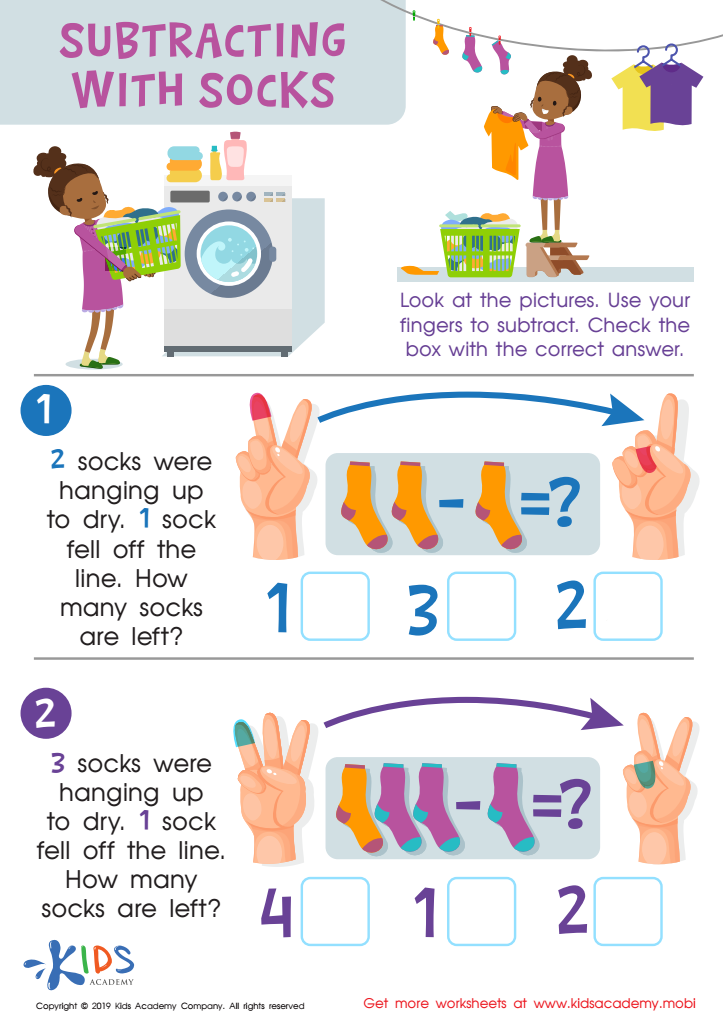
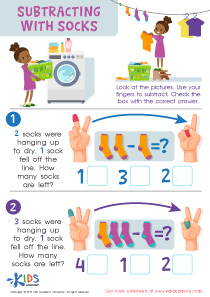
Subtracting Socks Worksheet
 Assign to My Students
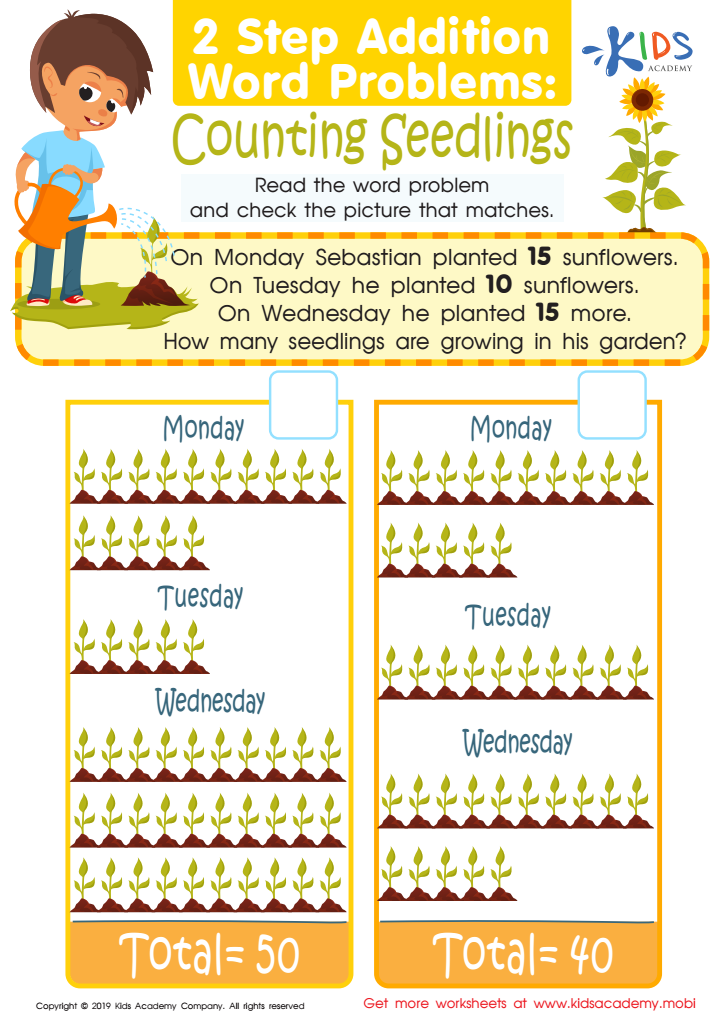
Counting Seedlings Worksheet
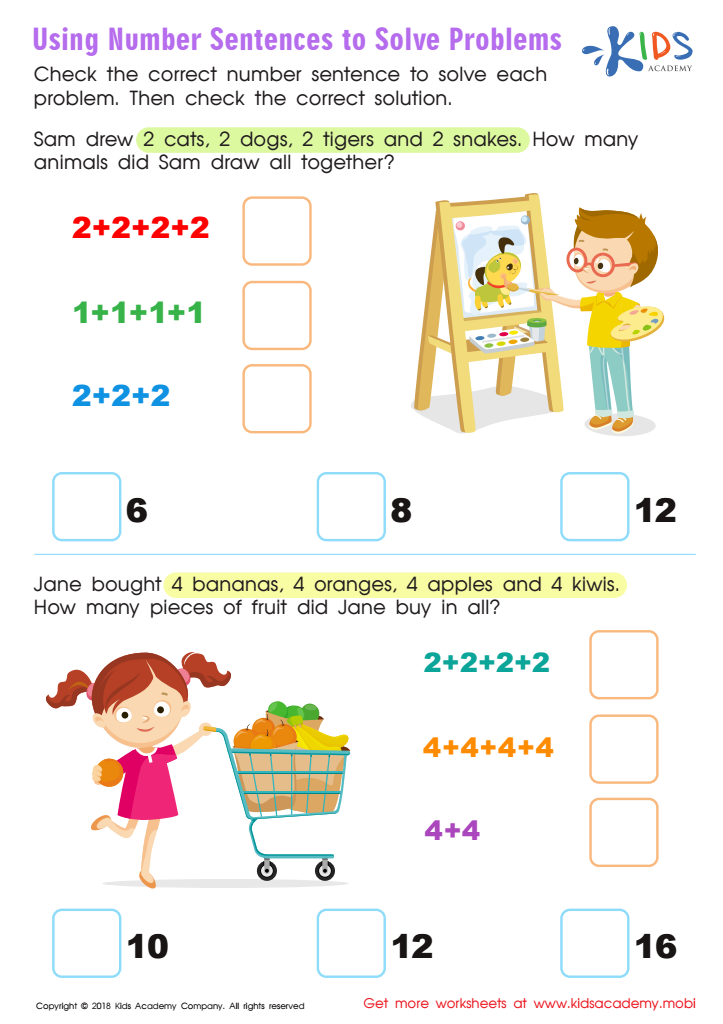
Using Number Sentences to Solve Problems Worksheet
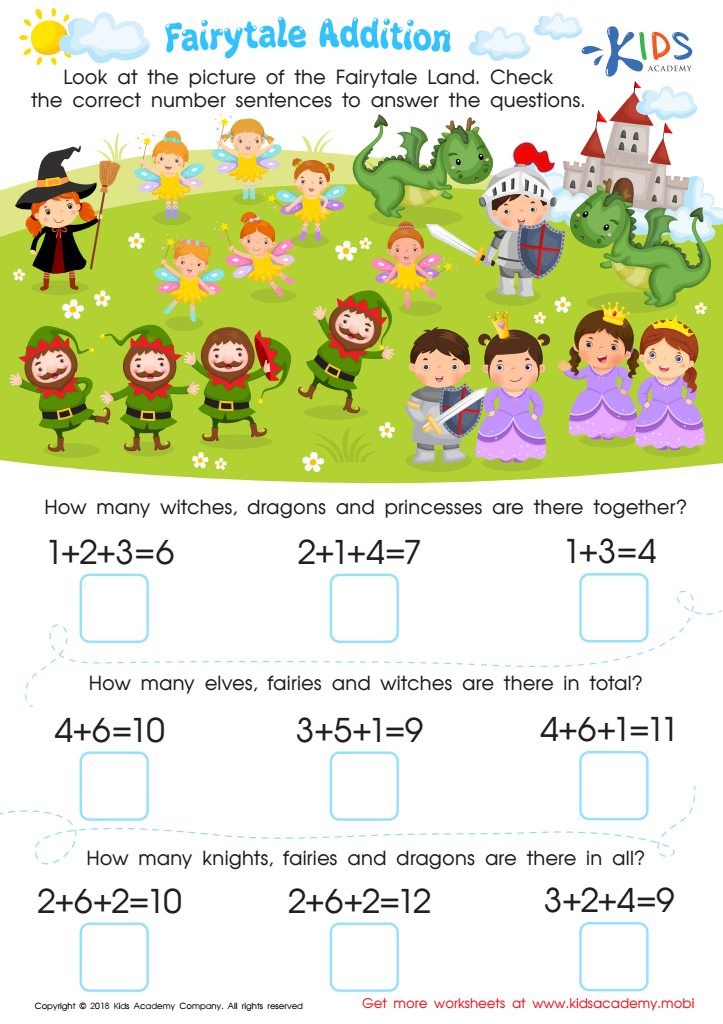
Fairytale Addition Worksheet
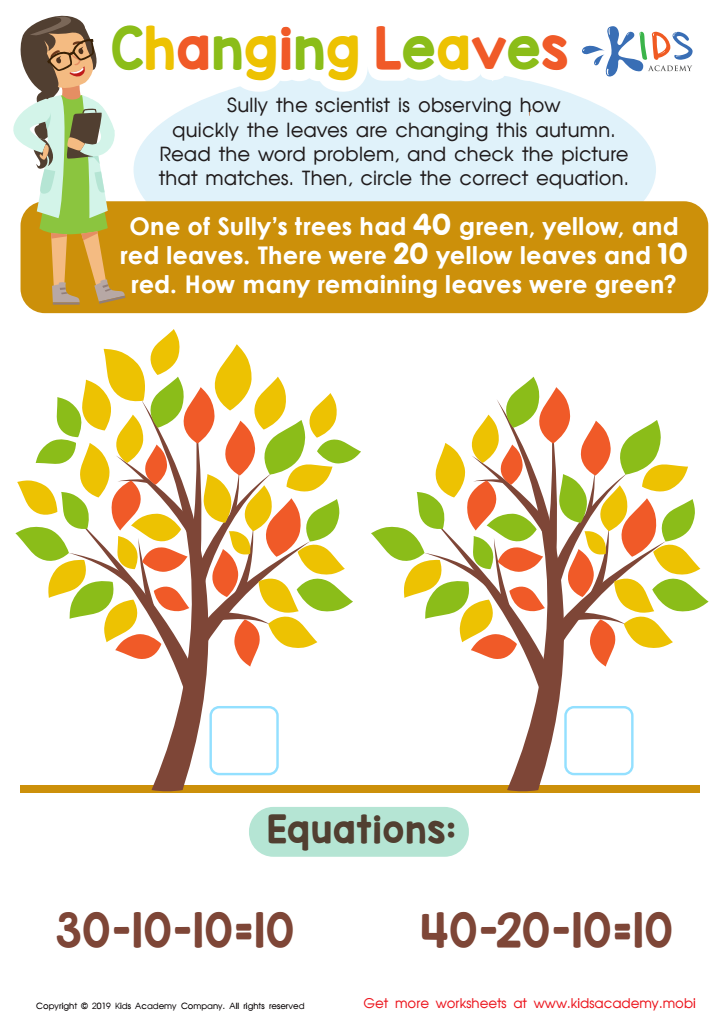
Changing Leaves Worksheet



Easy two-step word problems are essential for children aged 4-7, as they play a critical role in developing foundational math skills and logical thinking. For parents and teachers, engaging children with these problems offers a unique opportunity to nurture both cognitive and language skills. First, solving two-step word problems helps children learn how to process information and translate words into mathematical operations, enhancing their comprehension and critical thinking abilities.
Moreover, these problems encourage children to practice perseverance and problem-solving, crucial skills for lifelong learning. As they approach each challenge with curiosity, they gain confidence in their ability to tackle more complex tasks in the future.
Additionally, two-step word problems promote collaborative, dialogue-rich learning experiences, allowing children to articulate their thought processes and reasoning. This interaction lays the groundwork for effective communication skills, as they learn to express their ideas clearly.
Ultimately, choosing to focus on easy two-step word problems in the early years sets children on a path toward mathematical literacy and success. It equips them with the tools they need to unravel complex challenges as they progress in their education, making it a worthwhile investment for parents and educators alike.