Easy Graphs Worksheets for Ages 6-7
4 filtered results
-
From - To
Introducing our "Easy Graphs for Ages 6-7" worksheets, tailor-made to introduce your young learners to the captivating world of graphs and data! Designed with budding mathematicians in mind, these worksheets make learning about graphs an engaging, fun, and simple process. Through a variety of activities and easy-to-understand instructions, students will explore different types of graphs, learn how to interpret them, and even start creating their own. Each sheet is a colorful journey into basic graphing concepts, ensuring that children not only grasp but also enjoy their early math experiences. Unlock your child's potential with "Easy Graphs for Ages 6-7" – where learning meets fun!
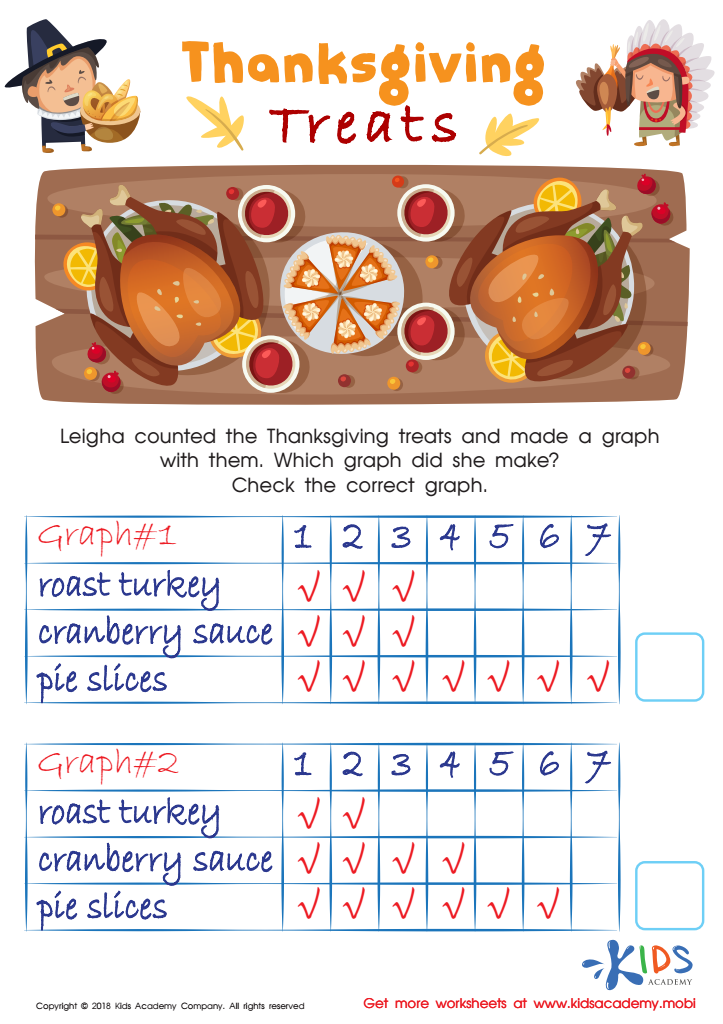
Graphs: Thanksgiving Treats Worksheet
 Assign to My Students
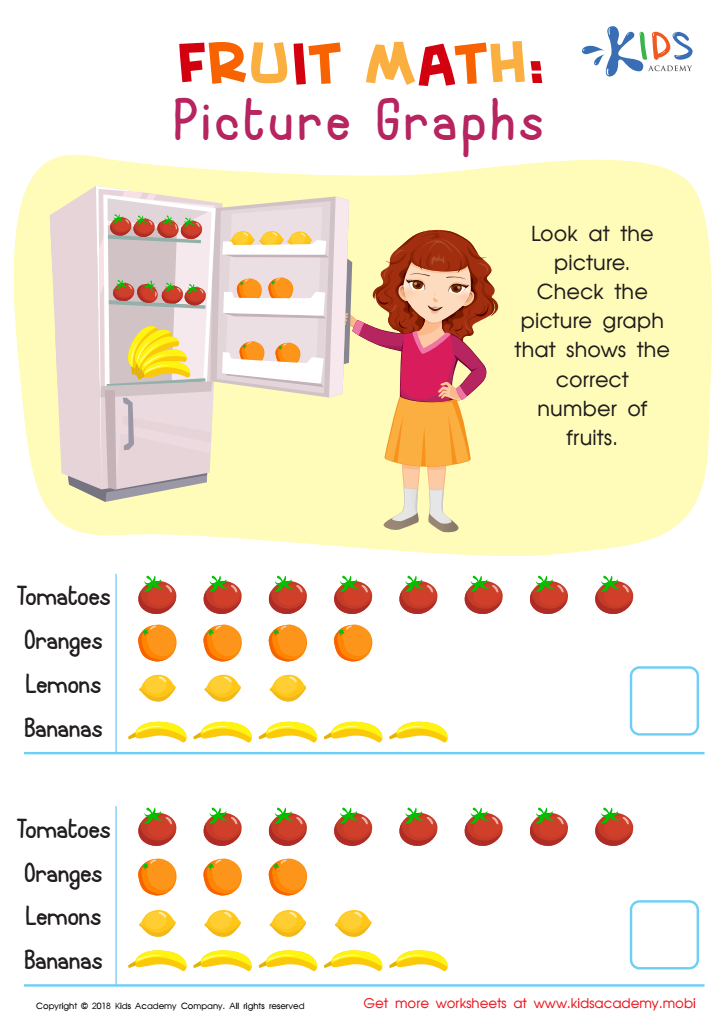
Fruit Math: Picture Graphs Worksheet
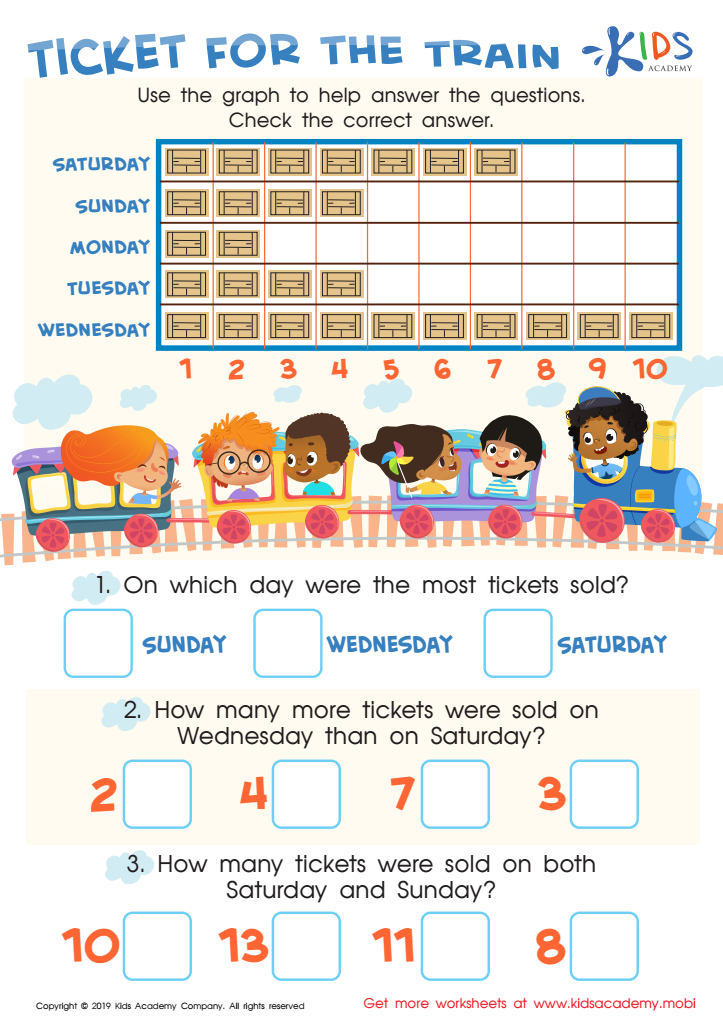
Ticket for the Train Worksheet
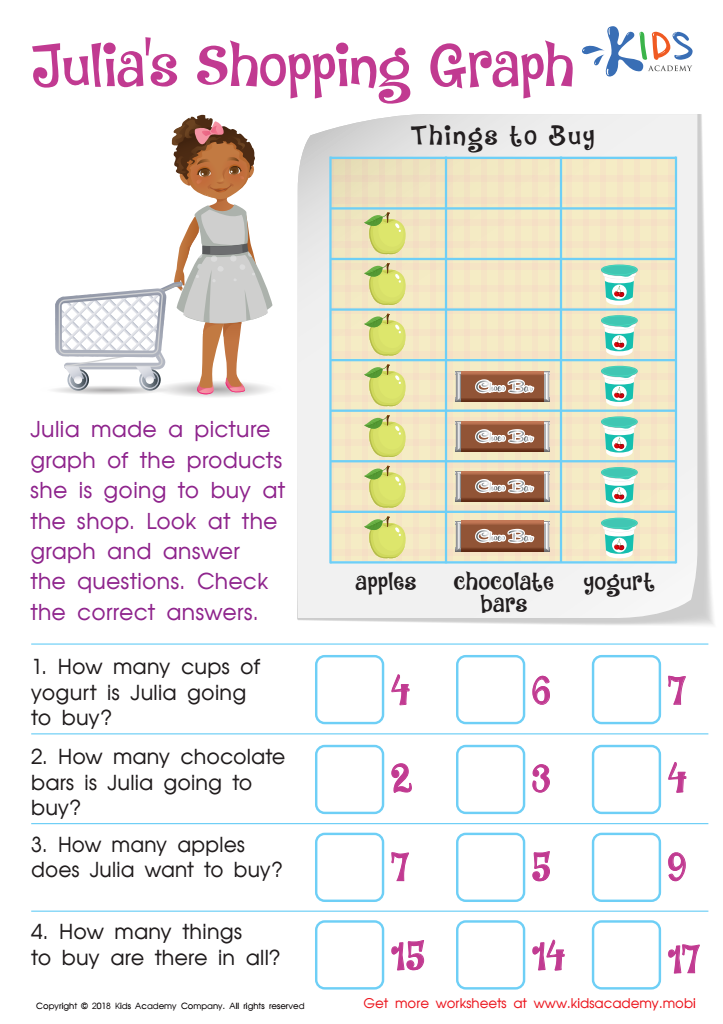
Julia's Shopping Graph Worksheet








Easy Graphs for Ages 6-7 are an invaluable resource for young learners beginning their journey into the world of mathematics and data interpretation. At such a formative age, children are just starting to understand the world around them through patterns, numbers, and comparisons. Easy Graphs tailored for ages 6-7 provide a foundational step that is both engaging and educational, making complex concepts accessible and fun.
These worksheets serve multiple purposes. First and foremost, they introduce the basic idea of representation of data visually, which is a crucial skill in both academic and real-world contexts. Through the use of simple shapes, colors, and objects that are familiar to children, these easy-to-understand graphs help kids to grasp the concept of quantity and its comparison without feeling overwhelmed.
Moreover, these worksheets are designed to enhance critical thinking and problem-solving skills. As children interpret the graphs, they learn to analyze information, draw conclusions, and even make predictions, which are essential skills in all areas of learning. Furthermore, working with Easy Graphs for Ages 6-7 fosters a love for mathematics early on by showing kids that math can be enjoyable and directly related to their everyday lives.
In conclusion, Easy Graphs for Ages 6-7 are not just worksheets; they are tools that unlock potential, build confidence, and lay the groundwork for future success in mathematics and beyond.








