Easy Two-step Word Problems Worksheets for Ages 6-7
5 filtered results
-
From - To
Introduce your young learner to the engaging world of math with our Easy Two-step Word Problems worksheets, perfectly tailored for children aged 6-7 years. These learning worksheets are designed to develop critical thinking and problem-solving skills through fun and accessible challenges. Each worksheet seamlessly combines reading and math, helping children to enhance their numerical understanding and literacy simultaneously. Watch your child's confidence grow as they navigate through each carefully crafted problem, learning to apply basic arithmetic in real-world contexts. Ideal for home or classroom use, these worksheets are a fantastic resource for fostering foundational math skills.
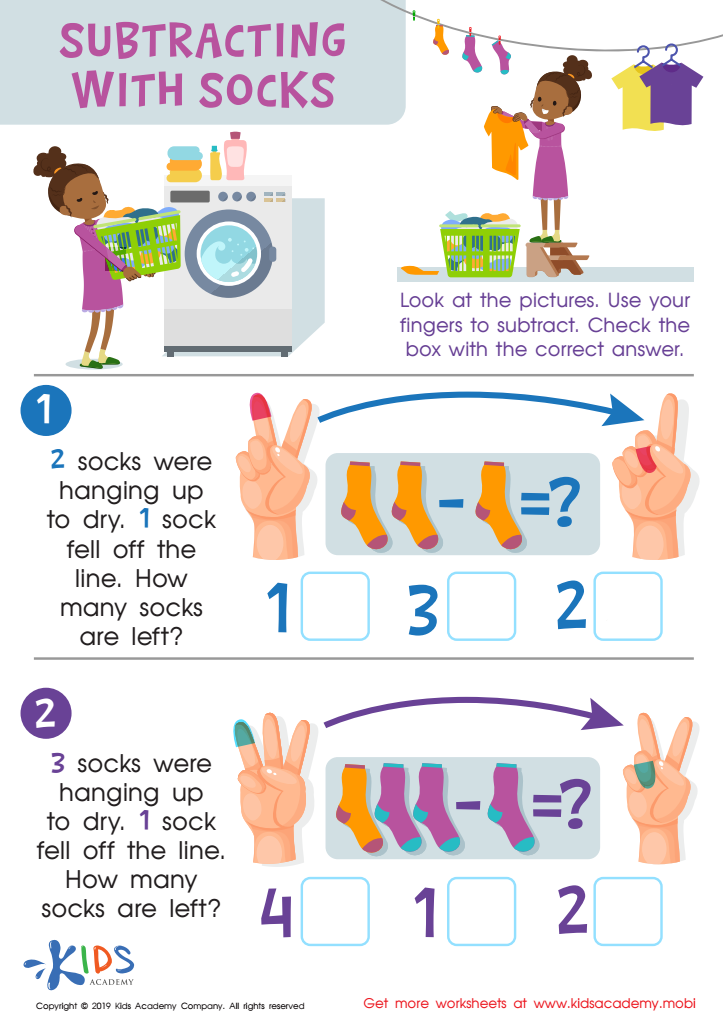
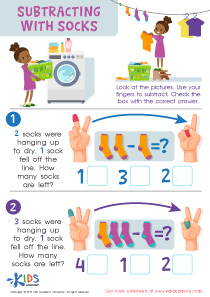
Subtracting Socks Worksheet
 Assign to My Students
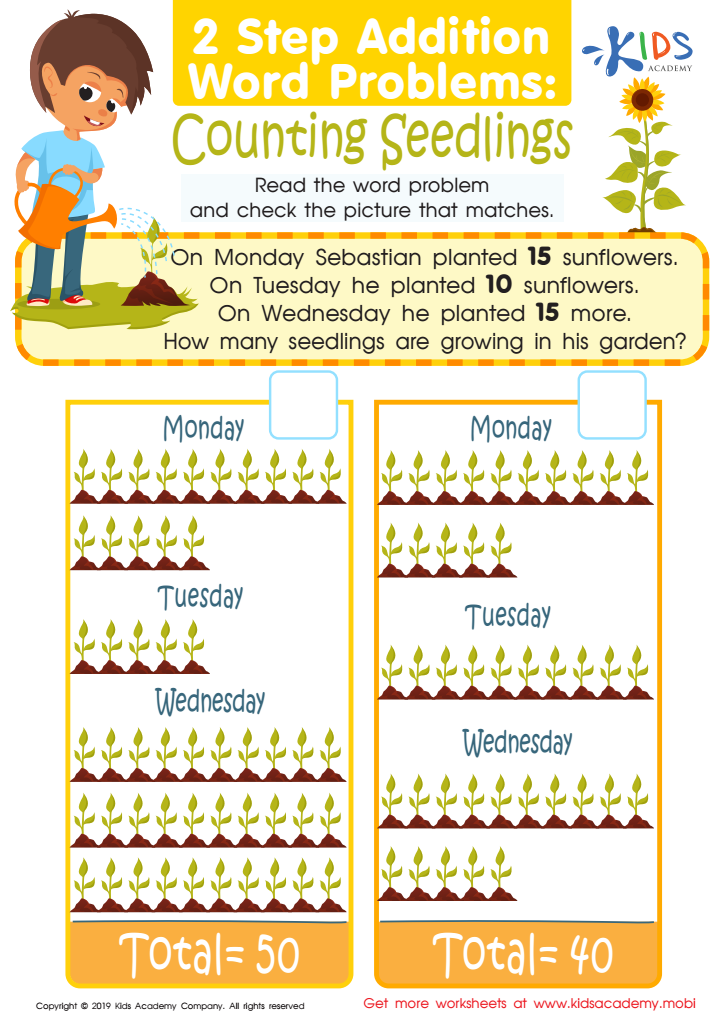
Counting Seedlings Worksheet
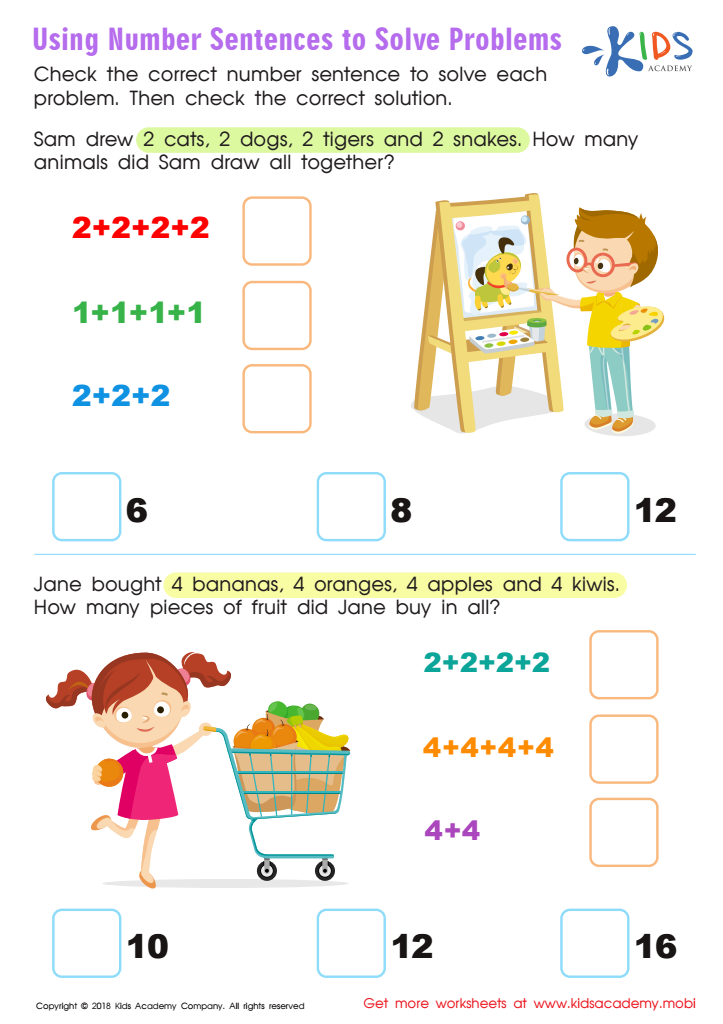
Using Number Sentences to Solve Problems Worksheet
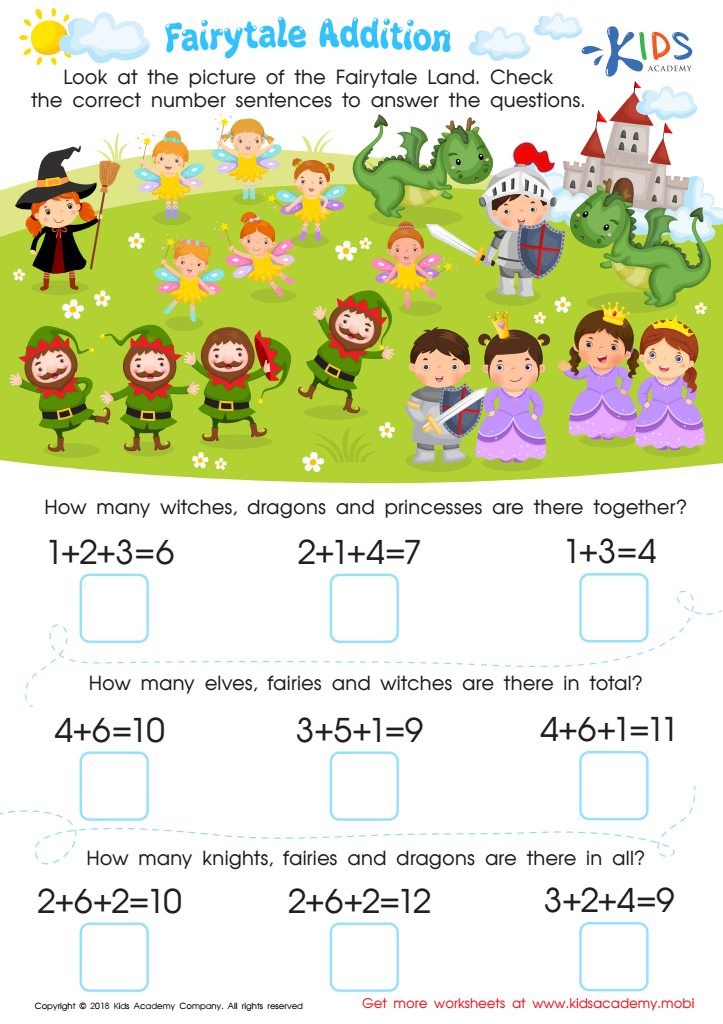
Fairytale Addition Worksheet
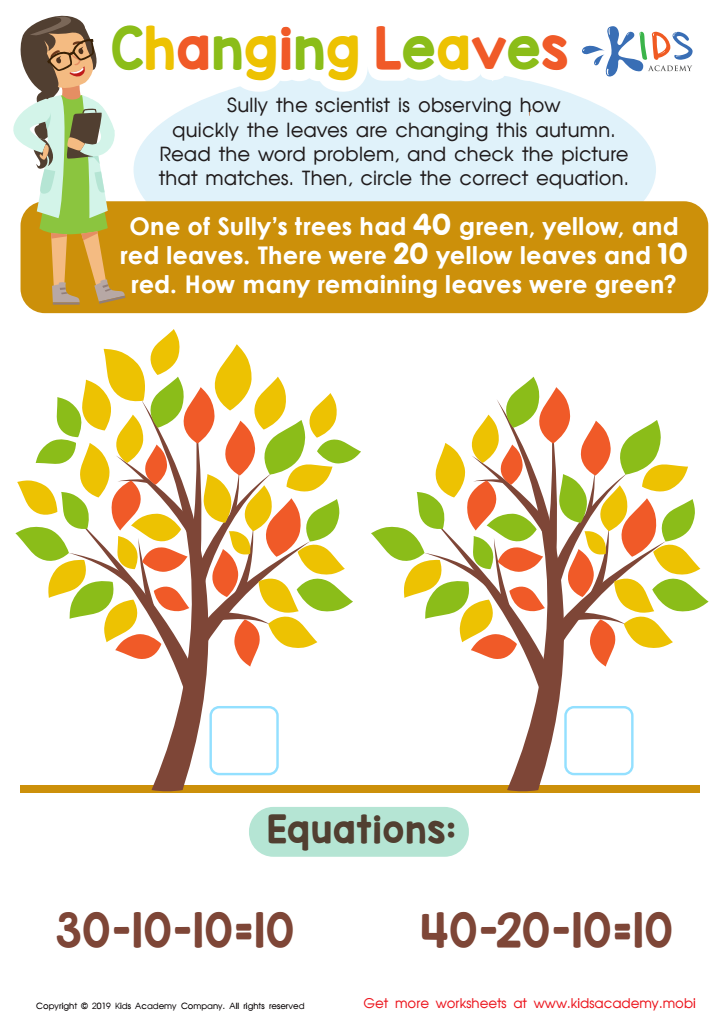
Changing Leaves Worksheet



Why Easy Worksheets on Two-step Word Problems Are Useful for Children Aged 6-7
As children progress through their early educational years, developing a strong foundation in basic math skills is crucial. Among the resources available to foster these skills, easy worksheets on two-step word problems stand out as particularly beneficial. Specifically designed for children aged 6-7, these learning printables not only enhance mathematical understanding but also boost critical thinking and problem-solving skills.
Cultivating Mathematical Foundations
At ages 6-7, children are transitioning from simple arithmetic—such as addition and subtraction—toward more complex mathematical concepts. Two-step word problems are an excellent bridge in this developmental phase. These problems require a child to perform two sequential mathematical operations to arrive at a solution. For example, a problem might ask a child to first add the number of apples two friends have and then subtract the number that was eaten. This kind of problem-solving reinforces their arithmetic skills while introducing them to the concept of multi-step reasoning.
Enhancing Reading and Comprehension Skills
Learning printables that focus on two-step word problems do more than just teach numbers; they also enhance reading and comprehension skills. Each problem is a mini-story that children need to read and understand. They must discern which parts of the text are relevant to solving the problem and which operations to apply. This practice is invaluable as it teaches children to extract and process information from written text, a skill that is beneficial across all areas of learning.
Boosting Cognitive Flexibility and Problem-Solving Skills
Problem-solving is a critical skill for academic success and everyday life. Easy worksheets on two-step word problems encourage children to think logically and flexibly. By engaging with these problems, children learn that there may be multiple steps or ways to approach a solution. This kind of practice can improve cognitive flexibility, helping children to adapt their thinking quickly and effectively in varied situations.
Promoting Independence and Confidence
Two-step word problems can be challenging at first, which makes them excellent tools for teaching perseverance and boosting confidence. As children work through these problems, often as part of learning printables, they learn to navigate difficulties independently. Each problem solved independently reinforces their self-esteem and motivates continued engagement and effort in learning.
Encouraging Real-World Application
Mathematics is not just for the classroom; it's a vital part of everyday life. Two-step word problems often simulate real-life situations, like buying groceries or sharing toys, which help children see the practical relevance of math. This connection between the abstract world of numbers and their everyday experiences can be incredibly motivating. When children recognize that the skills they are developing have real-world applications, their interest in mathematics often increases. Learning printables that contain contextually based two-step word problems can thereby make math more engaging and relatable, encouraging students to see the value and fun in math.
Facilitating Tailored Learning Experiences
One of the significant advantages of using learning printables for two-step word problems is the ability to tailor learning experiences to meet the individual needs of each child. Teachers and parents can choose worksheets that align with each child's current math abilities and learning pace. This customization ensures that children are neither bored with material that is too easy nor overwhelmed by concepts that are too difficult. Furthermore, these printables can be used in various settings, from classrooms to home learning environments, making them a versatile tool in the educational toolkit.
Supporting Collaborative Learning
While these worksheets are excellent for individual practice, they also open up opportunities for collaborative learning. Children can work together in pairs or small groups to solve two-step word problems, discussing their thought processes and reasoning. This collaboration can enhance communication skills and encourage children to consider different perspectives and strategies.
Conclusion
Easy worksheets on two-step word problems are more than just arithmetic drills; they are a comprehensive educational tool that supports the development of multiple skills critical for young learners aged 6-7. From reinforcing basic math operations to enhancing reading comprehension and fostering problem-solving abilities, these learning printables play a pivotal role in early childhood education. By integrating these worksheets into daily learning, educators and parents can provide children with a fun, engaging, and effective way to develop both their mathematical prowess and overall cognitive abilities, setting a solid foundation for future academic success and everyday problem-solving.