Filters

6 filtered results

Clear all filters
Favorites
With answer key
Interactive

6 filtered results

Difficulty Level

Grade


Welcome to our "Easy Upper & Lowercase Letters Worksheets" tailored for children aged 6-9! These engaging and interactive worksheets are designed to help young learners master the alphabet through fun activities. Each worksheet focuses on identifying, matching, and practicing both uppercase and lowercase letters, promoting handwriting skills and letter recognition. These materials are perfect for use at home or in the classroom, offering a variety of exercises that cater to different learning styles. Spark your child's love for reading and writing as they improve their literacy skills and gain confidence. Explore our extensive collection of printable worksheets today!

Check out this FREE Trial Lesson on Upper & Lowercase Letters for age 6-9!

Review

Favorites
With answer key
Interactive
  • 6-9
  • With answer key
  • Upper & Lowercase Letters
  • Easy
Uppercase and Lowercase Letters: Assessment Worksheet

Uppercase and Lowercase Letters: Assessment Worksheet

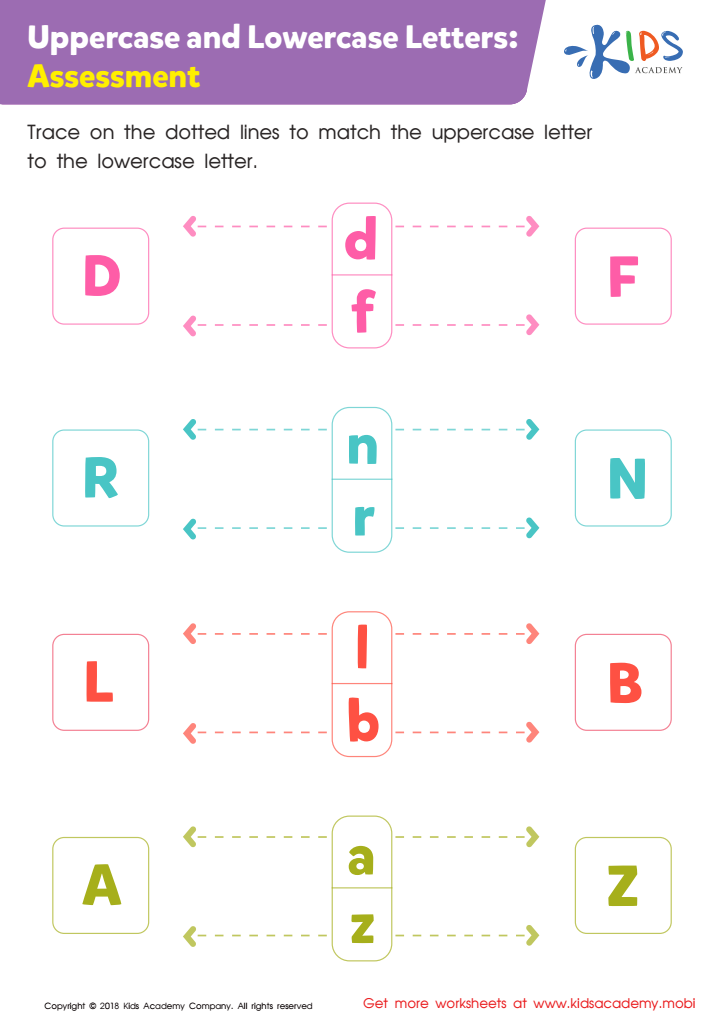
Assess your child's knowledge of upper- and lowercase letters with this worksheet. Have them trace the dotted lines to match the lowercase letters with their uppercase counterparts. This is a great way to gauge their progress and identify any areas of difficulty. Get a better understanding of your child's capabilities and encourage their development!
Uppercase and Lowercase Letters: Assessment Worksheet
Worksheet
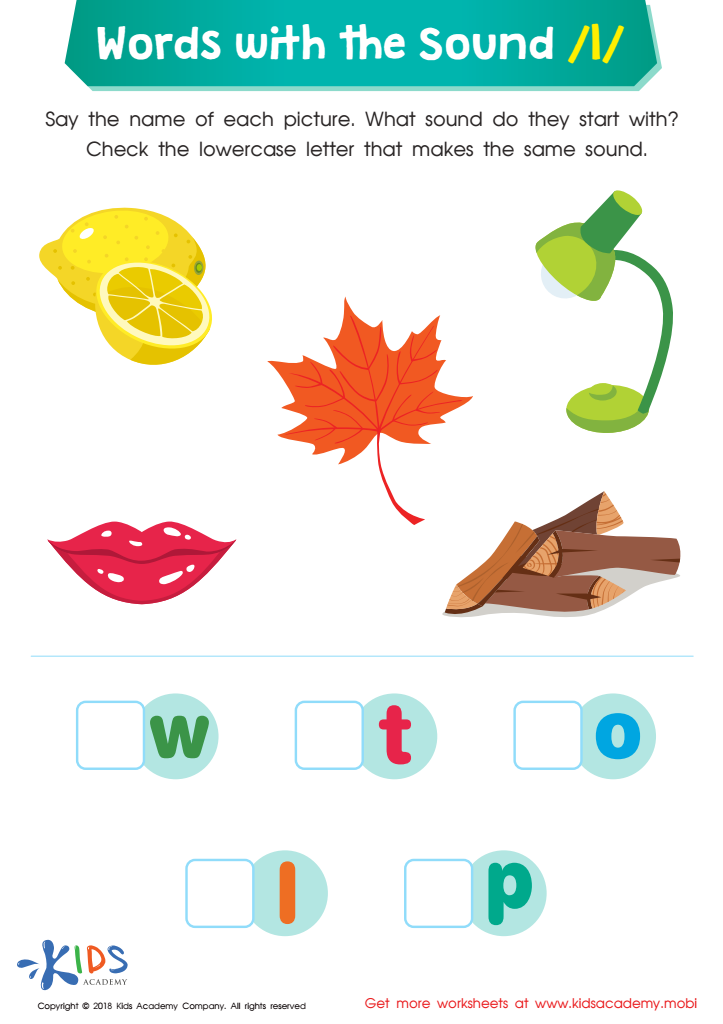
Words with Sound L Reading Worksheet

Words with Sound L Reading Worksheet

This PDF worksheet is great for helping emerging readers isolate initial sounds. Kids name familiar pictures, then identify the correct letter for the "l" sound. This worksheet strengthens fine motor skills, plus builds visual discernment. It's fun and colorful too!
Words with Sound L Reading Worksheet
Worksheet
Capitalization Key Worksheet Preview

Capitalization Key Worksheet

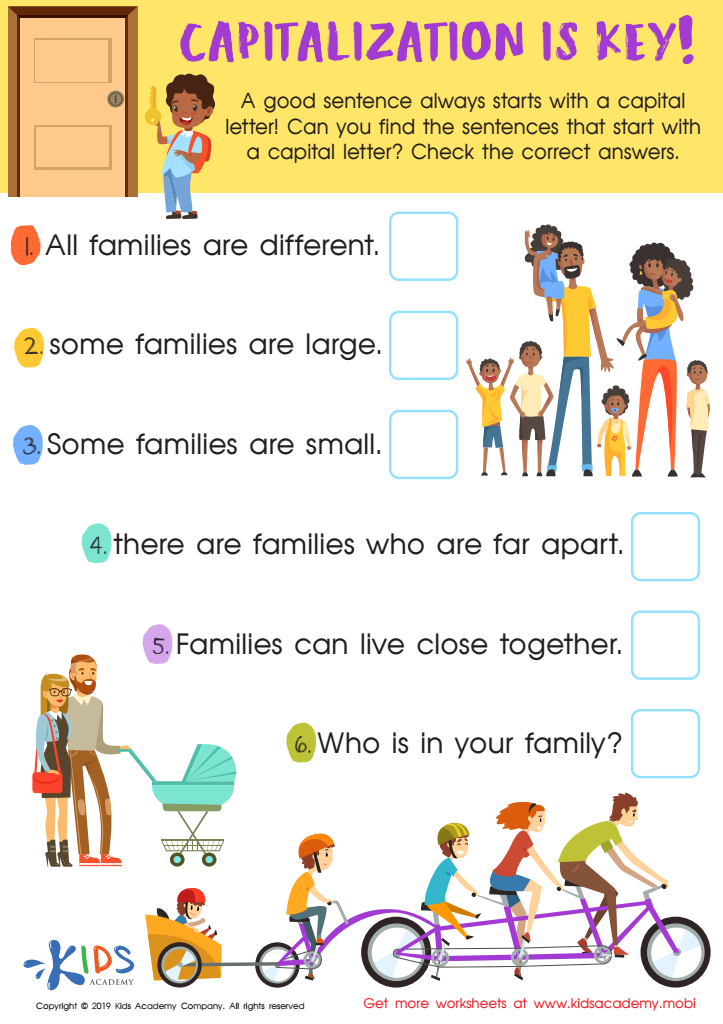
Help your kids learn the importance of capitalizing at the start of sentences with this fun PDF! It features 6 family-themed sentences, with pictures, that your students have to find the correctly capitalized versions of. Perfect for young learners, this worksheet adds a fun twist to learning.
Capitalization Key Worksheet
Worksheet
Fix Capital Letters Worksheet

Fix Capital Letters Worksheet

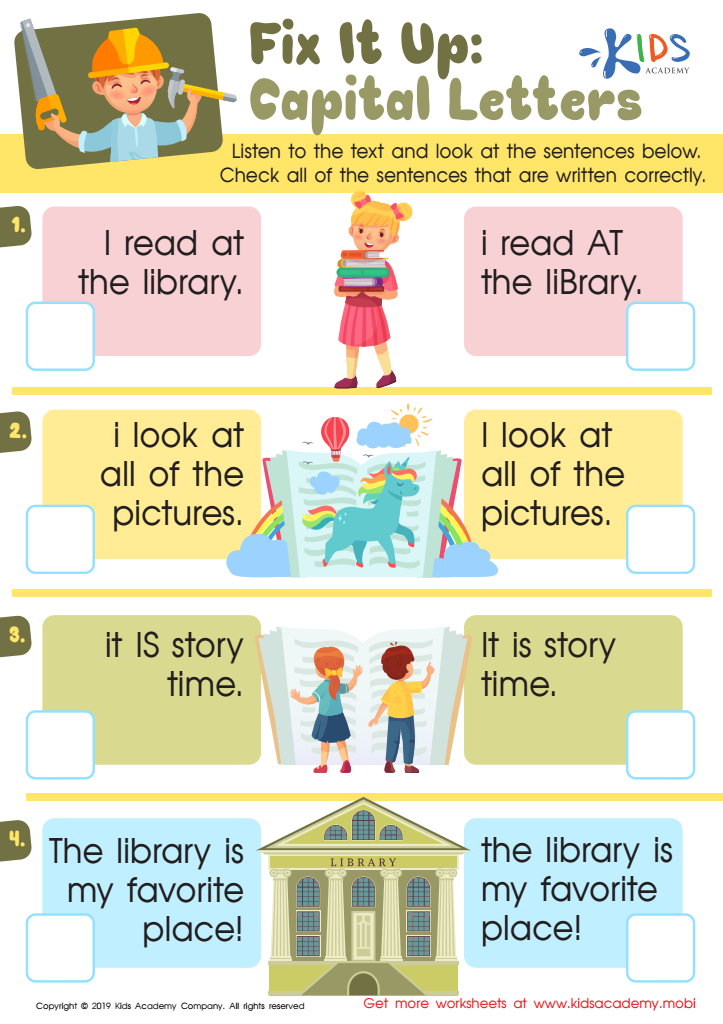
Put on your hardhats and get out the tools - it's time to do some repair work! Have your child identify sentences written with proper capitalization on this fun and colorful worksheet. Ask more advanced students to rewrite incorrect sentences correctly - it'll help them understand letter case better.
Fix Capital Letters Worksheet
Worksheet
How to Capitalize Worksheet Preview

How to Capitalize Worksheet

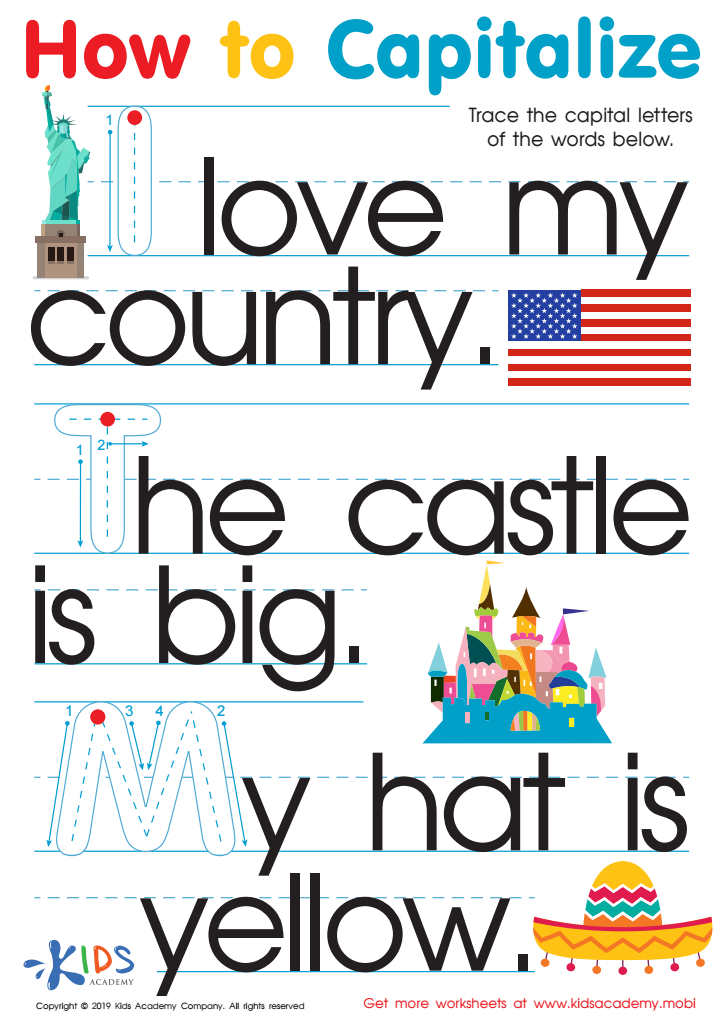
Capitalizing letters is important in English. This worksheet will help your child learn how to write them. Words such as "the" and "I" will be covered, with visuals such as the Statue of Liberty, the American Flag, a castle, and a sombrero. The "How to Capitalize" PDF is a great way to sharpen your child's writing and aid their success!
How to Capitalize Worksheet
Worksheet
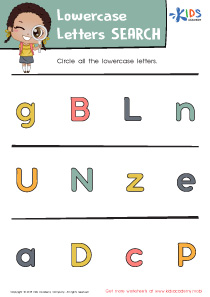
Lowercase Letters Search: Assessment Worksheet


Lowercase Letters Search: Assessment Worksheet

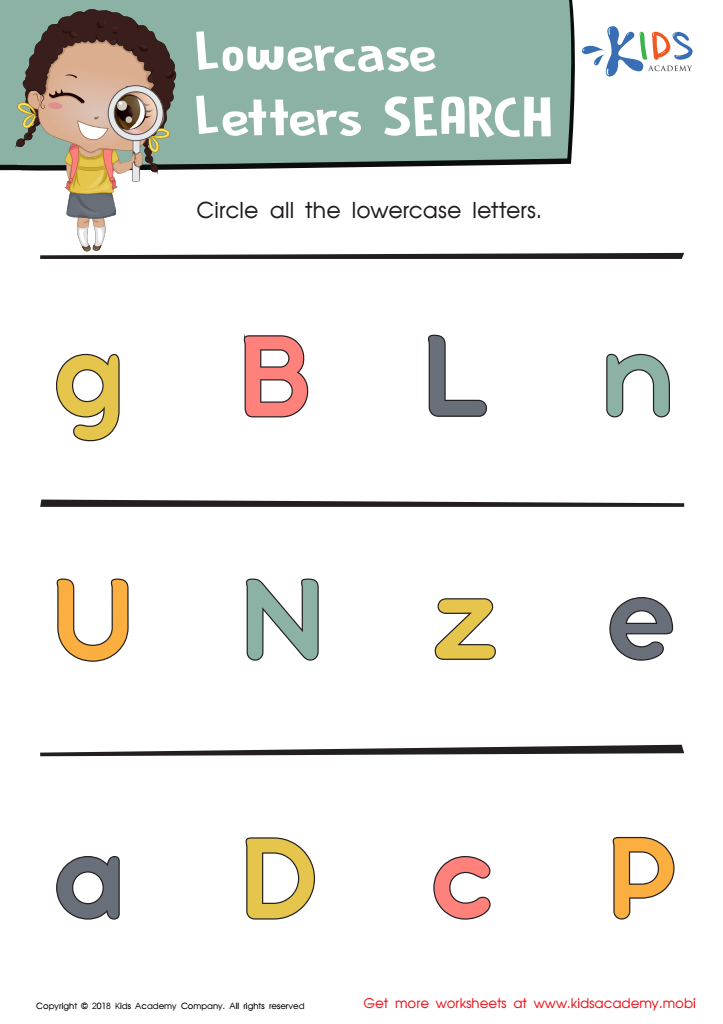
Circle all the lowercase letters in this worksheet. Identify them among a mix of uppercase and lowercase letters. Your child will have fun with this exercise thanks to its bright primary colors. Enjoyment and learning go hand-in-hand!
Lowercase Letters Search: Assessment Worksheet

Worksheet


Teaching easy uppercase and lowercase letters is essential for children aged 6-9, as it lays the foundation for their literacy skills. At this age, children are developing critical reading and writing abilities. Mastering letter recognition is key to improving their phonemic awareness, helping them to understand that letters correspond to specific sounds in words. This understanding promotes fluent reading and better comprehension skills.

Additionally, as children in this age range begin to write sentences and paragraphs, knowing the difference between uppercase and lowercase letters adds clarity and structure to their writing. It enables them to compose messages and stories that are coherent and easier to read.

Moreover, at this developmental stage, letter formation can influence children's confidence in their writing abilities. By providing engaging ways to practice letters, teachers and parents foster a love for learning and motivate children to express themselves creatively. Emoitional interest, coupled with sound educational foundations, strengthens children's linguistic skills, preparing them for success in higher grades.

Ultimately, understanding and practicing uppercase and lowercase letters empowers children, giving them crucial tools needed for effective communication and building lifelong literacy skills. Supporting them in this learning journey is essential for their overall academic success.