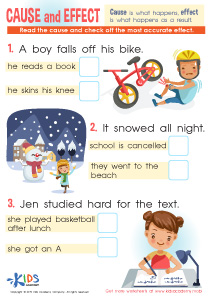
Normal Reading Non-Fiction Worksheets for 3-Year-Olds
5 filtered results
Difficulty Level
Grade
Age
-
From - To
Subject
Activity
Standards
Discover the joy of early learning with our Normal Reading Non-Fiction worksheets, specially designed for 3-Year-Olds. These engaging worksheets are perfect for introducing young minds to the fascinating world around them through simple, age-appropriate non-fiction content. Each sheet is crafted to captivate your child's curiosity, fostering a love for learning and reading from an early age. With vibrant illustrations and easy-to-understand facts, these worksheets make learning accessible and fun. Ideal for home or classroom use, our Normal Reading Non-Fiction collection for 3-Year-Olds is the perfect tool to spark a lifelong passion for knowledge in your little learner.
Favorites
With answer key
Interactive
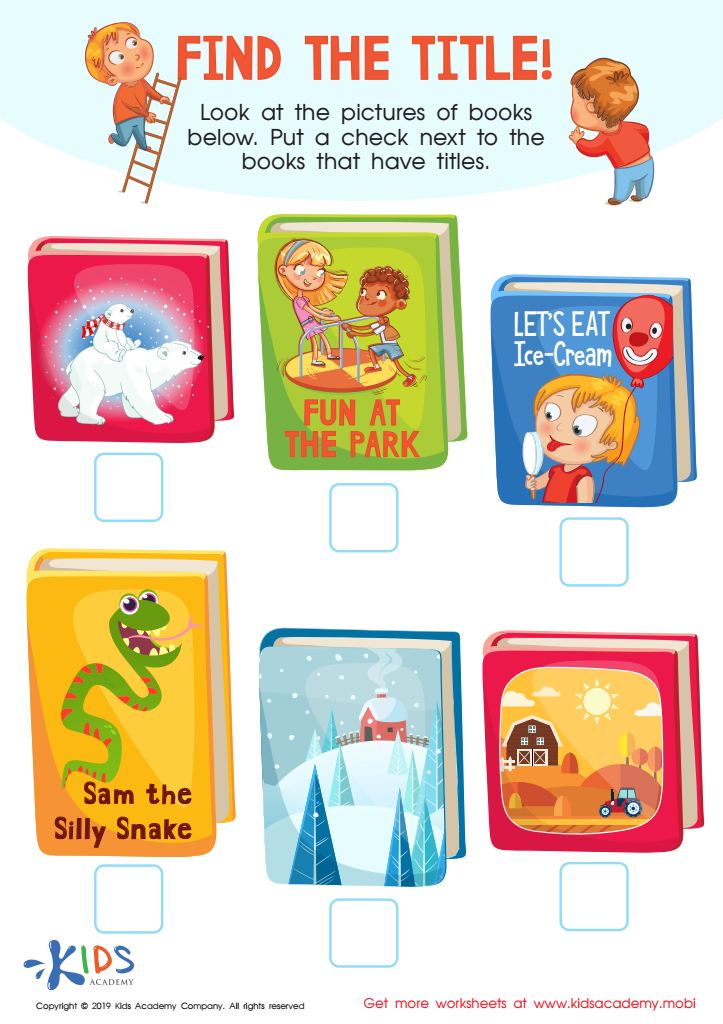
Find the Title Worksheet
Help your kids to identify the colors of the books on this worksheet. Ask them to spot the differences between the six books, such as which ones have titles printed on their covers. Ask them to put a check next to the books with titles. This activity will promote your kids' thinking skills.
 Assign to My Students
Find the Title Worksheet
Worksheet
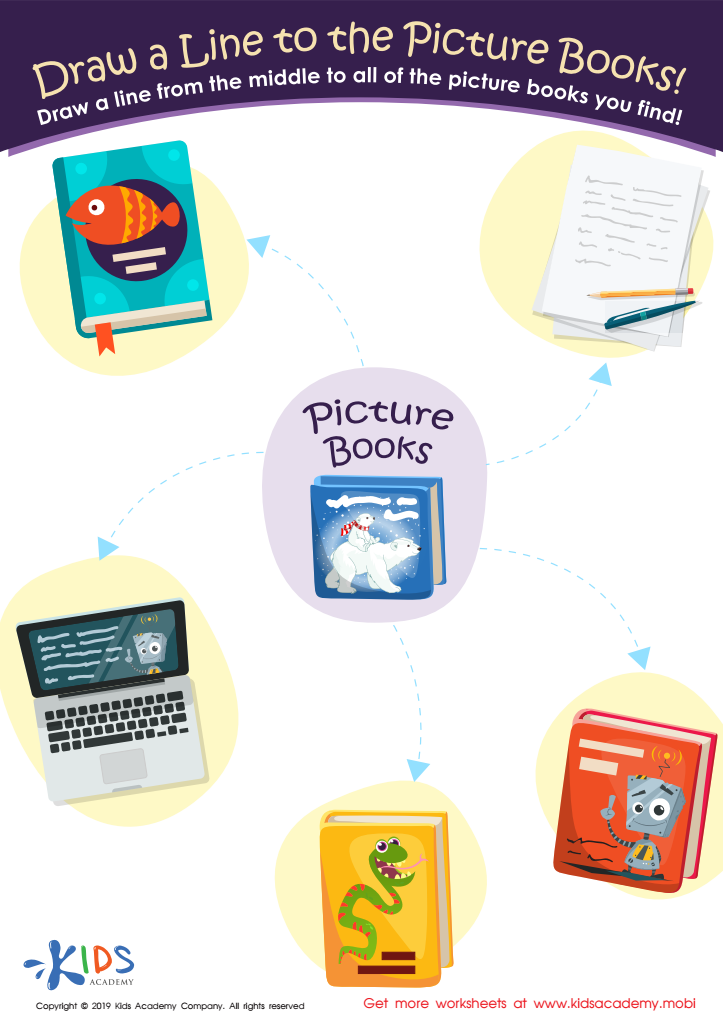
Draw a Line to the Picture Books Worksheet
Encourage your students to read and explore with this fun exercise! They'll draw a line from the word 'picture books' to the five objects. Picture books are exciting, with stories and colorful images. Make story time even more enjoyable with this worksheet!
Draw a Line to the Picture Books Worksheet
Worksheet

Towns Worksheet
Towns are generally quiet and safe, making them attractive for young families. Cities have more people, businesses and tall buildings. Roads are busy, and there is often plenty to do and see. Help your kids check which pictures in this worksheet show towns.
Towns Worksheet
Worksheet
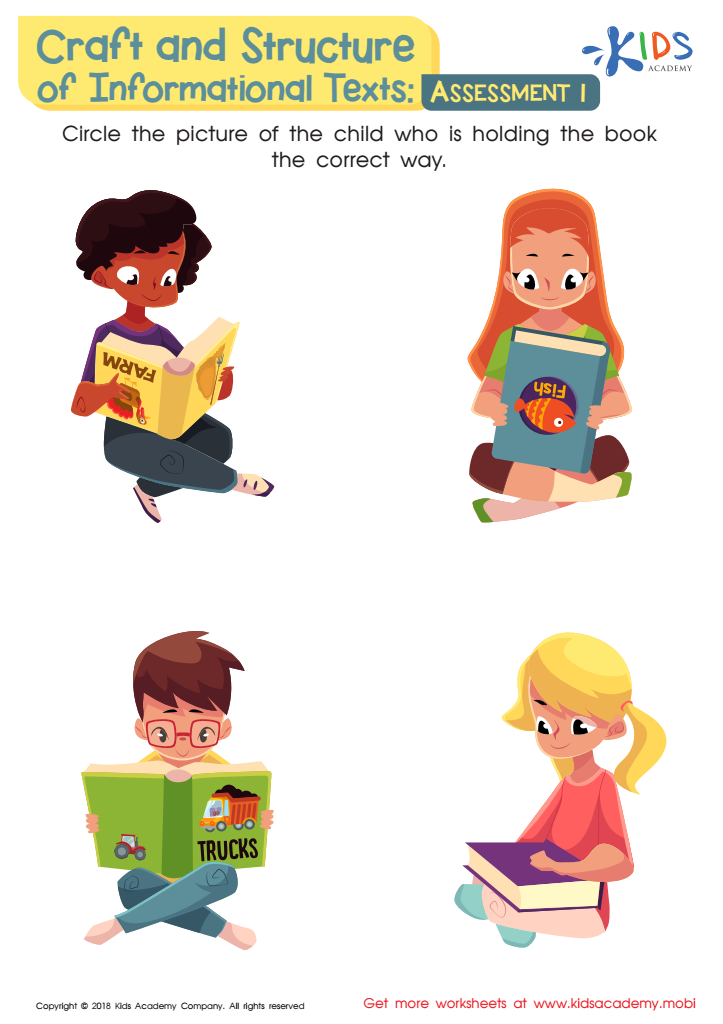
Craft and Structure of Informational Texts: Assessment 1 Worksheet
Young children need to know how to hold books correctly when they start reading. This assessment worksheet helps them show they know what to do. They'll look at the pictures and circle the child who is holding the book correctly. It's a great way to tell they are well on their way to becoming lifetime readers!
Craft and Structure of Informational Texts: Assessment 1 Worksheet
Worksheet
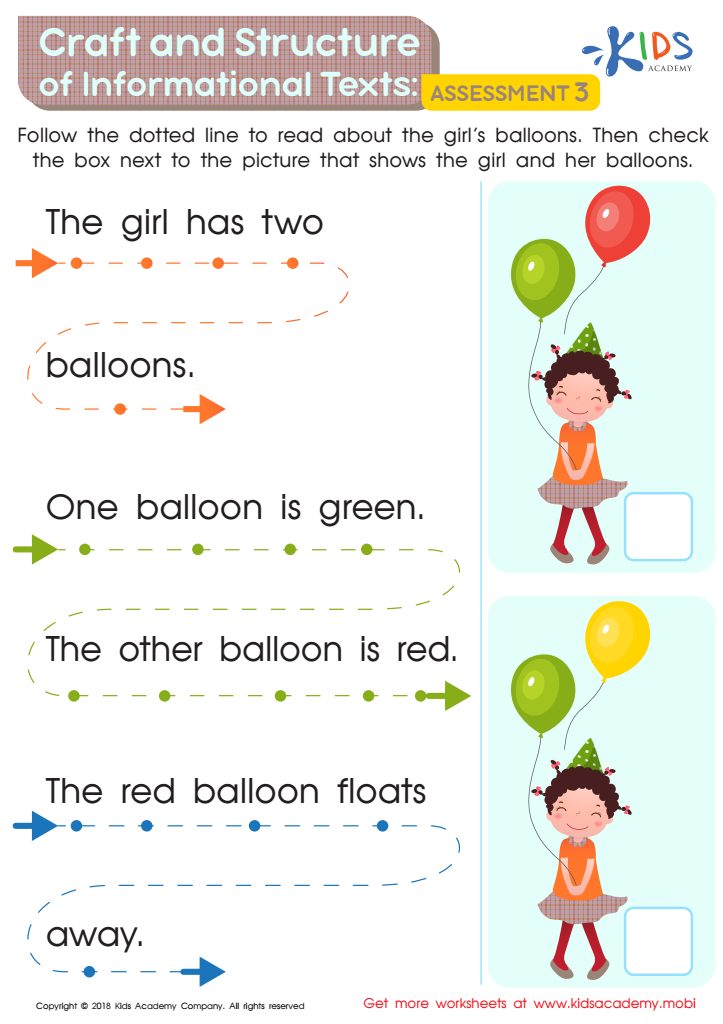
Craft and Structure of Informational Texts: Assessment 3 Worksheet
Test your beginning reader's understanding of left-to-right directionality and use of details from informational texts with this fun worksheet. Follow the traceable paths to find the right picture for each sentence. This will help your child gain confidence and be successful as a reader.
Craft and Structure of Informational Texts: Assessment 3 Worksheet
Worksheet
Join Kids Academy for Free
Who is primarily going to use this learning content?








Normal Reading Non-Fiction for 3-Year-Olds is a crucial educational tool that plays a vital role in the early development stages of children. These worksheets are designed to cater to the innate curiosity of toddlers, offering a structured way for them to explore the world around them. The importance of integrating Normal Reading Non-Fiction into the learning routine of 3-year-olds cannot be overstated, and here's why:
-
Building Vocabulary: At the age of three, children are at a prime stage for vocabulary expansion. Normal Reading Non-Fiction for 3-Year-Olds introduces them to a variety of words and concepts that are not typically found in everyday conversation, thereby enriching their language skills.
-
Developing Cognitive Skills: Through the engagement with factual content, these worksheets encourage critical thinking and comprehension skills. Children learn to connect information, ask questions, and understand the world in a logical manner.
-
Fostering a Love for Learning: By exposing 3-year-olds to the wonders of the real world through non-fiction, we are setting the foundation for a lifelong love of learning. This early interest in facts and knowledge about animals, space, the human body, and more, can spark future educational pursuits.
-
Enhancing Concentration: The structured nature of these worksheets helps young learners to focus and concentrate on tasks at hand, a skill that is beneficial beyond academic purposes.
In essence, Normal Reading Non-Fiction for 3-Year-Olds is not just about learning facts. It’s about building the blocks of language, cognition, passion for discovery, and attention that will serve children throughout their lives.