Normal Silent Vowels Worksheets for Ages 6-9
5 filtered results
-
From - To
Discover engaging exercises on silent vowels with our "Normal Silent Vowels Worksheets for Ages 6-9" at Kids Academy. Tailored for young learners, these captivating worksheets enhance phonemic awareness by highlighting silent letters often found in words. Through various fun activities and illustrative examples, kids practice identifying and pronouncing words with silent vowels, strengthening their reading and spelling skills. These worksheets are perfect for classroom use or home study, offering a blend of educational value and engaging content. Boost your child's literacy confidence with our expertly designed resources today!
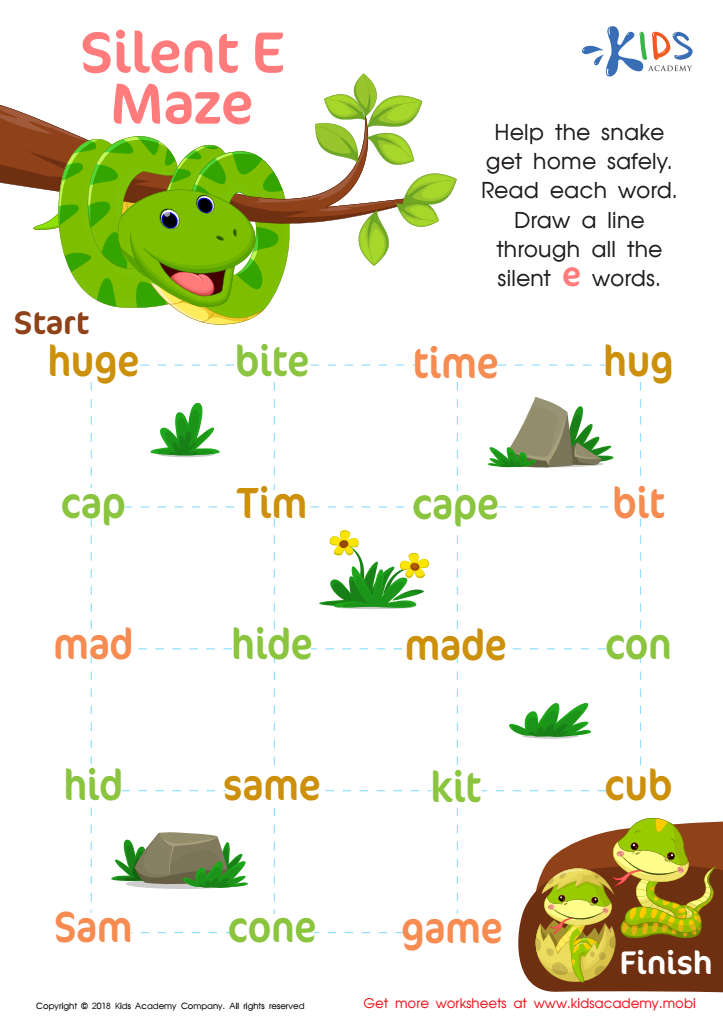
Silent E Maze Worksheet
 Assign to My Students
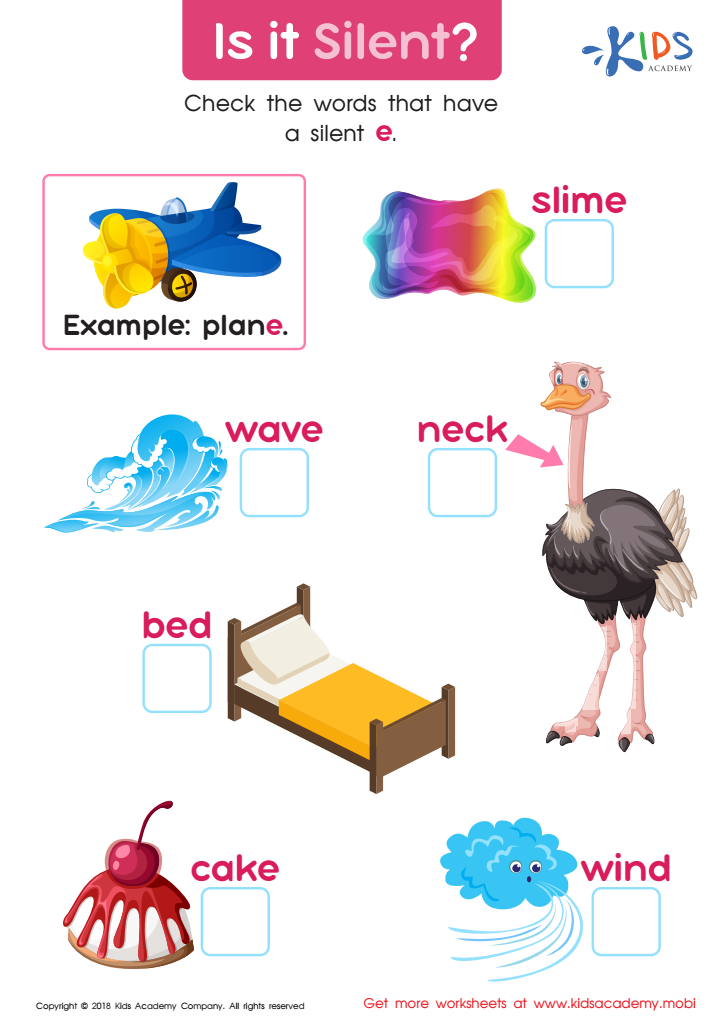
Is It Silent? Worksheet
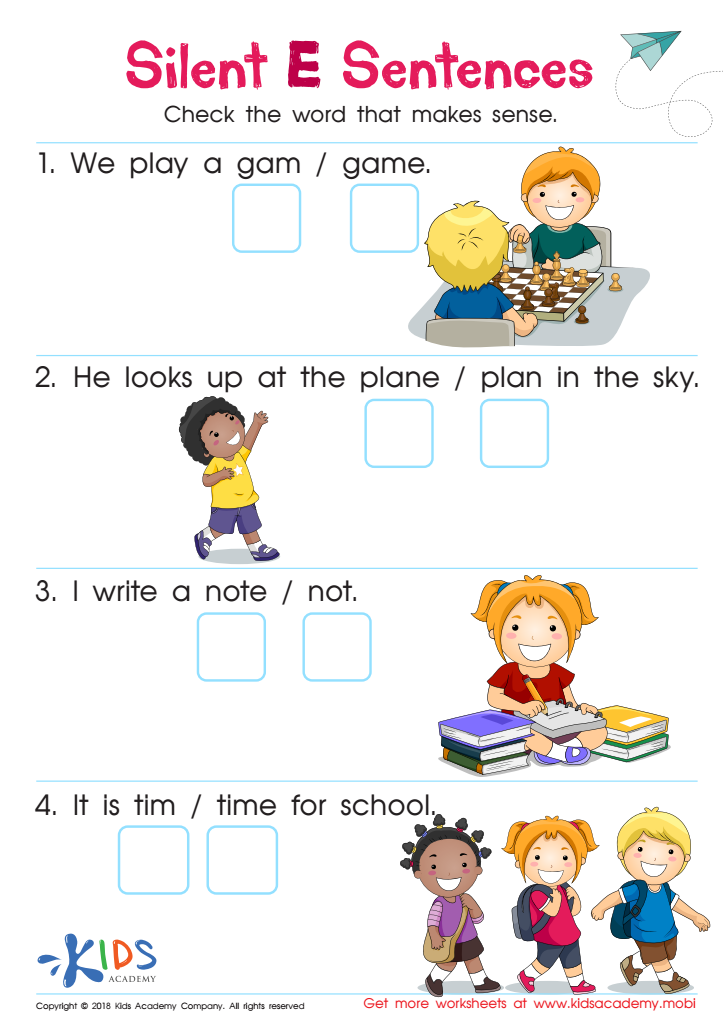
Silent E Sentences Worksheet
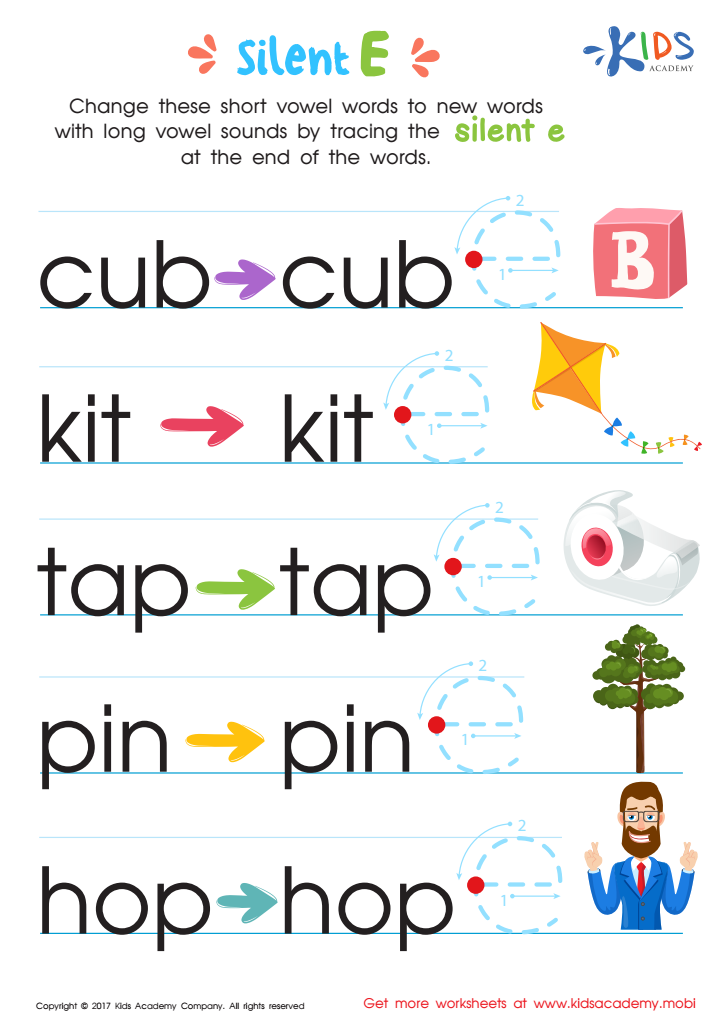
Silent E Words Worksheet
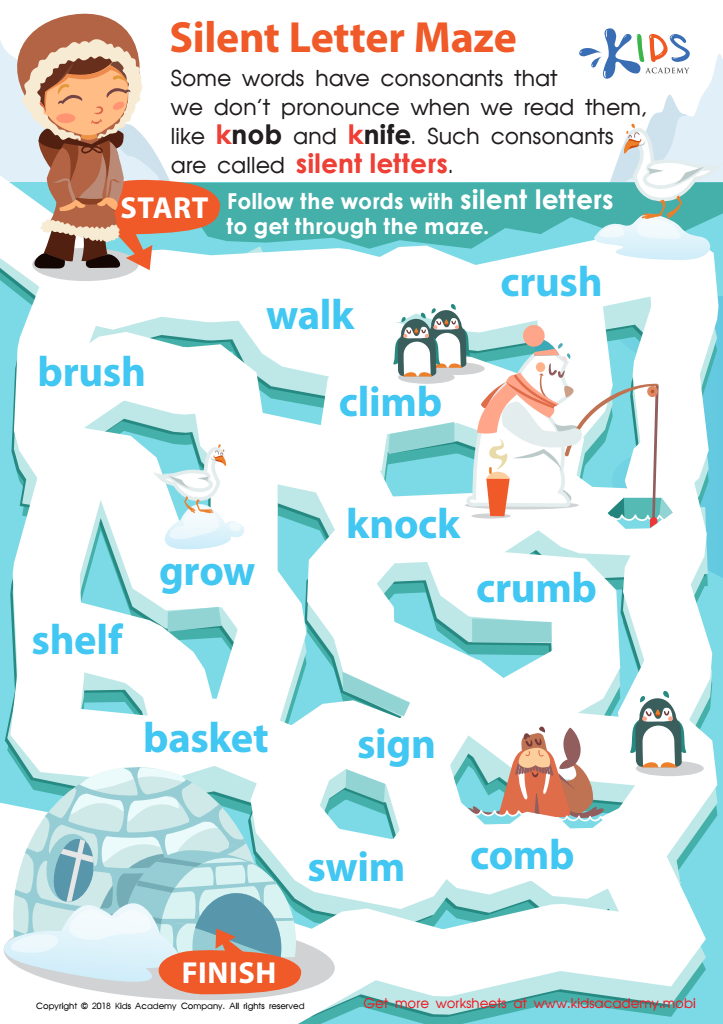
Silent Letter Maze Worksheet


Silent vowels play a crucial role in mastering early literacy skills, making them an essential focus for parents and teachers of children aged 6-9. Although silent vowels are not pronounced, they significantly impact word pronunciation, comprehension, and spelling. Take the word "cake" as an example; the silent 'e' at the end signals a long 'a' sound, differentiating it from "cak," which would have a short 'a' if pronounced.
By learning about silent vowels, children develop stronger phonemic awareness, which is crucial for reading fluency. This helps them decode new words, reducing frustration and promoting a love of reading. Silent vowels also enhance spelling skills. Understanding why certain letters are included in words aids children in spelling them correctly, reducing their reliance on rote memorization and helping them apply logical rules when trying to read or write new vocabulary.
Furthermore, early mastery of these concepts prepares children for more advanced reading and writing tasks, fostering academic confidence and success. Parents and teachers who emphasize silent vowels thus lay a strong foundation for lifelong literacy, benefiting children's academic achievements across all subjects. Prioritizing silent vowels equips young learners with crucial tools not just for immediate educational needs but for all future learning endeavors.