Letter-sound correlation Easy Alphabet Worksheets for Ages 3-4
4 filtered results
Difficulty Level
Grade
Age
-
From - To
Subject
Activity
Standards
Discover engaging and educational Easy Alphabet Worksheets designed for ages 3-4, focusing on letter-sound correlation. These printable activities from Kids Academy make learning fun, helping young children connect letters with their respective sounds. Perfect for early learners, these worksheets enhance phonemic awareness and provide a strong foundation for reading. With colorful illustrations and interactive exercises, children will enjoy mastering the alphabet while developing essential literacy skills. Whether at home or in the classroom, our expertly crafted worksheets make early language acquisition a delightful adventure for little learners. Start building your child's reading confidence today!
Favorites
With answer key
Interactive
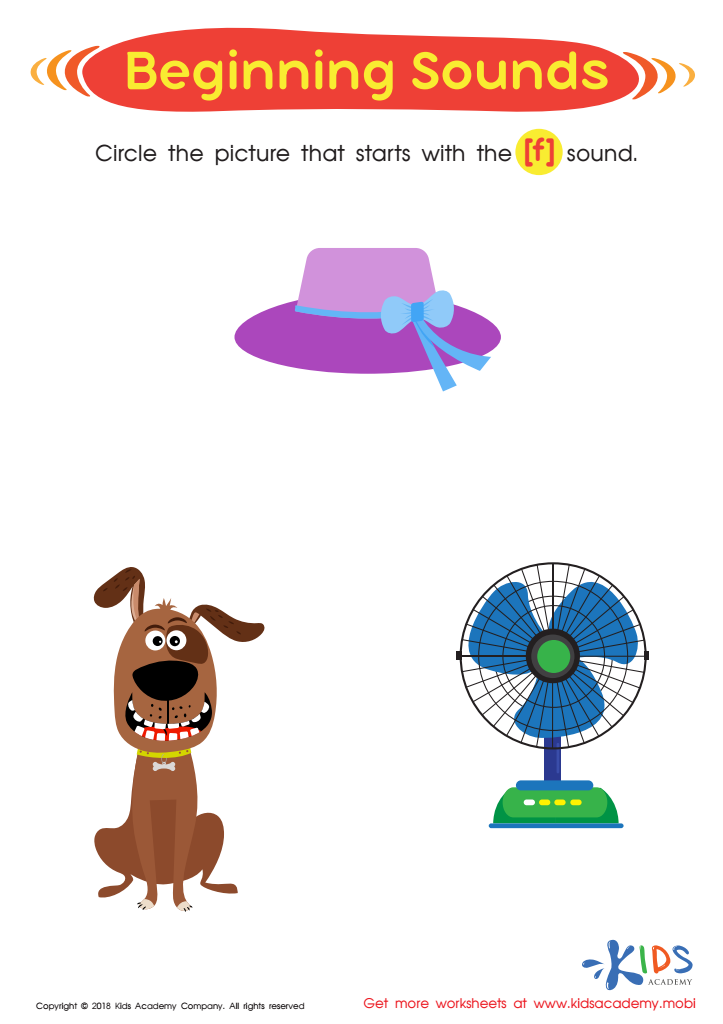
Beginning Sounds Assessment Printable
Test your child's knowledge of the alphabet. Ask them to recite the whole alphabet and the words for each letter. For example: A for apple, B for boy. Identify objects on this worksheet, then ask your child which one starts with the letter "f" and have them circle it.
 Assign to My Students
Beginning Sounds Assessment Printable
Worksheet
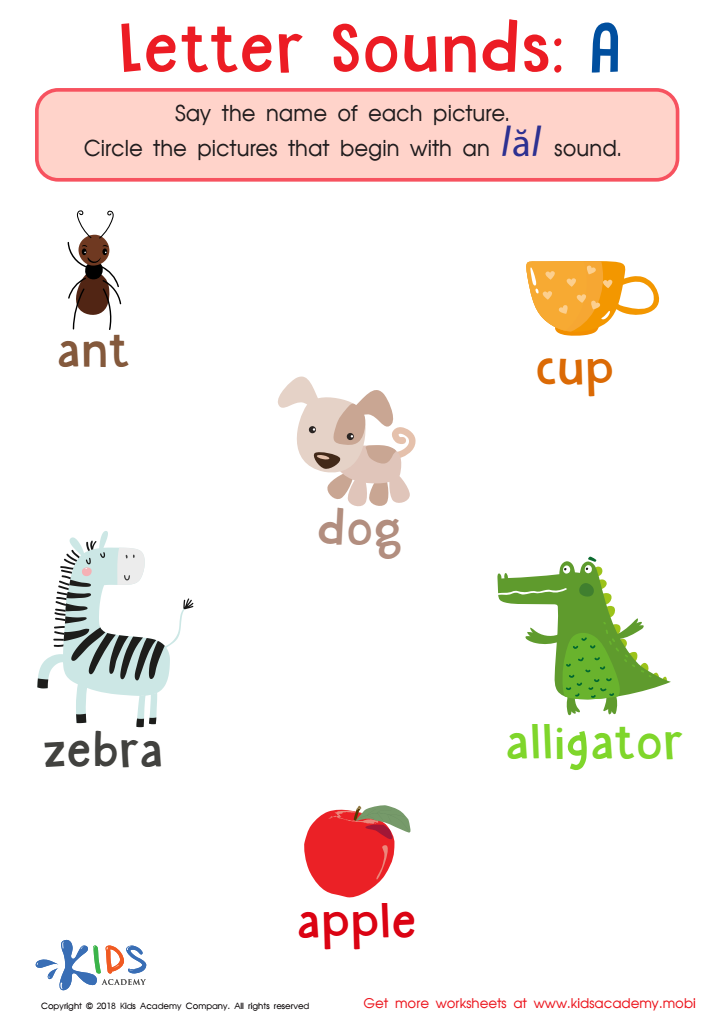
Letter A Sounds Worksheet
Encourage your new reader to practice the «ă» sound with this fun, free PDF worksheet. With the help of picture clues, they'll say the name of each word and trace circles around the items that start with «ă». This worksheet is an effective way to boost beginning sound skills while having fun!
Letter A Sounds Worksheet
Worksheet
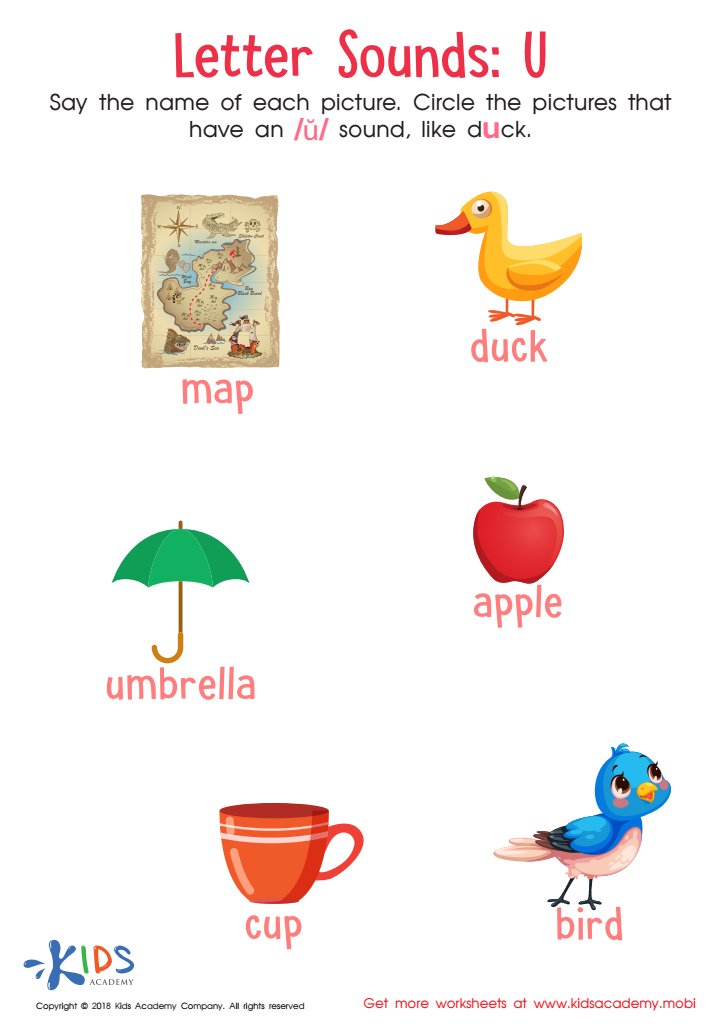
Letter U Sounds Worksheet
The letter U is special with multiple pronunciations. This worksheet helps kids identify the short «u» in words like duck and cup. Read the words aloud and listen closely to the sounds. Circle only words with the correct sound to complete the sheet. Kids will quickly know that words like "map" don't contain a U.
Letter U Sounds Worksheet
Worksheet
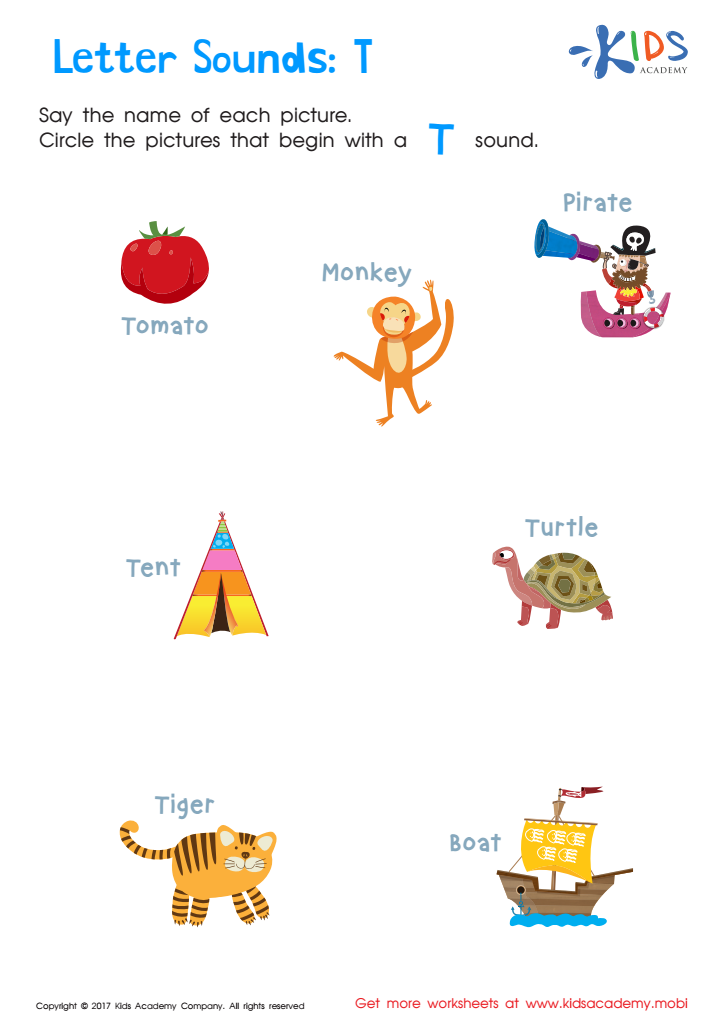
Letter T Sounds Worksheet
This worksheet is a fun way to help kids learn the t sound. It has familiar pictures and an easy-to-follow format, so kids can quickly recognize and learn the letter t.
Letter T Sounds Worksheet
Worksheet
Join Kids Academy for Free
Who is primarily going to use this learning content?




.jpg)



Understanding letter-sound correlation is critical for early literacy development in young children, especially ages 3-4. This foundational skill, often taught through methods like the Easy Alphabet system, allows children to connect written letters with their corresponding sounds, which is essential for reading and writing.
When parents and teachers prioritize teaching letter-sound relationships, they equip children with the tools to decode words, an important step towards independent reading. Early exposure to these concepts often leads to better phonemic awareness, enabling children to recognize and manipulate sounds in words more efficiently. This early advantage significantly accelerates the acquisition of reading skills, essential for academic success in later years.
Additionally, mastering letter-sound correlations enhances children's confidence and enthusiasm for learning. Activities designed for young learners, such as sing-alongs, interactive games, and story time using Easy Alphabet methods, make learning enjoyable and engaging. As children experience success in connecting letters with sounds, their motivation and curiosity to read more intensify.
Parents and teachers who invest time in teaching these skills give their children a strong head start. Early literacy fosters lifelong learning habits, helping children become proficient readers, effective communicators, and critical thinkers, which are invaluable skills for their future education and personal growth.