Letter recognition Easy Phonics Worksheets for Ages 3-4
4 filtered results
Difficulty Level
Grade
Age
-
From - To
Subject
Activity
Standards
Discover our engaging "Letter Recognition Easy Phonics Worksheets" designed specifically for children ages 3-4! These worksheets offer fun and interactive activities that foster early literacy skills by helping young learners identify and recognize letters. Through colorful illustrations and simple exercises, children will develop essential phonics skills and boost their confidence in reading. With our thoughtfully crafted materials, your little ones will enjoy hours of educational play, making learning letters an exciting adventure. Perfect for homeschooling, preschool settings, or supplementary practice at home, our worksheets are easy to access and print, ensuring that every child has the opportunity to excel in their early reading journey!
Favorites
With answer key
Interactive
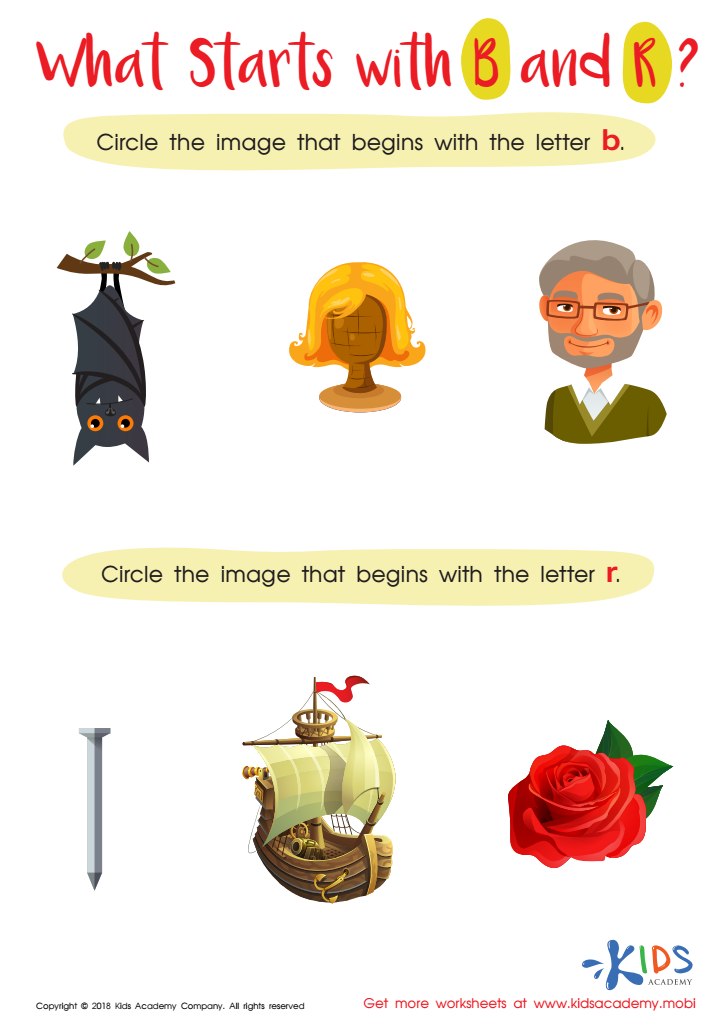
What Starts with B and R? Worksheet
Download this worksheet to help young readers practice visual and motor skills! They'll enjoy matching pictures with "B" and "R" letters while tracing the images. Bright and colorful, this engaging activity will help kids differentiate between words and have fun doing it.
 Assign to My Students
What Starts with B and R? Worksheet
Worksheet
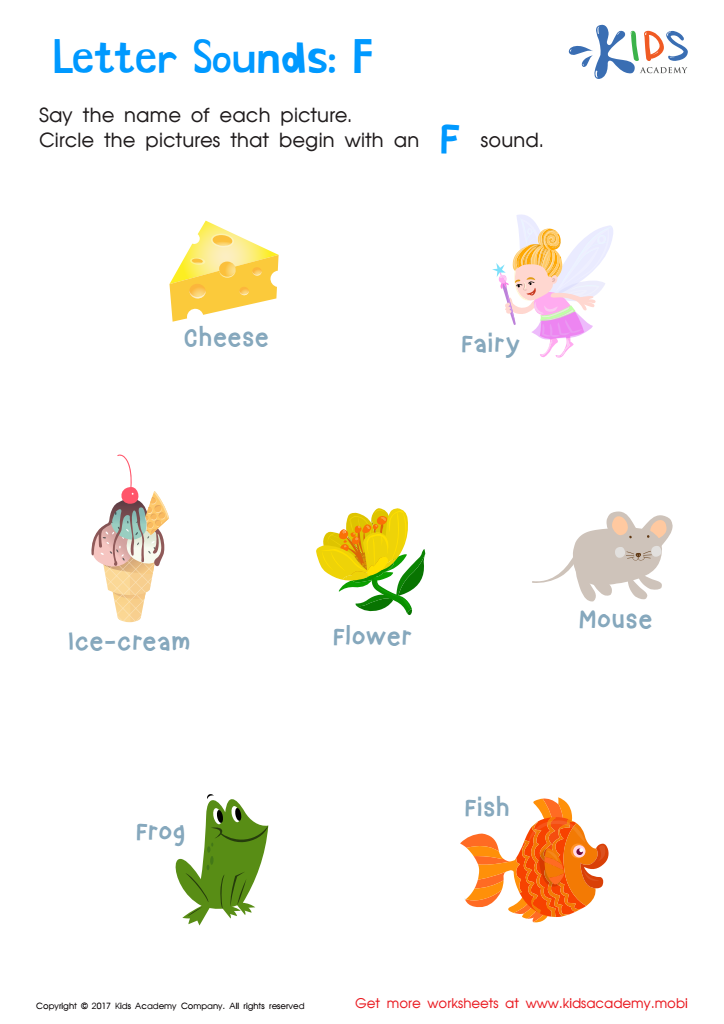
Letter F Sounds Worksheet
Kids will practice identifying 'f' words, tracing, and coloring the letter F for a great way to learn phonics.
Help your child discover the wonders of the letter 'F' with this fun worksheet! Kids will practice identifying 'F' words, tracing and coloring the letter, and building early reading skills. Stimulate their learning and let them connect letter sounds to words they know. An enjoyable way to practice phonics!
Letter F Sounds Worksheet
Worksheet
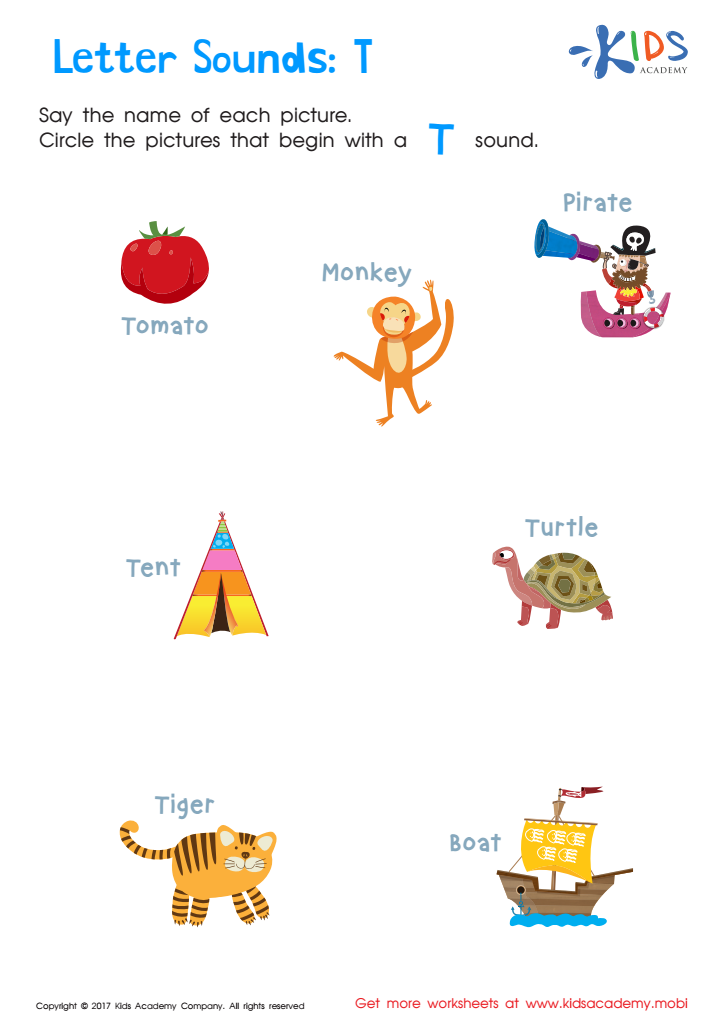
Letter T Sounds Worksheet
This worksheet is a fun way to help kids learn the t sound. It has familiar pictures and an easy-to-follow format, so kids can quickly recognize and learn the letter t.
Letter T Sounds Worksheet
Worksheet
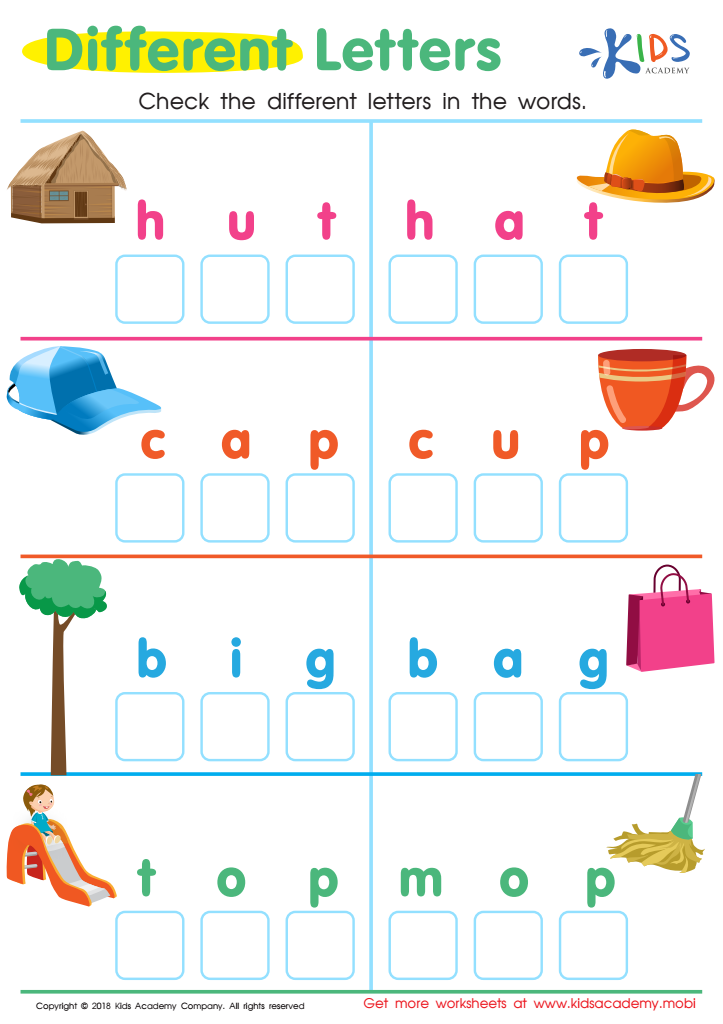
Different Letters Reading Worksheet
Download our phonics worksheet to help kids understand letter sounds. Have them sound out letters and join them to form words. Colorful pictures assist in recognition, making it perfect for kindergarteners. A great intro to phonics!
Different Letters Reading Worksheet
Worksheet
Join Kids Academy for Free
Who is primarily going to use this learning content?








Letter recognition is a foundational skill that plays a crucial role in early literacy development for children aged 3-4. During this stage, young learners are highly curious and absorb information rapidly, making it an ideal time to introduce the letters of the alphabet. Recognizing letters enables children to make connections between sounds and symbols, which is vital for reading and writing.
Easy Phonics programs designed for this age group offer interactive, engaging methods to facilitate letter recognition, often incorporating visual aids, songs, and hands-on activities. These approaches capture children's interest while reinforcing their learning. By mastering letter recognition, children build confidence in their eventual reading abilities, which can lead to a lifelong love for books and learning.
Furthermore, familiarity with letters prepares children for phonemic awareness, the next critical step toward mastering reading and spelling. When parents and teachers collaborate to emphasize letter recognition, they create a supportive learning environment, providing children with the skills they need to succeed in kindergarten and beyond. Engaging in phonics activities also fosters essential cognitive skills, such as memory and problem-solving, establishing a solid groundwork for academic success. Therefore, prioritizing letter recognition through Easy Phonics is essential for developing strong, enthusiastic readers.