Spelling practice Easy Phonics Worksheets for Ages 3-4
5 filtered results
Difficulty Level
Grade
Age
-
From - To
Subject
Activity
Standards
Explore our engaging Easy Phonics Worksheets designed specifically for children ages 3-4! These visually appealing worksheets make learning to spell fun and interactive, helping young learners develop essential phonics skills. Each worksheet incorporates colorful images and simple words, facilitating a hands-on approach to spelling practice. Our phonics resources encourage letter recognition, build vocabulary, and enhance reading readiness in a playful way. Ideal for both classroom settings and at-home learning, these worksheets support early literacy skills and foster a love for reading. Start your child’s spelling journey today with our thoughtfully crafted, easy-to-use phonics worksheets!
Favorites
With answer key
Interactive
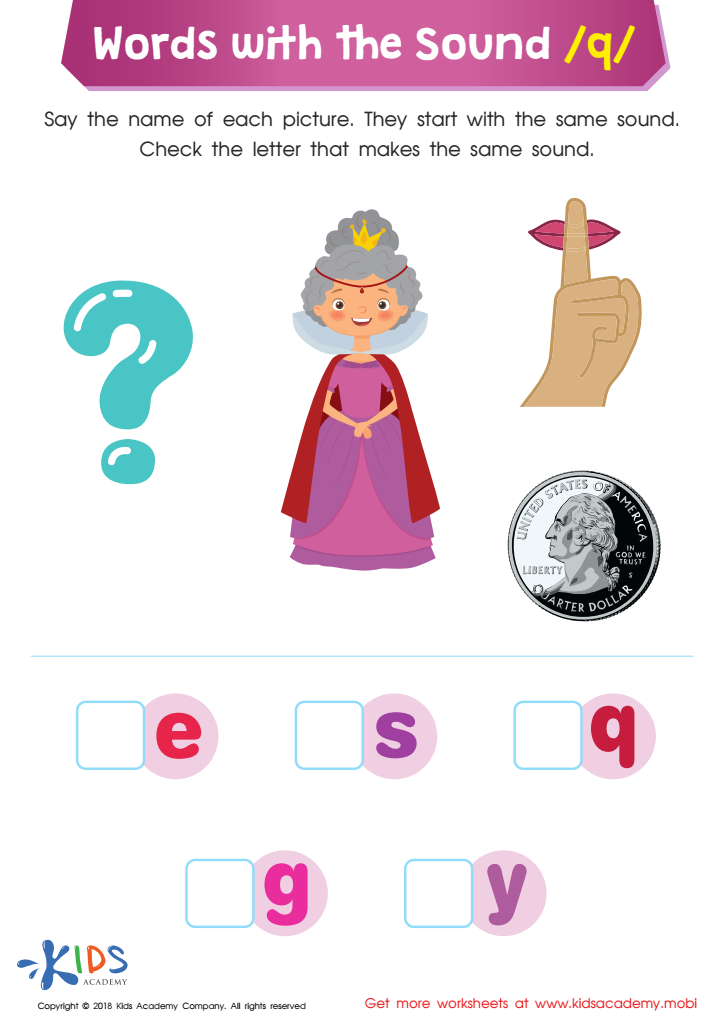
Words with Sound Q Reading Worksheet
Beginning readers will love this free PDF worksheet! Bright colors and familiar pictures make it fun, as they say the name of each image and work on fine motor skills. Letters “q” is featured among others, helping to recognize and isolate its sound, which is often seen with a “u” behind it.
Words with Sound Q Reading Worksheet
Worksheet
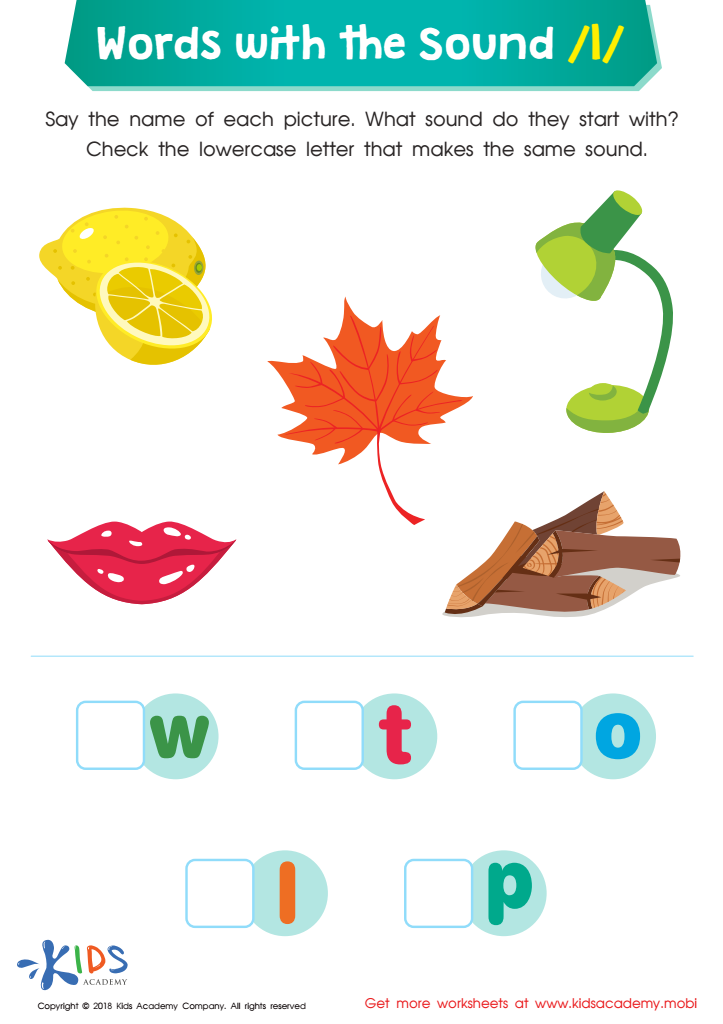
Words with Sound L Reading Worksheet
This PDF worksheet is great for helping emerging readers isolate initial sounds. Kids name familiar pictures, then identify the correct letter for the "l" sound. This worksheet strengthens fine motor skills, plus builds visual discernment. It's fun and colorful too!
Words with Sound L Reading Worksheet
Worksheet
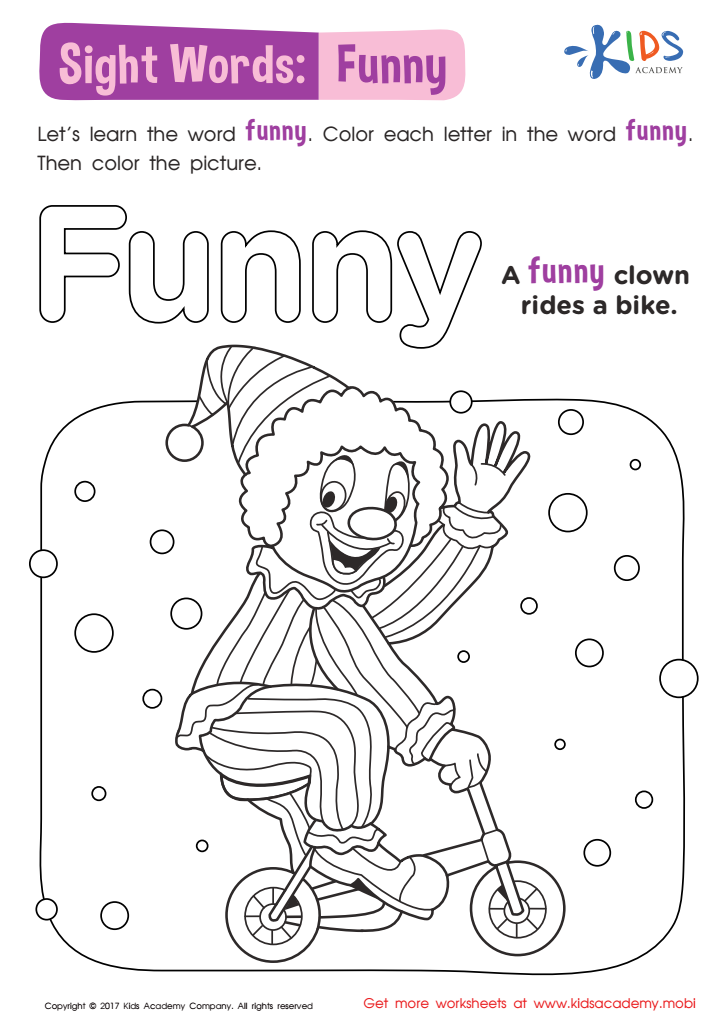
Funny Worksheet Sight Words Worksheet
Love humor? Introduce "funny" as a sight word with this fun worksheet! Have your child read the sentence then color the word in the center. Let them use their imagination to color the silly clown in any way they like!
Download (PDF)
 Assign to My Students
Assign to My Students
Funny Worksheet Sight Words Worksheet
Worksheet
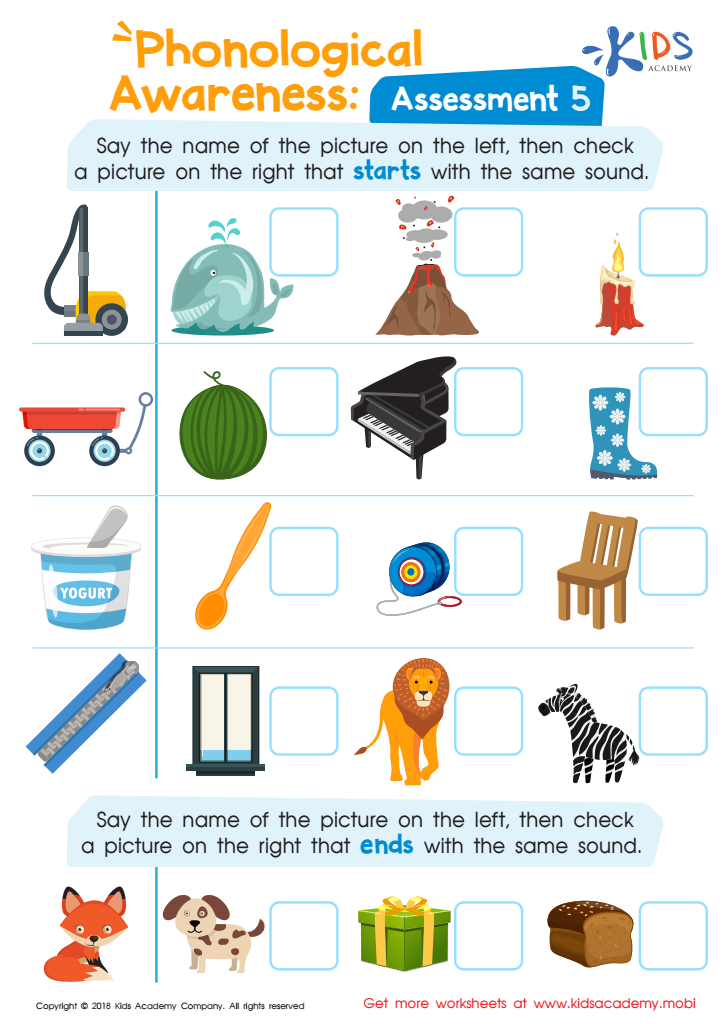
Phonological Awareness: Assessment 5 Worksheet
Repetition is key to success! This worksheet tests kids' ability to match beginning and ending sounds in words. Instruct them to say each word and listen closely to the sounds they make. Focus on the starting sounds for the first four pics, then the last one to hear ending sounds and find the right match!
Phonological Awareness: Assessment 5 Worksheet
Worksheet
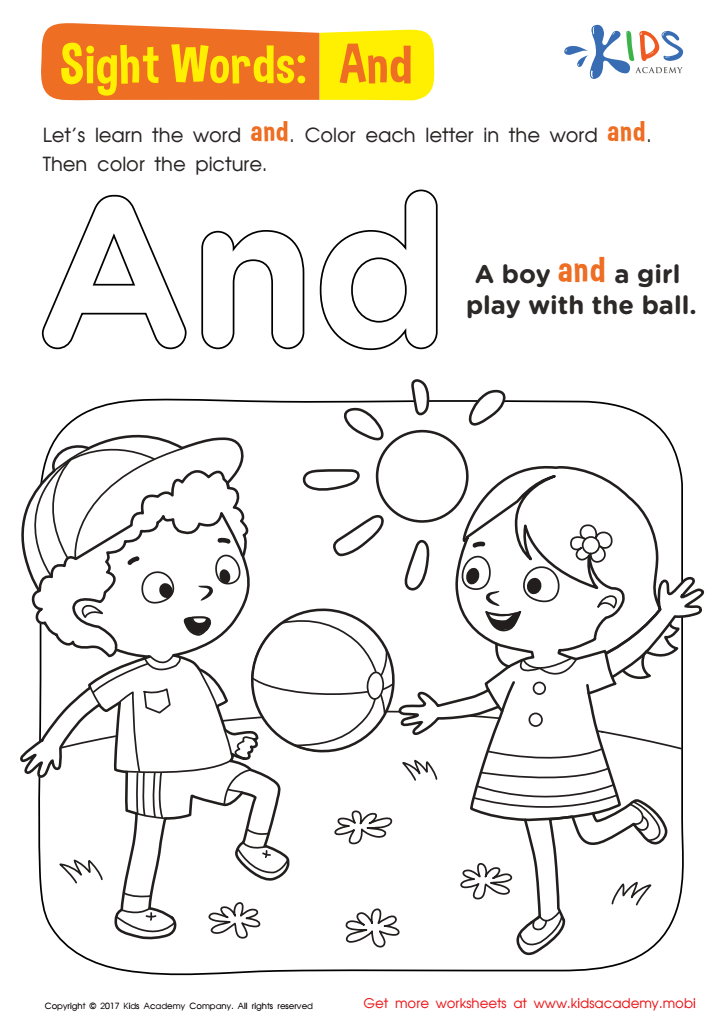
And Worksheet Sight Words Worksheet
Help your child get a jumpstart on reading with sight words! Print out this fun worksheet and get your child to read the sentence. Point out the word "and", then color the word and enjoy the rest of the scene! It's a great way to introduce sight words and get their early reading skills going!
Download (PDF)
Assign to My Students
Assign to My Students
And Worksheet Sight Words Worksheet
Worksheet
Join Kids Academy for Free
Who is primarily going to use this learning content?








Parents and teachers should prioritize Spelling Practice with Easy Phonics for Ages 3-4 as it lays the foundational blocks for literacy development. At this age, children's brains are highly receptive to language and phonetic patterns. Introducing phonics helps them understand the relationship between letters and sounds, building essential skills for reading and writing.
Engaging in phonics activities boosts a child’s vocabulary and language comprehension, making future learning more accessible. Additionally, early phonics practice aids in developing fine motor skills through activities that involve writing and letter recognition.
Moreover, establishing these skills early nurtures confidence and enthusiasm about learning. Children who grasp phonics often show improved performance in school, leading to better academic outcomes.
Furthermore, consistent practice creates routines and encourages a love for reading, setting the stage for lifelong learning. Ultimately, investing time in teaching phonics to young children not only fosters a love for language but also sharpens their cognitive skills, paving the way for a successful educational journey. Parents and teachers can collaborate to create fun and engaging phonics exercises that captivate young learners, making learning not only beneficial but enjoyable.