Counting skills Easy Addition and Subtraction Word Problems Worksheets for Ages 3-4
6 filtered results
-
From - To
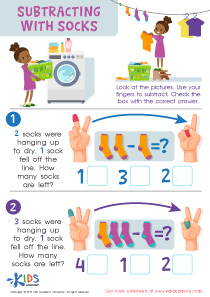
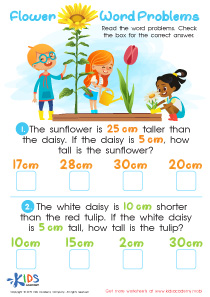
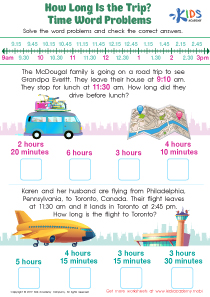
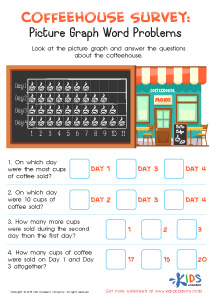
Introduce your little learners to fundamental math concepts with our Counting Skills Easy Addition and Subtraction Word Problems Worksheets for Ages 3-4. Designed to engage young minds, these worksheets feature colorful graphics and relatable scenarios that make learning addition and subtraction a fun adventure. Each word problem encourages children to practice counting while developing critical thinking and problem-solving skills. Perfect for early learners, these resources foster a love for math and build confidence as they explore numbers. Promote early math literacy and set the stage for academic success with interactive and educational activities that make math an enjoyable part of their daily routine!
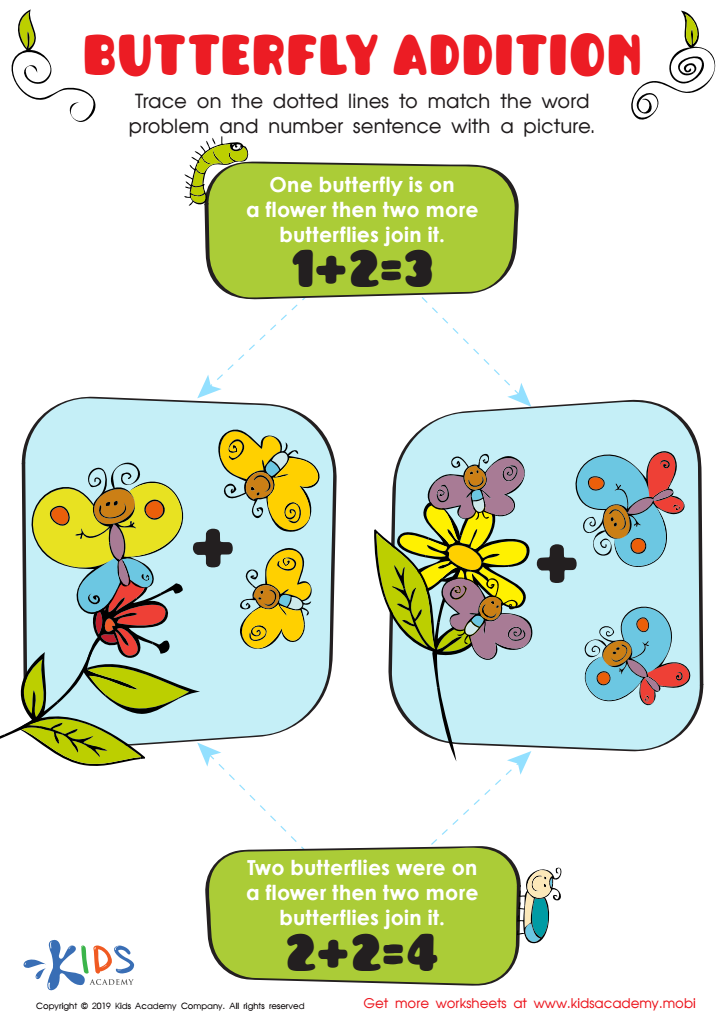
Butterfly Addition Worksheet
 Assign to My Students
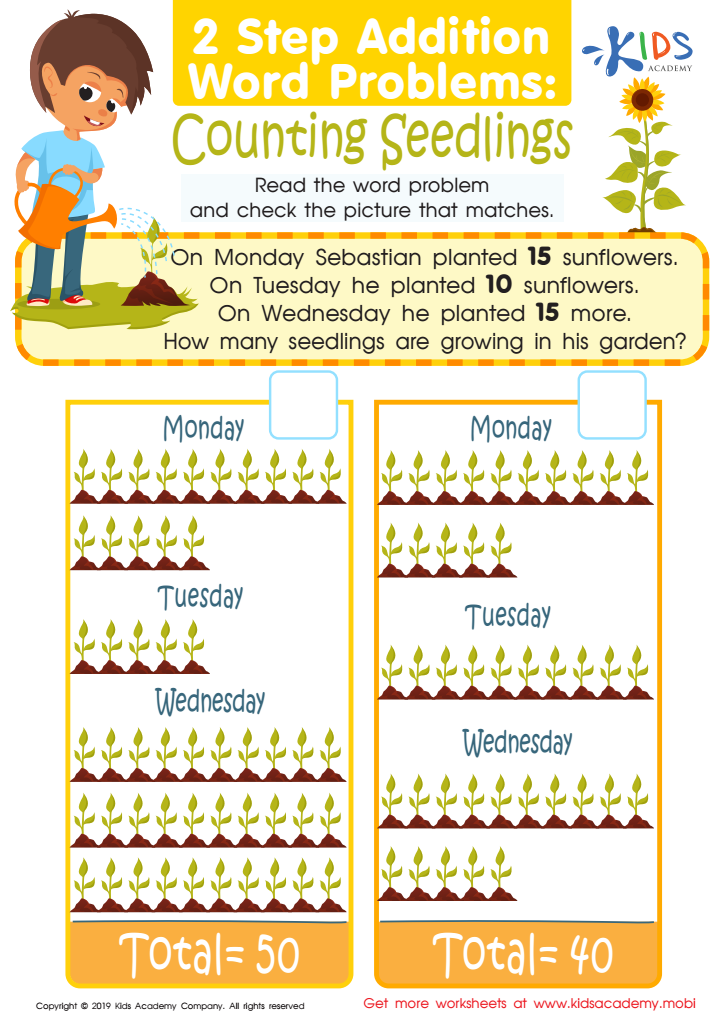
Counting Seedlings Worksheet
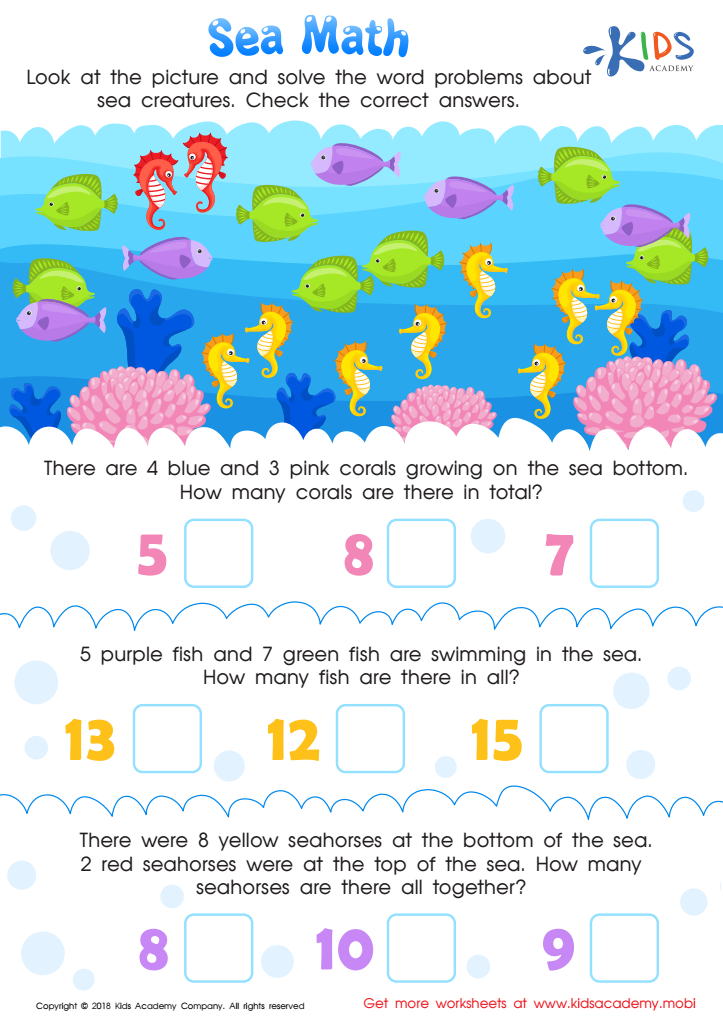
Sea Math Worksheet
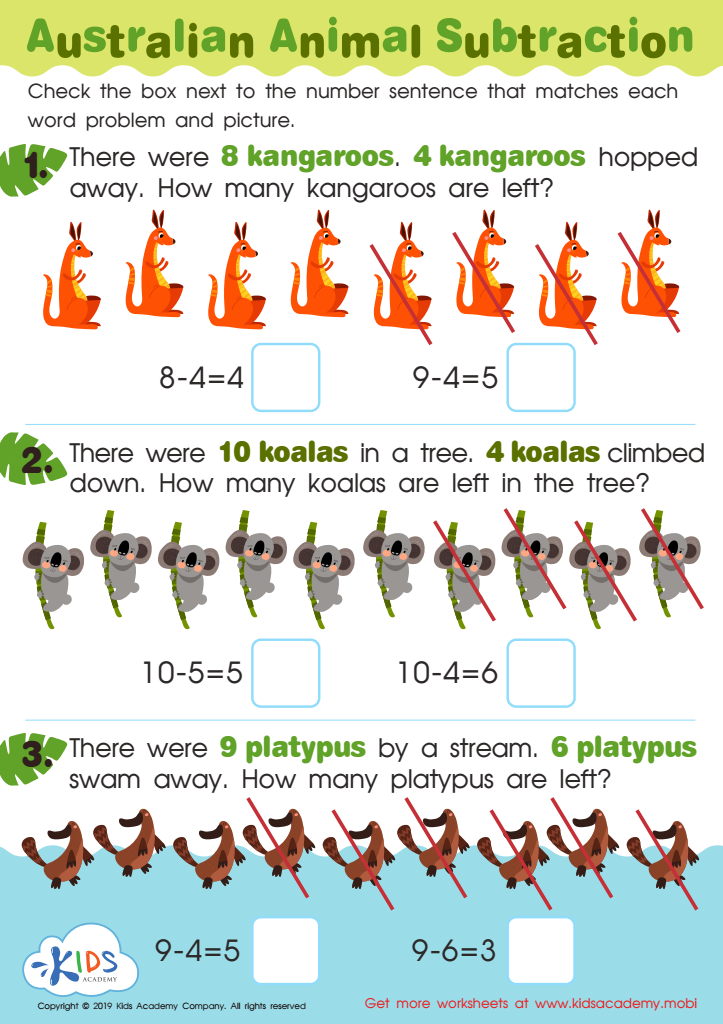
Australian Animal Subtraction Worksheet
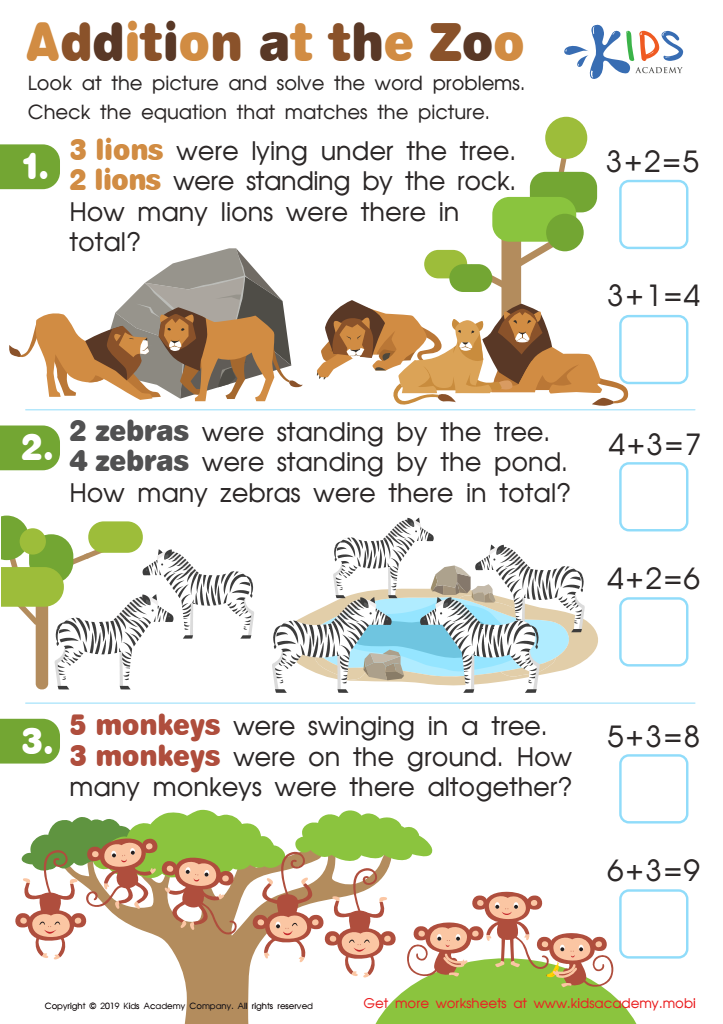
Addition at the Zoo Worksheet
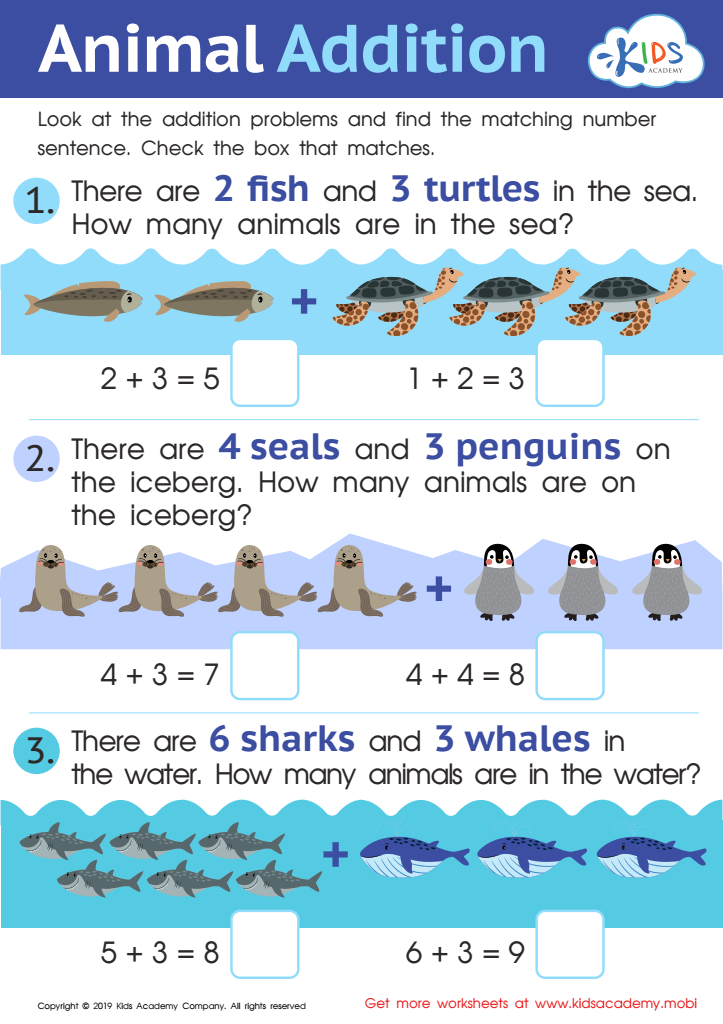
Animal Addition Worksheet








Counting skills, as well as basic addition and subtraction, are critical foundational elements in early childhood education, especially for ages 3-4. At this age, children are naturally curious and eager to learn concepts through play and exploration. Introducing easy addition and subtraction word problems helps to nurture this curiosity, reinforcing their understanding of numbers in real-world contexts.
Parents and teachers should care about these skills because they are not just about math; they support cognitive development, enhance problem-solving abilities, and foster critical thinking. When children engage with word problems, they practice comprehension and vocabulary, connecting language with mathematical concepts. Additionally, these activities encourage social interaction when done in groups, promoting communication skills and teamwork.
Moreover, early mastery of these skills can boost a child's confidence and enjoyment of math, setting a positive precedent for future learning. Establishing a solid mathematical foundation at a young age also prepares children for more complex concepts in later grades, ensuring they can keep pace with their peers. By integrating fun and relatable word problems into their learning experience, parents and teachers can create an enriching environment that promotes both academic and social development.