Comparing quantities Easy Math Worksheets for Ages 3-4
3 filtered results
-
From - To
Set the foundation for your child’s math skills with our "Comparing Quantities Easy Math Worksheets for Ages 3-4". Designed specifically for toddlers, these worksheets make learning a joyful experience. They enhance early mathematical reasoning by engaging young learners in fun activities that involve comparing different sets of objects. Pictures and simple exercises help kids grasp the concept of more versus less, laying the groundwork for future learning. Ideal for both classroom use and at-home practice, these worksheets are perfect for nurturing a love for math at an early age. Download now and watch your child thrive!
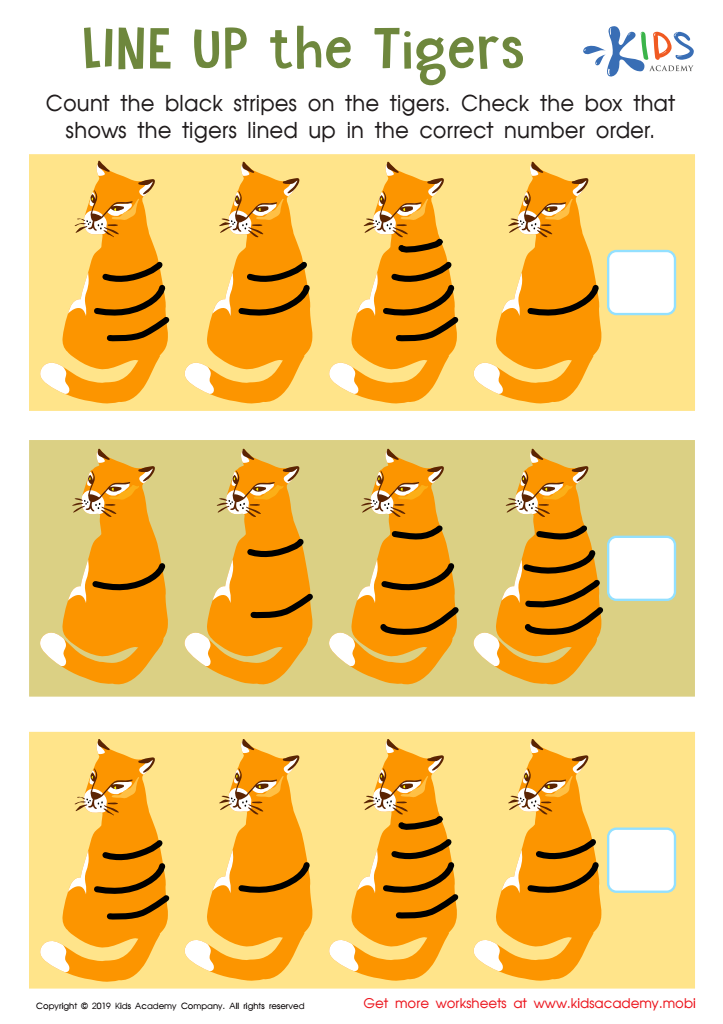
Line up the Tigers Worksheet
 Assign to My Students
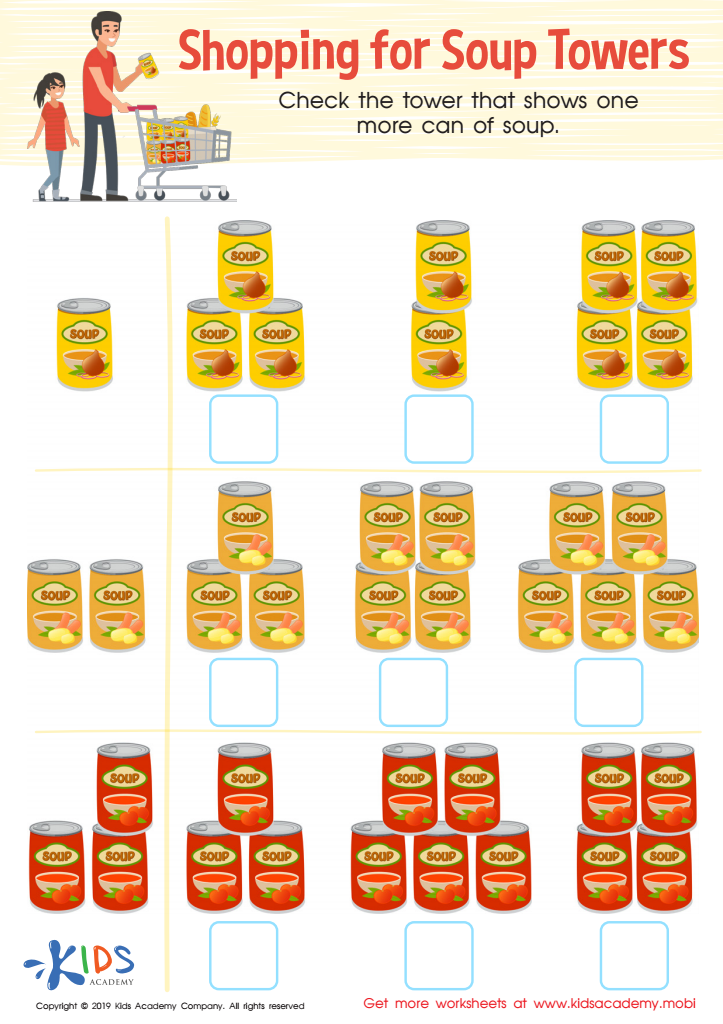
Soup Towers Worksheet
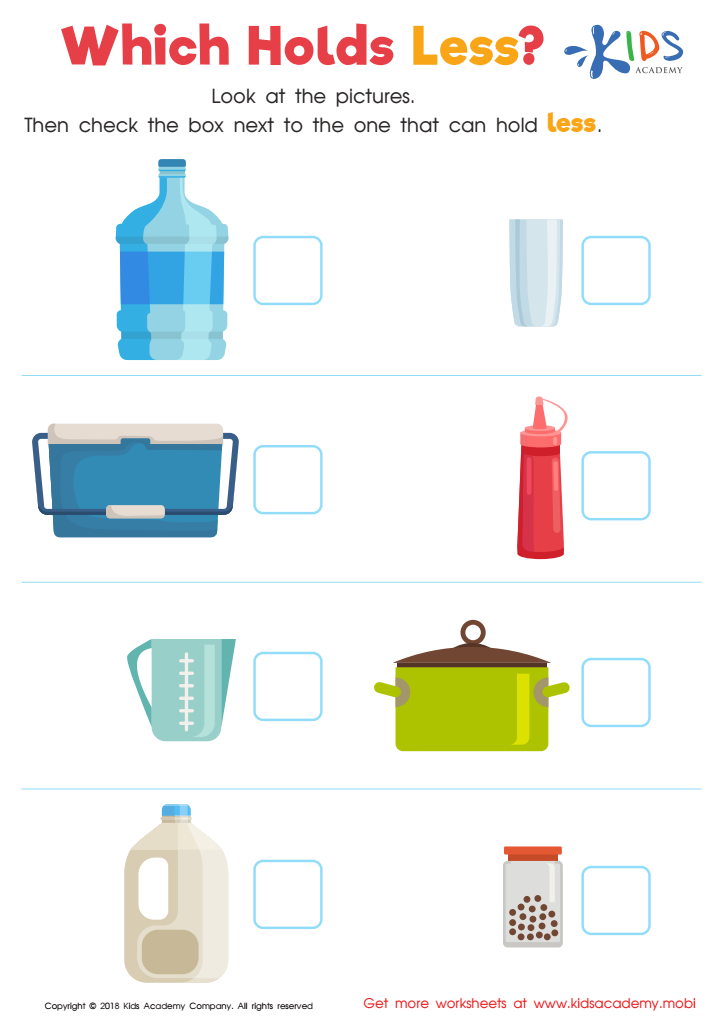
Which Holds Less? Worksheet







Parents and teachers should care about comparing quantities in early math for children ages 3-4 because it lays a foundation for essential cognitive skills and future academic success. At this developmental stage, children’s brains are highly receptive to learning basic mathematical concepts, and comparing quantities is a fundamental activity that promotes number sense. This skill helps them understand the concepts of "more," "less," "equal," and "different," which are crucial for more advanced mathematical operations like addition and subtraction.
Engaging in simple comparisons also enhances children's problem-solving and critical thinking skills. By observing, estimating, and comparing objects, children learn to make judgments and decisions based on observable characteristics. This everyday math exposure fosters confidence and encourages curiosity about numbers and patterns in their environment.
Additionally, mastering these basic concepts at an early age can prevent future difficulties in understanding more complex math subjects. Developing a strong mathematical foundation supports academic achievement as children progress through school.
Encouraging activities that involve comparing quantities—for example, sorting toys by size or counting and comparing snacks—can be fun and interactive, providing a delightful learning experience. Thus, caregivers and educators play a critical role in fostering an engaging, playful, and supportive environment that nurtures early mathematical mastery.








