
Visual Learning Easy Math Worksheets for Ages 3-4
4 filtered results
Difficulty Level
Grade
Age
-
From - To
Subject
Activity
Standards
Unlock your child's potential with "Visual Learning Easy Math Worksheets for Ages 3-4”! At Kids Academy, we design engaging activities that blend fun illustrations with foundational math concepts. Our worksheets focus on shapes, patterns, counting, and more, ensuring a stress-free and enjoyable learning experience for preschoolers. Tailored for visual learners, each worksheet uses vibrant images to make complex ideas simple and relatable. Perfect for parents and educators, our printable materials support early math skills development, fueling curiosity and confidence in young minds. Start your child's extraordinary learning journey today with our expertly crafted math resources!
Favorites
With answer key
Interactive
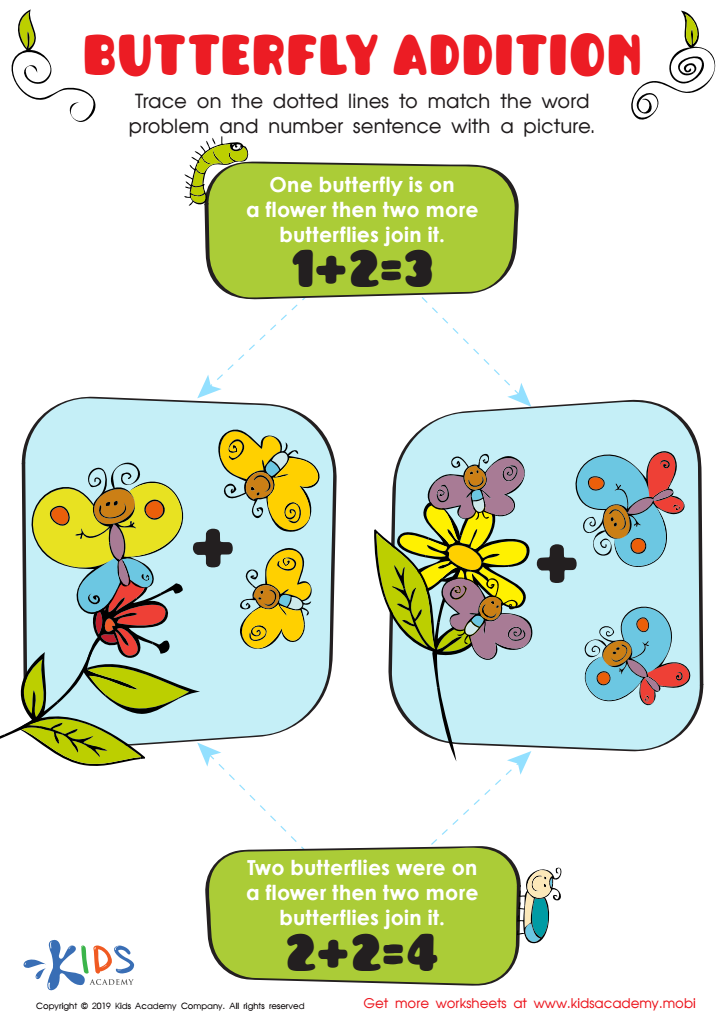
Butterfly Addition Worksheet
This tracing sheet is great for kids to work on math skills and have fun too. Read the word problems to them, then help them trace the dotted lines to match the problem and number sentence to a picture. Not only is it educational, it's beautiful too - your kids will love learning about butterflies!
 Assign to My Students
Butterfly Addition Worksheet
Worksheet
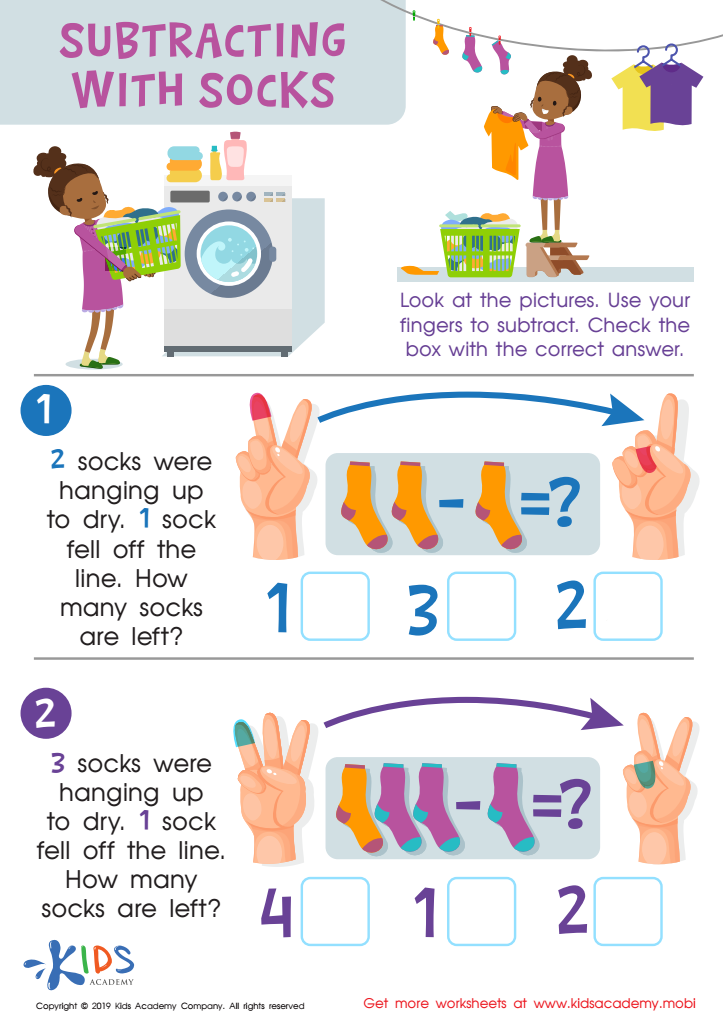
Subtracting Socks Worksheet
Before beginning this exercise with your children, warm them up with a counting game. If math is not their favorite subject, use this worksheet. Help them read the two word problems, then use their fingers to count and subtract. Ask them to select the correct answer and check the box.
Subtracting Socks Worksheet
Worksheet
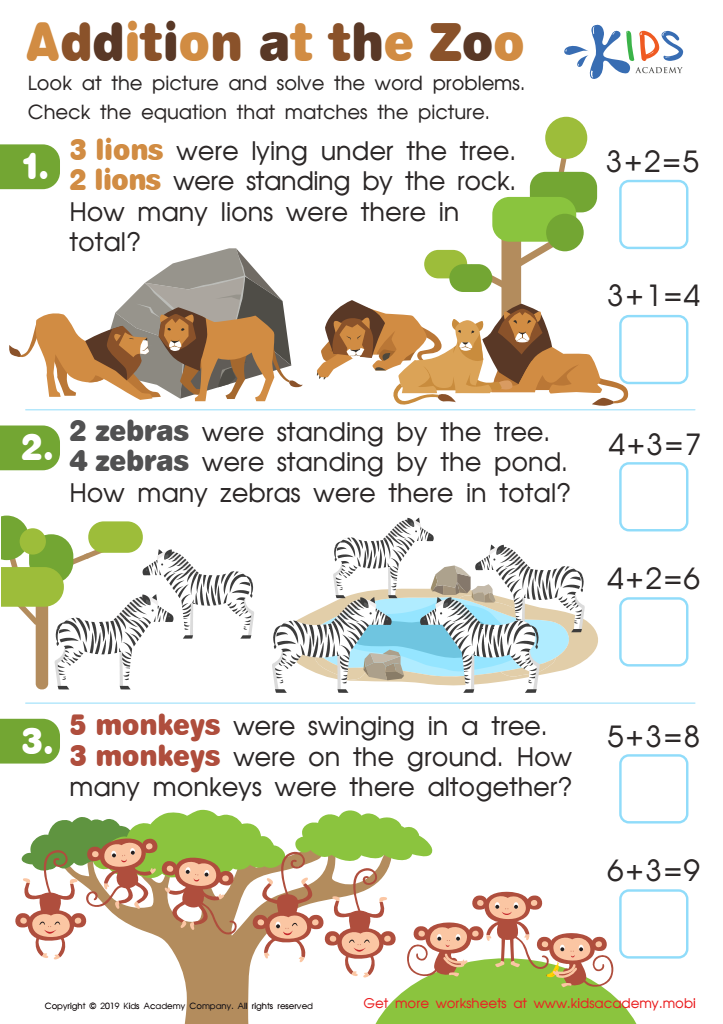
Addition at the Zoo Worksheet
Visit the zoo with your kids and point out all the different animals. Ask them to name their favorites and identify animals on a worksheet. Challenge them to solve word problems related to the pictures. Ask them for the equation that fits the picture and check the answer.
Addition at the Zoo Worksheet
Worksheet
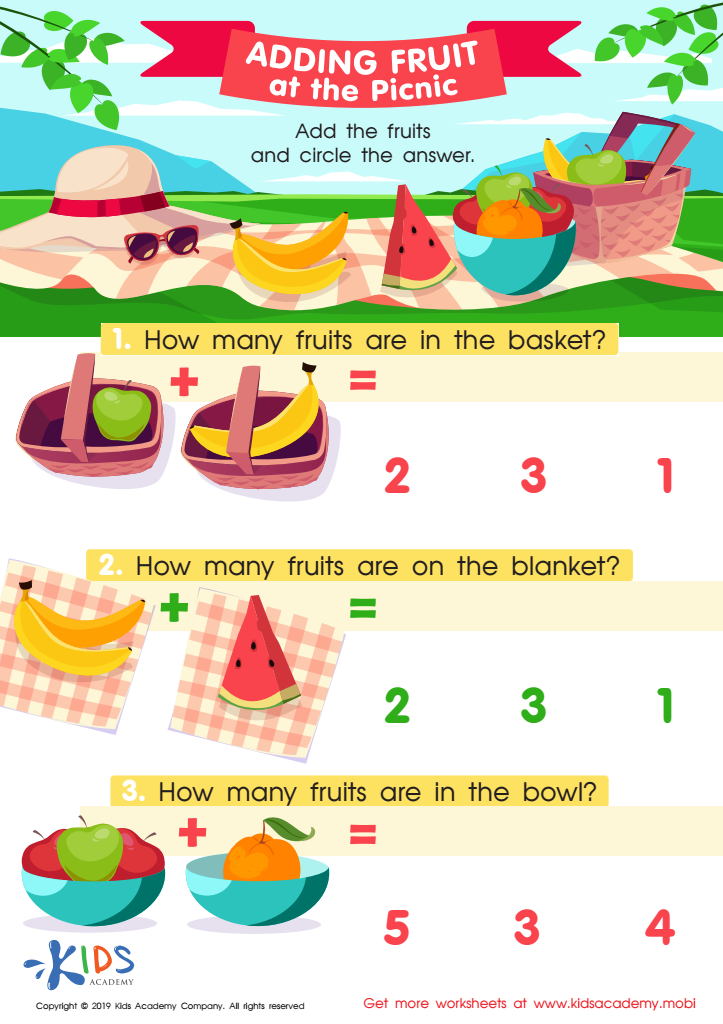
Adding Fruit at the Picnic Worksheet
Picnics are a great way for the family to enjoy a fun day in the sun! Get your kids involved by having them help load the picnic basket and do this worksheet to practice their math skills while they get ready. Identify the fruits in the picture, add them up, and circle the correct answer.
Adding Fruit at the Picnic Worksheet
Worksheet
Join Kids Academy for Free
Who is primarily going to use this learning content?






Visual Learning for Easy Math is crucial for children aged 3-4 as it capitalizes on their innate visual and sensory learning preferences, ensuring a natural and engaging educational experience. At this developmental stage, children's brains are highly receptive to visual stimuli, making pictorial representations a powerful tool for understanding mathematical concepts. Shapes, colors, and patterns not only capture young learners' attention but also facilitate better retention and comprehension of basic math skills.
Parents and teachers should prioritize visual learning because it lays a strong foundation for future mathematical proficiency. Visual aids like blocks, beads, and interactive games help demystify abstract concepts such as numbers, counting, and simple addition and subtraction. These tools also promote critical thinking, problem-solving, and spatial awareness, which are essential cognitive skills.
Moreover, incorporating visual learning in early math education can boost confidence and reduce math anxiety. When children see math as fun and accessible through vibrant visuals, they are more likely to develop a positive attitude towards the subject. By nurturing early math skills in an engaging manner, parents and teachers set the stage for ongoing educational success and a lifelong love of learning. In essence, visual math learning fosters a supportive and stimulating environment crucial for early childhood development.








