Writing practice Easy Math Worksheets for Ages 3-4
4 filtered results
-
From - To
Unlock the world of numbers for your little one with our "Writing Practice Easy Math Worksheets for Ages 3-4." Perfectly designed for preschool learners, these engaging activities combine fun and learning, helping toddlers develop early math skills and pencil control. With colorful illustrations and easy-to-follow instructions, each worksheet introduces concepts like counting, number recognition, and simple addition, setting a strong foundation for future math success. Foster a love for learning and watch your child's confidence soar as they practice fundamental math skills through writing and drawing. Explore our collection today and make math exciting for your preschooler!
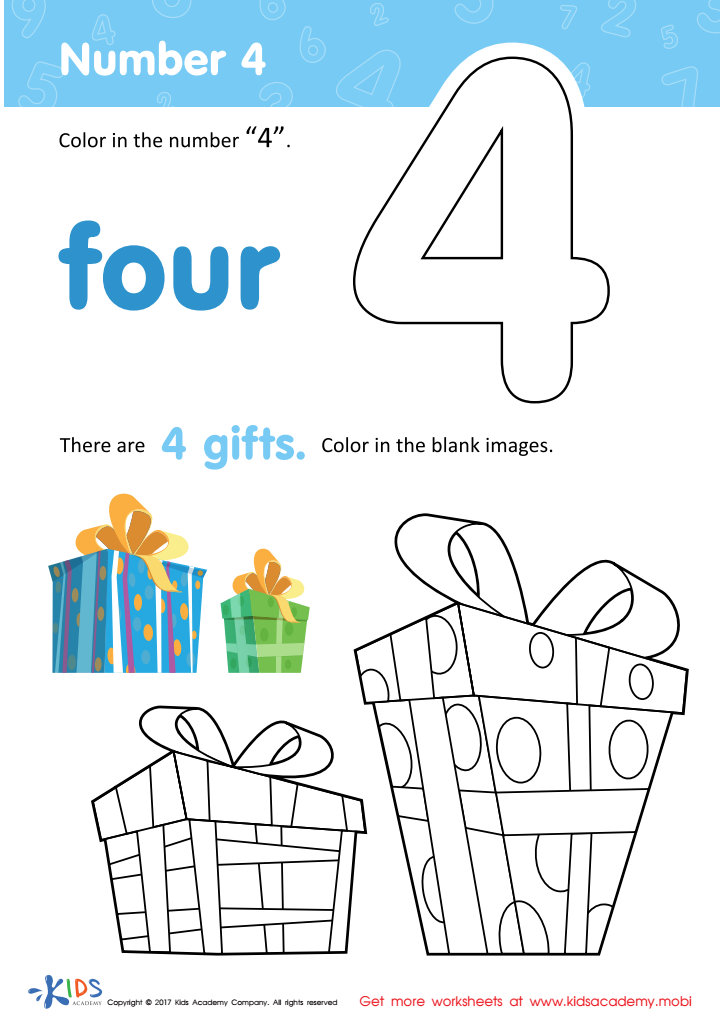
Number 4 Printable
 Assign to My Students
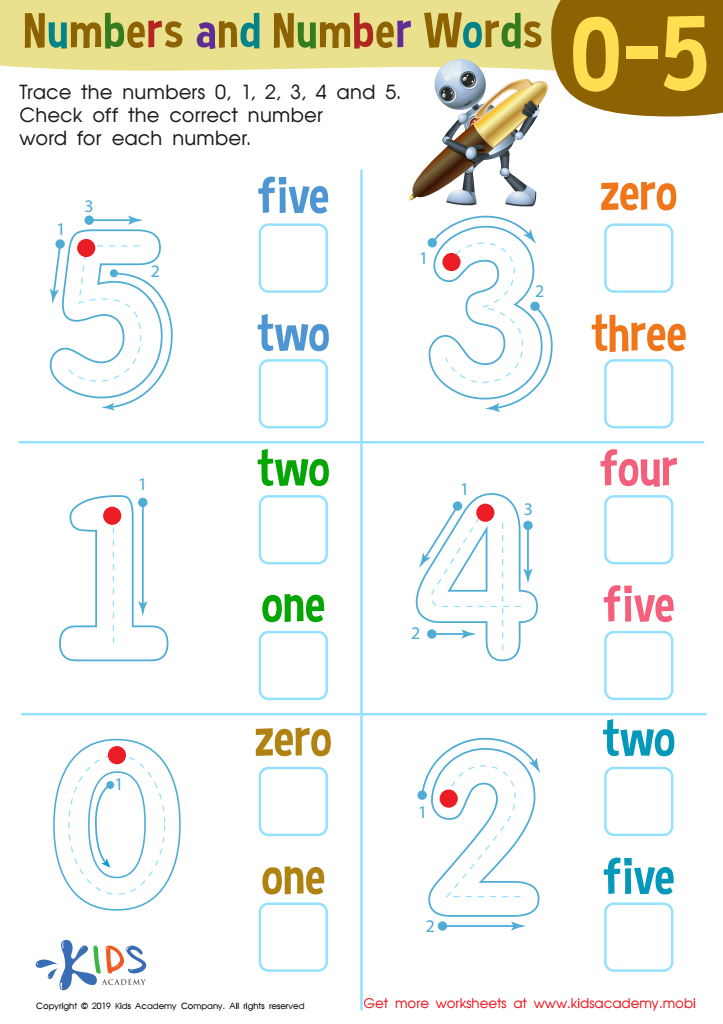
Numbers and Number Words Worksheet
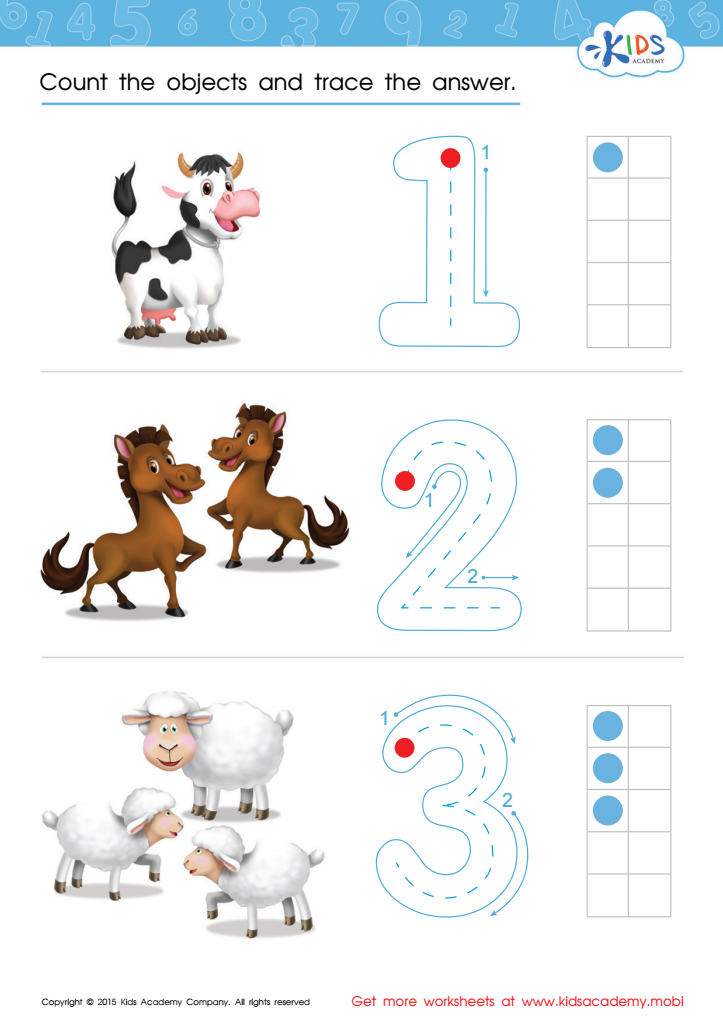
Count and Trace 1 – 3 Worksheet
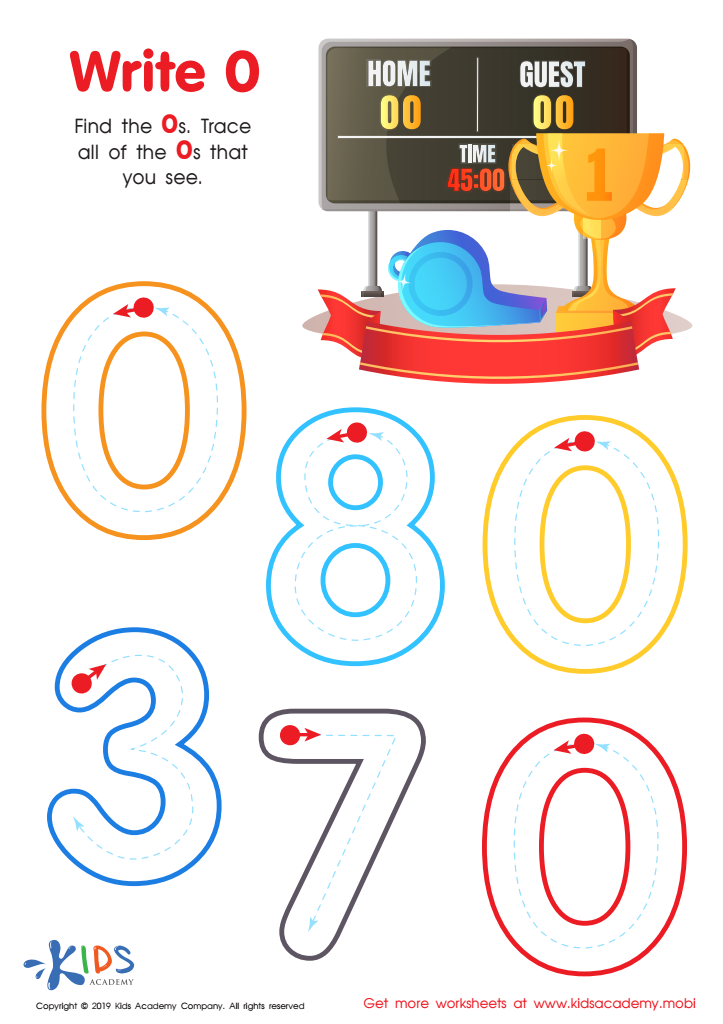
Write 0 Worksheet








Fostering writing and early math skills in children ages 3-4 is crucial since these foundational abilities form the basis for future academic success and cognitive development. During these formative years, children's brains are highly receptive, making it an ideal time to introduce learning activities.
Writing practice aids in fine motor skill development, helping children strengthen the hand muscles needed for tasks such as buttoning clothes, drawing, and eating with utensils. Mastery of these skills is essential for their daily independence and boosts self-confidence. Writing also serves as a gateway to literacy. From scribbling and tracing letters to writing their first names, early exposure to writing practices cultivates familiarity with letters and sounds, setting the stage for reading readiness.
Similarly, early math skills are more than just about numbers; they involve recognizing patterns, understanding spatial relationships, and developing problem-solving abilities. Simple activities like counting blocks, sorting shapes, or identifying numbers on everyday objects lay down a critical mathematical framework. By integrating math into playful, engaging activities, children begin to view it positively, reducing future anxieties about the subject.
Parents and teachers play vital roles in these early experiences. Providing structured tools and a supportive environment for writing and math practices ensures a balanced, well-rounded developmental growth, facilitating smoother transitions into formal schooling and enhancing lifelong learning habits.








