Fine Motor Skills Easy World Around Us Worksheets for Ages 3-4
3 filtered results
Difficulty Level
Grade
Age
-
From - To
Subject
Activity
Standards
Introducing "Fine Motor Skills Easy World Around Us Worksheets for Ages 3-4" – the ideal way to enhance your child's hand-eye coordination and dexterity through fun, engaging activities! Designed specifically for young learners, these worksheets cover essential topics from tracing to coloring, helping little ones grasp the world around them. Crafted by educational experts, each activity not only captivates young minds but also supports their cognitive development. Perfect for both classroom and at-home learning, our worksheets make skill-building an enjoyable adventure. Start nurturing your preschooler's fine motor skills and curiosity with our easy-to-follow and dynamic resources today!
Favorites
With answer key
Interactive

 Assign to My Students
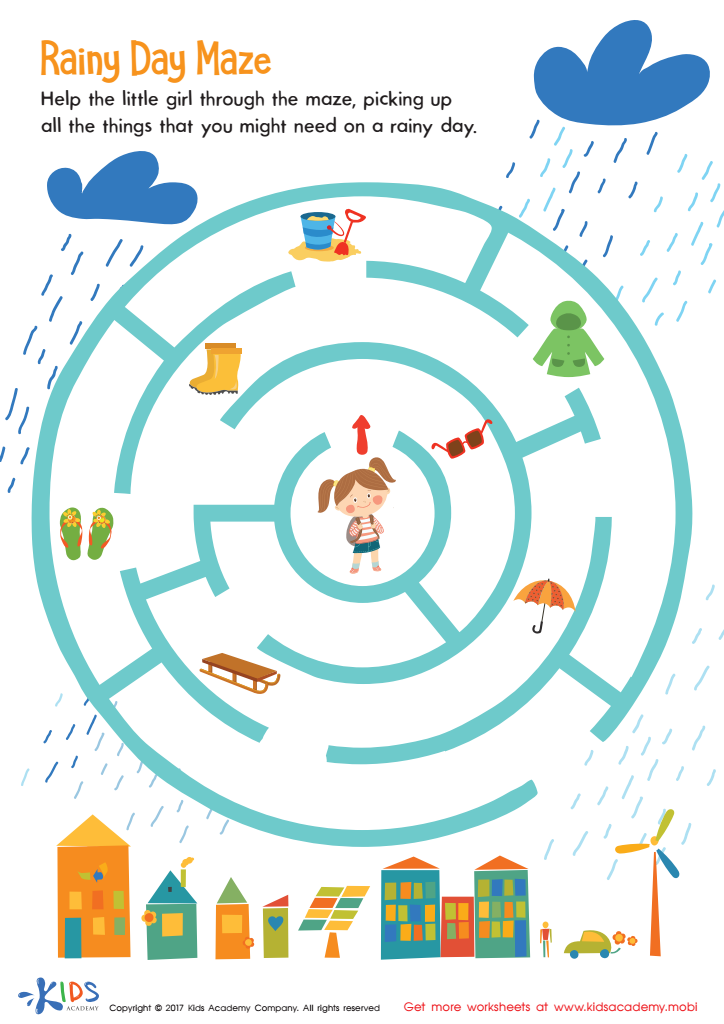
Rainy Day Maze Worksheet
Help your child use critical and problem solving skills to choose the right items! With this fun rainy day worksheet, they'll have a blast helping the character in the maze while learning about weather. Let’s get started!
Rainy Day Maze Worksheet
Worksheet
Join Kids Academy for Free
Who is primarily going to use this learning content?








Fine motor skills are fundamental to a child's overall development and future academic success. For ages 3-4, these skills involve the coordination of small muscles in the hands and fingers, which are crucial for tasks ranging from self-care (such as buttoning clothes and tying shoelaces) to classroom-related activities (such as holding a pencil, cutting with scissors, and manipulating small objects).
Parents and teachers should prioritize fine motor skills for several reasons. These skills enhance hand-eye coordination, which is essential not only for performing delicate tasks but also for general cognitive development. As children manipulate different materials and objects around them—whether it be beads, playdough, or puzzles—they engage in hands-on learning that stimulates brain connections, promoting spatial awareness and problem-solving abilities.
Fostering these skills at an early age builds a strong foundation for more complex activities as the child grows. Children who practice and develop their fine motor skills tend to demonstrate better handwriting, improved attention to detail, and increased independence in everyday tasks. Additionally, engaging activities bolster a sense of curiosity and exploration about the world around them, making learning both fun and developmental.
Ultimately, focusing on fine motor skills during these formative years equips children with the necessary tools to thrive academically and personally, laying a sturdy groundwork for lifelong learning and physical dexterity.