Fine motor skills improvement Easy Alphabet Worksheets for Ages 3-6
3 filtered results
Difficulty Level
Grade
Age
-
From - To
Subject
Activity
Standards
Enhance your child's fine motor skills with our Easy Alphabet Worksheets, designed specifically for ages 3-6. These engaging, age-appropriate activities help little learners develop hand-eye coordination, dexterity, and control while mastering the fundamentals of the alphabet. Featuring fun tracing, coloring, and cutting exercises, our worksheets encourage creativity and independent exploration. Perfect for home or classroom settings, these educational tools make learning letters a joyful experience. Foster essential skills that lay the groundwork for future academic success and boost your child's confidence through interactive and enjoyable activities. Download our worksheets today and watch your preschooler thrive with every letter they learn!
Favorites
With answer key
Interactive
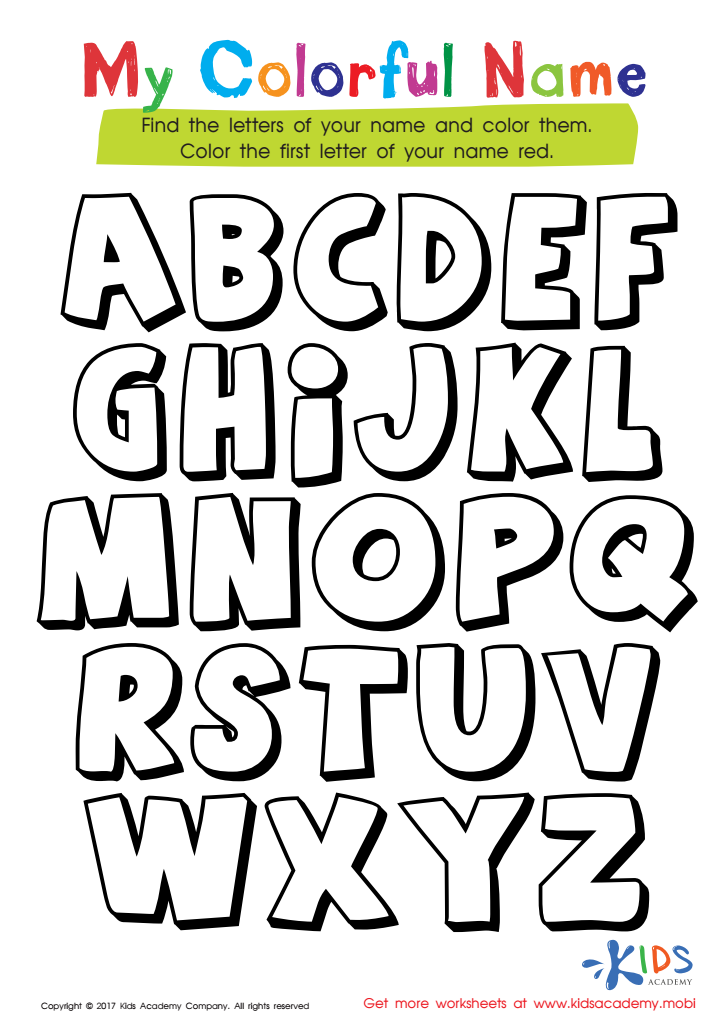
My Colorful Name Worksheet
Writing their names is a milestone for children. With this worksheet, they recall the letters in their name and color the letters one at a time. Spelling and alphabet order are reinforced as they find each letter. Use this fun printable to help kids learn to write their names!
Download (PDF)
 Assign to My Students
Assign to My Students
My Colorful Name Worksheet
Worksheet
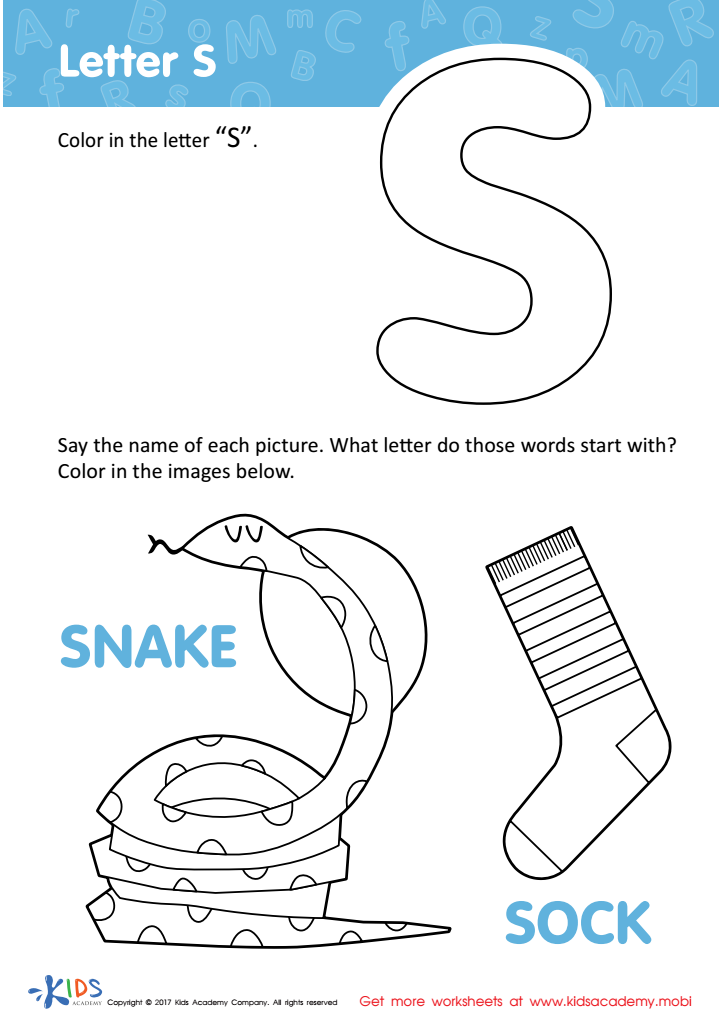
Letter S Coloring Sheet
Help your child practice recognizing the letter "S" and the sound it makes with this fun coloring page. It features a slippery snake, smelly sock and more! Give them extra practice by coming up with more "S" sounds and words.
Download (PDF)
Assign to My Students
Assign to My Students
Letter S Coloring Sheet
Worksheet
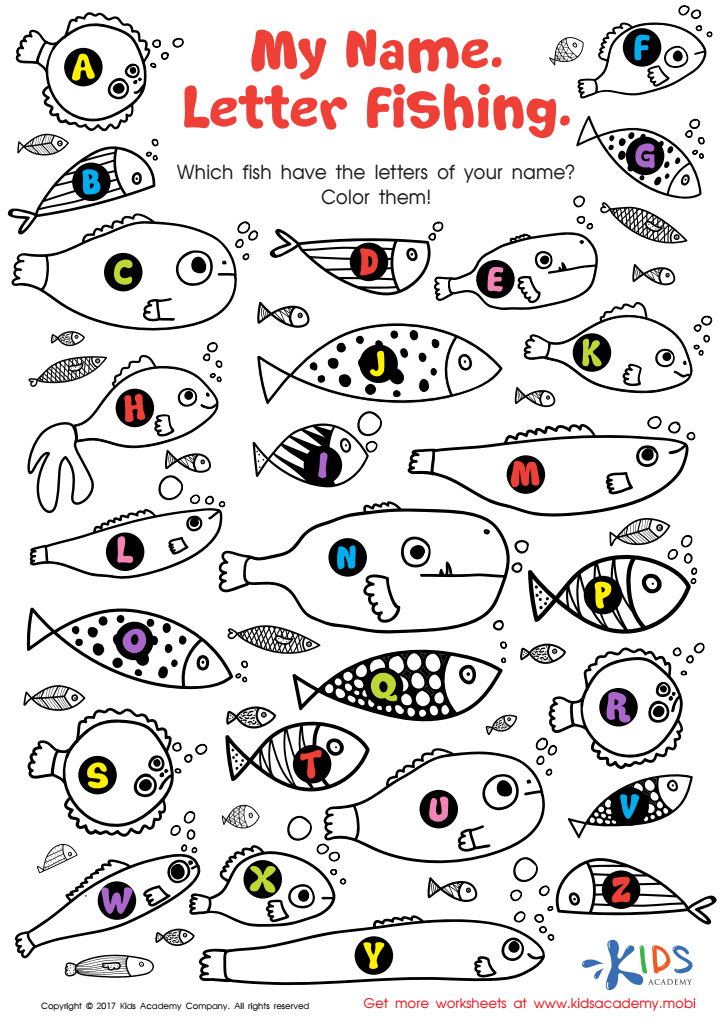
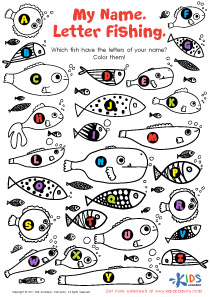
My Name: Letter Fishing Worksheet
Dive into the deep sea and search for fish with a letter on them. Can you find all the letters from your name? Color your favorite fish with crayons and be creative! On the other side, use the letters you found to write your name. Have fun coloring and finding the letters of your name! (80 words)
Download (PDF)
Assign to My Students
Assign to My Students
My Name: Letter Fishing Worksheet
Worksheet
Join Kids Academy for Free
Who is primarily going to use this learning content?







Fine motor skills are crucial for young children, especially ages 3-6, as they lay the foundation for various developmental milestones. These skills involve the use of small muscles in the hands and fingers, enabling children to perform essential tasks like holding a pencil, using scissors, and buttoning their clothes. Parents and teachers should care about the improvement of fine motor skills because they are interconnected with cognitive development, social interactions, and overall independence.
By focusing on activities that enhance fine motor skills, such as writing letters or simple drawing using resources like Easy Alphabet, children also refine their hand-eye coordination and increase their concentration levels. This process fosters a sense of accomplishment, boosting self-esteem. Furthermore, peer activities that involve manipulating objects—like building blocks or threading beads—encourage cooperation and communication among kids, essential for social growth.
Moreover, strong fine motor skills can lead to improved academic performance as children transition into more structured learning environments. Investing time and effort into developing these skills at an early age will set a solid foundation for future learning experiences, making it crucial for both parents and teachers to prioritize fine motor activities and tools.