Phonics recognition Easy Alphabet Worksheets for Ages 3-6
4 filtered results
-
From - To
Discover our engaging "Phonics Recognition Easy Alphabet Worksheets" designed specifically for children ages 3-6! These printable worksheets provide a fun and interactive approach to phonics, helping young learners develop essential reading skills. With vibrant illustrations and age-appropriate activities, your child will explore letter sounds, blend letters, and enhance their vocabulary in an enjoyable way. Suitable for home or classroom use, these worksheets will instill a love for learning while building confidence in phonetic recognition. Perfect for preschool and kindergarten readiness, our resources support early literacy development and set a strong foundation for future reading success. Start your child's phonics journey today!
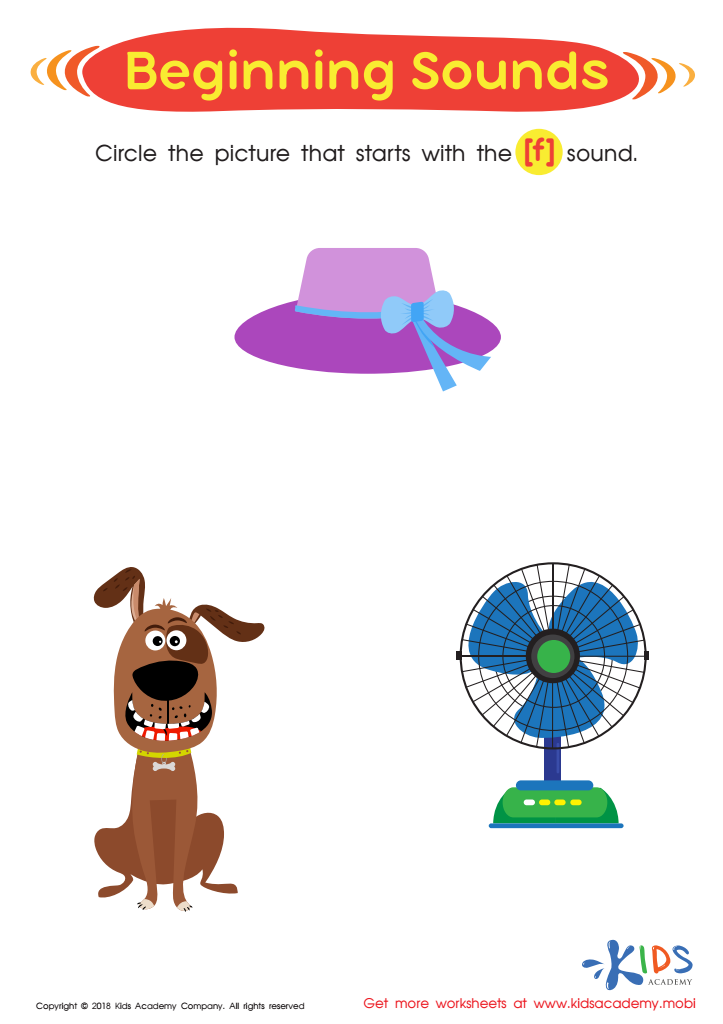
Beginning Sounds Assessment Printable
 Assign to My Students
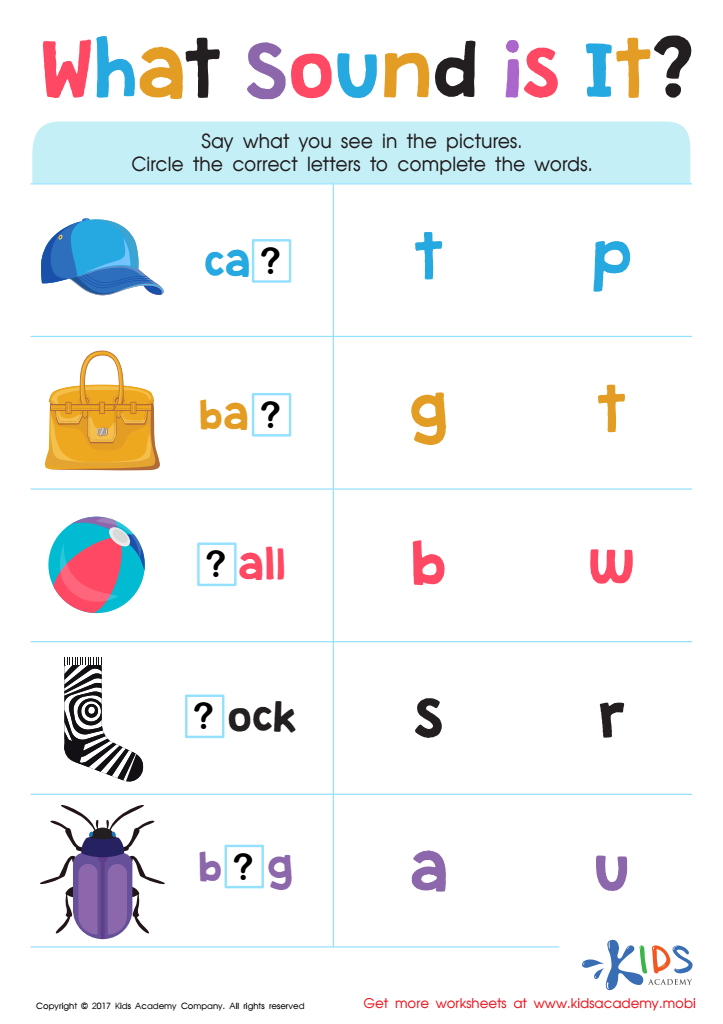
What Sound Is it? Worksheet
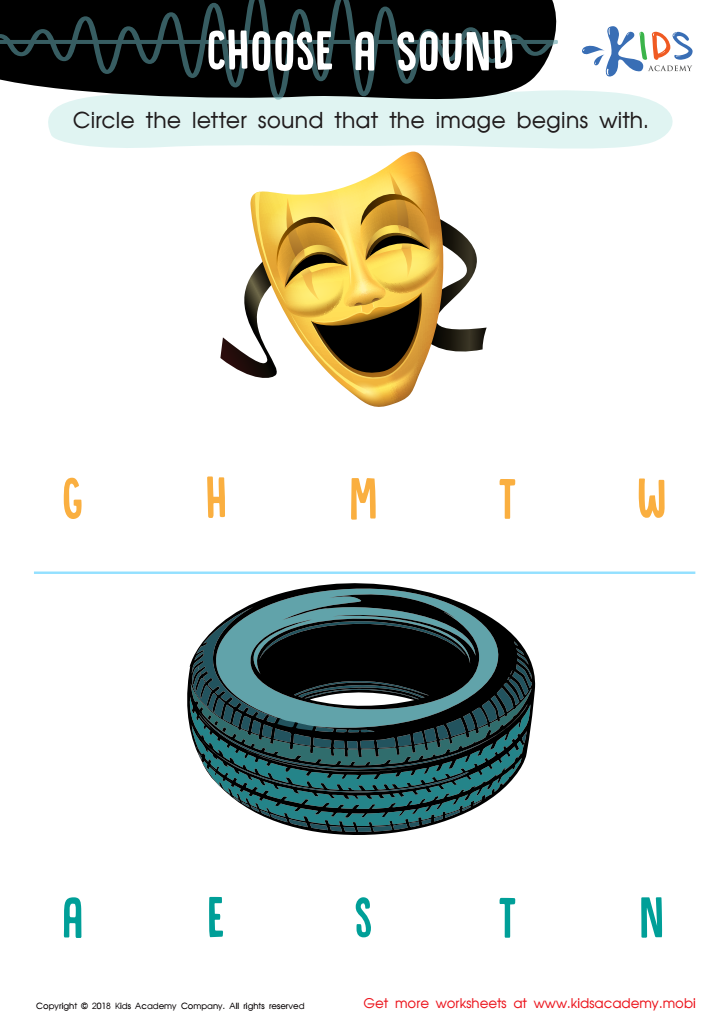
Choose a Sound Worksheet
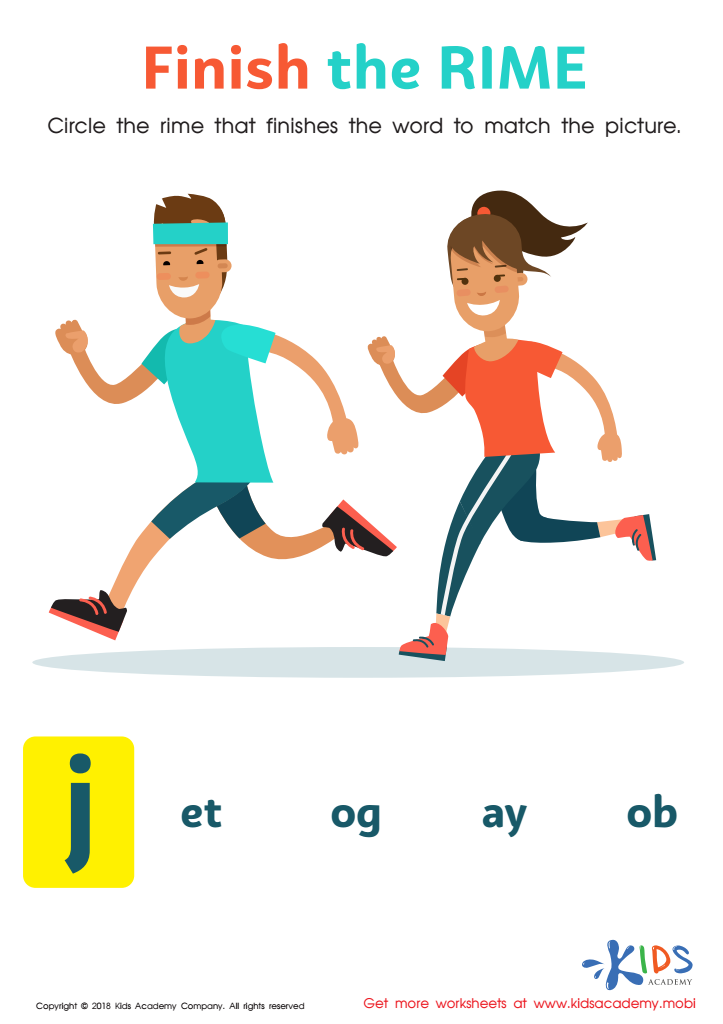
Finish the Rime Worksheet







Phonics recognition is crucial for children aged 3-6, as it lays the foundation for early literacy skills. This age range is a formative period where kids begin to understand the connection between letters and sounds, essential for reading and writing. Programs like Easy Alphabet help children recognize letters and their corresponding phonetic sounds through engaging activities and patterns.
Parents and teachers should care about phonics recognition because it directly impacts literacy development. Strong phonics skills enhance vocabulary, comprehension, and the ability to decode words—all vital for academic success. Children who grasp phonics early on are more likely to become confident readers, improving their overall learning experience and self-esteem.
Moreover, incorporating phonics recognition into early education fosters a love for reading. By making learning fun and interactive, children are more likely to engage with the material, reinforcing their skills. This not only cultivates a lifelong passion for literature but also serves as a catalyst for critical thinking and communication skills.
In essence, acknowledging and supporting phonics recognition lays a robust groundwork for children’s future educational achievements, making it essential for parents and teachers to prioritize in the early years.