Writing practice Easy Letter Recognition Worksheets for Ages 3-6
3 filtered results
-
From - To
Enhance your child's early literacy skills with our Easy Letter Recognition Worksheets, designed especially for ages 3-6. These engaging activities promote letter identification and writing practice in a fun and interactive way. Each worksheet offers colorful illustrations and simple exercises to keep young learners motivated and focused. Kids will practice tracing, identifying, and eventually writing letters, helping to solidify their understanding while building fine motor skills. Our worksheets are perfect for parents and educators seeking to support early literacy development at home or in the classroom. Download and watch your little ones thrive as they embark on their writing journey today!
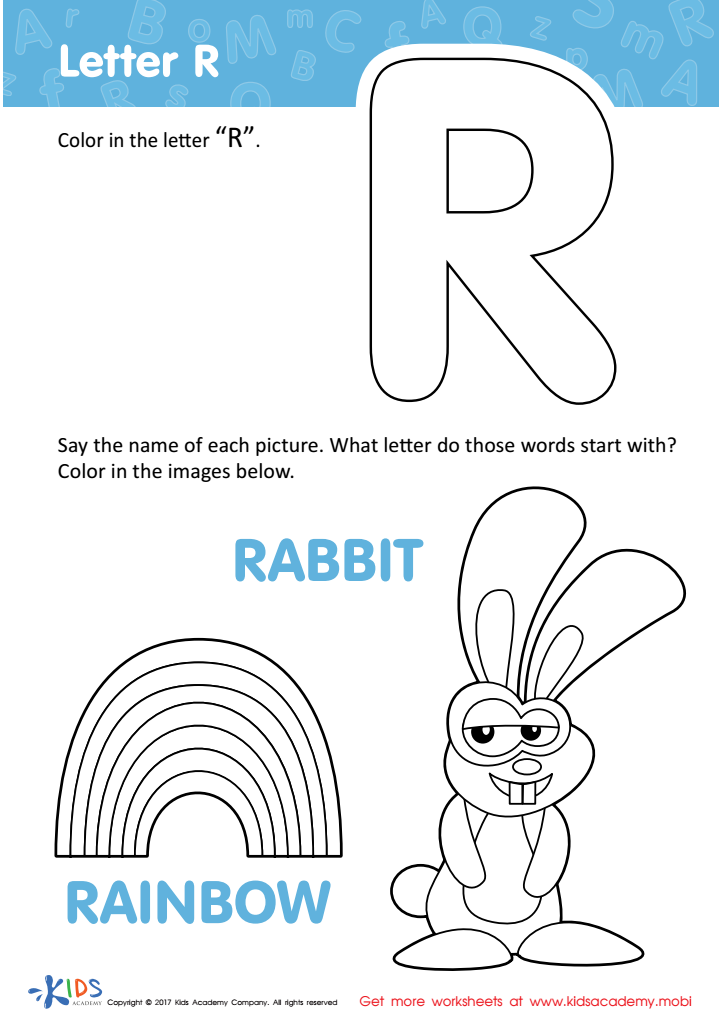
Letter R Coloring Sheet
 Assign to My Students
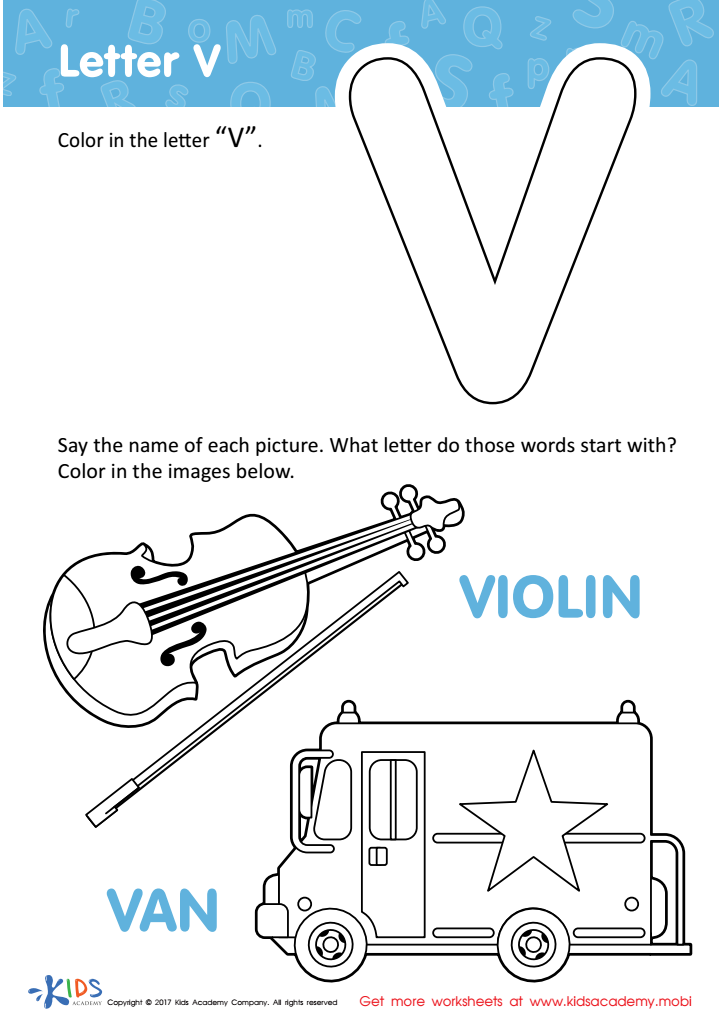
Letter V Coloring Sheet
Assign to My Students
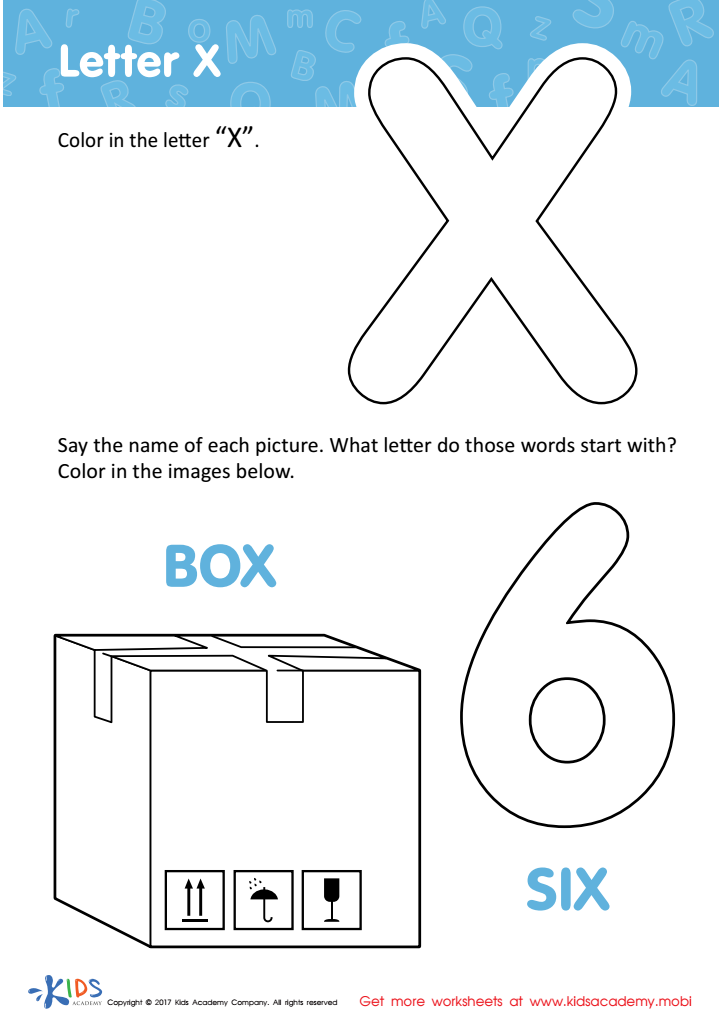
Letter X Coloring Sheet
Assign to My Students








Writing practice and easy letter recognition are foundational skills for children aged 3-6 that lay the groundwork for their future literacy development. At this crucial stage, children begin to understand the shapes and sounds of letters, which is key to reading, writing, and effective communication. Engaging in writing practice helps children enhance their fine motor skills, as they learn to grip writing tools and control their movements, fostering coordination.
Parents and teachers should prioritize this practice, as it fosters a love for learning and builds confidence in young learners. When children recognize letters easily, they are empowered to explore the world of books, triggers their imagination, and sparks curiosity about language. This early exposure cultivates invaluable cognitive skills, including memory and focus.
Additionally, writing practice aids in the development of social skills, as children might share their work or engage in collaborative writing activities. Therefore, consistent recognition and practice of letters can lead to positive educational experiences and create a strong literacy foundation. Ultimately, nurturing these skills not only prepares children for academic success but also equips them for meaningful self-expression throughout their lives.