Visual Learning Easy Addition & Subtraction Worksheets for Ages 3-6
5 filtered results
-
From - To
Enhance your child's math skills with our "Visual Learning Easy Addition & Subtraction Worksheets for Ages 3-6". Designed specifically for early learners, these engaging worksheets use vibrant visuals and interactive exercises to make learning basic math fun and effective. Your kids will develop a solid foundation in addition and subtraction through hands-on practice that captures their interest. Each worksheet integrates colorful illustrations, simple instructions, and age-appropriate challenges to help children grasp essential concepts effortlessly. Perfect for preschoolers and kindergarteners, these resources make mastering early math skills a joyful experience. Visit our page to download and start learning today!
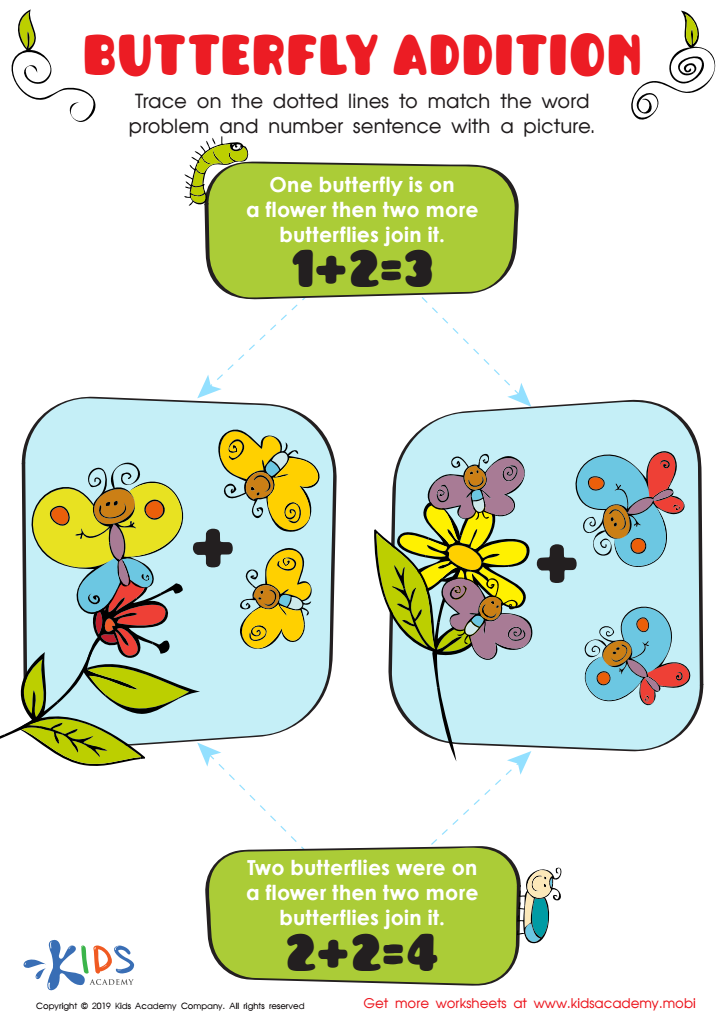
Butterfly Addition Worksheet
 Assign to My Students
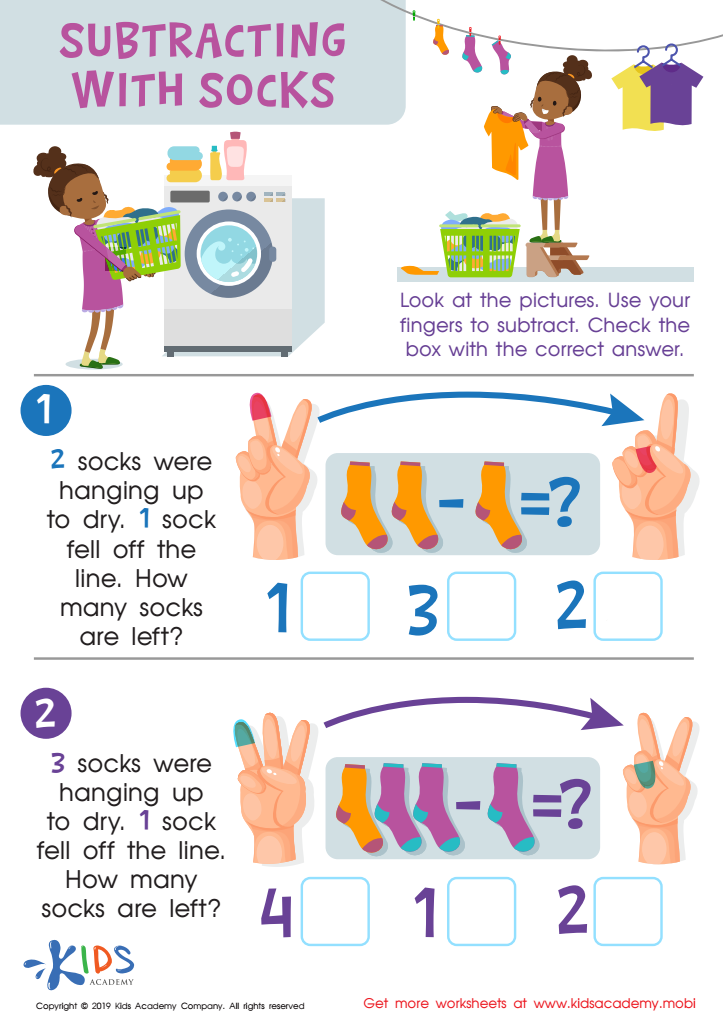
Subtracting Socks Worksheet
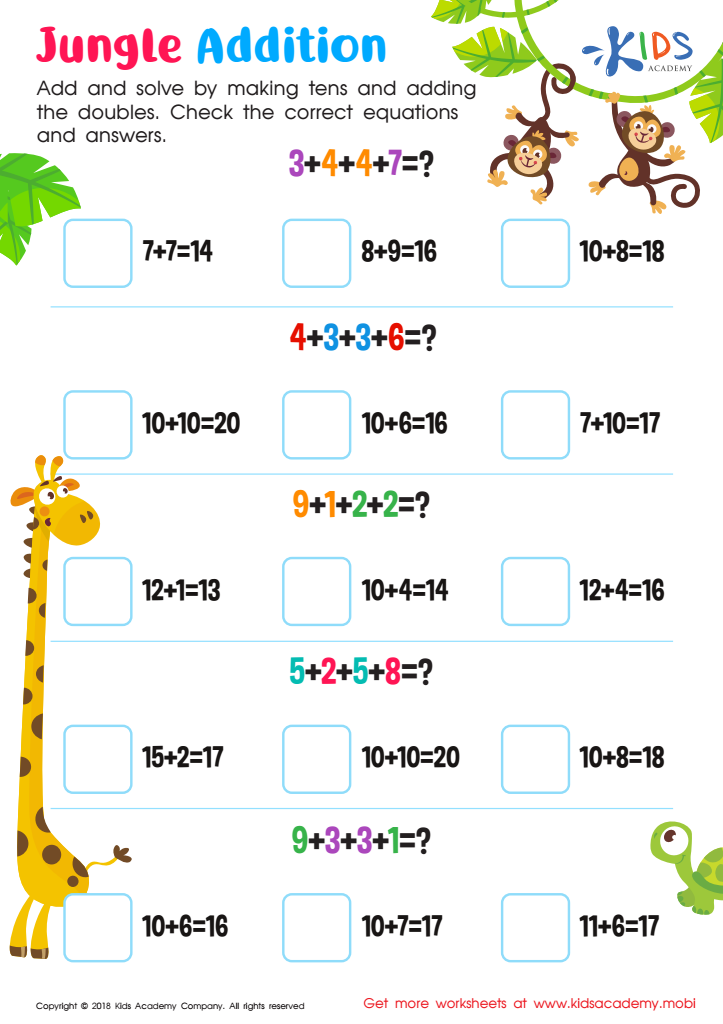
Jungle Addition Worksheet
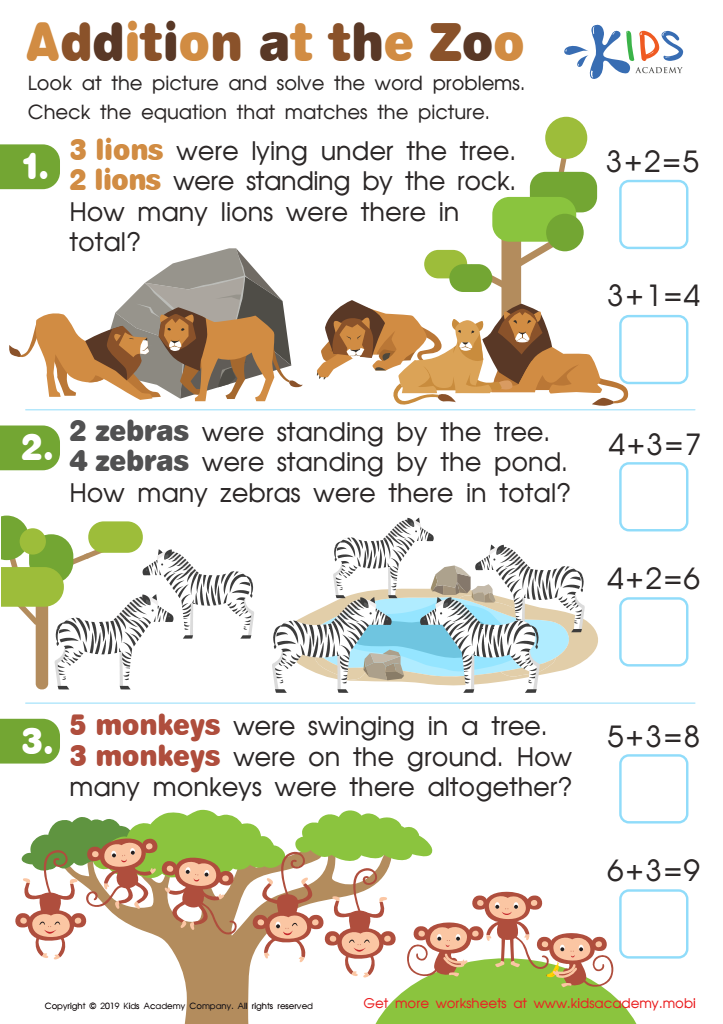
Addition at the Zoo Worksheet
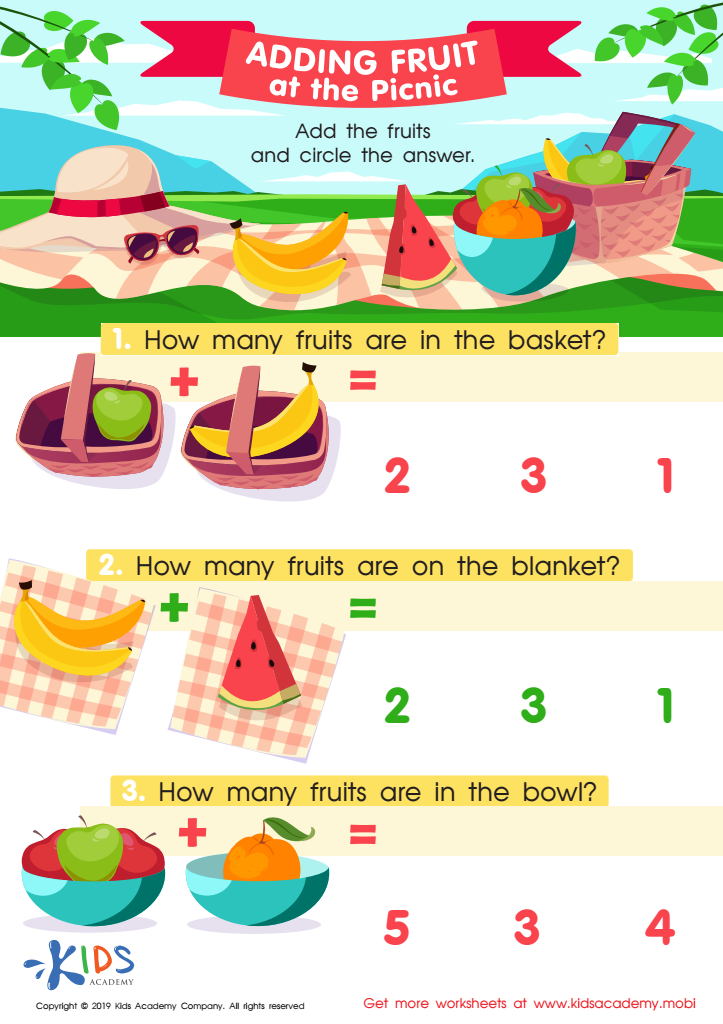
Adding Fruit at the Picnic Worksheet








Visual learning methods are particularly effective for young children (ages 3-6) when it comes to easy addition and subtraction. At this developmental stage, kids are primarily visual and kinesthetic learners, meaning they understand and retain information better when it's presented through images, objects, and hands-on activities. Using visual aids such as colorful counters, number lines, and picture books can make abstract math concepts more concrete.
Parents and teachers should care about this approach because it enhances engagement and makes learning enjoyable. Young children are naturally curious and visually stimulated, so tools like flashcards, interactive games, and apps designed for visual learning can capture their attention and make practice feel like play. This not only helps in understanding math but also fosters a positive attitude towards learning in general.
Implementing visual learning strategies supports differentiated instruction, catering to various learning styles and paces. For those children who may struggle with traditional methods, visual aids offer alternative routes to understanding. Additionally, mastering early math skills provides a foundation for future academic success. Skills learned in addition and subtraction are building blocks for advanced mathematical concepts used later in life. Therefore, by embracing visual learning methods, parents and teachers are investing in the child's long-term educational journey and cognitive development.








