
Time reading skills Easy Time Worksheets for Ages 3-6
3 filtered results
Difficulty Level
Grade
Age
-
From - To
Subject
Activity
Standards
Discover our engaging "Time Reading Skills Easy Worksheets" designed for children aged 3-6. These interactive resources help young learners develop essential time-reading abilities through fun activities. Each worksheet introduces concepts like clock recognition and distinguishing between hours and minutes, making it easy for kids to grasp the fundamentals of telling time. Perfect for preschool and kindergarten settings, these printable worksheets provide a hands-on approach to learning. Foster a love for math and improve critical thinking skills as children practice reading analog clocks and developing their understanding of time. Explore our collection and watch your child's confidence grow!
Favorites
With answer key
Interactive
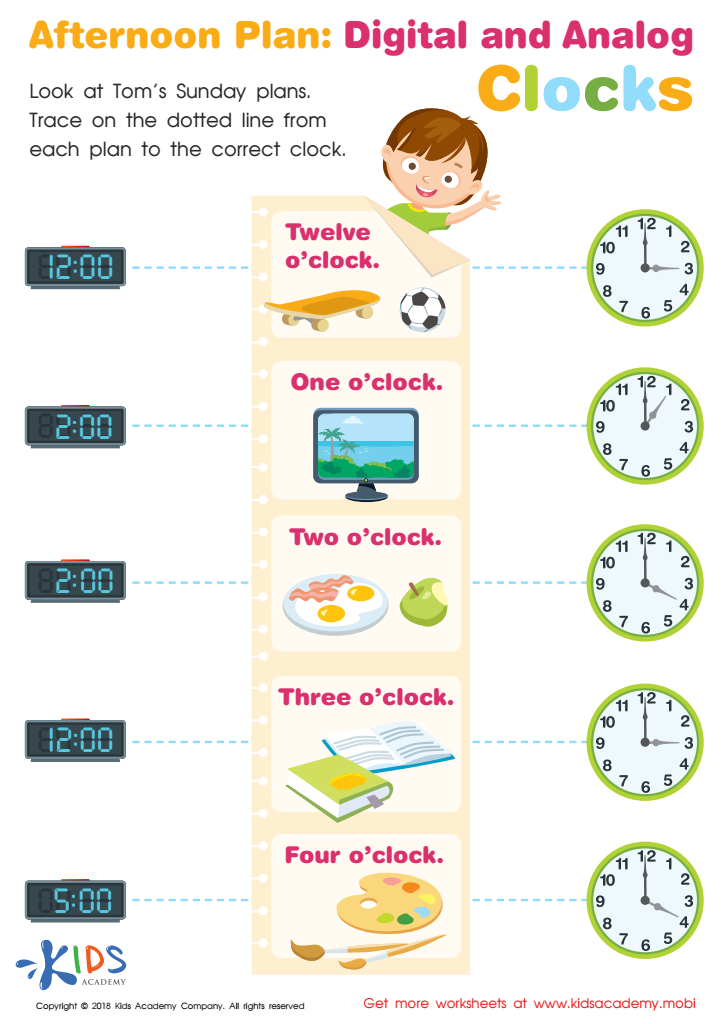
Afternoon Plan: Digital and Analog Clocks Worksheet
Tom's got Sunday plans and your kids can use this worksheet to help them learn how to tell the time. With tracing dotted lines from plans to the correct clock, they'll gain the skills to accurately convert digital time to analog. It'll be a great way to get them better at telling the time.
 Assign to My Students
Afternoon Plan: Digital and Analog Clocks Worksheet
Worksheet
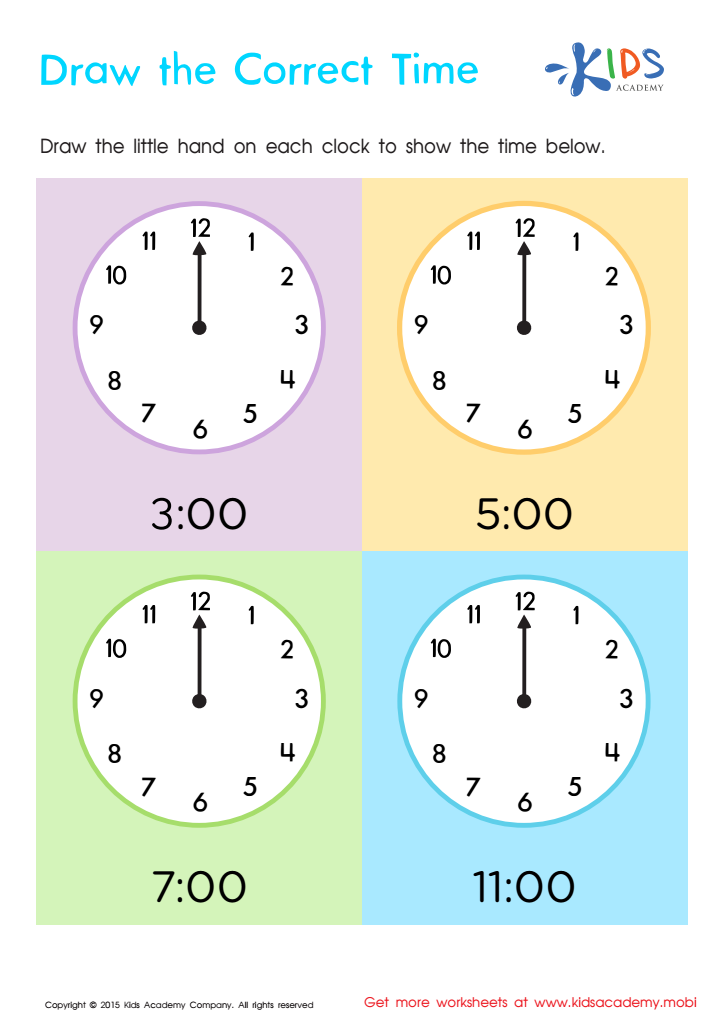
Telling The Time Worksheet: Part 1
Practice telling the time with Kids Academy. Our worksheets make it fun for kindergarteners to learn about clocks and reading the time. Find our free math worksheets on telling the time and draw the little hand on the clock faces to show the time. Let's learn together!
Telling The Time Worksheet: Part 1
Worksheet
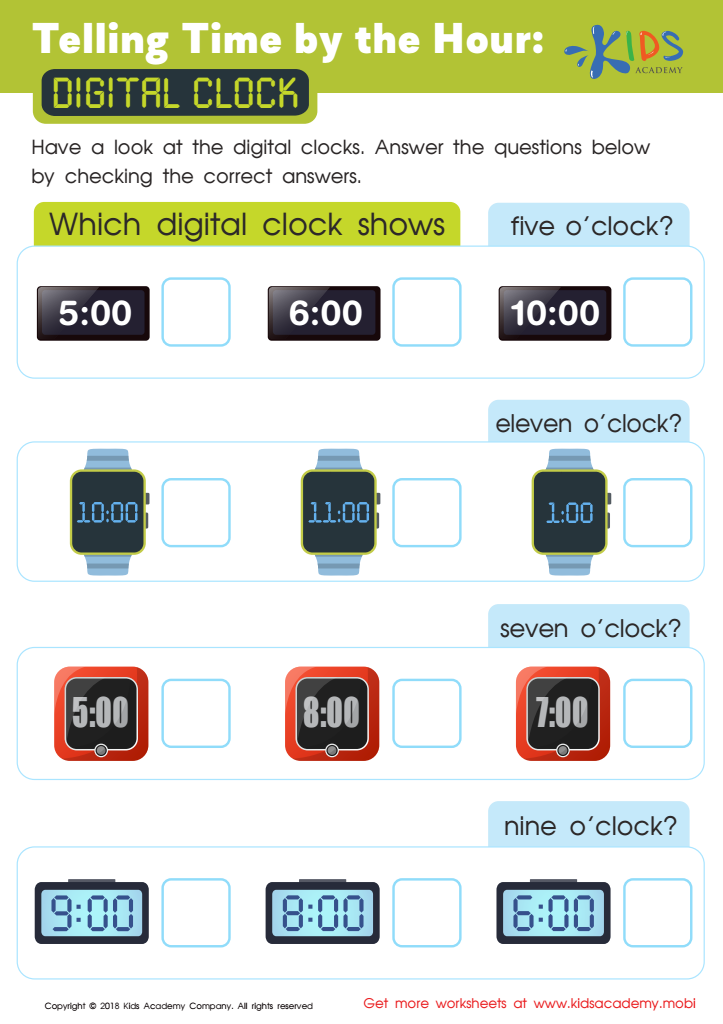
Telling Time by the Hour: Digital Clock Worksheet
Introduce your students to digital clocks. This worksheet will help them become familiar with them. Guide them through answering the questions - they're simple and stimulating. Encourage their young minds to explore the digital clocks in the exercise.
Telling Time by the Hour: Digital Clock Worksheet
Worksheet
Join Kids Academy for Free
Who is primarily going to use this learning content?







Time reading skills are crucial for children ages 3-6, as they form the foundation for essential cognitive and life skills. Understanding time helps young learners develop a sense of structure and routine, which is vital in their daily lives. When children grasp how to read clocks and comprehend concepts like past and future, they become more confident in managing their schedules, whether that’s knowing when it’s time for lunch, play, or bedtime.
Furthermore, time reading fosters critical thinking and problem-solving abilities. As kids begin to relate time to their activities, they learn to plan, prioritize, and make decisions—skills that are fundamental for future academic success and personal responsibility.
For parents and teachers, teaching time reading skills also means encouraging independence. When children learn to read a clock and understand scheduling, they become more self-sufficient, allowing for a smoother daily routine.
Moreover, these foundational skills promote social interaction and cooperation, as children begin to coordinate with peers around shared activities and events. In today’s fast-paced world, where time management is key to success, equipping young children with these skills lays a pathway for their future learning and overall development.








